That tiny, hidden freon leak might seem small, but it's quietly costing you a fortune. As refrigerant escapes, your air conditioner has to work overtime just to keep your home cool, and your electricity bills will show it. This constant strain puts immense pressure on the compressor—your AC's most expensive component. A seemingly minor freon leak air conditioning problem can quickly snowball into a complete system breakdown. Suddenly, you're facing a huge repair bill or a full replacement. Understanding the urgency and knowing when to call a professional can save you from that headache and a lot of money.
Key Takeaways
- A refrigerant 'top-off' is a red flag: Your air conditioner operates on a closed loop, so low refrigerant is a clear sign of a leak. Watch for symptoms like warm air, ice on the unit, or high energy bills, as these point to a problem that needs a professional fix.
- Leak repair is a job for the pros: For safety and legal reasons, only EPA-certified technicians should handle refrigerant. They have the right tools to find the source of the leak and fix it correctly, unlike DIY sealants which can cause more expensive damage.
- Weigh the cost of repair against replacement: For older systems, especially those over 10 years old or using the phased-out R-22 refrigerant, a major leak repair can be very expensive. It's often more cost-effective to invest that money in a new, more efficient air conditioner.
What Is a Freon Leak & Why Does It Matter for Your AC?
A Freon leak might sound like a minor issue, but it's a serious problem for your air conditioner's health and your home's comfort. Freon is the brand name for a type of refrigerant, the chemical compound that makes cooling possible. Your AC system is designed to be a closed loop, meaning the refrigerant should never run low or need to be "topped off." If your system is low on refrigerant, you have a leak, and ignoring it can lead to expensive repairs and even system failure.
How Does Freon Work to Cool Your Home?
Think of refrigerant as the lifeblood of your air conditioning system. This hardworking chemical circulates continuously through a set of coils. As your indoor air passes over the evaporator coil, the refrigerant inside absorbs the heat, much like a sponge soaks up water. It then travels to the outdoor unit, where it releases that heat outside. This cycle is what leaves you with cool, comfortable air inside your home. Because it operates in a closed system, your AC shouldn't lose refrigerant over time. If the level is low, it’s a clear sign of a leak in your air conditioning system.
How a Freon Leak Sabotages Your AC's Cooling Power
When your system loses refrigerant, it can no longer absorb and release heat effectively. Your AC will start to struggle, working much harder to cool your home. You'll likely notice the first sign when your house just doesn't feel as cool as it used to, even with the thermostat set low. You might also hear strange hissing or bubbling sounds near the unit, which can indicate escaping refrigerant. Another telltale sign is ice forming on the evaporator coils. Since the system is running longer and less efficiently, you’ll also see a frustrating spike in your monthly energy bills. A leak is a problem that only gets worse, so it's best to contact a professional right away.
Are Freon Leaks Dangerous?
Yes, a refrigerant leak can be dangerous for both your health and the environment. Direct contact with refrigerant can cause skin irritation or frostbite, and inhaling the fumes in a poorly ventilated space can be harmful. This is why you should never try to handle a leak yourself. Beyond the immediate safety risks, refrigerants are potent greenhouse gases. Older types, like R-22 (the original Freon), are known to deplete the ozone layer and are being phased out by the EPA. Handling these chemicals requires special certification and equipment to prevent their release into the atmosphere. Our certified technicians have the training to manage refrigerants safely and in compliance with all environmental regulations.
Health Risks from Refrigerant Exposure
Beyond the mechanical issues, a refrigerant leak introduces harmful chemicals into your home's air. Breathing in these fumes can lead to immediate symptoms like headaches, dizziness, and even difficulty breathing. While these might seem temporary, long-term exposure can result in more significant health complications. It's important to understand that even a slow leak continuously releases these substances, compromising your home's indoor air quality. This is why it's never safe to simply ignore the signs of a leak or remain in a home where you suspect one is present. Your family's well-being is the top priority, and ensuring the air they breathe is clean and safe is essential.
Why Leaks Pose a Risk to Children and Pets
Children and pets are especially susceptible to the dangers of a refrigerant leak for a simple reason: they spend more time closer to the floor. Refrigerant gas is heavier than air, so it tends to settle downwards, concentrating in the very spaces where your little ones and furry friends play and rest. This increases their risk of inhaling the harmful fumes. Additionally, direct contact with liquid refrigerant can cause severe, frostbite-like burns on their sensitive skin. Protecting your family is paramount, which is why addressing a potential leak should never be delayed. If you notice any signs, it's crucial to call for a professional heating and cooling system inspection immediately to ensure your home is safe for everyone.
4 Telltale Signs of a Freon Leak in Your Air Conditioning
A Freon leak can be sneaky, but your air conditioner will usually give you a few clear warning signs that something is wrong. Since refrigerant is essential for cooling your home, even a small leak can cause big problems. Paying attention to how your AC looks, sounds, and feels can help you catch a leak early and call in a professional before it leads to more expensive damage. If you notice any of these issues, it’s a good idea to investigate a little further.
Your AC Starts Blowing Warm Air
Is your air conditioner running, but the air coming out of the vents feels lukewarm? This is one of the most common signs of a refrigerant leak. Your AC’s refrigerant is what absorbs heat from inside your home and moves it outside. When the refrigerant level is low because of a leak, the system loses its cooling power. It simply can’t absorb enough heat to cool the air effectively. Instead of a refreshing blast of cold air, you get a weak, warm breeze. If your AC is struggling to keep you cool, it’s a clear signal that your system needs professional air conditioning services.
You Hear Unfamiliar Hissing or Bubbling
Your air conditioner should operate with a consistent, low hum. If you start hearing unusual sounds like hissing or bubbling, it’s time to listen closely. A distinct hissing noise, especially near the refrigerant lines or the AC unit itself, often indicates that refrigerant gas is escaping from a crack or hole. You might also hear a gurgling or bubbling sound, which can also point to a leak in the system. These noises are not part of normal operation. They are direct alerts that your AC is losing refrigerant and needs to be inspected by a certified technician right away.
There's Ice Forming on Your AC Unit
It might seem strange, but ice forming on your air conditioner is a classic symptom of low refrigerant. When your system doesn't have enough Freon, the pressure inside the evaporator coil drops. This causes the coil to become extremely cold, far colder than it should be. As humid indoor air passes over the freezing coil, the moisture condenses and freezes solid, creating a layer of ice. You might see this ice on the copper lines connected to your outdoor unit or on the indoor evaporator coil. While it might be tempting to just let it melt, the ice will return until the leak is fixed. This issue can seriously damage your compressor, so it’s best to contact a professional to handle it.
Your Energy Bills Unexpectedly Spike
If your electricity bill has suddenly gone through the roof but your cooling habits haven't changed, a Freon leak could be the culprit. An air conditioner with low refrigerant has to work much harder and run for longer periods to try and cool your home to the temperature you’ve set. This constant operation uses a significant amount of extra energy, which shows up on your monthly bill. This not only costs you money but also puts a huge amount of strain on your AC’s components, leading to premature wear and tear. Keeping an eye on your energy usage can help you spot an efficiency problem before it causes a major breakdown.
You Notice Puddles or Moisture Near Your Unit
Finding a puddle of water or signs of moisture around your indoor AC unit is a major red flag. While some condensation is normal, a pool of water suggests a bigger problem, often linked to a refrigerant leak. When your system is low on Freon, the evaporator coil can get too cold and freeze over. As that ice melts, it creates more water than your system’s drain pan can handle, causing it to overflow onto your floor. This moisture isn't just a slipping hazard; it’s a clear signal that your AC is struggling due to low refrigerant. Ignoring it can lead to water damage and more severe mechanical failures, so it’s important to have your air conditioning system inspected by a professional.
Your System Is Short Cycling
Does your air conditioner turn on for a few minutes, shut off, and then kick back on again shortly after? This frequent on-and-off pattern is known as short cycling, and it’s a classic sign of a refrigerant leak. Because the system lacks the proper amount of Freon, it can't effectively cool your home to the thermostat's set temperature. The AC runs in short, ineffective bursts, never completing a full cooling cycle. This not only fails to cool your home but also puts extreme stress on the compressor, the most expensive part of your unit. This constant starting and stopping accelerates wear and tear, leading to higher energy bills and an increased risk of a complete system breakdown.
You Notice a Faint, Sweet Smell
One of the most direct signs of a refrigerant leak is a peculiar odor in your home. Some refrigerants, particularly the older R-22 type, can emit a faint, sweet smell that’s often compared to chloroform or nail polish remover. If you detect this unusual scent, especially near your AC vents or the unit itself, you are likely smelling the refrigerant chemical as it escapes into your air. Don't dismiss this as a random household odor. Inhaling refrigerant can be harmful, so this is a sign to take very seriously. It’s a definite indicator that you have a leak and should immediately call for professional heating and cooling services to locate and repair it safely.
What to Do Immediately If You Suspect a Leak
If you notice any of the signs of a Freon leak—from warm air to strange smells—your immediate actions can make a huge difference in protecting both your family and your AC system. While a refrigerant leak always requires a professional repair, there are two critical steps you should take right away while you wait for a technician to arrive. Acting quickly helps minimize potential health risks from refrigerant exposure and can prevent a small problem from turning into a catastrophic and costly system failure. These simple precautions are your first line of defense.
Turn Off Your AC System
The very first thing you should do if you suspect a refrigerant leak is to turn your air conditioning system off completely at the thermostat. Continuing to run the unit with low refrigerant forces the compressor to work under immense strain, which can quickly lead to it overheating and failing. A damaged compressor is one of the most expensive repairs an AC system can have. By shutting the system down, you prevent further damage and stop it from circulating more refrigerant fumes throughout your home. This simple step protects your investment and ensures the safety of your household until one of our certified technicians can assess the situation.
Ventilate Your Home
After turning off your AC, your next priority is to ensure your home is well-ventilated. Open up windows and doors to allow fresh air to circulate and help dissipate any refrigerant fumes that may have accumulated indoors. While short-term exposure in a ventilated area is generally low-risk for adults, refrigerant is heavier than air and can settle in low-lying areas. For safety, it’s wise to move children and pets out of the immediate area or to another part of the house until the air has cleared. Taking this step helps minimize exposure and keeps your family safe while you wait for professional help to arrive.
What Causes Freon Leaks? (And How You Can Prevent Them)
A Freon leak isn't just bad luck; it's usually the result of a specific problem within your air conditioning system. Understanding the common causes can help you protect your unit from damage. Most leaks boil down to three main culprits: corrosion, simple wear and tear, or physical damage. The good news is that with a little proactive care, you can often prevent these issues from leading to a costly repair.
Long-Term Corrosion and Rust
One of the most common causes of refrigerant leaks is corrosion. Over time, the metal coils and lines in your AC system are exposed to moisture, dust, and other airborne particles. This exposure can cause the metal to rust and degrade, eventually creating tiny cracks or holes that allow refrigerant to escape. Here in coastal areas like Corpus Christi, the salty, humid air can speed up this process significantly. Keeping your outdoor unit clean and free of debris is a good first step, but professional cleaning during a tune-up is the best way to fight corrosion.
Everyday Wear and Tear
Your air conditioner works hard to keep your home comfortable, especially during a hot Texas summer. All that hard work leads to natural wear and tear over time. The constant vibration from the system running can weaken joints and connections in the refrigerant lines. Additionally, the rubber seals on service ports can degrade and become brittle, creating another potential spot for a leak. While choosing a durable system from a trusted brand like Trane can help, no unit is immune to the effects of aging. Regular inspections are key to catching these issues before they turn into a full-blown leak.
Accidental Damage and Faulty Installation
Sometimes, a leak is caused by straightforward physical damage. A stray rock from a lawnmower, falling branches during a storm, or even pests chewing on the lines can puncture the refrigerant coils. Another major, yet preventable, cause is faulty installation. If an AC unit isn't installed correctly, the connections in the refrigerant lines might not be properly sealed. This can lead to slow leaks that go unnoticed for months or even years, silently draining your system and driving up your energy bills. That's why having your system installed by a certified professional is so important for its long-term health and performance.
Why Regular AC Maintenance Is Your Best Defense
The single best way to prevent Freon leaks is with routine professional maintenance. During a tune-up, a technician can catch and address the very issues that lead to leaks. They will clean the coils to prevent corrosion, tighten connections that may have loosened from vibration, and inspect the entire system for early signs of wear or damage. Our membership program is designed to make this easy, providing regular check-ups to keep your system running efficiently and reliably. If you catch a potential problem early, you can often avoid the headache and expense of a major refrigerant leak repair.
Change Your Air Filters Regularly
It might not seem directly related, but a dirty air filter can contribute to a refrigerant leak. When your filter is clogged with dust and debris, it restricts airflow, forcing your AC system to work much harder to pull in air. This added strain puts extra pressure on all the internal components, including the delicate coils and lines that carry the refrigerant. Over time, this constant stress can weaken joints and create tiny cracks, leading to a slow leak. Regular maintenance is the best way to avoid leaks, save money on energy bills, and extend the life of your AC. Making a simple filter change part of your routine is an easy step toward protecting your system's most critical parts and ensuring it runs smoothly.
Keep Your Outdoor Unit Clear
Your outdoor condenser unit needs space to breathe. When it's crowded by plants, covered in leaves, or blocked by grass clippings, it can't release heat effectively. This trapped heat and moisture create the perfect environment for rust and corrosion to form on the delicate fins and coils. Corrosion is a primary cause of refrigerant leaks, as it eats away at the metal and creates small holes. Keeping your outdoor unit clean and free of debris is a good first step, but professional cleaning during a tune-up is the best way to fight corrosion. A technician can safely clean the interior components and spot any early signs of damage, helping you prevent a leak before it starts.
How Do Pros Find and Fix a Freon Leak?
When you suspect a Freon leak, your first and only call should be to a professional. Finding and fixing these leaks is a precise process that requires special tools and training. It’s not just about patching a hole; it’s about correctly diagnosing the problem, performing a lasting repair, and safely handling the refrigerant. A certified technician will follow a systematic approach to get your AC running efficiently again, ensuring the job is done right the first time. This process protects your system from further damage and keeps your home safe.
The First Step: A Professional Visual Inspection
The first thing a technician will often do is a thorough visual inspection of your entire AC system. They’re looking for a few key signs, with the most common being oily residue. Your AC’s refrigerant is mixed with a special oil that lubricates the compressor. When refrigerant leaks out, it carries this oil with it, leaving greasy or dark stains on the copper lines, coils, or fittings.
While you might be able to spot these oily patches yourself, a pro knows exactly where to look for the most common failure points. A visual check is a great starting point, but it doesn't always reveal the source, especially if the leak is very small or in a hard-to-see location.
Specialized Tools for Detecting Freon Leaks
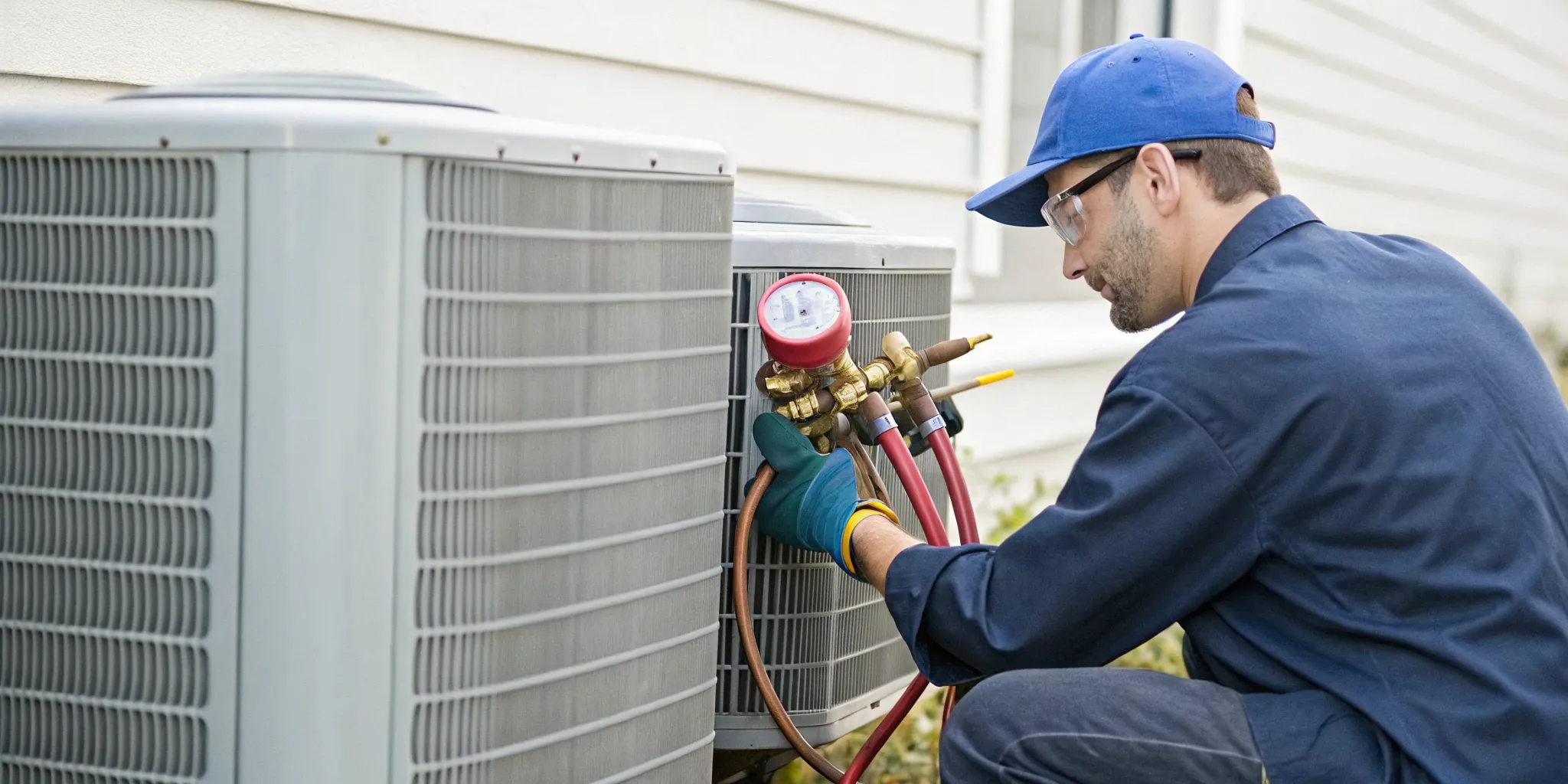
If a visual check doesn’t pinpoint the leak, technicians have a few other tools at their disposal. One of the most common is an electronic leak detector, often called a "sniffer." This handheld device sounds an alarm when it detects refrigerant gas in the air, helping the tech zero in on the source. Another method involves adding a special ultraviolet dye to the system. After the AC runs for a bit, the technician uses a UV light to find the leak, which will glow brightly. Once found, the repair might involve patching a tiny hole or brazing (a form of welding) a larger crack to create a permanent seal.
Nitrogen Pressure Tests
For really stubborn or tiny leaks that are hard to spot, technicians often turn to a nitrogen pressure test. This method is incredibly effective because it's both precise and safe for your system. A technician will carefully fill your AC system with pressurized nitrogen, which is an inert gas. "Inert" just means it won’t cause any chemical reactions or introduce moisture and other contaminants into your sensitive refrigerant lines. Once the system is pressurized, they use a gauge to monitor it closely. If the pressure starts to drop, it’s a sure sign that gas is escaping somewhere. This test allows a professional to confirm a leak's existence and then systematically isolate different parts of the system to pinpoint its exact location, ensuring a thorough diagnosis before any AC repair work begins.
Soap Bubble Tests
Sometimes, the simplest methods are still the most effective, and that’s where the soap bubble test comes in. This technique is exactly what it sounds like and is often used to confirm the location of a more obvious leak. After a technician has an idea of where the leak might be, they'll apply a special soap-and-water solution to the suspected joints, coils, or fittings. If a leak is present, the escaping refrigerant gas will create a cluster of bubbles, immediately revealing the source of the problem. While it’s a straightforward and reliable way to visually confirm a leak, it’s typically used for larger leaks that are easier to access. If you see signs of a leak, it's best to contact a professional who can perform the right tests to find and fix it correctly.
Why You Need a Certified Pro to Handle Refrigerant
Handling refrigerant is not a DIY project. It’s a chemical that can be harmful if inhaled and is regulated by the EPA for its environmental impact. Because of this, only technicians with an EPA 608 certification are legally allowed to purchase and handle refrigerants. Our team at Tommy Cool Air is fully certified to manage these substances safely. Attempting to work with Freon yourself poses serious health risks and can lead to hefty fines. A certified pro has the right equipment to safely recover the refrigerant, repair the leak, and recharge the system without releasing harmful chemicals into the atmosphere.
Why DIY "Stop Leak" Products Often Fail
You might see "stop-leak" sealants for AC systems on store shelves, but please steer clear of them. These products are marketed as a quick and easy fix, but they often cause more harm than good. A sealant is a temporary patch at best and doesn't address the underlying cause of the leak. Worse, these sticky substances can clog the small tubes and sensitive components inside your AC system, including the compressor, which is the most expensive part to replace. A professional air conditioning repair will fix the source of the problem correctly, ensuring your system runs reliably for years to come.
What to Expect During a Professional Repair
When you call a professional, you can expect a clear and methodical process. First, they will use their tools to confirm the leak's exact location. Next, they will safely recover any remaining refrigerant from your system before starting the repair. Depending on the issue, they will either patch the leak, braze the damaged component, or replace the faulty part entirely. After the repair is complete, they will perform a pressure test to ensure the leak is sealed. Finally, they will recharge your system with the precise amount of refrigerant specified by the manufacturer and test it to make sure it’s cooling your home effectively.
Evacuating and Recharging the System
After the leak is sealed, the technician performs two final, crucial steps: evacuating and recharging the system. First, they use a vacuum pump to remove all air, moisture, and contaminants that may have entered the lines during the repair. This is a critical step because any moisture left inside can mix with the refrigerant and create corrosive acids that damage your system from the inside out. Once the system is clean and dry, it's recharged. This isn't just a "top-off"; a certified pro uses digital scales to add the precise amount of refrigerant specified by the manufacturer. This precision is key to restoring your AC's efficiency and protecting the compressor, and it's why this process should only be handled by a trained air conditioning service technician.
After a Freon Leak: Should You Repair or Replace Your AC?
Finding out you have a freon leak is stressful enough, but then comes the big question: should you repair it or replace the whole system? It’s a major decision, and the right answer depends on your specific situation. There’s no single correct choice for everyone, but by looking at a few key factors like cost, your AC’s age, and the type of refrigerant it uses, you can make a confident and cost-effective decision for your home. Let's walk through what you need to consider.
What Does a Freon Leak Repair Cost?
The first thing on everyone's mind is the price tag. The cost to fix a freon leak can vary quite a bit, typically ranging from a few hundred dollars for a simple patch and recharge to over $1,500 if a major component like the evaporator coil needs to be replaced. The final bill depends on where the leak is, how hard it is to access, and the type of refrigerant your system uses. A small, accessible leak will be on the lower end of the spectrum. However, if the leak is in a major, hard-to-reach part, the labor and replacement costs will be higher. Getting a professional quote is the only way to know for sure what you’re looking at. Our team can provide a clear, upfront estimate for any air conditioning services you need.
Typical Costs for Leak Detection and Repair
Generally, you can expect an AC refrigerant leak repair to cost between $200 and $1,500. This wide range covers the entire process: a technician using specialized tools to locate the source of the leak, the labor and materials to seal the damaged area, and the cost to recharge the system with the correct type and amount of refrigerant. A minor, easily accessible leak will fall on the lower end of that spectrum. However, if the leak is in a major component or is difficult to access, the cost will be higher. Getting a precise quote from a professional is the best way to understand the investment required for your specific air conditioning repair.
Factors That Influence the Final Price
Several key factors determine where your repair will fall within that price range. The location of the leak is the biggest variable; a simple patch on an exposed line is far less expensive than replacing an entire evaporator coil. The type of refrigerant your system uses also significantly impacts the cost. Older systems using R-22 refrigerant, which is being phased out, are much more expensive to recharge than modern systems using R-410A. Finally, the severity of the damage and the associated labor time will affect the final bill. A complex repair that requires more time and replacement parts will naturally cost more than a straightforward fix.
Use the "$5,000 Rule" to Help You Decide
When you're weighing a repair against a replacement, a handy guideline to use is the "Rule of 5000." To use it, you simply multiply the estimated repair cost by the age of your AC unit in years. If the total is more than 5,000, replacement is often the more financially sound option. If the number is less than 5,000, a repair might be the better choice. For example, if you have an $800 repair quote for a 7-year-old system, the math is 800 x 7 = 5,600. Since that’s over 5,000, it’s a strong signal that investing in a new unit could be a smarter move in the long run. This isn't a hard-and-fast rule, but it’s a great starting point for making an informed decision.
Consider the 50% Rule
Another helpful guideline is the 50% Rule. It’s pretty straightforward: if the cost of a repair is 50% or more of the price of a brand-new air conditioner, it’s usually smarter to replace the unit. For example, if a major repair is quoted at $2,500, but a new, more efficient system would cost $5,000, you've hit that 50% mark. Pouring that much money into an older unit that might have other components failing soon is a risky investment. Instead, putting that money toward a new system gets you modern technology, better energy efficiency, and a fresh warranty. It’s about making a long-term financial decision rather than just a short-term fix. Our team can provide you with clear pricing for both the repair and options for a new energy-saving system so you can weigh your choices.
If Your AC Uses R-22 Freon, Your Decision Gets Complicated
The type of refrigerant your AC uses is a huge factor in the repair-or-replace debate. Many systems older than 10 years use R-22 refrigerant, also known as Freon. Due to its environmental impact, the EPA began the phaseout of R-22, and as of 2020, it can no longer be produced or imported in the United States. This means the remaining supply is extremely limited and very expensive. If your older unit has a leak, just refilling the R-22 can be costly, and it doesn't even fix the underlying problem. In these cases, it almost always makes more sense to replace the entire system with a modern unit that uses a more affordable and eco-friendly refrigerant.
The Long-Term Payoff of Upgrading Your Air Conditioner
While the upfront cost of a new AC system can seem high, it often comes with long-term benefits that make it a worthwhile investment. Modern air conditioners are significantly more efficient than their older counterparts, which translates directly to lower monthly energy bills. A new system also gives you peace of mind. Instead of worrying about another breakdown, you get a reliable unit backed by a manufacturer's warranty. We proudly install high-quality Trane systems known for their durability and performance. Upgrading also improves your home's comfort with better cooling and can even enhance your indoor air quality, giving you a healthier living environment.
Why Getting a Second Opinion Matters
When you’re facing a potentially expensive AC repair, it’s completely normal to feel a little sticker shock. Before you commit to a major repair or a full system replacement, it’s always a smart move to get a second opinion. This isn't about distrusting the first diagnosis; it's about making an informed financial decision for your home. Another certified technician might confirm the initial assessment, giving you confidence in your decision. Or, they might find a different, more cost-effective solution that was overlooked. Think of it as due diligence. Making a call for another perspective can provide clarity, save you money, and ensure you’re choosing the absolute best path forward for your home's comfort system. You deserve to feel confident in your choice, and seeing what another expert thinks is a great way to get there. You can see what our customers say about our honest assessments on our reviews page.
Questions to Ask Your Technician
Walking into a conversation about a technical repair can feel intimidating, but you hold more power than you think. Being prepared with a few key questions can help you understand the problem, evaluate your options, and feel confident in the solution you choose. A trustworthy technician will welcome your questions and take the time to explain things clearly. This isn't an interrogation; it's a conversation to ensure you're on the same page. Having these questions ready helps you cut through the technical jargon and get to the heart of the matter: what’s wrong, how can it be fixed, and what’s the best choice for your home and budget? For more helpful information, you can always check our company's FAQs page.
How Big Is the Leak?
One of the most important questions you can ask is about the size of the leak. Ask the technician how much refrigerant the system has lost. If it's a small amount, like a pound or two, the leak might be minor and relatively easy to repair. However, if the system is nearly empty, it points to a much larger or more significant leak. This information is critical because it directly impacts the feasibility and cost of the repair. A small leak might be a simple fix, but a major one could mean a key component, like the evaporator coil, has failed. Understanding the severity helps you weigh whether a repair is a lasting solution or just a temporary patch.
What Kind of Warranty Is Offered?
Before you agree to any work, always ask about warranty coverage. If your AC unit is less than 10 years old, there's a good chance that some parts might still be covered by the manufacturer's warranty. Be sure to ask your technician to check for you. This could save you a significant amount of money on replacement parts. It's also important to ask about the warranty on the repair itself. A reputable company will stand behind their work with a labor warranty, giving you peace of mind that the fix is built to last. Brands like Trane are known for their excellent warranties, which is a key factor when considering a replacement.
Ask About Temporary Cooling Solutions
If the final verdict is that you need a new air conditioner, the installation might not happen the same day. Going without AC for even a few days in the Texas heat can be incredibly uncomfortable, if not dangerous. Don't hesitate to ask your HVAC company if they can provide any temporary cooling solutions. Many customer-focused companies, including ours, may be able to offer portable AC units to keep at least one room in your home comfortable while you wait for your new system to be installed. It shows that a company cares about your well-being, not just the sale. When you contact us for a replacement estimate, be sure to ask about our options for keeping you cool in the meantime.
Related Articles
- My AC Is Leaking Water
- The AC Refrigerant You Can No Longer Get
- My Air Conditioner Froze Up
- Can Dog Urine Ruin an AC Unit?
- My Air Conditioner Is Making Weird Noises
Frequently Asked Questions
My AC is low on refrigerant. Can't I just have it topped off? Think of it this way: your AC's refrigerant system is a closed loop, so the only way for it to be low is if there's a leak. Simply adding more refrigerant without fixing the leak is like pouring water into a bucket with a hole in it. It’s a temporary and costly solution because that new, expensive refrigerant will just escape again. The correct approach is to have a professional find and permanently seal the leak before recharging the system.
Why is the refrigerant in my older AC unit (R-22) so expensive? The refrigerant used in most systems older than a decade, R-22, was found to be harmful to the Earth's ozone layer. Because of this, the EPA mandated a complete stop to its production and import in 2020. The only R-22 available now is recycled from old systems, which makes the supply extremely limited and the price very high. This is a major reason why replacing an older, leaking unit is often a more practical decision than repairing it.
Is it safe to stay in my house if I think my AC is leaking Freon? In a well-ventilated home, the refrigerant will usually dissipate and not pose a significant health risk. However, the chemical can be harmful if inhaled in a concentrated form, so you should avoid spending time right next to the leaking unit. The best thing to do is turn off your air conditioner to prevent further damage and call a certified technician to inspect the system safely.
My AC has ice on it. Does that automatically mean I have a Freon leak? Ice on your AC coils is a classic sign of low refrigerant, but it isn't the only possible cause. A severely clogged air filter or a malfunctioning blower fan can also restrict airflow across the coil, causing it to get too cold and freeze over. No matter the reason, ice is always a signal that your system is not working correctly and needs immediate professional attention to prevent a much bigger problem, like a damaged compressor.
How long does it usually take to fix a refrigerant leak? The time required for a repair really depends on the leak itself. Finding the source is often the most time-consuming part of the job. If the leak is small and in an easy-to-reach spot, a technician might be able to fix it in just a few hours. However, if the leak is in a major component like the evaporator coil, the repair will take longer, especially if a replacement part needs to be ordered.