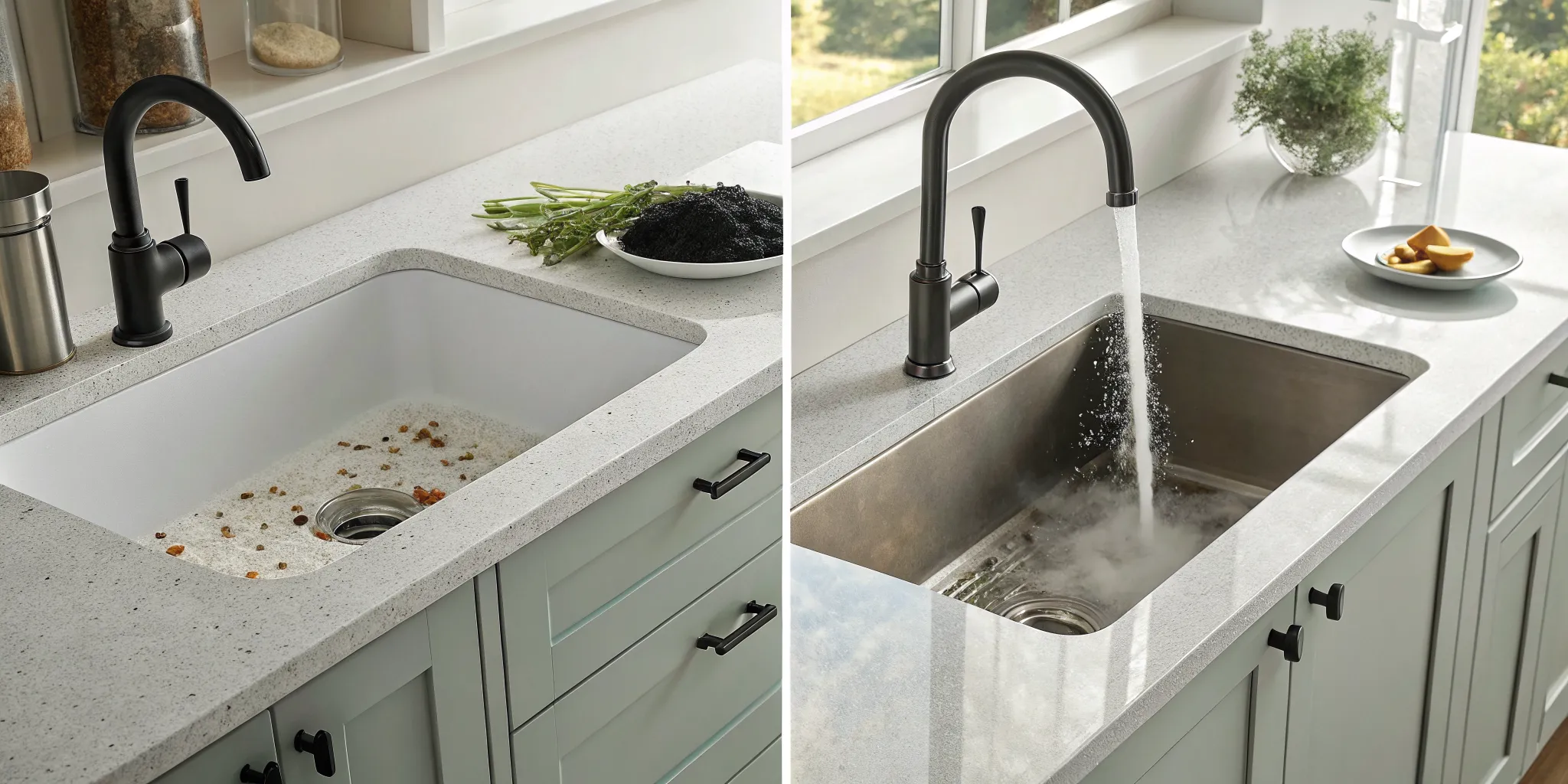
That low, angry hum from under your sink. The slow drain that turns washing dishes into a waiting game. The unpleasant odor that just won’t go away. These aren't just minor annoyances—they're clues. Your garbage disposal is trying to tell you something is wrong, and figuring out what it's saying is the first step to a real fix. We'll connect each of those strange signs to the most common garbage disposal problem behind it. This guide shows you the root cause and the right solution, so you can take action and restore peace to your kitchen sink.
Key Takeaways
- Know what not to grind: Keep your disposal running smoothly by avoiding grease, fibrous vegetables like celery, and hard items such as bones or fruit pits. Always run cold water during and after use to help flush everything through the pipes.
- Master the two most common quick fixes: If your disposal is silent, try pressing the small reset button on the bottom of the unit. If it just hums, turn off the power and use an Allen wrench to manually free the jammed blades from the socket underneath.
- Recognize when to call for backup: Some problems require a pro. Persistent leaks from the unit's body, electrical issues like a constantly tripping breaker, or a jam you can't clear yourself are all signs it's time for expert help.
Diagnosing Common Garbage Disposal Problems
A garbage disposal is a kitchen workhorse, but when it stops working, it can bring your whole routine to a halt. From strange noises to a complete refusal to turn on, most issues fall into a few common categories. The good news is that many of these problems have simple solutions you can try yourself. Let's walk through some of the most frequent garbage disposal troubles and what might be causing them.
It Simply Won't Turn On
When your disposal gives you the silent treatment, don't assume the worst just yet. First, check that it's securely plugged in. Next, locate the small reset button, which is usually red and found on the bottom of the unit under the sink. Press it firmly to see if that restores power. If it still won't turn on, check your home's main circuit breaker and flip the switch for the disposal off and on again. If none of these steps work, the motor or the switch itself might have failed, which is a sign it's time to call a professional.
It's Jammed and Won't Grind
If you flip the switch and hear a low humming sound but the blades aren't spinning, you likely have a jam. This happens when something is physically blocking the blades from moving. Before you do anything else, turn off the power at the switch and the circuit breaker. Safety first! Use a flashlight to look inside the disposal for any obvious culprits like a dropped utensil or a fruit pit. If you see something, use tongs or pliers, never your hands, to pull it out. If you don't see an obstruction, you can use an Allen wrench in the small socket on the bottom of the unit to manually crank the blades back and forth to free them.
It's Clogged or Draining Slowly
A slow-draining sink is a classic sign of a clog in your disposal or drainpipe. This is often caused by putting too much food down at once or grinding fibrous and starchy foods that create a paste. For a minor clog, try running the disposal with a strong stream of cold water for about a minute. If water is still backing up, you can try using a sink plunger to dislodge the blockage. For stubborn clogs that you can't clear on your own, it’s best to get professional plumbing services to avoid damaging your pipes.
It's Leaking Under the Sink
A puddle under your sink is never a welcome sight. To fix a leak, you first have to find its source. Check the top of the unit where it connects to the sink flange; a leak here may just require tightening the mounting bolts. Leaks from the side often come from the dishwasher or drainpipe connections, which might need a new gasket or a tighter clamp. However, if you see water dripping from the bottom of the disposal unit itself, it's usually a sign of an internal seal failure. Unfortunately, this type of leak can't be repaired and means the entire unit needs to be replaced.
It's Making Loud or Unusual Noises
Unusual noises are your disposal’s way of telling you something is wrong. A loud, metallic grinding or rattling sound usually means a non-food item like a piece of silverware, a bottle cap, or a bone fell in. Turn off the power immediately and use tongs to fish out the object. A humming noise, on the other hand, indicates the motor is working but the blades are jammed. This goes back to being stuck; you’ll need to turn off the power and manually free the blades with an Allen wrench from the bottom of the unit.
It Has a Persistent Bad Smell
Even when it’s working perfectly, a garbage disposal can sometimes develop unpleasant smells from leftover food particles. For a quick refresh, you can grind a few lemon or orange peels to release their fresh, citrusy oils. To give it a deeper clean, toss a handful of ice cubes and a little rock salt into the disposal and run it. The ice and salt will work together to scour away grime from the blades and chamber. For a final freshening, pour half a cup of baking soda down the drain, followed by a cup of vinegar, and let the fizzing action work its magic.
What Causes These Garbage Disposal Issues?
When your garbage disposal starts acting up, it’s usually a sign that something is wrong internally. From strange noises to a complete refusal to turn on, these issues often trace back to a few common culprits. Understanding what’s causing the problem is the first step toward getting your kitchen sink back in working order. Most of the time, the fix is simpler than you think. Let's walk through the four most frequent reasons your disposal might be giving you trouble.
Grinding the Wrong Types of Food
One of the most common reasons for a jam is sending the wrong things down the drain. Garbage disposals are tough, but they aren't invincible. Fibrous foods like celery, corn husks, and onion skins can wrap around the blades and stop them from spinning. Starchy items such as pasta, rice, and potato peels can expand with water and create a thick, paste-like clog. You should also avoid pouring fats, oils, and grease down the disposal, as they solidify in the pipes. Hard materials like bones, fruit pits, and large amounts of eggshells can also cause a jam or damage the blades.
Internal Electrical or Mechanical Failure
If your disposal is completely silent when you flip the switch, the issue is likely electrical. Before you panic, check the simple things. Make sure the unit is securely plugged into the outlet under the sink. Most disposals also have a small red or black reset button on the bottom of the unit; pressing it can often restore power after it trips. If that doesn't work, check your home’s main circuit breaker to see if the switch for the disposal has been tripped. Sometimes, the motor can overheat and shut down automatically. Letting it cool for a few minutes before hitting the reset button can solve the problem.
Sludge and Food Waste Buildup
Over time, small particles of food can stick to the inside of your disposal and pipes, leading to slow drains and unpleasant odors. If you notice a lingering, foul smell coming from your sink, it’s a clear sign of food waste buildup. This gunk can decompose and create a breeding ground for bacteria, which is what causes the bad smell. You might also notice water draining more slowly than usual, even if the disposal seems to be working. This happens when the buildup starts to narrow the drain pipe, restricting water flow. Grinding citrus peels can help freshen things up temporarily, but the underlying buildup needs to be addressed.
Worn-Out or Broken Parts
Like any appliance, a garbage disposal has a limited lifespan. If you’re dealing with persistent problems, it could be a sign of worn-out or damaged components. A leak coming directly from the body of the disposal unit itself often indicates a crack in the housing or a failed internal seal, which usually means it’s time for a replacement. Similarly, if the disposal repeatedly trips the reset button or your circuit breaker, it could point to a failing motor. For leaks around the top of the unit, the sink flange seal may have worn out. These issues often require professional plumbing services to diagnose and repair correctly.
The "Do Not Grind" List: What to Keep Out of Your Disposal
Your garbage disposal is a powerful kitchen appliance, but it’s not an invincible trash can. Knowing what to keep out of it is the single best way to prevent clogs, jams, and unpleasant odors. Treating your disposal with a little care can save you from the headache of a breakdown and the cost of a repair. To keep your unit running smoothly, think of it as having a specific diet. Here are the four food groups you should always keep off its menu.
Fibrous Vegetables and Starches
It can be tempting to wash all your veggie scraps down the drain, but some of them can cause serious trouble. Fibrous vegetables like celery, asparagus, corn husks, and artichokes have long, stringy fibers that your disposal’s blades can’t effectively chop up. Instead, these strings can wrap around the blades and jam the motor.
Similarly, starchy foods are a major problem. Things like pasta, rice, potatoes, and bread expand when they absorb water. If you send them down the drain, they can swell into a thick, glue-like paste that creates stubborn clogs in your pipes. It’s best to scrape these items into the trash or compost bin.
Grease, Oil, and Fat
This is a big one. Never, ever pour grease, cooking oil, or fat down your garbage disposal or any drain in your home. While these substances might be liquid when they’re hot, they solidify as they cool inside your pipes. Over time, this creates a sticky, greasy buildup that catches other food particles, leading to slow drains and nasty blockages deep within your plumbing system.
Instead of washing grease down the sink, pour it into an old coffee can or jar. Let it cool and solidify, then simply toss it in the trash. It’s a simple habit that can prevent some of the most difficult and expensive plumbing problems.
Bones, Pits, and Other Hard Items
While your garbage disposal is designed to grind up food, it has its limits. Tossing in items that are too hard can dull or damage the blades, overload the motor, and cause a serious jam. This includes things like chicken bones, ribs, and large fruit pits from peaches or avocados. Even smaller, seemingly harmless items can cause issues over time.
Coffee grounds and eggshells are two common culprits. They seem to grind up easily, but they can accumulate in your pipes and create a dense, sediment-like sludge that leads to clogs. It’s safer to add these to your compost pile or throw them in the garbage. If you do end up with a jam you can't clear, it's time to contact a professional.
Non-Food Items
This may sound obvious, but you’d be surprised what ends up in a garbage disposal. Any non-food item should be kept far away from your sink drain. Things like paper towels, plastic wrappers, twist ties, rubber bands, and cigarette butts don’t break down and can cause an instant jam or damage the motor.
Accidents happen, too. A spoon, fork, or even a small toy can easily fall in unnoticed. Always be mindful of what’s in your sink before you flip the switch. Taking a quick look can prevent a lot of damage. Regular maintenance, like the kind included in our membership plan, can also help catch any underlying issues before they become major problems.
How to Troubleshoot Your Garbage Disposal: A 5-Step Guide
A garbage disposal is a kitchen workhorse, but even the best ones can run into trouble. Before you assume the worst, know that many common disposal problems have simple solutions you can handle yourself. A humming motor, a slow drain, or a mysterious leak might just need a little attention, not a full replacement. Walking through these five troubleshooting steps can help you identify the issue and get your sink back in working order. Just remember to always prioritize safety: before you inspect the unit or try to clear a jam, turn off the power at the wall switch and the circuit breaker.
Step 1: Check the Power and Hit the Reset Button
If your garbage disposal is completely silent when you flip the switch, the fix could be surprisingly simple. Most disposals have a built-in overload protector that automatically shuts off the motor to prevent it from overheating. When this happens, you just need to give it a moment to cool down. Look for a small red or black button on the bottom of the disposal unit under your sink. Press this reset button firmly to restore power. If it still doesn’t turn on, the next step is to check your home’s main electrical panel and see if the circuit breaker connected to the disposal has tripped.
Test the Outlet and Check the GFCI
Okay, so the reset button didn't work and the breaker is fine. Don't worry, there's one more simple electrical check you can do. The outlet your disposal is plugged into might be a special safety outlet called a GFCI (Ground Fault Circuit Interrupter). You'll recognize it by the 'Test' and 'Reset' buttons on its face. These outlets are common near sinks and are designed to trip to prevent electrical shock. Press the 'Reset' button firmly to see if that restores power. If you're still not getting anything, try unplugging the disposal and plugging in something small, like a phone charger, to confirm the outlet is dead. If the outlet has no power and won't reset, it could be faulty. Electrical work can be tricky, so if you've reached this point, it's best to call a plumbing professional to safely diagnose the issue.
Step 2: Manually Unjam the Blades with an Allen Wrench
Hearing a humming sound but the blades aren’t spinning? That’s a classic sign of a jam. Something is likely wedged in the grinding chamber, preventing the blades from moving. After you’ve turned off all power to the unit, find the small, hex-shaped hole on the very bottom of the disposal. Your unit probably came with a special Allen wrench for this purpose. Insert the wrench into the hole and turn it back and forth. This motion manually moves the blades, which can help dislodge whatever is stuck inside. Once the blades move freely, you can remove the wrench, restore power, and try running it again.
Step 3: Clear Clogs Using Tongs or a Drain Snake
Sometimes the problem is a clog you can see. If water is draining slowly or not at all, turn off the power and grab a flashlight. Look down into the disposal from the sink opening to see if you can spot the culprit. Often, it’s a stray bottle cap, a piece of silverware, or a large food scrap. Never use your hands to clear a disposal. Instead, use a pair of tongs or pliers to safely pull out the object. If you can’t see anything, the clog might be further down the line. For these deeper blockages, our team offers expert plumbing services to clear your drains quickly and safely.
How to Clear the P-Trap
If the clog isn't in the disposal, the next suspect is the P-trap—that U-shaped pipe under your sink. Its main job is to hold water to block sewer gases, but it’s also notorious for catching hair, grease, and other gunk. For a minor clog, you can try a simple home remedy by pouring a mix of boiling water, baking soda, and vinegar down the drain to dissolve the buildup. If that doesn’t do the trick, you’ll need to clear it manually. Place a bucket underneath to catch water, then use channel-lock pliers to loosen the two large nuts holding the pipe. Carefully remove the trap, empty its contents into the bucket, and use an old brush to scrub out any remaining grime. If you’re not comfortable with this step or the clog is still there, it’s a sign of a deeper issue, and it's best to give us a call.
Step 4: Find and Tighten the Source of a Leak
A puddle under your sink is never a welcome sight. If you suspect your garbage disposal is leaking, the first thing to do is find where the water is coming from. The most common leak points are the sink flange at the top, the dishwasher hose connection on the side, or the discharge drainpipe at the bottom. To pinpoint the source, dry the entire unit with a towel, then plug the sink and fill it with a little water. Let it drain and watch closely for drips. If the leak is coming from a connection point, you may be able to stop it by simply tightening the bolts or clamps in that area.
Fixing Leaks from the Top of the Unit
If you see water dripping from where the garbage disposal meets the bottom of your sink, the culprit is almost always the sink flange. This is the metal ring that sits in your sink drain, connecting the disposal unit to the sink itself. Over time, the plumber's putty or rubber gasket that creates a seal between the flange and the sink can wear out, crack, or become compressed, allowing water to seep through. This is a very common source of leaks, especially in older units. While it might sound complicated, addressing this issue often just involves tightening the mounting assembly that holds everything in place, which can re-compress the seal and stop the drip.
Tightening Loose Mounting Bolts
The constant vibration from grinding food can cause the mounting bolts that hold your disposal tight against the sink to loosen over time. If you've identified a leak coming from the top of the unit, this is your next move. Look for the mounting ring, which is part of the assembly just below the sink flange. You'll see several screws or bolts. Using a screwdriver, tighten each one a little at a time, moving in a star pattern to ensure even pressure. Be careful not to overtighten, as this could crack the flange. If the leak persists after tightening, the flange likely needs to be removed and resealed with new putty. If that feels beyond your comfort zone, our expert team can handle it with our professional plumbing services.
Step 5: Deep Clean to Get Rid of Bad Smells
Lingering odors are a common complaint, but they’re easy to fix. Foul smells are usually caused by tiny food particles that have built up inside the grinding chamber. To give your disposal a deep clean, start by grinding a handful of ice cubes with some coarse salt. This combination acts as a natural scrub, scouring the blades and chamber walls. Next, grind a few small citrus peels from a lemon or orange to freshen things up. For a final touch, pour about half a cup of baking soda down the drain, followed by a cup of white vinegar. Let the mixture fizz for about 15 minutes, then flush everything with hot water.
How to Keep Your Garbage Disposal Running Smoothly
A little bit of regular care can keep your garbage disposal running smoothly for years and help you avoid most common problems. Think of it less as a chore and more as a simple routine to protect your investment and keep your kitchen sink functional. These easy maintenance habits only take a few minutes but can save you from the headache of clogs, jams, and unpleasant odors.
Always Run Cold Water When Grinding
This might be the easiest and most important habit to adopt. Always run a steady stream of cold water into the sink before you even turn the disposal on. Keep it running the entire time you're grinding food, and for about 30 seconds after you turn the disposal off. Why cold water? It helps solidify any grease or fats, allowing the blades to chop them up and wash them away. Hot water, on the other hand, can melt grease, causing it to coat your pipes and lead to stubborn clogs down the line. It’s a simple switch that makes a huge difference for your home's plumbing system.
Cut Food Scraps into Small Pieces
It’s tempting to shove large scraps down the drain and let the disposal do all the work, but it’s not an industrial-strength woodchipper. Overloading the unit or feeding it large chunks of food can strain the motor and cause jams. A good rule of thumb is to cut larger items into smaller, more manageable pieces before putting them in the disposal. Feed the scraps in gradually instead of all at once. This gives the blades enough time and space to work effectively, ensuring everything gets ground up properly and washed away without putting unnecessary stress on your appliance.
Clean It Regularly with Ice, Salt, and Citrus
Here’s a quick and satisfying way to clean your disposal. Once or twice a month, toss a handful of ice cubes and a little coarse salt down the drain and run the disposal. The ice and salt work together to scour the inside of the grinding chamber and knock food residue off the blades. For a fresh scent, follow up by grinding a few small pieces of lemon or orange peels. The citrus oils naturally combat odors and leave your sink smelling clean and fresh. It’s a simple, non-toxic cleaning method that keeps your unit in top shape.
How Ice Cubes and Rock Salt Sharpen Blades
You’ve probably heard the popular kitchen tip: toss ice cubes down your disposal to sharpen the blades. The truth is, your garbage disposal doesn’t actually have sharp, knife-like blades. Instead, it uses blunt metal impellers that spin at high speed, forcing food waste against a stationary grind ring. So, while the ice isn't sharpening anything, it’s doing something much more useful. The hard ice and coarse rock salt act as a powerful scouring agent, chipping away the greasy, sticky gunk that builds up on the impellers and inside the grinding chamber. This deep clean helps the grinding components work more efficiently. If your disposal still seems sluggish after a good cleaning, it could point to a deeper problem that needs professional plumbing services.
Freshen the Drain with Baking Soda and Vinegar
If you notice a lingering funk that citrus peels can't quite fix, it might be coming from deeper in the drain. For a deeper clean, try the classic combination of baking soda and vinegar. Pour about half a cup of baking soda into the disposal, followed by half a cup of white vinegar. Let the mixture fizz and bubble for about 15 minutes. This reaction helps break down stubborn food particles and neutralize odors. Once the fizzing stops, flush everything out by running hot water down the drain for at least a minute.
Important Warnings for Disposal Care
Never Use Harsh Chemical Drain Cleaners
When your sink is clogged, reaching for a bottle of chemical drain cleaner feels like an easy fix. However, these products can cause far more harm than good. Harsh chemicals are corrosive enough to melt the plastic components inside your garbage disposal and can severely damage your pipes over time. Instead of solving the problem, you could be creating a much more expensive one. These chemicals don't just disappear; they sit in your pipes, eating away at the material. A safer approach is to use the manual methods we've discussed, like an Allen wrench or pliers. If you're facing a clog that won't budge, it's always best to call for professional plumbing help instead of risking your plumbing system.
Avoid Using Hot Water for Fats and Grease
It seems logical to use hot water to wash away greasy food scraps, but this is one of the biggest mistakes you can make with your disposal. While hot water melts grease and oil, it doesn't make them disappear. Instead, the liquefied grease travels down your drain, only to cool and solidify further down the line. This creates a sticky, stubborn coating inside your pipes that traps other food particles, leading to major blockages. The correct method is to always use cold water. Cold water keeps fats and grease in a solid state, allowing the disposal blades to chop them into tiny pieces that can be flushed away without coating your pipes. It’s a simple habit that protects your entire plumbing system from greasy buildup.
Schedule Annual Professional Maintenance
Just like your car needs a tune-up, your home’s plumbing system benefits from a professional check-up. Scheduling annual maintenance can prevent small issues from turning into major emergencies. A professional plumber can spot wear and tear, identify potential clogs, and ensure your disposal's motor and blades are in good working order. Our membership program includes yearly inspections that can save you from costly repairs and give you peace of mind, knowing your entire plumbing system is well-cared for.
When Should You Call a Professional Plumber?
While many garbage disposal issues have a simple DIY fix, some problems are best left to the experts. Knowing when to put down the Allen wrench and pick up the phone can save you time, prevent bigger messes, and keep you safe. If you’ve tried the basic troubleshooting steps and the problem persists, it’s a clear sign you need a professional eye. Issues involving persistent leaks, tricky electrical problems, or a completely failed motor often point to a deeper problem that a quick fix won’t solve.
Ignoring these signs can lead to water damage under your sink, serious electrical hazards, or the need for a more expensive repair down the line. A professional plumber has the right tools and experience to diagnose the root cause of the issue quickly and safely. If your garbage disposal is giving you a headache you can’t seem to solve, it’s always better to call for expert plumbing help than to risk making the problem worse. We’ll walk through a few specific scenarios where calling a pro is your best bet.
A Persistent Leak You Can't Fix
A puddle of water under your sink is never a good sign. While some minor leaks can be fixed by tightening a connection, a persistent drip from the garbage disposal unit itself is a major red flag. If you notice water coming from the body of the disposal, it often indicates a crack in the internal housing or a failed seal. According to plumbing experts, leaks from the main body of the unit are a sign that it’s time for a full replacement. Trying to patch a cracked unit is usually a temporary fix at best. A professional can determine the exact source of the leak and let you know if a repair is possible or if a new unit is the most cost-effective solution.
The Risks of Water Damage and Mold Growth
That slow, constant drip might not seem like a big deal at first, but it's creating the perfect environment for serious problems. The dark, enclosed space under your sink is already prone to moisture, and a persistent leak supercharges the risk of water damage to your cabinets and flooring. Before you know it, that damp wood becomes a breeding ground for mold and mildew, which can release spores into your home's air. This isn't just about a musty smell; it can affect your family's health. Addressing a leak promptly is crucial to protect both your property and your indoor air quality. Don't let a small drip turn into a major headache.
The Reset Button or Breaker Keeps Tripping
The reset button is a safety feature designed to shut the motor off when it overheats or gets jammed. If you have to press it frequently, or if the corresponding circuit breaker keeps tripping, it’s a sign of an underlying electrical problem. This could mean the motor is failing and drawing too much power, or there might be a wiring issue. Continuously resetting it won’t solve the root cause and could be a safety risk. Instead of getting into a cycle of resetting the power, it’s time to have a professional diagnose the electrical system and the disposal motor to find out what’s really going on.
The Motor Hums but the Blades Don't Spin
That low humming sound is the sound of a motor that wants to work but can’t. It means the unit is getting power, but the blades are stuck. Often, you can fix this by using the small wrench that came with your disposal to manually free the blades from the bottom of the unit. However, if you’ve tried that and the blades still won’t turn, the motor may be seized or burned out. Trying to force it can cause more damage. At this point, it’s best to stop and call a plumber. They can determine if the jam is simply too tough to clear or if the motor has failed and needs to be replaced.
You Suspect an Electrical Problem
If you flip the switch and get complete silence, the problem is likely electrical. The first thing to do is check your home’s main electrical panel to make sure the circuit breaker hasn’t tripped. If the breaker is on but the disposal is still dead, the issue could be with the switch, the wiring, or the unit itself. Electrical work can be dangerous if you don’t have the right training and tools. For your safety, it’s always best to have a qualified professional inspect the system. They can safely test the components and find the source of the failure without putting you or your home at risk.
You Smell Something Burning
A burning smell coming from any appliance is alarming, and your garbage disposal is no exception. If you catch a whiff of something burning when you run the unit, it’s a serious warning that the motor is overheating. This usually happens when the disposal is jammed, forcing the motor to work much harder than it’s designed to. Even if the motor is still running while the blades are stuck, this intense strain can quickly lead to a burned-out motor. The most important thing to do is to turn off the power at the wall switch and the circuit breaker immediately. Don't try to fix it yourself; a burning smell indicates a problem that needs an expert eye. It's time to call a professional to safely assess the situation.
You Have Damaged or Improperly Installed Plumbing
Sometimes, the problem isn't a clog or a jam, but the unit itself. If you notice water dripping from the main body of the disposal, it’s a sign of a serious internal failure, like a cracked housing or a broken seal. Trying to patch a crack is a temporary fix at best; a leak from the unit's body almost always means it's time for a full replacement. Another sign of trouble is a recurring electrical issue. If you find yourself constantly resetting the disposal or flipping the circuit breaker, it points to an underlying problem. This could be a failing motor drawing too much power or faulty wiring. Both of these situations require professional plumbing services to ensure the job is done safely and correctly.
It Might Be Time for a Replacement
Sometimes, it makes more sense to replace your garbage disposal than to keep repairing it. If your unit is old, has a major leak from its body, or requires frequent fixes, a replacement is often the smarter long-term investment. A failing motor or recurring clogs are also strong indicators that your disposal is on its last legs. A professional plumber can help you choose a new model that fits your sink and your needs, then handle the entire installation process. This ensures all the plumbing and electrical connections are done correctly, giving you peace of mind and a reliable new appliance.
Understanding the Average Lifespan
Like any hard-working appliance, your garbage disposal won’t last forever. With proper care, most disposals have a lifespan of about 8 to 15 years. Where your unit falls in that range really depends on how you use it. If you’re careful about what you put down the drain, run cold water every time, and give it a regular cleaning, you can expect it to last well over a decade. However, if it’s constantly battling tough scraps or things from the "do not grind" list, its lifespan will likely be on the shorter end. Knowing this average helps you decide whether a persistent issue is worth a simple repair or if it’s a sign that your disposal is nearing retirement.
Signs Your Unit Has Reached Its End of Life
So, how do you know if it’s a simple fix or the final straw? There are a few tell-tale signs that your unit is beyond repair. A major one is a leak coming directly from the bottom or body of the disposal itself; this usually means an internal seal has failed or the housing is cracked, and a replacement is the only real solution. Another clear indicator is frequent electrical issues. If you constantly have to press the reset button or the circuit breaker trips when you run it, the motor is likely failing and drawing too much power. Finally, if your unit is getting on in years and you’re dealing with recurring clogs or a motor that just doesn't seem to have the power it once did, it’s often more cost-effective to invest in a new one than to continue with temporary fixes.
The Bigger Picture: Waste Disposal and the Environment
We’ve spent a lot of time talking about what happens inside your kitchen sink, but it’s worth taking a step back to look at the bigger picture. What we choose to send down the drain or throw in the trash doesn’t just disappear. It becomes part of a much larger waste stream that has a real impact on our local environment, from the soil under our feet to the air we breathe. Being mindful of our waste is more than just preventing a clog; it’s about being a good neighbor to our community and protecting the natural beauty of the Corpus Christi area for the long haul.
How Improper Waste Disposal Affects Water and Air Quality
When waste isn't handled correctly, it can have serious consequences for our essential resources. Improperly disposed items, especially hazardous materials, can contaminate the soil as chemicals and heavy metals seep into the ground. This pollution can eventually make its way into our groundwater, which is a primary source of drinking water for many communities. For a coastal area like ours, this also means runoff can carry toxins into our bays, harming marine ecosystems. The problem isn't just on the ground, either. Decomposing waste releases harmful gases, including methane, into the atmosphere. These emissions can compromise air quality and contribute to broader environmental issues. While we can't control all outdoor pollutants, it highlights the importance of maintaining clean indoor air quality to create a healthy sanctuary inside our homes.
Expert Garbage Disposal Repair in Corpus Christi
While it’s empowering to fix things around the house, some jobs are best left to the pros. When it comes to your garbage disposal, knowing when to put down the Allen wrench and pick up the phone can save you time, money, and a major headache. If you’ve tried the DIY fixes and the problem keeps coming back, it’s a clear sign that a deeper issue is at play.
You should call for professional help if you notice persistent problems. These include clogs that return no matter how often you clear them, a leak that won’t stop (especially if it’s coming from the bottom of the unit), or a disposal that refuses to turn on even after you’ve tried all the troubleshooting steps. A humming motor that doesn’t grind is another red flag that points to a more complex mechanical or electrical failure. Don’t risk further damage to your plumbing or a potential electrical shock; it’s always safer to call an expert.
Here in Corpus Christi, you don’t have to tackle tricky plumbing problems alone. The team at Tommy Cool Air is ready to handle all your plumbing service needs, from diagnosing a stubborn garbage disposal to installing a brand-new replacement. Our licensed plumbers have the right tools and expertise to find the source of the problem and fix it safely and efficiently. If your garbage disposal is giving you grief, contact us today for fast, reliable help.
Related Articles
Frequently Asked Questions
My garbage disposal is suddenly much louder than it used to be. Is that a problem? A sudden increase in noise usually means something is wrong. If you hear a metallic, rattling sound, you likely have a piece of silverware or another hard object bouncing around inside. Turn off the power and use tongs to fish it out. If the noise is more of a grinding or whirring sound, the blades or other internal parts might be worn out. While some disposals are naturally louder than others, a new, concerning noise is your cue to investigate or call a professional.
How often should I be cleaning my garbage disposal? For basic freshening, grinding a few citrus peels once a week can keep smells at bay. For a more thorough cleaning, using the ice cube and salt method is a good idea about once a month. This helps scour away any stubborn food buildup from the grinding chamber. If you use your disposal heavily, you might want to do this every couple of weeks to keep it running well and smelling fresh.
Is it better to repair my old disposal or just buy a new one? This really depends on the age of your unit and the type of problem. If your disposal is relatively new and has a minor issue like a simple jam or a leaky connection, a repair is often the most sensible choice. However, if the unit is more than eight years old, has a leak coming from the main body, or needs a motor replacement, you will likely save money in the long run by investing in a new one.
What if pressing the reset button doesn't fix the problem? The reset button is your first line of defense when the motor overheats or jams, but it isn't a cure-all. If you press the button and the disposal still won't turn on, check your main circuit breaker next. If the breaker is fine and the unit is still dead, the problem could be with the switch, the wiring, or the motor itself. At that point, it's best to call a professional to safely diagnose the electrical issue.
So, what kinds of food scraps are actually safe to put down the disposal? Your disposal can handle most soft or cooked food scraps when you run plenty of cold water. Things like leftover vegetables (the non-fibrous kind), soft fruits, and small amounts of plate scrapings are generally fine. The key is to cut larger items into smaller pieces and feed them into the disposal gradually instead of all at once. This prevents the motor from being overloaded and ensures everything gets ground up properly.