Last Updated: October 26, 2026
Quick Summary
A HEPA filter vs standard air filter comes down to particle capture: standard filters trap larger dust and debris to protect your HVAC system, while HEPA filters capture 99.97% of particles as small as 0.3 microns, including fine dust, pollen, and mold spores for better air quality. However, true HEPA filters require compatible equipment or a dedicated system, as most residential HVAC units can't handle the airflow resistance without modifications.
- Standard filters (MERV 8-11) need changing every 30 to 90 days and protect equipment primarily, not lungs.
- True HEPA filters capture 99.97% at 0.3 microns, but HEPA-type or HEPA-grade filters are usually MERV 13-16 and not true HEPA.
- Most residential HVAC systems designed for MERV 8 filters can't safely handle true HEPA without risking reduced airflow, longer run times, and blower strain.
- A 4- or 5-inch media cabinet running MERV 13 offers a practical middle ground for homes that can't support true HEPA.
- Portable HEPA air purifiers clean single rooms effectively, while whole-home upgrades require system compatibility checks first.
Table of Contents
- The Real Difference Between HEPA Filter and Standard Air Filter
- HEPA vs. MERV Filter: Understanding Ratings and Performance
- HEPA Filter for Home HVAC System: Can Your System Handle It?
- HEPA Air Purifier vs. HVAC Filter: Which Works Better for Your Home
- How Often to Change Home Air Filters: Maintenance That Matters
- Particle Capture and Indoor Air Quality: What Each Filter Actually Removes
- Choosing the Right Filter for Your Home and HVAC System
- Frequently Asked Questions
The Real Difference Between HEPA Filter and Standard Air Filter
Most homeowners don't think about air filters until they can't breathe.
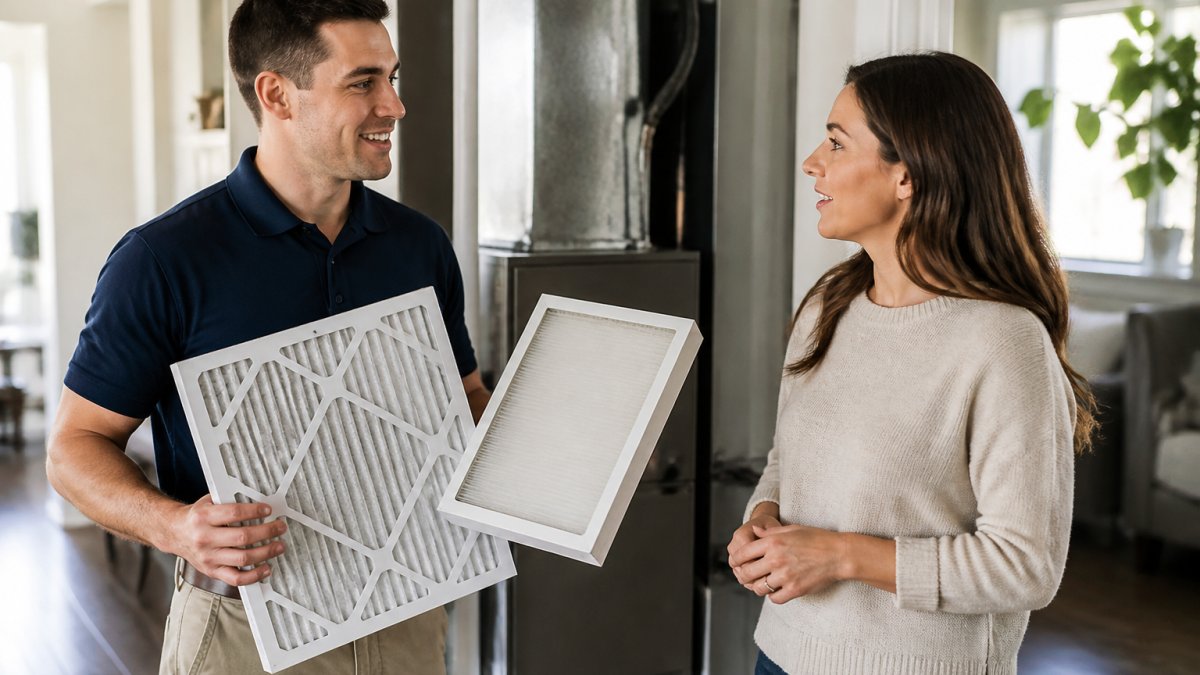
The basic difference is straightforward. A standard air filter, the kind that comes with most residential HVAC systems, traps larger particles like dust, lint, and pet hair. It's designed primarily to protect your HVAC equipment, not necessarily your lungs.
Think of it this way: a standard filter is a fence that stops the big stuff. A HEPA filter is a net that catches the tiny stuff too.
The real kicker? Not all HVAC systems can handle a true HEPA filter without some modifications. That's where things get interesting, and it's exactly what we'll break down for you here.
HEPA vs. MERV Filter: Understanding Ratings and Performance
Most filter articles wave their hands and say "MERV is complicated." Not us. Let's read the labels together.
MERV stands for Minimum Efficiency Reporting Value, a 1-to-16 scale set by ASHRAE that tells you how well a filter captures particles in three size bands: 3 to 10 microns, 1 to 3 microns, and 0.3 to 1 micron. Higher MERV means more capture in the smaller bands.
Here's the practical cheat sheet for what's actually printed on the box at the hardware store:
- 1-4: Typical Capture: Less than 20% of 3-10 micron particles; What It's Good For: Larger dust, lint, pollen clumps; Common Use: Cheap fiberglass filters; equipment protection only
- 5-8: Typical Capture: 20-50% of 3-10 micron; some 1-3 micron; What It's Good For: Dust, pollen, pet dander, mold spores; Common Use: Standard residential pleated filters
- 9-12: Typical Capture: 50-85% of 1-3 micron; some 0.3-1 micron; What It's Good For: Fine dust, smoke particles, bacteria; Common Use: Upgraded residential; good allergy baseline
- 13-16: Typical Capture: 85%+ of 1-3 micron; 75%+ of 0.3-1 micron; What It's Good For: Very fine particles, some viruses; Common Use: Near-HEPA; check your blower first
A true HEPA filter doesn't get a MERV number at all. It's tested to a different standard, 99.97% capture at 0.3 microns, the "most penetrating particle size," meaning the hardest size to catch (the EPA). Hit 99.97% there and you're doing even better on larger and smaller particles.
Now, the marketing trap. A filter labeled "HEPA-type," "HEPA-grade," or "HEPA-style" is not a true HEPA filter. It usually lands somewhere around MERV 13 to MERV 16, genuinely good, but not the 99.97% standard.
Pro Tip
Quick reality check: a human hair is roughly 70 to 100 microns wide. A grain of pollen is about 10 to 100 microns. Mold spores run 3 to 12 microns. Bacteria are around 0.5 to 5 microns. A 0.3 micron particle, the HEPA benchmark, is smaller than all of them. That's why the rating matters for allergy sufferers and not just for equipment protection.
The bottom line: MERV tells you how a filter performs across a range of sizes. HEPA tells you it hit a specific, very high bar at the hardest size to catch. Neither number, on its own, tells you whether the filter belongs in your air handler, which is the next conversation.
HEPA Filter for Home HVAC System: Can Your System Handle It?
Think of your blower like a straw. A wide-open straw drinks easy. Pinch it and you work harder for the same sip.
Here's what that looks like in real terms when a system isn't designed for it:
- Reduced airflow. Rooms farthest from the air handler get less conditioned air. You feel it as a warm bedroom in summer or a cool one in winter.
- Longer run times. The system runs longer to hit the thermostat setpoint, which means more energy use and more wear on the compressor.
- Coil freeze-up risk. Low airflow across the indoor coil can drop it below freezing, ice it up, and leave you with a no-cool situation on the hottest day of the year.
- Blower motor strain. ECM and PSC motors both work harder against higher static pressure. Over time, that's a service call waiting to happen.
- Noise. A starved blower is a loud blower. You'll hear it before you see the energy bill.
So how do you check? Three places:
- The data plate on your air handler or furnace. Most list a maximum external static pressure, commonly around 0.5 inches of water column (in. w.c.) for standard residential equipment, though some higher-end units allow more. That's your ceiling.
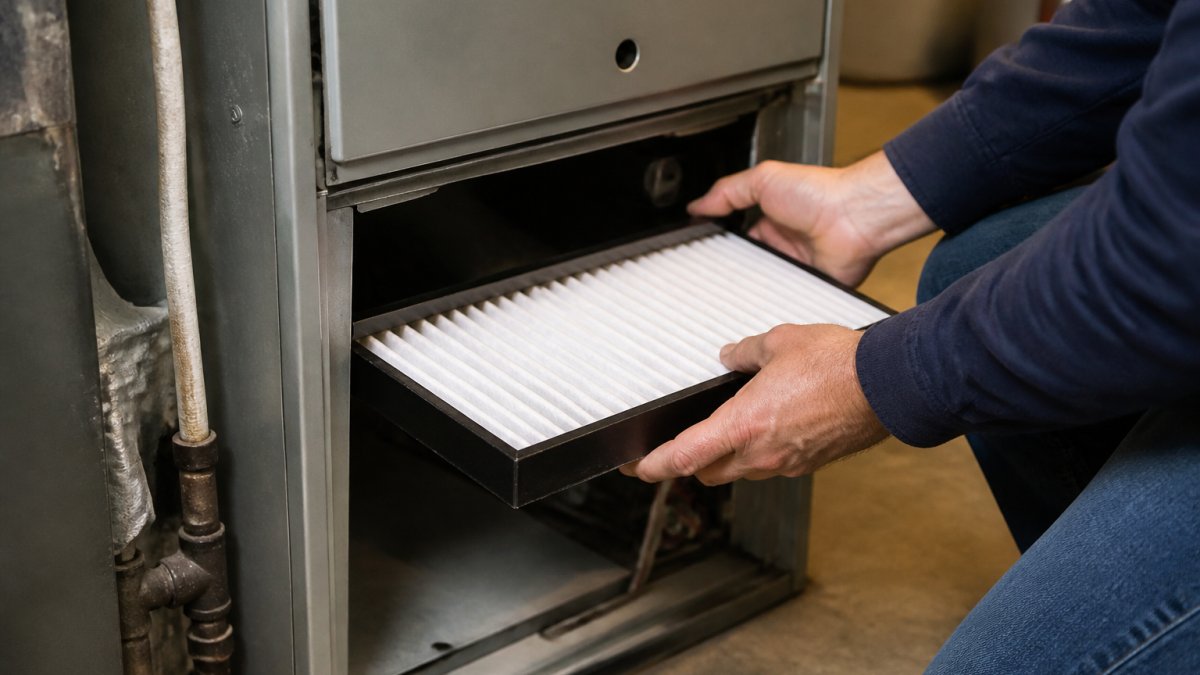
- The filter grille or slot size. A 1-inch slot is not built for a deep HEPA cartridge. A 4- or 5-inch media cabinet can often handle MERV 13 comfortably; true HEPA usually needs a dedicated cabinet or bypass system.
- The manufacturer's spec sheet. It will list the MERV range the equipment is rated for. If it says MERV 11 max, don't argue with it.
Watch Out
If your system was sized for a 1-inch MERV 8 filter and you slide in a 1-inch "HEPA-grade" MERV 16, you didn't upgrade your air quality, you just choked your blower. The filter may say HEPA on the box, but the equipment didn't get the memo.
The workaround for homes that genuinely need HEPA-level filtration: a dedicated whole-home air purifier or bypass HEPA system that pulls air through HEPA media on its own blower, separate from the main airstream. You get true HEPA performance without asking your furnace to do something it wasn't built for. Products like air purifiers for HVAC systems sit alongside your equipment instead of fighting it.
A middle path many homes can handle: a 4- or 5-inch media cabinet running MERV 13.
Before any filter upgrade, have your system evaluated. Our AC Inspections & Diagnostics service can measure static pressure, check your blower's rated capacity, and tell you what your equipment can handle, no guesswork, no filter-box marketing claims.
HEPA Air Purifier vs. HVAC Filter: Which Works Better for Your Home
Here's a question that comes up often: should you add a portable HEPA air purifier or upgrade your whole-home filter?
It depends. A portable HEPA air purifier works great for a single room, it pulls air through a true HEPA filter and returns clean air to that space.
But here's the trade-off: it only cleans the air in that room. Your bedroom might be fresh as a mountain breeze while your living room collects dust.
A whole-home approach, upgrading your HVAC filter or installing a dedicated system, cleans air throughout the house as your system runs.
For most homes, a combination wins. Use a standard or HEPA-type filter in your HVAC for baseline whole-home filtration, then add a portable HEPA purifier in bedrooms or high-traffic areas.
How Often to Change Home Air Filters: Maintenance That Matters
Filter replacement schedules vary wildly depending on the filter type.
A standard MERV 8 or 11 filter typically needs changing every 30 to 90 days, depending on how much dust and debris your home generates.
HEPA-type filters (MERV 13+) often last longer, sometimes 6 to 12 months, because their density allows them to hold more particles before becoming clogged.
The real indicator is visual. If it looks dark and clogged, change it, calendar be darned.
- Standard (MERV 8-11): Typical Lifespan: 30-90 days; Check Frequency: Monthly; Best For: Basic dust and debris
- HEPA-type (MERV 13+): Typical Lifespan: 6-12 months; Check Frequency: Every 3 months; Best For: Allergies and finer particles
- True HEPA: Typical Lifespan: Varies by system; Check Frequency: Per manufacturer; Best For: Whole-home or portable units
EPA guidance on indoor air quality and filter maintenance recommends checking your filter monthly and replacing it when it visibly needs it.
One more thing: regular filter changes are part of keeping your system healthy. That's why Air Conditioning Maintenance & Tune-Ups include filter inspections and replacements.
Particle Capture and Indoor Air Quality: What Each Filter Actually Removes
Let's talk specifics about what each filter actually traps, this is where the rubber meets the road for your health.
A standard air filter catches the obvious stuff: dust, lint, larger pollen particles, and pet hair. These are particles bigger than about 3 microns.
HEPA-type and true HEPA filters go deeper. They capture fine dust, smaller pollen particles, mold spores, dust mite droppings, and some bacteria.
The practical impact: if you have allergies or asthma, upgrading from a standard filter to a HEPA-type filter often makes a noticeable difference.
That said, no filter is a magic bullet. But combined with regular indoor air quality maintenance, a good filter system is a legitimate part of creating a healthier home environment.
Mechanical filtration is one tool among several. Ventilation, humidity control, and regular cleaning all play roles too.
Choosing the Right Filter for Your Home and HVAC System
So how do you pick? Here's our straightforward approach.
First, check your system's specifications. Look at your furnace or air handler manual to see what MERV rating it's designed for. Most standard residential systems handle MERV 11 comfortably.
Second, consider your needs. Are you dealing with allergies? Pets? Do you live in a dusty area? If air quality is a real concern, aim for at least MERV 13.
Third, think about your budget and maintenance willingness. Higher-rated filters cost more and might need replacing more frequently if they fill up faster.
Finally, don't overlook the whole-home air purifier option.
When in doubt, talk to someone who knows your specific system. We can walk you through what makes sense for your home, your health needs, and your equipment.
Ready to evaluate your home's air quality and find the best filtration approach for your system? Our certified contractors can assess your HVAC system, talk through your air quality concerns, and recommend solutions that actually work for your situation. Get in touch with us today, and let's make sure you're breathing easy.
Frequently Asked Questions
What is the difference between a HEPA filter and a standard air filter?
A HEPA filter captures 99.97% of airborne particles as small as 0.3 microns, including fine dust, pollen, mold spores, and pet dander. Standard residential HVAC filters typically capture larger particles and rate between MERV 1-8, meaning they trap maybe 20-35% of particles. HEPA uses dense glass fibers and mechanical filtration to stop what standard filters let through. For people with allergies or asthma, that difference is huge.
Can you put a HEPA filter in a standard home HVAC system?
Not always. True HEPA filters are so dense they create high static pressure, which can strain older HVAC units and reduce airflow. Some systems can handle a HEPA-type filter (which mimics HEPA performance with slightly lower density), but you need a professional to check your system first. That's where we come in, our certified contractors can assess your unit and recommend whether a HEPA upgrade is safe or if a portable air purifier is the smarter choice for your home.
How often should you replace a HEPA filter in your home?
HEPA filters typically last 6-12 months, depending on how much dust and pet dander your home generates. Standard filters usually need changing every 1-3 months. Because HEPA filters trap so much more, they clog faster if your home is dusty, so check them monthly. Replacing them on schedule keeps your system running smoothly and maintains that 99.97% filtration efficiency.
Are HEPA filters better than standard filters for allergies?
Yes, for allergy sufferers, HEPA filters are noticeably better. They capture dust mites, pollen, mold spores, and pet dander at a level standard filters simply can't match. If someone in your home has asthma or seasonal allergies, upgrading to HEPA (if your system allows) or adding a portable HEPA air purifier can make a real difference in how you feel. We've seen customers report fewer allergy symptoms after improving their home's filtration.
Be Cool Today
 Add tommycool.com as a preferred source on Google →