Table of Contents
- 10 Signs Your HVAC System Needs Replacement
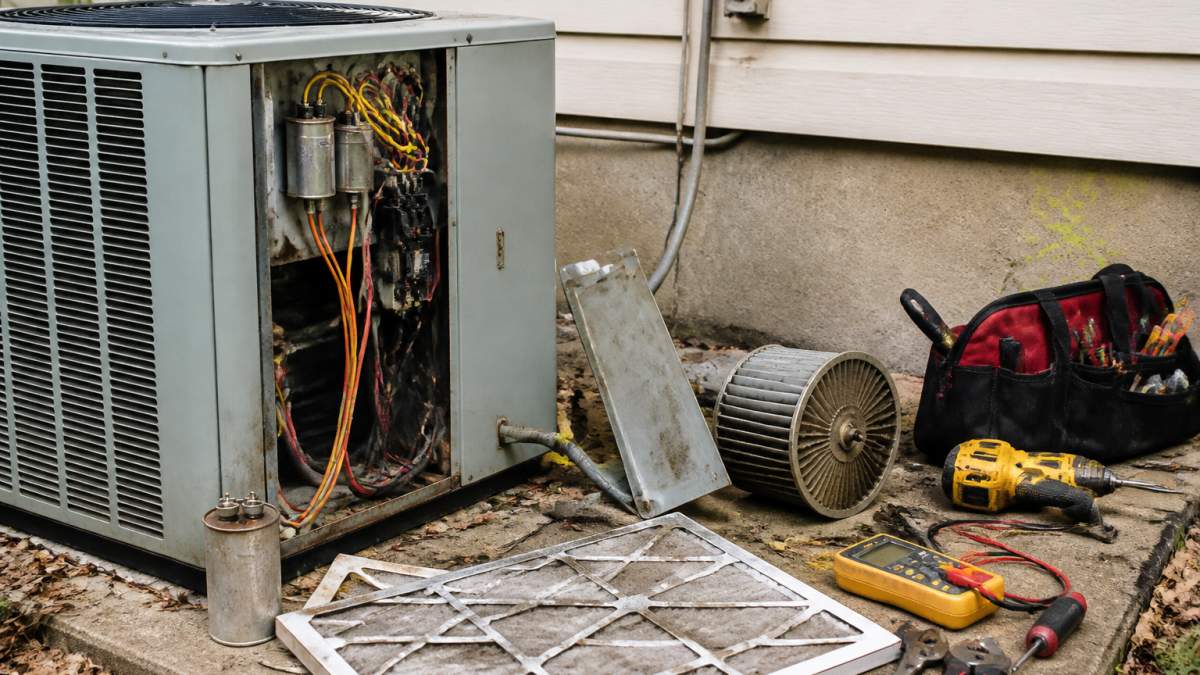
- 1. Frequent or Increasingly Costly Repairs
- 2. Rising Energy Bills and Reduced Efficiency
- 3. Uneven Temperatures and Inconsistent Heating and Cooling
- 4. Unusual Noises: Grinding, Squealing, Banging, or Rattling
- 5. Repeated Breakdowns and Unreliable Operation
- 6. Declining Heating or Cooling Performance
- 7. System Age and Expected Equipment Lifespan
- 8. Indoor Air Quality and Humidity Changes
- 9. Safety Symptoms and Urgent Response
- 10. Repair Costs Approaching Replacement Value
- The Average Lifespan of an HVAC System
- Repair or Replace HVAC System: A Decision Framework
- Signs of a Failing Air Conditioner vs. Normal Wear
- What the Cost to Replace an AC Unit Actually Covers
- What a Replacement Assessment and Installation Involve
- Frequently Asked Questions
Last Updated: October 5, 2026
10 Signs Your HVAC System Needs Replacement
Knowing the 10 signs your HVAC system needs replacement can save you from a mid-summer breakdown and thousands in emergency costs.
Most homeowners wait too long. They patch a failing unit year after year, then pay for it twice: once in repairs, and again in a rushed replacement when the system dies in August.
1. Frequent or Increasingly Costly Repairs
A system that needs a repair every few months is telling you something. When repair bills stack up faster than they used to, the unit is wearing out.
The math matters here. According to the U.S. Department of Energy's guidance on heating and cooling, aging equipment loses efficiency over time, so each repair buys you less comfort than the last.
2. Rising Energy Bills and Reduced Efficiency
Energy bills that climb while your usage stays the same point to a failing system. An aging unit has to run longer to hit the same thermostat setting, and that extra runtime shows up on your utility statement.
Watch for this pattern: your habits haven't changed, but your bill has. That gap is the cost of a system working harder than it should.
3. Uneven Temperatures and Inconsistent Heating and Cooling
Some rooms hot, others cold? Uneven room temperatures often mean the system can't push air evenly anymore. Weak airflow, a tired blower, or duct problems all show up this way.
If you're constantly adjusting vents or closing doors to balance things out, the system is losing its grip on your home's comfort.
4. Unusual Noises: Grinding, Squealing, Banging, or Rattling
Strange noises are one of the clearest warning signs. Grinding, squealing, screeching, banging, and rattling each point to a different problem, and none of them are normal.
- Grinding often means a failing motor or bearing
- Squealing can signal a worn belt or blower issue
- Banging may point to loose or broken internal parts
Any new noise deserves a professional inspection before it turns into a breakdown.
5. Repeated Breakdowns and Unreliable Operation
When your system quits and restarts on its own schedule, reliability is gone. Repeated breakdowns mean you can't trust the unit to keep your home comfortable when you need it most.
That unpredictability is the real cost. You're not just fixing a machine; you're managing anxiety about the next failure.
6. Declining Heating or Cooling Performance
A system that no longer keeps up on the hottest or coldest days is losing capacity. It runs nonstop and still falls short of the thermostat setting.
Declining cooling performance in summer and weak heating performance in winter usually mean the equipment is near the end of its useful life.
7. System Age and Expected Equipment Lifespan
Age alone doesn't doom a system, but it changes the conversation. Most air conditioners and furnaces last roughly 15 to 20 years with good maintenance. Heat pumps often land in a similar range.
If your unit is past that mark and showing other signs on this list, repair money starts to feel like a bad bet. You can check the ENERGY STAR guidance on heating and cooling equipment for how newer, efficient models compare.
- Frequent repairs: What It Often Means: Worn components; Typical Fix: Replace if 2+ per year
- Rising energy bills: What It Often Means: Lost efficiency; Typical Fix: Inspect, then weigh replacement
- Uneven temperatures: What It Often Means: Weak airflow; Typical Fix: Check ducts and blower
- Strange noises: What It Often Means: Failing motor or parts; Typical Fix: Professional inspection
- Repeated breakdowns: What It Often Means: Unreliable operation; Typical Fix: Plan replacement
- Age past 15-20 years: What It Often Means: End of lifespan; Typical Fix: Get a replacement assessment
8. Indoor Air Quality and Humidity Changes
More dust, stale air, or sticky humidity indoors often traces back to the HVAC system. A failing unit struggles to manage moisture and filter air the way it should.
For people with allergies or asthma, this matters a lot. Poor airflow and rising humidity can make a home feel worse, not just warmer.
9. Safety Symptoms and Urgent Response
Some warning signs are safety issues, not comfort issues. For gas furnaces, watch for a yellow burner flame instead of blue, soot, or a smell of gas. These need immediate attention.
If you smell gas, leave the home and call for help right away. Do not wait to see if it passes.
Watch Out
Never ignore a gas smell, soot around a furnace, or a yellow burner flame. These can signal a carbon monoxide risk, and the consequence of waiting is serious. Shut the system down and call a professional immediately.
10. Repair Costs Approaching Replacement Value
There's a tipping point where a repair costs nearly as much as a new system. When one fix eats a large share of replacement value, the repair rarely pays off.
A common mistake is spending big on a single repair for an old unit, then facing another failure months later. At that point, the money is gone and you still need new equipment.
Pro Tip
Ask for a repair-versus-replacement comparison before approving any major fix. A good contractor will show you the numbers side by side, not just push a new unit.
The Average Lifespan of an HVAC System
The average lifespan of an HVAC system depends on the type of equipment and how well it's maintained. Air conditioners and furnaces commonly last 15 to 20 years, while heat pumps often fall in a similar range with regular service.
Maintenance stretches that window. Systems that get yearly tune-ups tend to reach the top of the range, while neglected units often fail early.
Repair or Replace HVAC System: A Decision Framework
Deciding to repair or replace an HVAC system comes down to how five factors interact: age, repair frequency, repair cost, efficiency loss, and expected remaining life. Most articles treat any single sign as decisive. That's the wrong way to decide. A 6-year-old system with one failed capacitor is a repair. A 17-year-old system with a failed compressor and rising summer bills is a replacement.
Here's a framework that weighs the factors together.
Step 1: Establish the system's age and expected remaining life
Use the lifespan ranges in the section above. If the unit is past 75% of its expected life, weight every other factor more heavily toward replacement. If it's in the first half of its life, weight toward repair.
Step 2: Count repairs in the last 24 months
- Zero or one repair: Repair is usually the right call if the system is under 10 years old.
- Two repairs in 12 months, or three in 24 months: The system is telling you it's worn out. Start pricing replacement.
- Two repairs in 12 months on a unit over 12 years old: Replacement usually wins on total cost.
Step 3: Compare repair cost to replacement cost
The rule of thumb most contractors use: if a single repair costs more than one-third of what a new system would cost, and the unit is past the midpoint of its lifespan, replace it.
A second rule that catches more cases: if the repair cost multiplied by the expected remaining years of the unit exceeds the cost of a new system, replace.
Step 4: Factor in efficiency loss
An older system may still run, but at a higher cost per hour of operation. Federal minimum efficiency standards have risen over time, so a system built 15 or more years ago is almost certainly less efficient than anything sold today. If your summer and winter bills have climbed while your habits haven't changed, that gap is the efficiency tax you're paying to keep the old unit alive.
Step 5: Check for safety and refrigerant issues
Two conditions override the math:
- Any safety symptom (gas odor, carbon monoxide alarm, soot, yellow burner flame, burning smell, or repeated breaker trips) means stop using the system and call a professional. Do not run the numbers first.
- Refrigerant type. Older systems use R-22, which is no longer produced in the U.S. and has become expensive and hard to source. If your system needs an R-22 recharge, the repair cost is high and the supply is only going to get tighter. That alone often tips the decision toward replacement.
Putting it together
- Under 10 years: Repairs in last 2 years: 0-1; Repair cost vs. new system: Under one-third; Lean: Repair
- Under 10 years: Repairs in last 2 years: 2+; Repair cost vs. new system: Under one-third; Lean: Repair, but investigate why
- 10-15 years: Repairs in last 2 years: 1; Repair cost vs. new system: Under one-third; Lean: Repair, start planning
- 10-15 years: Repairs in last 2 years: 2+; Repair cost vs. new system: Over one-third; Lean: Replace
- Over 15 years: Repairs in last 2 years: Any; Repair cost vs. new system: Over one-third; Lean: Replace
- Any age: Repairs in last 2 years: Any; Repair cost vs. new system: Any; Lean: Safety issue overrides, call a pro
This isn't a hard rule, but it keeps emotion out of the decision. When two or more columns point the same direction, that's your answer.
Signs of a Failing Air Conditioner vs. Normal Wear
Telling the signs of a failing air conditioner apart from normal wear saves you from replacing a healthy system. Normal wear looks like slightly higher bills or a unit that runs a bit longer on the hottest days. A failing system looks different.
Here's the difference:
- Normal wear: Small efficiency dips, minor seasonal adjustments
- Failing AC: Frequent repairs, strange noises, uneven cooling, repeated breakdowns
- Normal wear: Consistent performance year over year
When symptoms stack up instead of staying isolated, that's your signal.
What the Cost to Replace an AC Unit Actually Covers
The cost to replace an AC unit covers far more than the box on the truck. It includes the equipment itself, labor, and the parts that make the system work as a whole.
Most quotes include:
- The outdoor condenser unit and indoor components
- Labor for removal and installation
- Refrigerant lines and connections
Pricing depends on your home's size, the system you choose, and the condition of your ducts. We don't quote prices over the phone, because every home is different.
What a Replacement Assessment and Installation Involve
A replacement assessment starts with a full inspection of your current system and your home's needs. A technician checks the equipment, ductwork, insulation, and airflow to size the new system correctly.
Installation then follows a clear process:
- Remove the old equipment and dispose of it
- Prepare the site and check duct connections
- Install the new indoor and outdoor units
- Connect refrigerant lines and wiring
- Test airflow, cooling, and heating
- Walk you through the new thermostat and settings
Sizing matters more than most people realize. You can read more about proper HVAC sizing from the U.S. Department of Energy to understand why it counts.
Key Takeaway
The right replacement isn't just about a new unit. Correct sizing, clean ducts, and a proper install decide how well it performs and how long it lasts.
Frequently Asked Questions
What is the average lifespan of an HVAC system?
Most HVAC systems last 15 to 20 years, though that range shifts with equipment type and how well the system has been maintained. Air conditioners and furnaces typically run 15 to 20 years, while heat pumps often land closer to 15. In a hot, humid climate, a system that runs almost year-round can wear out faster than the same unit in a milder region. Once your equipment passes the 15-year mark and starts needing frequent repairs, plan for HVAC system replacement rather than waiting for a full breakdown.
Should I replace a 20-year-old HVAC system?
At 20 years, replacement usually makes more sense than another repair. The system is already past its expected equipment lifespan, parts become harder to source, and efficiency has dropped well below current standards. If you are facing a repair that costs a meaningful share of a new unit, or if you have had two or more breakdowns in a single year, put that money toward a new system. A professional inspection can confirm whether the compressor, blower, or heat exchanger is still worth keeping.
How much does it cost to replace an AC unit?
The cost to replace an AC unit depends on system size, efficiency rating, whether ductwork or the blower needs work, and the labor involved in the installation. Because those factors vary so much from home to home, there is no single figure that applies to everyone. The most accurate approach is a written quote based on an on-site assessment of your home. Ask for a breakdown that separates equipment, labor, and any duct or electrical work so you can compare quotes fairly.
Is it worth repairing an old HVAC system instead of replacing it?
It can be worth repairing if the system is under 10 years old, the repair is minor, and the unit has been reliable. The calculus changes when the equipment is past 15 years, the repair is expensive, or the same problem keeps returning. A simple rule: if the repair cost is more than a third of what a new system would run, and the unit is already near the end of its lifespan, replacement gives you better long-term value. A certified technician can walk you through the repair or replace HVAC system decision with real numbers.
A failing HVAC system rarely gives you a convenient warning. It quits on the hottest day, when you need it most, and leaves you scrambling for a fix. Tommy Cool has kept homes comfortable since 1994 with 24/7 emergency service, honest and transparent pricing, and a 100% satisfaction guarantee. Our certified contractors will inspect your system, explain your options in plain terms, and help you decide what's right for your home. Get in touch with Tommy Cool today and get your comfort back.