When an air conditioner stops responding to the thermostat, the thermostat may not be the only problem. A loose terminal, failed sensor, control-board issue, or equipment fault can create similar symptoms. Corpus Christi heat and humidity can make those symptoms more urgent.
Thermostat repair cost depends on what the diagnosis finds, including wiring, sensors, compatibility, parts, labor, and the age of the HVAC system. A straightforward repair may call for a different recommendation than a replacement or control upgrade. Tommy Cool Air provides quote-based guidance after checking the thermostat and connected equipment.
That evaluation matters because thermostats coordinate heating and cooling equipment, but not every control works with every system. A technician can test the connections, confirm how the system responds, and explain whether repair, replacement, or a compatible upgrade is the practical next step.
Request a thermostat diagnosis and service quote
What Does Thermostat Repair Cost Depend On?
Thermostat repair cost depends on what failed, how the system is wired, and whether the thermostat is the real source of the problem. Diagnosis, sensors, compatibility, parts, labor, system age, and location can all change the recommended repair. A reliable estimate starts with inspection, not a universal price.
Tommy Cool Air uses quote-based service pricing rather than publishing one fixed thermostat repair amount. That approach allows the recommendation to reflect your equipment and the work it actually needs.
Diagnosis comes before the repair recommendation
A thermostat symptom does not always mean the wall control itself is broken. The equipment may have a wiring issue, sensor problem, or another control fault. A technician may perform a full system inspection and check thermostat and sensor operation before recommending a repair.
That inspection can also separate a thermostat fault from another HVAC issue. For example, inconsistent temperatures or frequent cycling may involve equipment performance rather than the thermostat alone. See this guide to thermostat-related short cycling for more context.
Wiring, sensors, and compatibility affect the scope
Terminal wiring is central to thermostat diagnosis. A loose connection, damaged conductor, or incompatible control setup can change the repair plan. Sensors add another variable, especially when the displayed temperature does not match conditions in the room.
Compatibility matters when a thermostat connects to different equipment types or control features. System age can affect available replacement options, wiring condition, and whether the existing controls support a newer thermostat. Review smart thermostat installation options when replacement or an upgrade may be part of the decision.
Parts, labor, and location change the estimate
Parts and labor depend on the diagnosis, access, thermostat type, and complexity of the control system. A straightforward repair differs from work that requires rewiring, sensor correction, or compatibility adjustments.
Location can affect estimates through local service conditions, taxes, and fees. Corpus Christi homeowners may also need a broader system review when a thermostat symptom appears alongside cooling or heating problems. For a transparent recommendation, request professional HVAC service in Corpus Christi and ask what the diagnosis includes.
How Technicians Diagnose a Thermostat Problem
A thermostat can look like the problem while another HVAC component causes the symptom. Diagnosis separates a control failure from wiring, power, airflow, or equipment trouble.
That distinction matters when estimating thermostat repair cost. A responsible recommendation follows testing, not a universal price table.
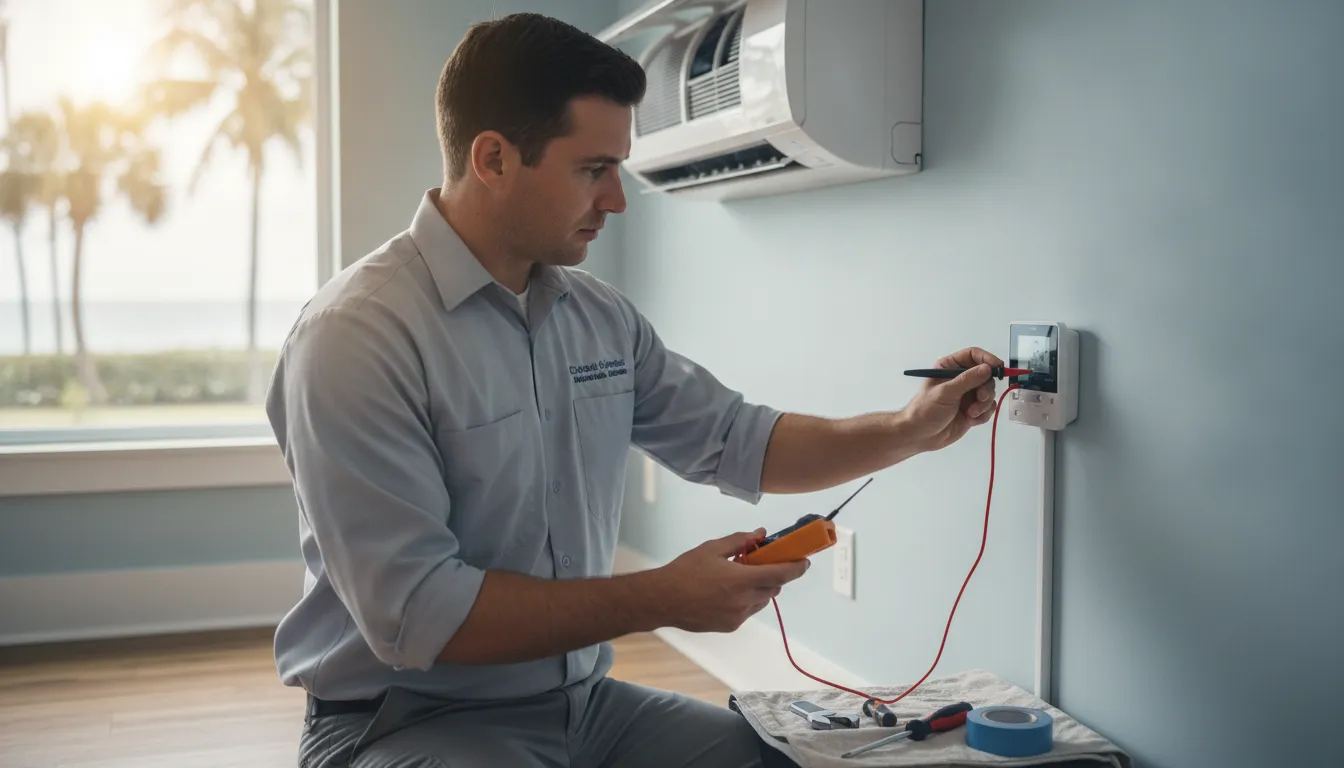
- Document the symptoms. The technician asks when the issue began and what the system does after a temperature change. Common clues include a blank display, uneven comfort, delayed starts, constant running, or frequent cycling. Thermostat malfunctions can affect air conditioners, furnaces, and heat pumps. Frequent cycling can also result from airflow, refrigerant, equipment-size, or thermostat problems.
- Check power and basic operation. The technician verifies that the thermostat receives power and responds to commands. They inspect batteries when applicable and look for visible damage, loose mounting, or an unresponsive display. HVAC service procedures include thermostat testing and electrical-connection inspections. A failed fuse, disconnect, control board, or low-voltage circuit can create similar symptoms.
- Inspect terminal wiring. Thermostat terminals connect control signals to the HVAC equipment. The technician checks wire placement, secure connections, corrosion, damaged insulation, and compatibility with the system. Terminal wiring is a core part of thermostat training and diagnosis. Heat pumps and dual-fuel systems require extra care because controls may coordinate multiple heating components.
- Test sensors and commands. Sensors help the control interpret room conditions. A technician checks sensor operation and compares the displayed temperature with the actual room conditions. They may test heating, cooling, fan, emergency heat, or auxiliary heat commands. Smart controls can also involve occupancy settings, schedules, remote access, and adaptive recovery.
- Observe the equipment response. The technician confirms whether the indoor and outdoor equipment responds correctly to each command. If the thermostat signals properly but the system does not start, the fault may involve relays, contactors, capacitors, airflow, refrigerant, or another component. A full inspection and stored trouble-code review can reveal related damage or overheating.
Advanced diagnosis may include airflow measurement, thermal imaging, duct testing, or digital documentation. These checks help prevent replacing a thermostat that is working correctly.
For symptoms involving the complete cooling system, review professional AC repair in Corpus Christi. If short cycling is the main clue, see our guide to thermostat-related short cycling.
Which Thermostat and HVAC Compatibility Checks Matter?
A thermostat is a control component, not a universal accessory. The right replacement depends on the equipment, terminal wiring, available power, control sequence, and the features you actually need.
Conventional controls may operate basic heating or cooling equipment. Programmable controls can adjust temperatures on a schedule, while smart controls may add occupancy response, adaptive recovery, remote access, and energy-use tracking. The U.S. Department of Energy explains these distinctions in its HVAC thermostat training guide.
| Control type | What a technician checks | Important compatibility question |
|---|---|---|
| Conventional | Heating, cooling, power, terminals, and equipment response | Does the control sequence match the system? |
| Programmable | Schedule functions, terminals, and heating or cooling stages | Can it control the equipment without changing the sequence? |
| Wi-Fi or smart | Power needs, wiring, network features, sensors, and setup | Are the system and home network suitable for the selected features? |
| Heat pump | Changeover operation, auxiliary heat, terminals, and equipment response | Can the control manage the heat-pump sequence correctly? |
| Dual-fuel | Heat-pump operation, secondary heat, and coordinated controls | Will the components operate in the intended order? |
Terminal wiring is part of the diagnosis
Technicians review terminal wiring rather than relying only on the thermostat's appearance. A loose connection, missing common wire, incorrect terminal, or damaged conductor can create symptoms that resemble a failed control.
Heat pumps require extra attention because the thermostat can coordinate heating, cooling, changeover, and auxiliary heat. Dual-fuel systems may also require coordinated operation between the heat pump and secondary heating equipment. That sequence matters more than choosing a control based on its app features.
Smart features still require system fit
Tommy Cool Air supports programmable and Wi-Fi-enabled thermostat installation and configuration. The company's service information names Google Nest, Amazon Alexa, and Apple HomeKit among supported smart-home platforms, subject to the selected equipment and setup.
Before choosing an upgrade, discuss whether you need scheduling, remote control, occupancy-based adjustments, or energy-use tracking. You can review smart thermostat installation options without assuming every model fits every HVAC system.
Sizing and system design can affect the recommendation
Thermostat compatibility is only one part of comfort performance. Professional load calculations and system sizing can support equipment and control recommendations. If rooms remain uncomfortable, a new thermostat may not resolve an airflow or capacity problem.
That is why a technician should evaluate the complete system before finalizing a thermostat repair or replacement recommendation. The result may involve wiring, sensors, equipment controls, or the thermostat itself.
Repair or Replacement: Which Choice Makes Sense?
A thermostat fault does not automatically mean the whole control should be replaced. The right choice depends on the diagnosis, wiring, sensors, compatibility, parts, labor, and system age.
That is why a reliable thermostat repair cost discussion starts with the system, not a universal number. A quote should explain what failed and why the recommendation fits your equipment.
Repair usually makes sense when the fault is isolated
Repair may be practical when the thermostat has a loose connection, damaged terminal wiring, or a component that can be corrected without changing the control strategy. A technician should also check sensor operation and the equipment response.
This distinction matters because a thermostat symptom can come from another HVAC problem. Airflow issues, frequent cycling, or equipment faults can look like control failure. Testing helps separate the thermostat from the system around it.
If your home has inconsistent cooling or repeated cycling, review these thermostat-related short cycling causes before choosing replacement.
Replacement may fit an aging or incompatible control
Replacement deserves consideration when the existing thermostat repeatedly fails, no longer communicates correctly, or cannot support the equipment configuration. Age alone does not decide the outcome, but it can affect parts availability and reliability.
Compatibility is especially important with heat pumps, staged equipment, and connected controls. Terminal wiring, system type, sensors, and required control functions should match before installation begins. Not every thermostat works with every HVAC system.
A replacement can also support an upgrade goal, such as scheduling, remote access, or more connected system control. Those benefits should follow an equipment and wiring review, not replace one. Load calculations and system sizing may also support broader energy-saving HVAC recommendations.
Tommy Cool Air has a separate page for smart thermostat installation options. That page covers installation and upgrades, while this decision focuses on diagnosing the existing problem and choosing responsibly.
When professional installation expertise matters
Professional help matters when wiring is unclear, symptoms return after a reset, or the thermostat controls a heat pump or more complex system. A technician can inspect connections, sensors, equipment response, and related faults before recommending a repair or replacement.
Ask for a written explanation of the fault, compatible options, labor, parts, and expected system benefits. This keeps the decision grounded in your equipment instead of a generic thermostat repair cost estimate.
Why Gulf Coast Conditions Can Complicate Thermostat Decisions
In Corpus Christi and nearby Gulf Coast communities, thermostat symptoms deserve a broader look than a quick control replacement. Tommy Cool Air serves coastal areas where humidity and salt air can affect HVAC equipment. Year-round cooling also means the system may operate through long stretches of demanding weather.
Those conditions do not prove that the thermostat caused a comfort problem. They explain why a technician should evaluate the thermostat alongside the equipment, wiring, sensors, and other controls. A display that goes blank, uneven temperatures, or an air conditioner that will not respond may involve more than one component.
Humidity can blur the diagnosis
High indoor humidity can make a home feel warm even when the thermostat shows the selected temperature. That symptom may point toward cooling performance, airflow, or control operation rather than the thermostat alone. A technician can compare the thermostat reading with system behavior before recommending repair or replacement.
Frequent cycling deserves the same caution. Thermostat malfunction is one possible cause, but airflow issues, refrigerant problems, and oversized equipment can also contribute. Reviewing thermostat-related short cycling can help homeowners understand why the symptom needs proper diagnosis.
Salt air and long cooling seasons add context
Coastal salt air can affect HVAC equipment over time, while extended cooling demand can expose weaknesses in controls or connected components. These factors may influence what a technician checks and whether a repair addresses the actual problem.
That context also matters when considering a smart or replacement thermostat. The right choice depends on system compatibility, control wiring, sensor operation, and the condition of related equipment. A quote should reflect those findings instead of using a universal thermostat repair cost.
How to Prepare for a Thermostat Service Quote
A useful service quote starts with useful information. Before the visit, gather details that help the technician separate a thermostat fault from a wiring, equipment, or control issue.
- Record the symptoms. Note when the problem began and what the system does. Include blank screens, incorrect temperatures, delayed starts, frequent cycling, or rooms that stay uncomfortable.
- Write down recent changes. Mention power interruptions, remodeling, moisture exposure, unusual noises, recent HVAC work, or a thermostat that was recently reset. These details can point toward wiring or control problems.
- Photograph the thermostat. Take a clear picture of the display, settings, and visible wiring. Do not remove wires or open equipment unless a qualified professional directs you.
- Collect system information. Record the equipment type, thermostat brand, approximate system age, and any model information you can safely access. Heat pumps and dual-fuel systems may require coordinated controls.
- List comfort and energy concerns. Explain whether the issue affects one room, the whole home, or your monthly energy use. Also note whether the system runs continuously or starts and stops repeatedly.
- Prepare your preferred outcome. Decide whether you want the existing control repaired, a compatible replacement, or information about smart features. Your goal helps frame practical options without assuming replacement is necessary.
A transparent quote should identify the diagnosed problem, recommended work, expected parts, labor, and any compatibility concerns. It should also explain whether sensors, terminal wiring, system age, or related HVAC faults affect the recommendation.
Individual service pricing is quote-based, so a universal thermostat repair cost would be misleading. The final recommendation should follow inspection and testing, not only the thermostat symptom.
If replacement becomes the better option, review smart thermostat installation options separately from repair decisions. If frequent starts are part of the complaint, review the guide to thermostat-related short cycling.
For a diagnosis that considers the thermostat and the HVAC system together, request a thermostat service quote from Tommy Cool Air.
Get a quote-based thermostat repair recommendation
Frequently Asked Questions
How is a thermostat problem diagnosed?
A technician tests the thermostat, checks electrical connections and terminal wiring, inspects sensor operation, and observes how the HVAC equipment responds. The inspection also helps separate a thermostat fault from airflow, equipment, or other control problems.
Can I replace my thermostat myself?
Some basic replacements appear simple, but compatibility and wiring vary by system. Heat pumps, dual-fuel equipment, multiple stages, and smart controls may require coordinated setup. Turning off power and confirming the system configuration helps prevent an incorrect installation.
How do I know whether to repair or replace a thermostat?
Repair may make sense when the fault involves a connection, sensor, or other limited issue. Replacement may be more practical when the thermostat is damaged, repeatedly unreliable, incompatible with the equipment, or no longer supports the control features you need.
Why does thermostat repair cost vary from one home to another?
The estimate can change with diagnosis time, wiring, sensors, compatible parts, labor, system age, and the equipment being controlled. Tommy Cool Air uses a quote-based approach rather than publishing one universal service price.
What should I have ready before requesting a thermostat quote?
Note the symptoms, when they began, the thermostat model if visible, recent HVAC work, and whether the system is a heat pump or dual-fuel setup. Photos of the thermostat and wiring can also help the technician prepare for the visit.
Ready to Plan Your Thermostat Diagnosis?
A clear diagnosis can help separate a thermostat issue from wiring, sensor, compatibility, or equipment concerns. Tommy Cool Air can review your situation and provide a quote-based recommendation for the next step. To request a quote or schedule a thermostat diagnosis, contact Tommy Cool Air through the contact page.