You expect a strong, cool breeze from your AC, but instead, you get a weak whisper of air. It's frustrating, and it's also a clear sign your system is struggling. When your AC is barely blowing air, it has to run longer and harder just to keep up, which drives your energy bills way up. Restoring that powerful airflow isn't just about comfort; it's about protecting your wallet from wasted energy. We'll walk through the common culprits so you can figure out what's wrong and get your system running efficiently again.
Key Takeaways
- Start with the simple solutions: Before you panic, check for the most common culprits of weak airflow. A dirty air filter, blocked vents, or incorrect thermostat settings are often the cause and are easy fixes you can do yourself.
- Recognize the warning signs: Pay attention when your AC shows signs of a bigger problem. Ice forming on the unit, strange grinding or squealing noises, and a sudden jump in your energy bills are clear signals that you need to investigate further.
- Leave hazardous repairs to the pros: For your safety and the health of your system, always call a certified technician for complex issues. Problems involving refrigerant leaks, electrical components, or the blower motor require professional tools and expertise to fix correctly.
Why Is My AC Barely Blowing Air?
When the Texas heat is in full swing, the last thing you want is a weak trickle of air from your vents. If you’re standing in front of a register wondering why your AC is barely blowing, you’re not alone. Weak airflow is a common issue, and it’s your air conditioner’s way of telling you something is wrong. The good news is that the cause is often a simple fix. However, it can also be a symptom of a more serious problem that needs professional attention.
Before you panic, let’s walk through the most common reasons your AC might be underperforming. From a simple filter swap to issues buried deep in your ductwork, identifying the culprit is the first step toward getting that strong, cool breeze back. Understanding these potential problems can help you decide if it’s a quick DIY fix or if it’s time to call for air conditioning services. We’ll cover the six most frequent causes, so you can get a better idea of what’s happening with your system.
Is the Airflow Loss Sudden or Gradual?
One of the first questions to ask yourself is how quickly the problem appeared. Did the airflow weaken over several weeks, or did it go from strong to weak overnight? A gradual loss of airflow often points to a maintenance issue that has been building over time. The most common cause is a dirty air filter that has become so clogged with dust and debris that it’s restricting air from passing through. It could also indicate a slow buildup of dirt on the evaporator coils or even a minor refrigerant leak. These are signs that your system is due for a check-up to maintain its cooling efficiency.
On the other hand, a sudden and significant drop in airflow is a red flag for a more serious problem. This usually means a key component has failed. For example, the motor that powers the blower fan might have burned out, or a belt could have snapped. Another common cause of a sudden stop in airflow is frozen evaporator coils, which can quickly form a block of ice that air can't get through. If you notice an abrupt change, it’s best to turn the system off to prevent further damage and call a professional for AC repair, as these issues require an expert diagnosis.
The Usual Suspect: A Dirty Air Filter
Think of your air filter as the lungs of your HVAC system. Its job is to trap dust, pollen, and other debris, but when it gets too full, it can’t “breathe.” A clogged air filter is the number one cause of weak airflow because it physically blocks air from entering the system. This forces your AC to work much harder to pull air through, reducing the amount that gets cooled and sent back into your home. Checking your air filter once a month and changing it regularly is the easiest and most effective way to maintain strong airflow and protect your entire system from unnecessary strain.
Are Your Evaporator Coils Frozen?
If you notice weak airflow and your home isn't cooling, you might have frozen evaporator coils. These coils are responsible for absorbing heat from the air, but when something goes wrong, they can get so cold that humidity freezes on their surface, forming a block of ice. This ice acts as a barrier, preventing air from passing through. What causes this? The most common reason is a dirty air filter restricting airflow, but it can also be caused by low refrigerant. If you see ice, turn your AC off to let it thaw and contact a professional to find and fix the underlying problem.
The Problem with a Dirty Evaporator Coil
Even if your evaporator coil isn't completely frozen, a layer of dirt can cause significant problems. Over time, dust, pet dander, and other airborne particles build up on the coil's surface, creating an insulating blanket. This grime prevents the coil from effectively absorbing heat from your home's air, which is its main job. As a result, your AC system has to run longer and work harder to cool your space, leading to reduced airflow and higher energy bills. This constant strain not only impacts your comfort but can also lead to more serious damage. If you suspect a dirty coil is the culprit, having a professional perform a thorough cleaning as part of a routine AC service is the best way to restore airflow and efficiency.
Is Your Blower Motor Giving Out?
The blower motor is the powerful fan that pushes conditioned air through your ductwork and out of your vents. If this motor is failing, you’ll feel the effects as weak or nonexistent airflow. Over time, blower motors can wear out, belts can loosen, or dirt can build up and slow the fan down. You might hear unusual noises like squealing or clanking if the motor is struggling. Since the blower motor contains complex electrical components, it’s not a DIY repair. A trained technician can diagnose whether the motor needs cleaning, repair, or a full replacement to restore your home’s comfort.
Check for a Dirty Blower Wheel
The blower wheel works hand-in-hand with the blower motor. It’s a cylindrical fan, often compared to a hamster wheel, that scoops up air and pushes it into your ductwork. Over time, this wheel can get caked in a thick layer of dust, grime, and even mold. As this debris builds up on the fan blades, it weighs them down and obstructs their path, making it impossible for the wheel to move air effectively. This buildup is a direct cause of restricted airflow, resulting in that weak, unsatisfying breeze you feel from your vents.
This problem goes beyond just weak airflow. A dirty blower wheel throws the entire system off balance, forcing the motor to work much harder and use more electricity. This added strain can shorten the motor's lifespan and lead to a costly breakdown. Because the blower wheel is tucked away deep inside your indoor air handler and can be easily damaged, cleaning it is not a simple DIY task. A professional technician has the specific tools and expertise to clean the wheel safely and thoroughly, restoring powerful airflow and efficiency to your air conditioning system.
How Blocked Ducts Restrict Airflow
Your ductwork is the highway that carries cool air from your AC unit to every room in your house. If that highway has a roadblock or a major pothole, the air won’t get where it needs to go. Ducts can become blocked by debris, or they can be crushed or kinked in your attic or crawlspace. More commonly, ducts develop leaks or holes, allowing precious cool air to escape before it ever reaches your vents. This not only weakens airflow but also wastes a significant amount of energy. A professional duct inspection can pinpoint these issues and ensure the air you’re paying to cool actually makes it into your living spaces.
Could Your Thermostat Be Confused?
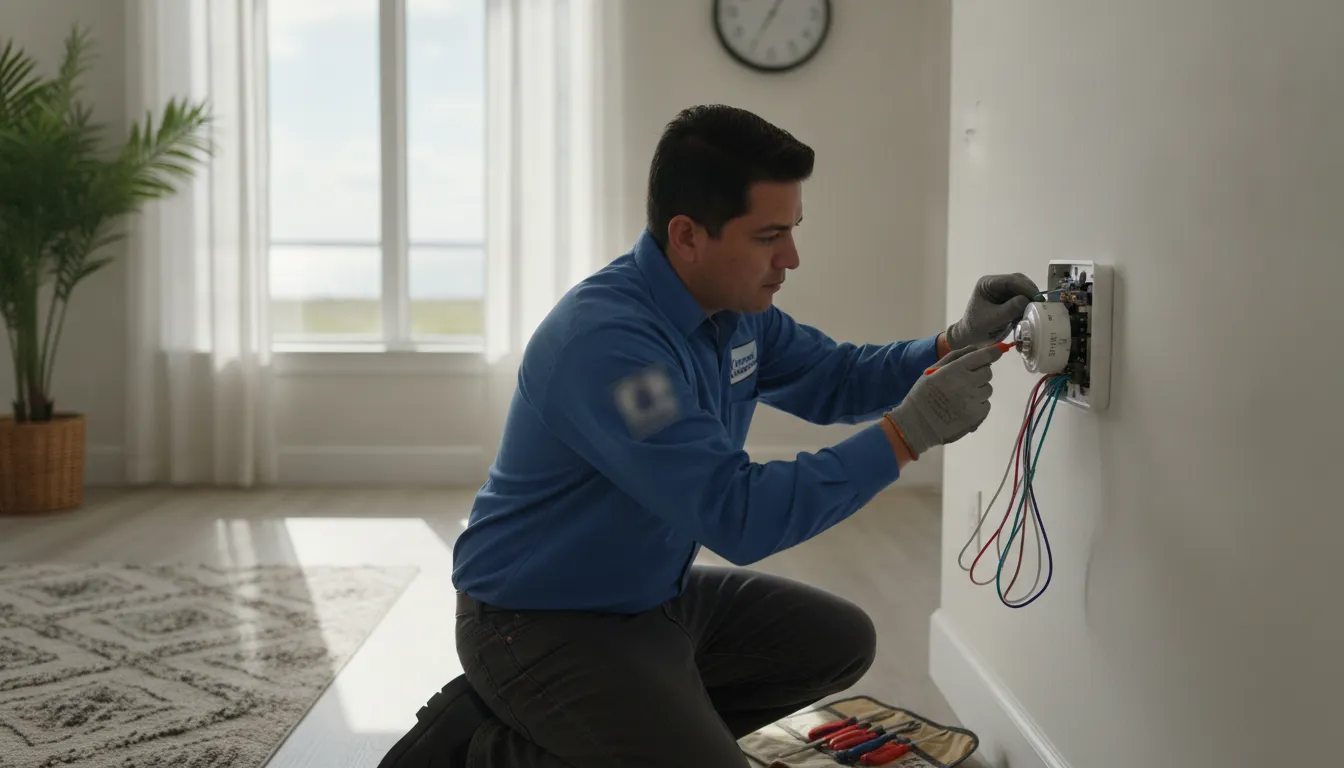
Sometimes the problem isn’t with your AC unit at all, but with its command center: the thermostat. A malfunctioning thermostat can send incorrect signals to your air conditioner, preventing it from running properly. The issue could be as simple as dead batteries or incorrect settings (for example, the fan is set to “ON” instead of “AUTO,” which can make airflow feel warmer). It could also be a wiring issue or a sign that the thermostat itself is failing. Check the batteries and settings first, but if your system continues to act up, the thermostat may need to be recalibrated or replaced by a professional.
Why Low Refrigerant Is a Big Deal
Refrigerant is the lifeblood of your air conditioner; it’s the substance that actively cools the air. If your system is low on refrigerant, it means there’s a leak somewhere. Low refrigerant levels prevent the system from cooling effectively and are a primary cause of frozen evaporator coils, which block airflow. It’s important to understand that refrigerant is not “used up” over time. If it’s low, you have a leak that needs to be found and repaired. Simply adding more refrigerant without fixing the leak is a temporary fix that doesn’t solve the problem. Handling refrigerant requires a licensed technician, so this is a job you should always leave to the pros.
Could It Be a Faulty Circuit Board?
The circuit board is essentially the brain of your entire HVAC system, telling all the different parts what to do and when. It controls everything from the compressor to the blower fan. If the circuit board malfunctions, it can fail to send the correct signals to the fan motor, causing it to run at a low speed or not at all. This results in the weak airflow you’re feeling at the vents. Because the circuit board is a complex electrical component, diagnosing and repairing it is not a DIY job. For your safety and to avoid causing further damage to your system, it’s always best to have a certified technician handle any potential electrical issues. A professional can safely test the board and determine if it needs to be repaired or replaced to get your air conditioning system running correctly again.
The Dirty Air Filter: Your AC's #1 Enemy
If your air conditioner is struggling to push out cool air, the first and most common culprit is a dirty air filter. Think of the filter as your AC’s lungs. When it gets clogged with dust, pollen, and pet dander, your system can’t breathe. It’s like trying to run a marathon while breathing through a straw. This restriction forces your entire system to work much harder to pull in air, which is why you feel that weak, sad little breeze coming from your vents.
Ignoring a dirty filter doesn't just make you uncomfortable; it puts a major strain on your AC's components, leading to higher energy bills and potentially expensive repairs. The good news is that checking and changing your air filter is one of the easiest and most effective pieces of home maintenance you can do. Before you assume the worst, start with this simple fix. It’s a crucial part of our standard air conditioning services for a reason.
How to Know You Need a New Filter
Your AC will give you a few clear hints when its filter is ready for retirement. The most obvious sign is weak airflow from your vents, but that’s not the only one. You might also notice an unusual amount of dust settling on your furniture shortly after cleaning. A dirty filter can’t trap particles effectively, so it just circulates them back into your home. Another sign is a musty or unpleasant odor coming from your vents, which can indicate mold or mildew growth on the filter. If you notice any of these issues, it’s a good idea to check your filter right away to improve your home's indoor air quality.
How a Clogged Filter Stresses Your System
A clogged filter creates a domino effect of problems inside your AC unit. First, it puts immense strain on the blower motor, which has to work overtime to pull air through the dense layer of grime. This can cause the motor to overheat and fail prematurely, leading to a costly repair. Second, the lack of proper airflow across the evaporator coils can cause them to get too cold and freeze over. Once that happens, you’ll have a block of ice preventing any air from passing through at all. Regularly changing your filter is a simple step that prevents these bigger headaches. It's a key part of the routine maintenance included in our membership program, designed to keep your system running smoothly.
A Simple Guide to Replacing Your Filter
Checking your air filter is a quick task you can do in just a few minutes. First, turn off your AC system at the thermostat for safety. Next, locate the filter compartment, which is typically a slot on your indoor unit where the main air duct connects. Slide the old filter out and hold it up to a light. If you can't see light passing through it, it’s definitely time for a replacement. When you slide the new one in, make sure the arrows on the filter's frame are pointing in the direction of the airflow (toward the AC unit). If you’re not sure where your filter is or feel uncomfortable doing it yourself, just contact us and we’ll be happy to help.
How to Pick the Right Filter for Your AC
When you buy a new filter, getting the right size is the most important thing. The dimensions are printed on the side of your current filter, so just jot them down before you head to the store. You’ll also see a MERV rating, which tells you how effective the filter is at trapping small particles. While a higher MERV rating means cleaner air, it can also restrict airflow more, so it’s best to stick with the manufacturer's recommendation. As a general rule, you should replace your filter every 90 days. If you have pets or live in a particularly dusty area, you’ll want to check it every 60 days. Using the right filter helps high-quality systems, like the Trane units we install, perform at their best.
Understanding Ductwork and Uneven Airflow
If you’ve checked your filter and your AC unit seems fine, it’s time to look at the delivery system: your ductwork. Think of your ducts as the highways that carry cool air throughout your home. If those highways are blocked, leaky, or poorly designed, the air simply can’t get where it needs to go. This is a very common, yet often overlooked, cause of weak airflow. You can have the most powerful, efficient air conditioner on the market, but if your ducts are compromised, you’ll be left with a stuffy house and high energy bills. The cool air you’re paying for might be escaping into your attic or crawlspace instead of cooling your living room.
Problems within your ductwork can range from simple obstructions to more complex issues like leaks or fundamental design flaws. Identifying the source of the problem is key to restoring balanced, powerful airflow to every room. Sometimes, the fix is straightforward, but other times it requires a professional eye to diagnose and repair correctly. A thorough inspection of your duct system can reveal exactly why certain rooms feel warmer than others and why your AC seems to be running constantly without much effect. Getting your ducts in order is a critical step in any comprehensive air conditioning service.
Why Air Doesn't Flow Evenly
Uneven airflow is the classic symptom of a ductwork problem. You’ll know you have it if one vent is blasting arctic air with the force of a jet engine while the vent in the next room barely whispers a cool breeze. This imbalance means the air isn't being distributed properly as it travels from your AC unit. Instead of a smooth, even delivery to all parts of your home, the air is taking the path of least resistance. This often leaves rooms farther away from the AC unit feeling warm and underserved. If you’re constantly adjusting the thermostat to cool down one specific hot spot, the issue likely isn’t the AC unit itself, but the ducts responsible for getting the air there.
Common Ductwork Problems
Several issues can disrupt the flow of air through your ducts. Over time, ducts can become disconnected, crushed by items stored in the attic, or develop kinks that create a bottleneck. Debris can also build up inside, creating a partial or full blockage that stops air in its tracks. However, the most frequent and costly problem is leaky ductwork. Small holes, gaps, and cracks can develop at the seams and joints, allowing a significant amount of your conditioned air to escape into unconditioned spaces like walls, attics, or crawlspaces. This forces your system to run longer to cool your home, wasting energy and money. You can find more tips for keeping your system running well on our blog.
Leaks Caused by Damage or Pests
Ductwork, especially the flexible kind often found in attics and crawlspaces, is surprisingly vulnerable. It can be easily damaged by being stepped on or having heavy objects stored on top of it. Pests are another common culprit; rodents and other critters can chew through duct lines to create nests, leaving behind large holes. These leaks are a major source of energy loss. When cool air escapes before reaching its destination, your AC has to work much harder to compensate, and your energy bills will reflect that wasted effort. A careful inspection is often needed to find these hidden leaks and seal them up for good.
Design Flaws in Older Homes
If you live in an older home, your ductwork might have been installed long before modern efficiency standards were a consideration. These systems were often not designed with balanced airflow in mind, resulting in long, convoluted duct runs and improper sizing that make it difficult for air to reach every room effectively. An outdated design can struggle to keep up with a modern, high-efficiency air conditioner, creating pressure imbalances and poor performance. If your home has always had issues with uneven cooling, the original layout of your ductwork could be the underlying cause, requiring a professional assessment to determine the best way to improve it.
Balancing Airflow in Your Home
If your ductwork is in good shape but you still have uneven temperatures, the system may simply be unbalanced. This means too much air is being sent to some rooms and not enough to others. Balancing involves adjusting the volume of air that flows to each vent to ensure every part of your home gets the conditioning it needs. While major balancing should be done by a professional, there are a couple of simple adjustments you can make yourself to see if it helps. The goal is to redirect the air from the over-served areas to the under-served ones, creating a more comfortable and consistent temperature throughout your house.
Using Dampers to Direct Air
Many duct systems are equipped with dampers, which are small metal plates inside the ducts that can be adjusted to control airflow. You can usually find them near the main unit where the individual ducts branch off, and they’ll have a small lever on the outside. If the lever is parallel to the duct, the damper is fully open; if it’s perpendicular, it’s closed. Check to make sure the dampers for your problem rooms are fully open. You can also try slightly closing the dampers for the rooms that get too much air. This will help redirect more of that airflow toward the rooms that need it most.
Why You Shouldn't Close Too Many Vents
It might seem logical to close the vents in rooms you don’t use to save energy, but this can actually harm your HVAC system. Your system is designed to handle a specific airflow volume, and closing vents increases the air pressure inside your ductwork. This added pressure puts a major strain on your AC’s blower motor, which can lead to overheating and premature failure. It can also worsen existing leaks in your ducts by forcing more air out of them. For optimal performance, it’s best to keep all your vents open. If you’re still struggling with airflow issues after checking for simple fixes, it’s time to contact a professional for help.
Signs of a More Serious AC Problem
Sometimes, weak airflow isn't just about a dirty filter. It can be your air conditioner’s way of telling you something more serious is going on. While simple fixes are great, ignoring these bigger warning signs can lead to expensive repairs or even a full system replacement down the road. If you’ve already tried the basic troubleshooting steps and your AC is still struggling, it’s time to play detective. Paying attention to these specific symptoms can help you understand when to stop DIY-ing and call in a professional. Catching these issues early protects your system, your comfort, and your wallet.
Why Is There Ice on Your AC Unit?
Finding ice on your AC unit might look cool, but it’s a definite sign of trouble. Ice typically forms on the evaporator coils when they get too cold, which can happen for a few reasons, like a refrigerant leak or a malfunctioning blower. When the coil freezes over, it physically blocks air from passing through, leading to that weak airflow you’re feeling from your vents. Don't try to chip the ice away yourself. The best first step is to turn off your AC to let it thaw. Then, give a professional a call to diagnose the root cause. Our air conditioning services can pinpoint why your unit is freezing up.
How a Bad Metering Device Causes Freezing
Another behind-the-scenes culprit for frozen coils is a faulty metering device. This small but critical component acts like a gatekeeper, controlling how much refrigerant flows into the evaporator coil. If the device malfunctions, it can let too much or too little refrigerant through, throwing the whole system out of balance. This disruption causes the coils to get excessively cold, and just like a glass of iced tea on a humid Corpus Christi day, moisture from the air condenses and freezes onto their surface. That ice buildup creates a solid barrier that blocks air, leaving you with weak airflow. Diagnosing and repairing a metering device requires specialized tools, so it’s a job best left to a professional who can restore your system’s proper function.
A Safe Way to Thaw Frozen Coils
If you spot ice on your AC unit, your first move is simple: turn the system off at the thermostat. This stops the cooling cycle and allows the ice to melt naturally. Trying to scrape or chip the ice off can easily damage the delicate fins on the coils, leading to a much more expensive repair. Letting it thaw on its own prevents further harm and minimizes the risk of water damage from melting ice. Once the ice is gone, remember that you’ve only treated the symptom, not the cause. It’s important to contact a technician to find out why the unit froze in the first place, whether it’s a dirty filter, low refrigerant, or another issue.
Decoding Your AC's Strange Noises
Your air conditioner should be relatively quiet. If you start hearing grinding, squealing, or banging sounds coming from your vents or the AC unit itself, listen up. These noises often point to a problem with the blower motor. The blower is the fan that pushes cool air through your ducts, and if it’s dirty, failing, or has a broken part, it can't do its job effectively. You’ll notice weaker airflow and hear the system struggling. These mechanical issues won't fix themselves and can cause more damage if ignored, so it's important to have a technician inspect the system.
Dealing with Hot and Cold Spots in Your Home
Do you feel a nice breeze in the living room but barely any air in the bedroom? This inconsistency is a classic symptom of ductwork problems. Over time, air ducts can develop leaks, cracks, or even become disconnected in your attic or crawlspace. When this happens, the cool air your AC produces escapes before it ever reaches the intended rooms. This results in some areas feeling comfortable while others remain warm and stuffy. Leaky ducts not only reduce airflow but also waste a significant amount of energy, forcing your system to work much harder than it should.
Is Your AC Driving Up Your Energy Bill?
If your AC seems to be running all the time but the airflow is still weak, take a look at your latest utility bill. A sudden, unexplained spike in your energy costs is a major red flag. This often means your AC system is struggling with a serious inefficiency, like a refrigerant leak or leaky ducts. Your system runs constantly (a process called short cycling) trying to reach the temperature on your thermostat, but it can't keep up. This constant operation without results wastes a tremendous amount of electricity and puts excessive strain on your AC’s components.
5 Quick Fixes You Can Try Yourself
Before you pick up the phone to schedule a service call, there are a few simple troubleshooting steps you can take. Sometimes, weak airflow is caused by a minor issue that you can easily resolve in just a few minutes. Working through these quick checks can save you time and money, and at the very least, it will help you give our technicians more specific information if you do need to call us.
These fixes don’t require any special tools or technical knowledge, just a little bit of investigation. From checking for simple blockages to resetting a breaker, these are the first things any HVAC pro would ask you about. So, let’s walk through them together. Taking a few moments to check these common culprits can often get your cool air flowing freely again.
1. Clear Your Vents and Registers
One of the most common reasons for weak airflow is also the easiest to fix: something is blocking your vents. Your HVAC system is a loop; it pulls air in through return vents and pushes cooled air out through supply vents. If either is blocked, it chokes the system. Take a walk through your home and make sure nothing (like furniture, rugs, or even a sneaky pet bed) is covering your return air vents. Also, check that all your supply registers are open and unobstructed. It’s a simple step, but it can make a world of difference in your home’s comfort.
The Importance of Unblocked Return Vents
It’s easy to focus on the vents blowing cool air out, but the return vents—those larger grilles that suck air in—are just as important. Think of them as your AC system’s lungs; they need to inhale freely to be able to exhale that refreshing, cool air. When a couch, bookshelf, or even a pile of laundry blocks a return vent, you’re essentially suffocating your system. It has to work much harder to pull in enough air to cool, which wastes energy and puts a huge strain on the blower motor. Keeping these pathways clear is one of the simplest fixes you can make to ensure your entire system runs efficiently.
2. Clean Your Outdoor Unit
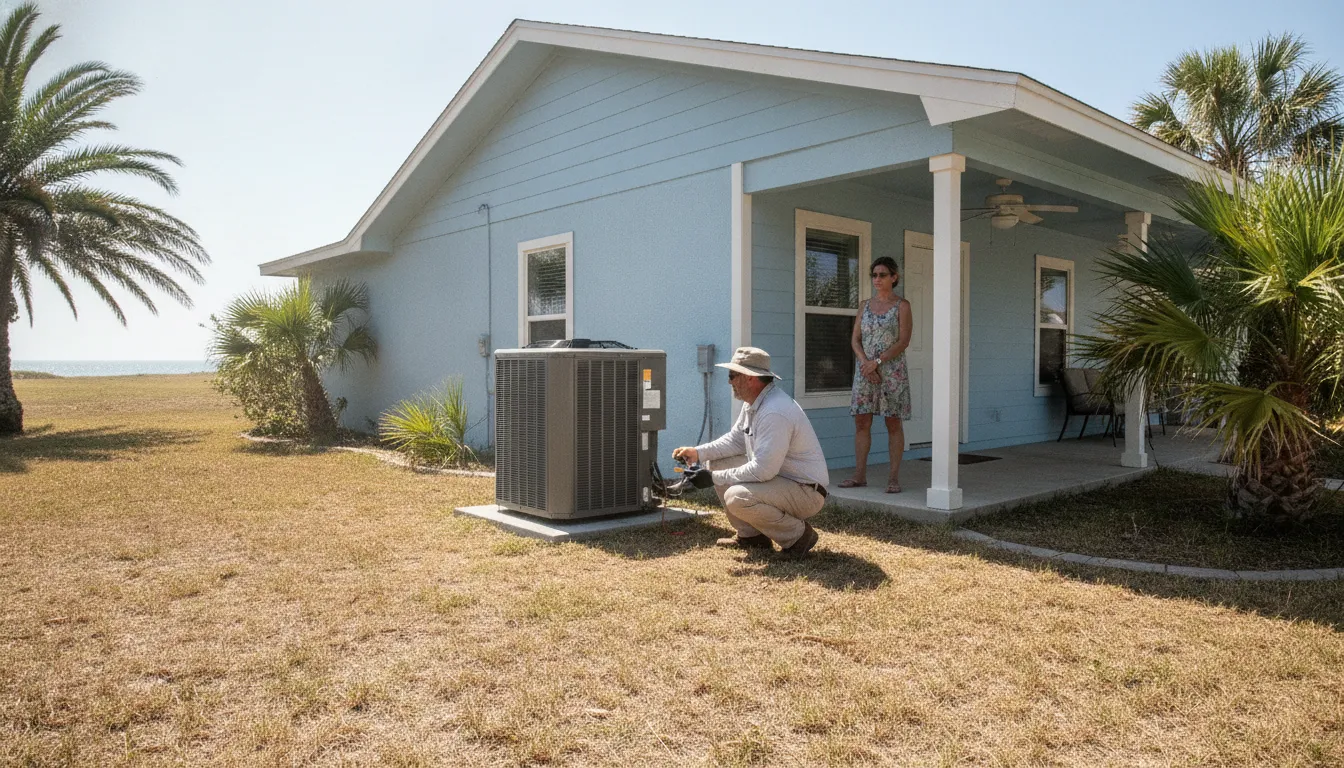
Your air conditioner’s outdoor unit, the condenser, needs to breathe. Over time, it can get covered in leaves, grass clippings, dirt, and other yard debris. This buildup prevents the unit from releasing heat effectively, which can strain the system and reduce its cooling power. Before you do anything, make sure you turn off the power to the unit at the circuit breaker. Then, gently clear away any debris from the sides. You can use a garden hose on a light setting to rinse off the fins, but avoid using a high-pressure nozzle, as it can cause damage. A clean outdoor unit is essential for proper air conditioning services.
3. Check Your Thermostat Settings
It might sound obvious, but a quick thermostat check can sometimes solve the problem instantly. First, make sure your thermostat is set to "cool" and that the temperature is set lower than the current room temperature. If the set temperature is higher than the room’s temperature, the AC simply won’t turn on. Also, check the fan setting. If it’s set to "ON," the fan will blow continuously, even when the AC isn’t cooling the air. This can make the airflow feel weak or warm. For normal operation, the fan should be set to "AUTO."
4. Test Airflow from Each Vent
If you suspect a problem, play detective for a few minutes. Go to each room and hold your hand up to the supply vents. Do you feel a steady stream of cool air? If you notice weak airflow from certain vents but strong flow from others, it could indicate a blockage or a leak in your ductwork. This is valuable information because it helps pinpoint where the problem might be. Issues within your ducts can also impact your home’s atmosphere, so it’s a good idea to be aware of your system’s performance and how it affects your indoor air quality.
5. Reset the Circuit Breaker
If your AC system isn’t blowing any air at all, the issue could be electrical. Head to your home’s main electrical panel and find the circuit breaker connected to your HVAC system. It should be clearly labeled. Sometimes, a breaker can trip due to a power surge or an overloaded circuit. If it’s tripped, you’ll need to reset it. To do this safely, flip the switch completely to the "OFF" position, then flip it back to "ON." If the breaker trips again right away, don’t reset it again. This indicates a more serious problem, and it’s time to contact a professional for help.
6. Carefully Clean the Blower Fan
The blower fan is the workhorse of your AC system, responsible for pushing all that cool air through your ducts. Over time, its blades can get caked with dirt and grime, which slows it down and weakens airflow. If you’ve heard squealing or clanking noises, it could be the fan struggling under the extra weight. Cleaning it can help, but this is a more hands-on task. First, for your safety, you must turn off all power to your AC unit at the circuit breaker. The fan is located inside your indoor air handler. You can carefully wipe the blades with a soft brush or rag. If you're not comfortable opening up your unit, it's best to leave this to a professional. Regular maintenance, like what we provide in our membership program, ensures components like this stay clean and efficient.
Know When to Call an AC Pro
While it feels great to solve a home repair issue on your own, some AC problems are best left to the experts. If you’ve tried the quick fixes and your air conditioner is still struggling, it’s time to call for backup. Trying to handle complex repairs without the right training or tools can lead to more expensive damage or, even worse, create a safety hazard for your family. A professional technician can accurately diagnose the root cause of the weak airflow and get your system running safely and efficiently again. At Tommy Cool Air, we’ve seen it all, and we’re here to help when you’re in over your head.
Don't DIY Refrigerant or Electrical Repairs
If you spot ice forming on your AC coils, don't just scrape it off and hope for the best. This is a classic sign of a refrigerant leak. Handling refrigerant requires special certification and equipment, as it can be harmful if released improperly. Similarly, any issue you suspect is electrical, like a buzzing sound or a breaker that keeps tripping, requires a professional. Faulty wiring is a serious fire risk. Our team is trained to handle these hazardous situations safely, providing expert air conditioning services to find the leak or fix the wiring and get your cool air flowing again without putting your home at risk.
Leave Complex Repairs to the Experts
Did you check the filter and clear the vents, but the airflow is still weak? The problem might be deeper within your system, like a failing blower motor or issues with your ductwork. The blower motor is the powerful fan that pushes cool air through the vents, and if it’s malfunctioning, you’ll feel the difference immediately. Your ducts could also be the culprit, with hidden leaks or blockages restricting airflow. Diagnosing these problems requires specialized tools and a trained eye. We can inspect your entire system, from the motor to the furthest ducts, to improve your home’s indoor air quality and restore strong, even cooling.
How Maintenance Prevents Future Headaches
The best way to deal with AC problems is to prevent them from happening in the first place. If you’re constantly troubleshooting your system, it’s a sign that it needs a professional check-up. Regular maintenance is key to keeping your air conditioner running smoothly and efficiently, especially in the Texas heat. During a tune-up, a technician can clean essential components, tighten electrical connections, and spot small issues before they turn into major breakdowns. Signing up for a maintenance plan, like our Cool Club Membership, ensures your system gets the care it needs to last longer and save you money on energy bills and unexpected repairs.
Professional Solutions for Weak Airflow
When you've exhausted all the DIY options and your home still has rooms that feel like a sauna, it’s a clear sign that the problem lies deeper within your ductwork. This is where a professional diagnosis makes all the difference. An experienced technician can perform a thorough inspection to find hidden leaks, blockages, or design flaws that are choking your airflow. They have the right tools to measure air pressure and pinpoint exactly where the cool air is getting lost. Instead of guessing, they can identify the root cause and recommend a targeted solution to restore balance and comfort throughout your entire home.
Installing an In-line Duct Booster Fan
One of the most effective solutions for a room with stubbornly weak airflow is an in-line duct booster fan. Think of it as a small, powerful helper installed directly inside the ductwork leading to the problem area. This fan works by increasing the air pressure within that specific duct, giving the cool air the extra push it needs to reach distant rooms. It’s an ideal fix for homes with long duct runs or a layout that makes it difficult for air to circulate evenly. A professional can assess your system to determine if a booster fan is the right choice, or if another issue is the real culprit. A proper duct inspection ensures the air you’re paying to cool actually makes it into your living spaces.
Related Articles
- Air Conditioner Not Blowing Cold Air
- Understanding AC Efficiency: Tips for Optimizing Your Cooling System
- Do Air Vent Deflectors Work?
- My Air Conditioner Is Making Weird Noises
- Running an AC without a filter
Frequently Asked Questions
How often do I actually need to change my air filter? As a general rule, you should replace your filter every 90 days. However, this isn't a one-size-fits-all answer. If you have pets that shed or live with someone who has allergies, you should check the filter monthly and plan to change it every 60 days. A clean filter is the single most important thing you can do to ensure strong airflow and keep your system healthy.
My AC is blowing weak, but the air still feels cool. What does that mean? If the air coming out is cool but not strong, it usually means the cooling part of your system is working, but the air isn't being delivered properly. This often points to a problem with the blower motor, which is the fan that pushes air through the ducts. It could also be caused by a significant blockage or leak in your ductwork that is preventing the cool air from reaching your vents with enough force.
If I see ice on my unit, can I just let it thaw and restart the AC? While you should turn off your AC to let the ice melt, simply restarting it won't solve the problem. Ice is just a symptom of a deeper issue, most commonly low refrigerant from a leak or severely restricted airflow from a dirty filter or failing motor. If you don't fix the root cause, the ice will just come back, putting your system under serious strain and leading to a much more expensive repair.
Why is airflow strong in some rooms but weak in others? This is a classic sign of a problem within your ductwork. Your ducts are like a highway system for air, and uneven flow suggests there's a roadblock or a major exit ramp leak somewhere. A duct could be crushed, disconnected, or have a large hole, causing cool air to spill into your attic or crawlspace instead of reaching its destination. A professional inspection is needed to find and fix these hidden issues.
Could a dirty outdoor unit really cause weak airflow inside? Yes, it absolutely can. Your outdoor unit's job is to release heat that's been pulled from your home. If it's covered in dirt, leaves, or grass clippings, it can't get rid of that heat effectively. This forces your entire system to work harder and less efficiently, which can reduce its overall performance and lead to weaker, less cool air coming from your indoor vents.