In Corpus Christi, a commercial HVAC system works through long cooling seasons, heavy humidity, and salty coastal air. When comfort slips, employees notice, customers feel it, and equipment problems can quickly become an operating expense.
The most effective commercial HVAC maintenance tips combine scheduled professional inspections with routine filter checks, coil cleaning, electrical reviews, and thermostat calibration. The U.S. Department of Energy reports that strong operations and maintenance practices can reduce annual energy costs by 5% to 20%. Making preventive care a practical business decision, not just a repair precaution.
For local business owners and property managers, maintenance is also about protecting dependable uptime. Understanding how HVAC performance affects energy use, equipment life, and day-to-day comfort makes it easier to prioritize the work that matters most.
Why Commercial HVAC Maintenance Matters for Corpus Christi Businesses
For Corpus Christi businesses, HVAC maintenance is more than a routine line item. Reliable heating and cooling protect employee comfort, customer experience, equipment, inventory, and day-to-day productivity. Gulf Coast systems work through intense heat, high humidity, salt air, and long cooling seasons, so small maintenance issues can become expensive disruptions quickly.
Energy use is one of the clearest reasons to stay ahead of those issues. The U.S. Department of Energy reports that HVAC can account for roughly 40% to 44% of the energy used in a commercial building. The same agency estimates that sound operations and maintenance practices can reduce annual energy costs by 5% to 20%. Keeping coils clean, airflow unrestricted, and controls properly adjusted helps a system deliver the needed comfort without forcing the equipment to run harder than necessary. Energy efficiency guidance from the U.S. Department of Energy provides additional context for managing building energy use.
Preventive service also gives business owners more control over reliability. A consistent maintenance program is commonly associated with a 30% to 50% lower risk of unexpected equipment failure. That does not eliminate every breakdown, but it gives a technician an opportunity to identify worn components. Electrical concerns, airflow restrictions, and developing refrigerant problems before they trigger an emergency call. Planned service is easier to schedule than a failed rooftop unit during a busy workday or a stretch of triple-digit heat.
Maintenance protects the equipment investment
Commercial HVAC equipment is a major capital investment. Well-maintained systems typically serve for about 15 to 25 years, while neglected units may last closer to 10 to 15 years. Regular inspections and timely repairs can extend useful life by as much as 15 years in some cases. Helping a business delay premature replacement and plan future upgrades more deliberately.
Tommy Cool Air helps Corpus Christi businesses build practical service plans around their building, equipment, occupancy, and operating schedule. If you are researching commercial HVAC basics, maintenance is one of the most important starting points. A professional evaluation can identify the right service frequency before Gulf Coast conditions expose the system's weak points.
Essential Commercial HVAC Maintenance Tips for Peak Performance
Corpus Christi businesses place heavy demands on their HVAC equipment. Salt air can accelerate corrosion, while Gulf Coast humidity makes efficient cooling and moisture control especially important. Use this checklist as a practical starting point, then have qualified technicians handle electrical, refrigerant, and combustion-related work.
Check and replace filters every one to three months
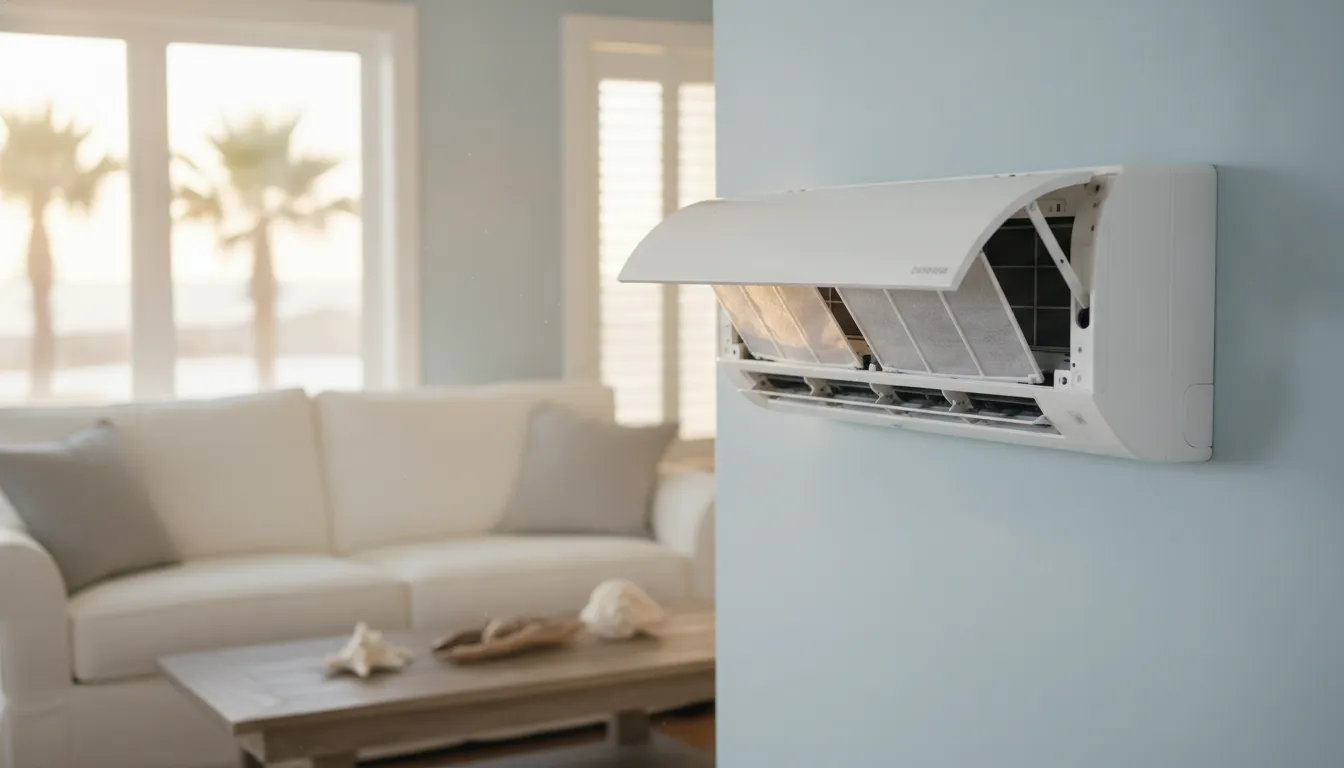
Inspect filters at least monthly during periods of heavy use. Replace them every one to three months, adjusting the interval for building occupancy, operating hours, construction dust, and other environmental conditions. A clogged filter restricts airflow and makes the system work harder. Regular AC maintenance can help your team set an interval that fits the building instead of relying on a calendar reminder alone. Source guidance recommends checking and replacing filters every one to three months.
Clean condenser coils and protect outdoor equipment
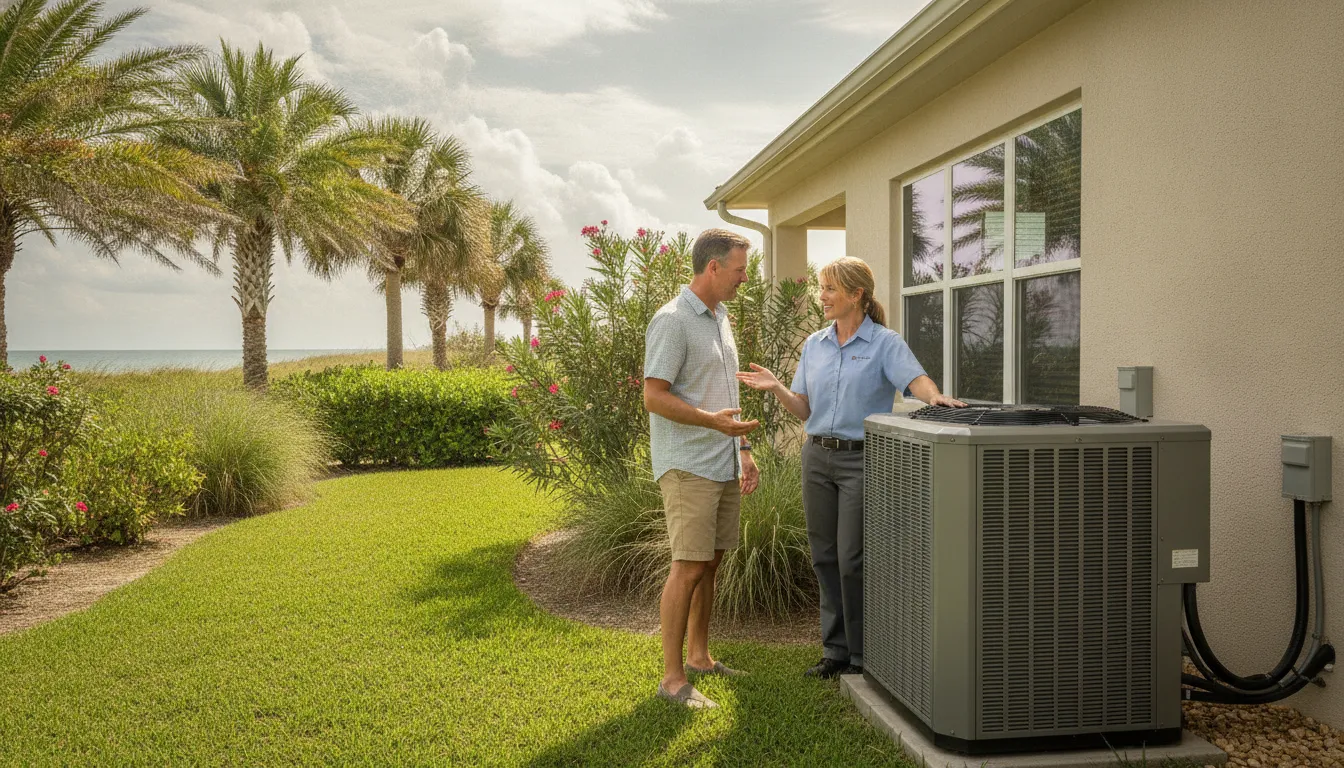
Schedule condenser-coil cleaning as part of routine service. Dust, debris, and salt-air residue can reduce heat transfer and cooling performance. Keep the area around outdoor equipment clear, and ask a technician to inspect for corrosion or damage rather than pressure-washing sensitive components yourself. Cleaning condenser coils supports efficient cooling performance.
Inspect electrical connections before they become a failure
Loose, worn, or corroded electrical connections can contribute to equipment failure and unsafe operation. During scheduled maintenance, a qualified technician should inspect connections, terminals, contactors, capacitors, and related components. Salt air makes this inspection particularly valuable for coastal properties. Routine HVAC maintenance should include checking electrical connections.
Check belts and pulleys before they fail
Belts and pulleys should be checked for wear, cracking, fraying, alignment problems, and improper tension. Replacing a worn belt during planned service is less disruptive than waiting for a sudden failure during business hours. Belts should be replaced before failure to help avoid downtime.
Calibrate thermostats and controls
Compare thermostat readings with actual space conditions and verify that schedules, sensors, and setpoints match the building's needs. Calibration helps prevent unnecessary runtime, hot and cold complaints, and wasted energy. Have the controls checked whenever zones, occupancy patterns, or equipment change. Thermostat calibration is an essential efficiency task.
Inspect refrigerant levels and system performance
Refrigerant levels should be inspected by a qualified HVAC professional as part of a performance check. An incorrect charge may indicate a leak or another system problem, so adding refrigerant without finding the cause is not a complete fix. Refrigerant-level inspection helps confirm efficient operation. If a problem requires more than maintenance, Tommy Cool Air can provide commercial AC services.
Schedule boiler maintenance before winter
Cooling is the priority for much of the Gulf Coast, but boiler equipment still needs attention before colder weather arrives. Inspect and service boilers ahead of winter to reduce the risk of a mid-season failure, especially in facilities that depend on them for heat or process needs. Regular boiler maintenance helps avoid mid-season failures.
Seasonal HVAC Maintenance Schedule for Gulf Coast Businesses
Gulf Coast businesses cannot treat HVAC maintenance as a once-a-year task. In Corpus Christi and nearby communities, long cooling seasons, high humidity, and salt-laden air put steady pressure on commercial equipment. A seasonal schedule helps facility teams catch developing problems before they interrupt operations, damage inventory, or make occupied spaces uncomfortable.
Spring: prepare for sustained cooling
Schedule a complete air-conditioning inspection before the first stretch of summer heat. The visit should include cleaning condenser coils, checking electrical components, inspecting refrigerant levels, and confirming that controls and airflow are operating as intended. Spring is also a practical time to review service records, identify aging equipment, and plan repairs while the building still has more scheduling flexibility.
Summer: control filters, corrosion, and indoor conditions
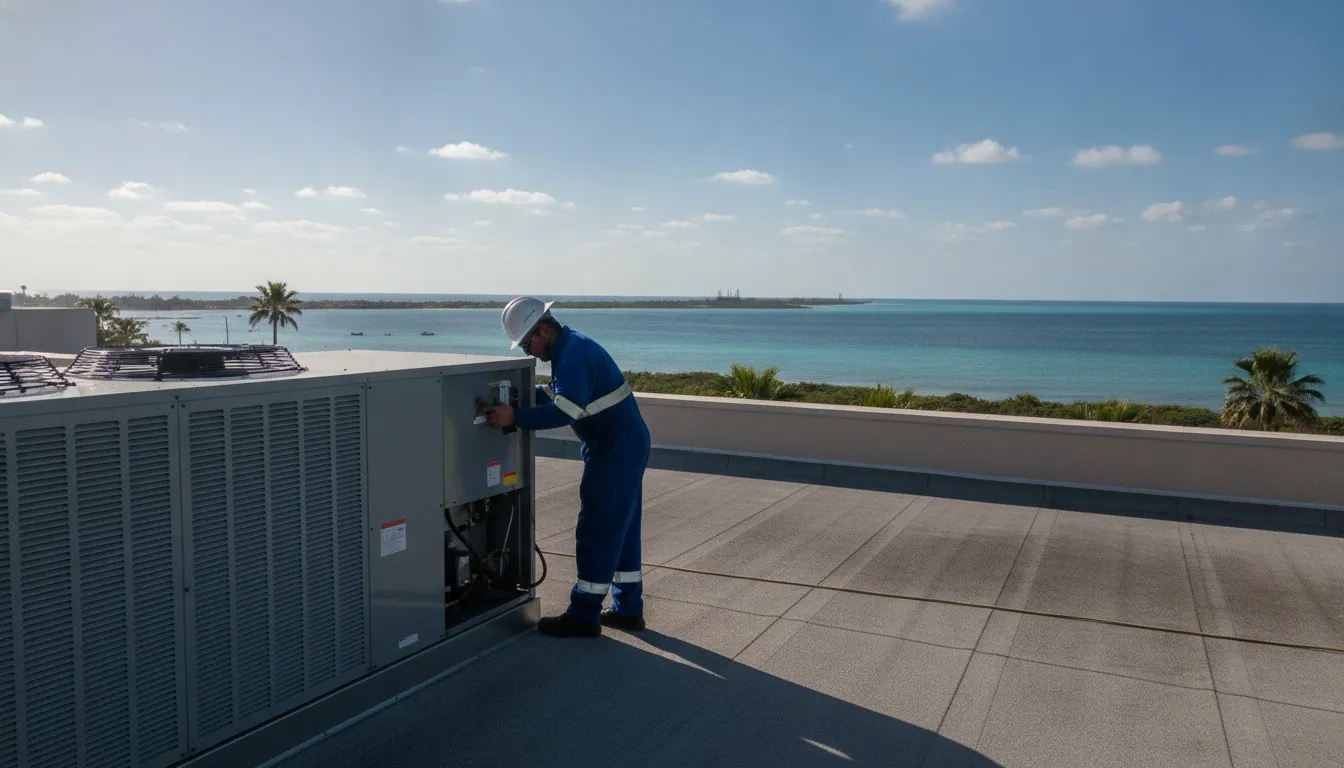
During peak cooling, check filters at least monthly and replace them according to building use, occupancy, and indoor air conditions. A busy retail space, restaurant, warehouse, or office may need more frequent attention than a lightly occupied building. Ask technicians to inspect outdoor units for salt-air corrosion, blocked airflow, damaged wiring, and coil buildup. These checks protect cooling performance when equipment is working hardest.
Summer maintenance also supports indoor air quality. Clean filters, correct ventilation, and properly operating coils help commercial HVAC systems manage the moisture and airborne particles that affect employees, customers, and tenants. Maintenance is not only about avoiding a breakdown; it helps keep occupied spaces healthier and more comfortable.
Fall: prepare heating equipment
Before cooler weather arrives, test heating equipment and safety controls. For buildings with boilers, inspect the system before winter demand rather than waiting for a mid-season failure. Heat pumps should receive a seasonal inspection as well, including airflow, electrical connections, controls, and overall operating condition. Addressing deficiencies in fall gives your team time to coordinate repairs without an urgent disruption.
Winter: monitor IAQ and plan ahead
When doors and windows stay closed more often, continue monitoring indoor air quality, humidity, filter condition, and ventilation. Watch for uneven temperatures, unusual odors, condensation, or complaints from occupants. Use winter planning time to schedule the next spring tune-up and prioritize capital replacements.
Tommy Cool Air's seasonal maintenance plans can help businesses keep these inspections on a predictable calendar. When your team needs dependable commercial AC services, a documented plan gives Tommy & the Cool Kids the context needed to respond efficiently.
Commercial HVAC Maintenance vs. Emergency Repair: What Business Owners Should Know
For a Corpus Christi business, the difference between planned maintenance and emergency repair is more than a line item on an invoice. It can determine whether employees, customers, tenants, or inventory remain comfortable and protected during a Gulf Coast heat wave. Preventive maintenance helps identify worn components before they trigger a shutdown, while emergency service begins after the system has already failed.
| Planned maintenance visit | After-hours emergency repair |
|---|---|
| Scheduled during a lower-impact operating period. | Often starts when occupants are uncomfortable or operations are disrupted. |
| Technicians can inspect, clean, test, and replace aging parts proactively. | Technicians must diagnose the immediate failure under time pressure. |
| Costs are easier to plan and budget. | Urgent labor, expedited parts, and lost business can increase the total cost. |
| Reduces the likelihood of unexpected equipment failure by 30% to 50%. | May leave a failed component affecting other parts of the system. |
Why emergency failures cost more
An emergency call can involve after-hours labor, limited parts availability, and a rushed decision about whether to repair or replace equipment. The direct repair bill is only part of the impact. A closed area, interrupted production, spoiled inventory, or unhappy customers can create additional losses. Continued operation after a warning sign can also allow a small electrical, airflow, or mechanical problem to damage other equipment permanently.
Why summer planning matters in Corpus Christi
Corpus Christi businesses face intense heat, high humidity, and long cooling demands. During summer peak, every hour without reliable air conditioning can affect revenue and working conditions. Building commercial AC repair into a response plan is important, but pairing it with scheduled inspections is usually the better way to limit disruption. Tommy Cool Air helps local businesses spot risks early, plan service around operations, and avoid preventable emergencies with practical commercial HVAC maintenance tips.
How Tommy Cool Air Supports Corpus Christi Businesses
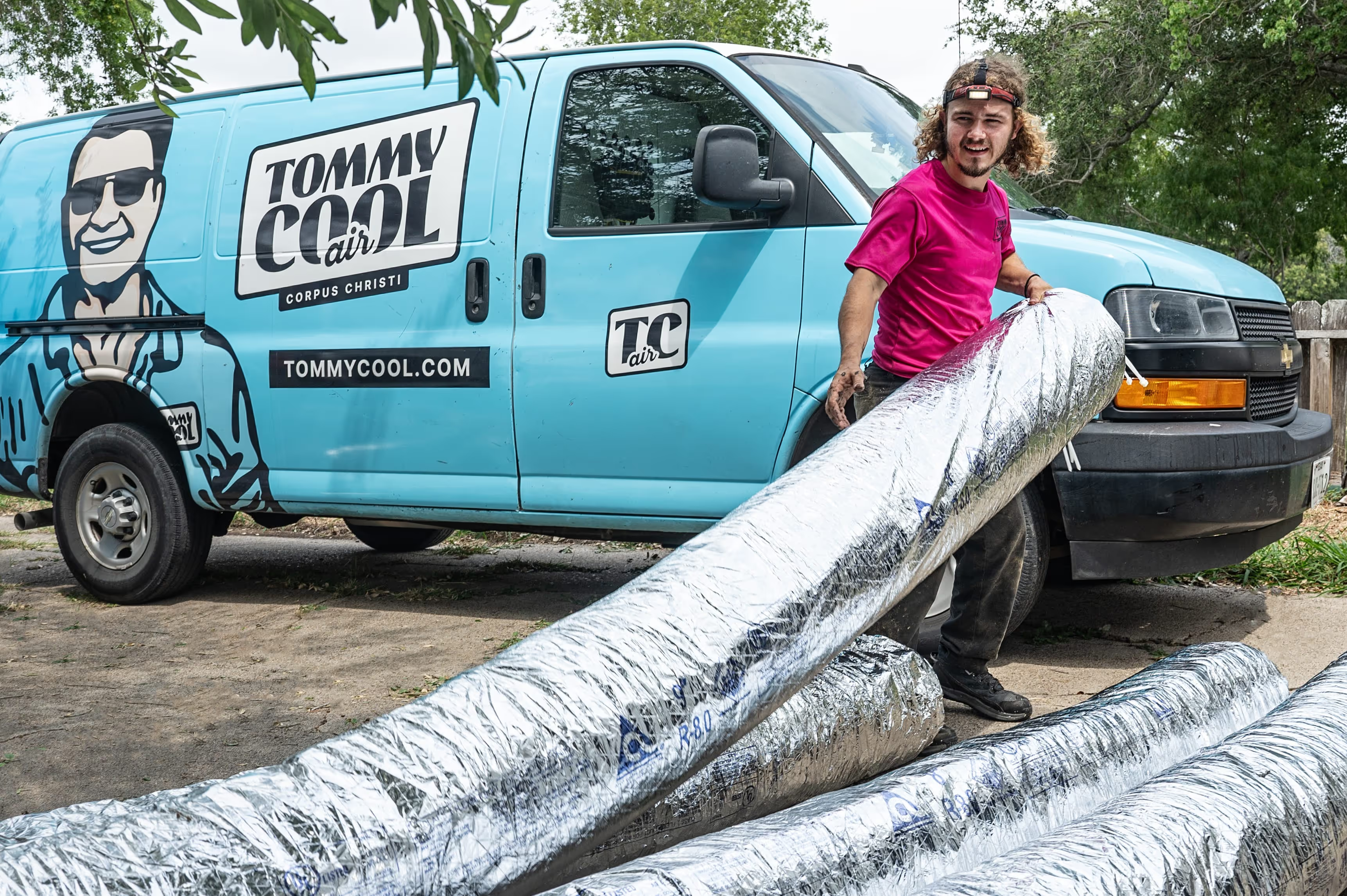
Commercial HVAC maintenance is easier to manage when your service partner understands the conditions your equipment faces every day. Tommy Cool Air serves businesses throughout the Corpus Christi area, including Flour Bluff, Padre Island, Calallen, Portland, Rockport, Aransas Pass, and nearby Gulf Coast communities. Tommy & the Cool Kids bring practical experience to systems that must perform through extreme heat, high humidity, and salt-air corrosion.
Maintenance built around your business
A commercial system cannot always wait for a convenient appointment. Tommy Cool Air provides commercial HVAC maintenance and repair support with an emphasis on dependable operation and responsive communication. Technicians can help identify developing issues during planned service, address wear caused by coastal conditions, and recommend next steps based on your building, equipment, and operating needs. That gives business owners a clearer path to protecting comfort without treating every warning sign as an emergency.
When a system does fail, 24/7 emergency service is available for Gulf Coast businesses. Call (361) 444-7777 when an urgent heating or cooling problem threatens employees, customers, inventory, or daily operations. For planned maintenance, service questions, or a quote, contact Tommy Cool Air today.
Equipment and service support that scales
Tommy Cool Air works with trusted Trane products and supports commercial comfort systems with an approach that combines technical knowledge and local familiarity. Whether you manage one storefront, an office, a facility, or multiple properties, the goal is consistent service from technicians who understand the full Corpus Christi service area.
Businesses that want a more proactive maintenance routine can also explore the Cool Kids Comfort Club. The membership includes access to predictive maintenance technology, helping turn service from a last-minute scramble into a more organized part of facility planning. Ask the Cool Kids which options fit your equipment and schedule.
For business owners looking for a dependable partner rather than a one-time fix, Tommy Cool Air offers the local coverage. Trane expertise, and emergency responsiveness needed to keep commercial spaces comfortable in demanding Gulf Coast weather.
Frequently Asked Questions
What is the best commercial HVAC maintenance checklist?
Start with filters, condenser coils, electrical connections, belts, pulleys, thermostats, and refrigerant levels. Review drainage, controls, airflow, and visible corrosion as well, especially in Corpus Christi's humid, salt-air environment. Document each inspection, the condition found, and the recommended follow-up so your team can spot recurring issues before they interrupt operations.
How often should commercial HVAC systems be serviced?
Schedule professional service at least twice a year, with additional visits based on equipment age, building use, occupancy, and Gulf Coast conditions. Filters may need checking and replacement every one to three months, depending on usage and environmental conditions. ANSI/ASHRAE/ACCA Standard 180 can help inform a consistent inspection and maintenance program.
What are essential commercial HVAC maintenance tips for performance?
Keep filters and coils clean, verify airflow, calibrate thermostats, inspect electrical connections, and replace worn belts before they fail. Ask a qualified technician to check refrigerant levels and confirm that controls are operating correctly. These steps help equipment cool consistently while giving your team an opportunity to address small problems before they become disruptive repairs.
How can commercial HVAC maintenance save energy costs?
Clean, correctly adjusted equipment does not have to work harder than necessary to maintain comfortable temperatures. The U.S. Department of Energy reports that operations and maintenance best practices can reduce annual energy costs by 5% to 20%. Review the Department of Energy guidance alongside your utility data to identify improvement opportunities.
Ready to Schedule Commercial HVAC Maintenance?
Consistent maintenance can help your Corpus Christi business keep its HVAC system prepared for demanding Gulf Coast conditions. When you are ready to plan the next visit, contact Tommy Cool Air to schedule your commercial HVAC maintenance today.