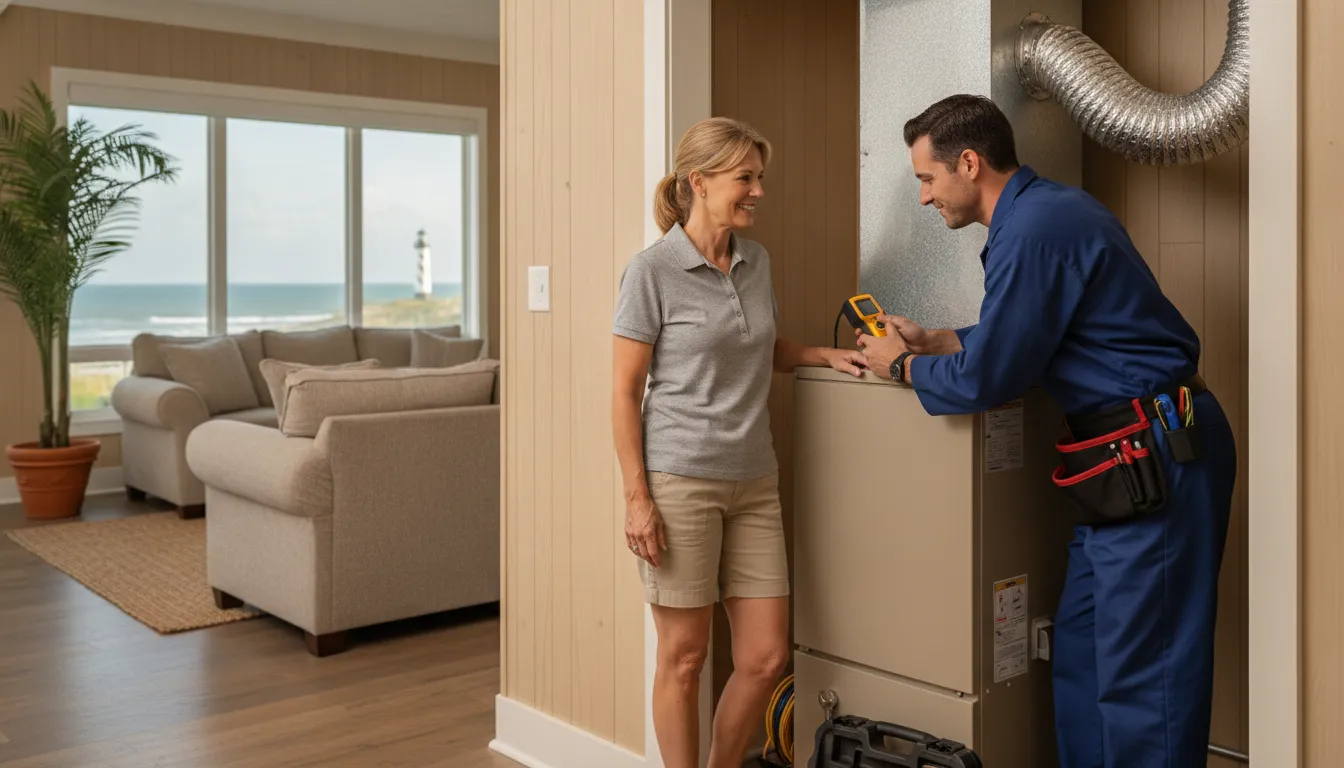
When warm air suddenly turns cool, do not assume your heater has failed. In a Corpus Christi winter, a brief startup puff can simply be air clearing from the ducts. The important clue is whether the system begins producing steady warmth soon afterward.
A heater blowing cold air for only a short time can be normal as the blower clears cooler duct air before ignition. If the air stays cold beyond about five minutes, or the system repeatedly cycles without heating, the symptom deserves troubleshooting and possibly professional diagnosis.
Start with the timing and pattern before adjusting anything beyond basic thermostat settings. That distinction helps separate normal startup behavior from a fault affecting ignition, airflow, or safe operation. It also answers a common concern for coastal homeowners: whether the first burst of cool air is expected when the heat starts.
Schedule heating help with Tommy Cool Air
Is a brief burst of cool air normal when the heat starts?
A short burst of cool air can be normal when a furnace first starts. The blower may move cool air from the ducts before the burners fully ignite and the system reaches operating temperature. If the air becomes warm shortly afterward, the startup cycle may be working as intended. Cold airflow that continues beyond the startup period, or repeated cycles that never produce warm air, deserves investigation.
The first few moments after a heating call can feel confusing, especially in a Coastal Texas home where the system may sit unused for long stretches. Your thermostat signals for heat, the blower begins moving air, and the furnace works through its normal ignition sequence. That sequence can briefly send the air already sitting in the ductwork into the rooms. Once the furnace reaches operating temperature, the supply air should feel warmer.
What a normal startup usually looks like
Watch what happens after the thermostat calls for heat. A brief cool stream followed by warm air is different from a steady stream of room-temperature or cold air. The important detail is whether the system transitions into consistent heating. You do not need to open the furnace or inspect internal components to make that basic observation.
It can also help to notice whether the change happens consistently at each startup. A similar, brief burst before warm air arrives is less concerning than a new pattern that lasts longer or varies from cycle to cycle. Avoid judging the system only by the first few seconds after the blower starts. Give the heating cycle time to complete its startup sequence.
When the cold air is not just startup behavior
Persistent cold airflow after about five minutes of continuous operation is a sign that the system should be investigated. Repeatedly turning on and off without ever producing warm air is another warning pattern. These symptoms suggest the furnace may not be completing its heating cycle, even though the blower continues to run.
At that point, do not assume the issue will resolve by repeatedly changing the thermostat. Note how long the air stays cold, whether the system cycles repeatedly, and whether the problem affects every register. Those observations can help a technician understand what the equipment is doing. For safe next steps, review heating system repair and installation information or contact Tommy Cool Air for guidance.
The practical distinction is simple. A brief cool burst during startup can be normal. Cold air that continues or returns through repeated unsuccessful cycles is not something to ignore. If the pattern persists, arrange an evaluation before relying on the heater during the next cold spell.
What should you check first when your heater blows cold air?
When your heater is blowing cold air, start with safe checks: confirm the thermostat calls for heat. Set the fan to Auto, inspect the filter, verify power, and make sure registers are open. These steps can identify a simple airflow or control issue without opening the equipment or touching fuel, wiring, or safety controls.
Work through the checks below in order. Give the system a moment after each adjustment, because the blower may continue moving cool air already sitting in the ductwork before heated air reaches the room. If the airflow stays cold, stop troubleshooting rather than moving into internal furnace work.
Confirm the thermostat is requesting heat
Set the thermostat to Heat, then raise the temperature a few degrees above the current room temperature. Check the display for a low-battery warning or an error message. If the thermostat has a fan setting, choose Auto rather than On. The On setting can keep the blower running continuously, even when the heating cycle is not actively producing warm air. Incorrect thermostat settings can therefore feel like a heater problem when the system is simply circulating room-temperature air. If the display is blank or unresponsive, do not remove the thermostat from its base or handle wiring. Move to the power check instead.
Look at the air filter
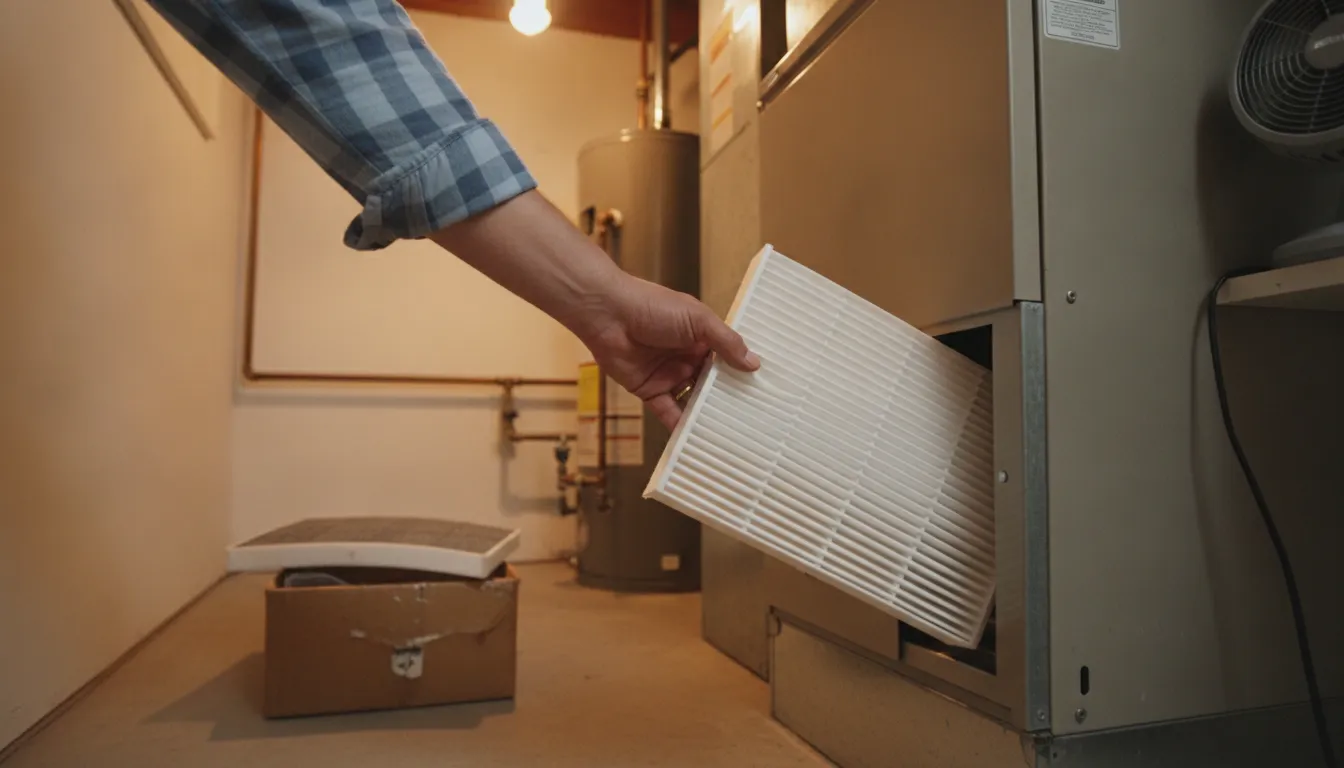
With the system off, inspect the accessible filter according to the instructions printed on its frame. If it is visibly coated with dust or difficult to see through, replace it with the correct size and type for your system. A clogged filter restricts airflow and can contribute to overheating, which may trigger a safety shutdown. Do not operate the heater without a filter, and do not use a filter that does not fit securely. A replacement filter may improve airflow, but it will not correct an ignition, gas-supply, blower, or other internal fault.
Verify the system has power
Check that the heating system switch near the equipment has not been turned off accidentally. You can also check the relevant electrical panel for a tripped breaker, but do not repeatedly reset a breaker that trips again. Repeated tripping can signal an electrical or equipment problem. Leave internal panels closed, and never remove a furnace cover to look for a switch, flame, or wiring issue. If the thermostat is calling for heat but the equipment remains silent, professional diagnosis is the safer next step.
Make sure registers are open and unobstructed
Walk through the rooms and confirm that supply registers are open and not covered by furniture, rugs, storage, or curtains. Blocked registers can reduce the amount of heated air reaching living spaces and can affect overall airflow. Check the return-air grilles as well, keeping their visible surfaces clear. Do not tape, cut, or alter ductwork during this check. If one room stays cold while other rooms receive warm airflow, mention that pattern to the technician. It can help distinguish a room airflow concern from a system-wide heating failure.
These homeowner checks are intentionally limited to visible settings and accessible components. Do not open a gas furnace, bypass a safety switch, handle wiring, or inspect a heat exchanger. Do not relight equipment unless the manufacturer provides a safe user procedure. Do not adjust a gas supply. For broader safe HVAC troubleshooting steps, keep the same boundary between simple observations and technician-only diagnostics.
If the heater still blows cold air after these checks, record what you observed. Note whether the blower runs, whether the system cycles on and off, whether an error code appears, and whether the air is cold or merely lukewarm. Then request Corpus Christi furnace repair or the appropriate heating service. A clear symptom description helps Tommy & the Cool Kids begin with the right information.
Why does a heater keep blowing cold air?
A heater blowing cold air after startup usually points to a failed ignition, dirty flame sensor, limited gas supply, blocked condensate drain, duct leakage, or a safety lockout. Heat pumps can also deliver lukewarm air when refrigerant is low. Persistent symptoms deserve professional diagnosis rather than internal DIY repairs.
A short cool draft can happen during startup. But air that stays cold means the system is not completing its heating cycle or is losing heat before it reaches the room. The pattern of the airflow can help identify the likely system category, although it cannot replace an inspection.
| Likely cause | What you may notice | Safe next step |
|---|---|---|
| Ignition or flame-sensor problem | The blower runs, but the burners do not light or do not stay lit. | Stop repeated restart attempts and arrange furnace diagnosis. |
| Gas supply or gas valve fault | A gas furnace does not establish a flame, or heating stops unexpectedly. | Do not adjust the gas system. Have a qualified technician inspect it. |
| Leaky ductwork | The unit appears to run, but rooms receive weak or cool airflow. | Request duct inspection and sealing where needed. |
| Condensate drain blockage | A high-efficiency furnace may stop heating while the fan continues. | Schedule service instead of opening the furnace cabinet. |
| Heat-pump refrigerant issue | Airflow feels lukewarm rather than genuinely warm. | Arrange heat pump repair and installation service. |
Ignition, flame sensing, and fuel problems
A furnace may blow cold air when its pilot light or electronic ignition fails. A dirty flame sensor can also prevent ignition or stop the system from sustaining a flame. In either case, the blower may keep moving air through the home without delivering heat.
Older furnaces may use a standing pilot light and thermocouple instead of electronic ignition. A gas valve fault can prevent the pilot or burner from lighting. Insufficient gas supply can create a similar symptom, but gas-related diagnosis requires professional handling. Do not open the cabinet, adjust a gas valve, or attempt to repair wiring.
Airflow, condensate, and safety lockouts
Leaky ductwork can allow heated air to escape before it reaches the registers. That can make the heater seem cold even when the equipment is producing heat. A technician can evaluate duct connections and identify whether sealing or repair is appropriate.
High-efficiency furnaces produce condensate water during combustion. If the condensate drain becomes blocked, the system may develop a heating problem. Some high-efficiency systems shut off the burners while continuing to run the fan during certain safety conditions. That combination can feel like a heater blowing cold air, but it is a signal to stop guessing and seek service.
Why heat pumps can feel different
Heat pumps do not operate exactly like gas furnaces. When a heat pump has low refrigerant, its airflow may feel lukewarm at best. The system may run without creating the level of warmth you expect, especially when the outdoor temperature changes. Refrigerant work belongs with a trained HVAC professional.
For a gas furnace, heat-pump system, or mixed heating setup, furnace repair in Corpus Christi can address ignition failures, flame-sensor concerns, airflow issues, and related heating symptoms. A technician can identify whether the problem is fuel, combustion, ductwork, condensate, or a system safety control without asking you to perform hazardous internal checks.
How can Gulf Coast conditions affect heating performance?
In Corpus Christi, a heater blowing cold air deserves attention even though the heating season is shorter than the cooling season. Gulf Coast systems work through humidity, salt-air corrosion, hurricane conditions, and long stretches of year-round cooling. Those conditions can influence how equipment performs when a cold snap finally sends the thermostat into heating mode. A brief change in weather does not make cold air from the registers normal, but local operating conditions can shape the symptoms and the maintenance the system needs.
For a homeowner, the first practical distinction is between a system that has been used recently and one that has sat idle for months. A heater that runs only occasionally may reveal an existing issue when it is needed again. The thermostat may call for heat, the blower may start, and the home may still feel chilly because the heating cycle is not completing correctly. Watch the pattern rather than relying on one blast of air. Note whether the air warms after startup, whether the system shuts down quickly, and whether the same room stays uncomfortable.
Why coastal equipment needs a seasonal check
Coastal exposure can make routine inspection especially valuable. A heating system also shares components with the equipment that keeps a Gulf Coast home comfortable for much of the year. Before the first meaningful cold snap, a technician can evaluate the heating sequence, airflow, controls, and visible equipment condition. That inspection helps identify a system that has been operating under heavy cooling demand but has not recently completed a heating cycle.
Homeowners can keep the safe part of this process simple. Confirm that the thermostat is set to heat, replace a visibly dirty filter, make sure supply registers are open, and check that the equipment has power. Do not open the furnace cabinet or attempt to clean internal parts. If the heater still blows cold air, the cause may require measurements and component testing that cannot be completed safely from the thermostat.
What local homeowners should do next
Keep a short record of the symptom, including the outdoor conditions, thermostat setting, approximate runtime, and rooms affected. This information gives a heating technician a clearer starting point. It also helps distinguish a one-time startup concern from a recurring heating failure.
When the problem continues, professional heating maintenance and tune-ups can help evaluate seasonal readiness. If the system is already failing to heat, request furnace repair in Corpus Christi rather than repeatedly restarting it. Tommy Cool Air can explain what the equipment is doing, identify the service path, and keep the next step focused on safe home comfort.
When is heater troubleshooting unsafe?
A heater blowing cold air is not always an emergency, but certain symptoms call for caution. Leave gas, wiring, heat-exchanger, and safety-switch work to a trained professional. If you smell gas, notice a strong burning odor, hear unusual equipment noises, or suspect carbon monoxide, stop troubleshooting and prioritize everyone's safety.
Carbon monoxide deserves special attention because it is colorless, tasteless, and odorless. Fuel-burning equipment can produce it when gas, oil, kerosene, wood, or charcoal burns. The EPA warns that malfunctioning or improperly used appliances can create dangerous levels. Moderate exposure may cause severe headaches, dizziness, confusion, nausea, or fainting. Read the EPA's carbon monoxide safety guidance for the complete warning signs and response steps.
Leave the house when carbon monoxide may be present
If a carbon monoxide alarm sounds, anyone develops possible exposure symptoms, or you have another reason to suspect carbon monoxide, get fresh air immediately. Leave the house and seek emergency medical care. Do not stay inside to locate the source, reset the heater repeatedly, or continue testing the system. Contact emergency services from a safe location, then arrange professional inspection before using the equipment again.
Carbon monoxide is different from a gas odor. You may notice the smell of gas before a fuel-supply problem becomes obvious, but carbon monoxide itself has no smell. If you smell gas, do not operate switches, use an open flame, or attempt to inspect the furnace cabinet. Leave the area and contact the appropriate emergency or utility service from outside. A heating technician can investigate the equipment after the immediate hazard has been addressed.
Stop when the symptom points inside the furnace
A cracked heat exchanger or gas-valve problem can create a hazardous condition, even when the original complaint is simply cold air. A blower that runs without heat may also reflect a safety lockout or another internal fault. These are not homeowner repair projects. Never open a gas furnace, handle wiring, bypass a safety switch, or inspect a heat exchanger yourself. Those actions can expose you to electrical, combustion, fire, or carbon monoxide hazards.
A burning smell or unusual noise is also a reason to stop experimenting rather than adding more resets. Turn the system off if doing so is safe, keep people and pets away from the equipment, and request qualified help. The U.S. Department of Energy explains that combustion appliances require careful installation and maintenance, with exhaust gases vented outdoors. Review the DOE combustion equipment safety information for more context.
For a safe next step after the immediate hazard is ruled out, use furnace repair in Corpus Christi or schedule heating maintenance and tune-ups. A trained technician can evaluate combustion components, ventilation, and controls without asking you to perform hazardous diagnostics.
When should you call a heating professional in Corpus Christi?
If your heater is blowing cold air beyond a brief startup period, stop troubleshooting when the cause is not obvious or the system repeatedly fails to heat. A qualified professional can evaluate the thermostat, airflow, ignition, blower, heat pump, gas supply, and safety controls without turning a simple symptom into a larger problem.
Call for professional help when the system continues blowing cold air after you have checked the thermostat mode, filter, power, and registers. Persistent symptoms can involve ignition failures, blower motor problems, malfunctioning thermostats, or heat exchanger problems. These issues are not interchangeable, and the correct repair depends on the equipment and the underlying fault. Tommy Cool Air provides furnace repair in Corpus Christi for gas, electric, and heat pump heating systems.
Know when a symptom needs diagnosis
A service call is especially appropriate when the heater cycles repeatedly, will not maintain a comfortable temperature, or produces airflow that remains cold or only lukewarm. A heat pump may need a different diagnostic approach than a gas or electric furnace. For heat pump equipment, use the heat pump repair and installation service information rather than assuming the system has a furnace-style ignition problem.
Do not open the furnace cabinet, handle wiring, bypass a safety switch, inspect a heat exchanger, or attempt to adjust gas components. Internal furnace work is unsafe for homeowners. Gas-supply problems and suspected heat exchanger damage require professional attention. If you notice a gas odor, burning smell, unusual noise, or a furnace that will not turn on, treat the situation as urgent and use the emergency heating repair option.
Use maintenance to reduce repeat cold-air problems
If the heater works again but has developed recurring symptoms, schedule preventive care instead of waiting for another failure. Heating maintenance may include cleaning burner assemblies, calibrating the thermostat, lubricating moving parts, testing for carbon monoxide leaks, and replacing air filters. Review heating maintenance and tune-ups to understand the maintenance path for your equipment.
Tommy Cool Air serves homeowners, businesses, and property managers across Corpus Christi and nearby Texas Gulf Coast communities. Service areas include Flour Bluff, Kings Crossing, Calallen, Padre Island, Portland, Rockport, Port Aransas, Aransas Pass, and Ingleside. When you need a qualified next step, contact Tommy Cool Air with the system type, airflow temperature, checks completed, and unusual sounds or odors. That information helps the technician begin with a clearer picture.
Contact Tommy Cool Air for heating service
Frequently asked questions about a heater blowing cold air
Is it normal for a heater to blow cold air when it starts?
A brief burst of cool air can be normal while the furnace reaches operating temperature and clears cool air from the ducts. If the airflow stays cold after several minutes or the system repeatedly cycles without heating, stop relying on normal startup behavior and investigate the cause.
What should I check first when my heater blows cold air?
Check that the thermostat is set to heat, the temperature is above the room temperature, and the fan is set to auto. Then inspect the filter, confirm the system has power, and make sure supply registers are open and unobstructed. These checks are safe for most homeowners.
Why is my furnace blower running but there is no heat?
The burners may not be igniting, or a safety control may be interrupting the heating cycle. A dirty filter can restrict airflow and contribute to overheating, while ignition, flame-sensing, gas-supply, and internal component problems require professional diagnosis.
Is a furnace blowing cold air dangerous?
Cold air alone does not always indicate an emergency, but gas, electrical, ignition, and heat-exchanger problems can create safety risks. If you smell gas, notice a burning odor, hear unusual noises, or suspect carbon monoxide, leave the area and seek emergency help. Do not open the furnace or bypass a safety switch.
When should I call a heating professional?
Call a professional when basic thermostat, filter, power, and register checks do not restore heat. Call sooner when the system keeps cycling, will not ignite, or blows cold air continuously. A technician can safely evaluate ignition, airflow, gas, ductwork, controls, and heat-exchanger concerns.
Need help with a heater blowing cold air?
If basic checks do not restore comfortable heat, a professional evaluation can help identify the cause and guide the right next step. Contact Tommy Cool Air to schedule heating help or request a quote through the contact page.