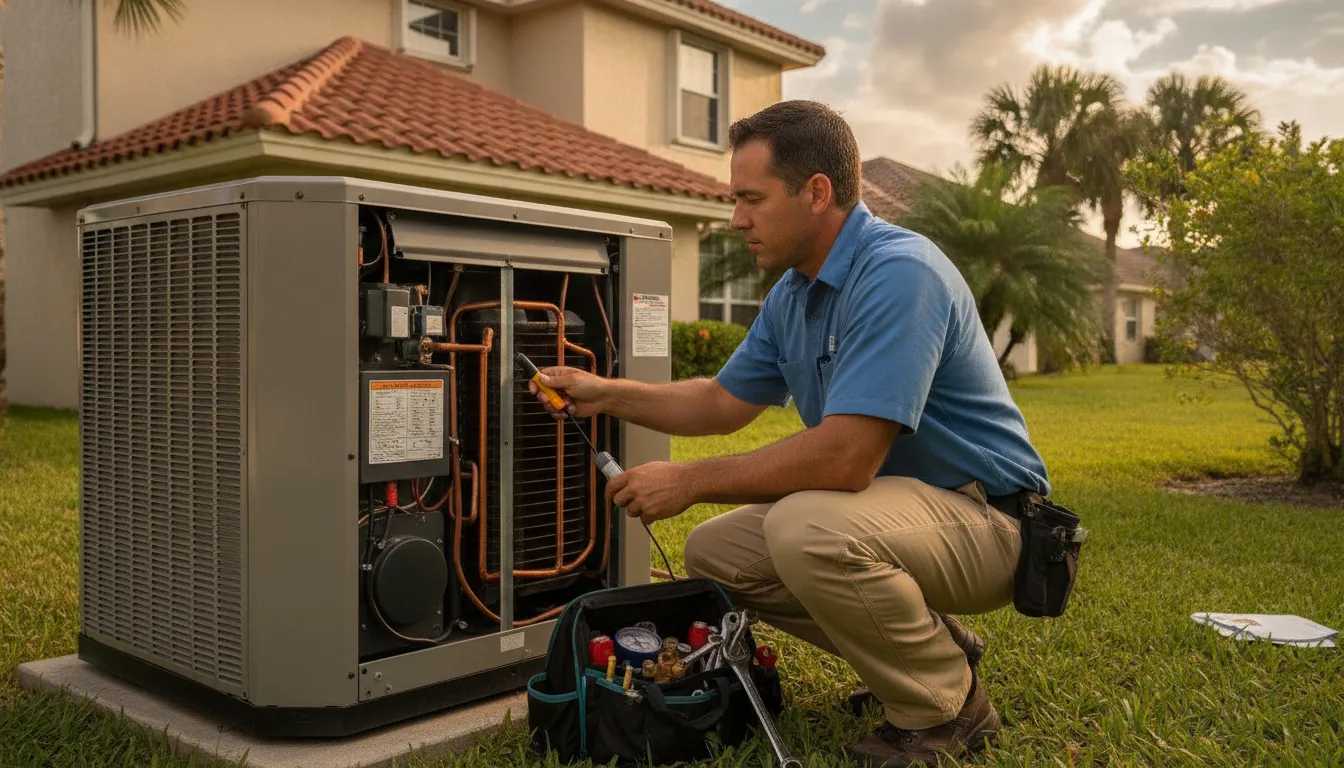
When an air conditioner stops cooling, homeowners often search for HVAC compressor cost first. That number can be difficult to answer without testing the system. A failed capacitor, airflow restriction, refrigerant problem, or control issue can create similar symptoms.
HVAC compressor cost depends on the confirmed cause, equipment type, system age, refrigerant circuit, access, and labor scope. A professional evaluation can separate compressor failure from related problems. It can then compare a quote-based repair with replacement options for your home.
Corpus Christi systems face long cooling seasons, high humidity, and coastal salt air. Those conditions make a careful diagnosis especially important. The right decision should address the complete system, not just one part.
Have Tommy Cool Air evaluate your HVAC system and explain your options.
What Is an HVAC Compressor, and Why Does Diagnosis Matter?
An HVAC compressor is the pump that moves refrigerant through an air conditioning system. It works with the condenser, expansion device, evaporator, and fans to transfer heat from indoor air. A measured diagnosis helps identify the actual fault before anyone recommends repair or replacement.
The compressor raises refrigerant pressure so the system can release heat outdoors. It also supports refrigerant flow through the indoor coil. The U.S. Department of Energy describes the compressor as a pump within a residential air conditioning system.
DOE guidance shows that a split system depends on several connected components. Read the DOE air conditioning diagnostic guidance for more detail.
A compressor may receive blame when the real problem involves airflow, electrical components, refrigerant charge, a restricted device, or a control issue. Low airflow can affect performance without proving compressor failure. A refrigerant problem can also change pressures and temperatures. That can create similar symptoms.
What a professional diagnosis measures
A technician compares readings with the equipment's design and operating conditions. Checks can include suction pressure, liquid pressure, suction temperature, liquid temperature, and outdoor ambient temperature. Return-air and supply-air temperatures can reveal additional problems. Humidity readings help show whether the system is removing moisture as expected.
Electrical testing adds another layer. A technician can evaluate voltage, current, connections, capacitors, and protective controls. The evaluation may also consider airflow, coil condition, thermostat operation, and visible damage. A complete process connects the readings instead of treating one abnormal number as a final answer.
This approach gives homeowners a clearer HVAC compressor cost discussion. For broader cooling guidance, review our guide to air conditioning system repair.
What Factors Shape HVAC Compressor Cost for Homeowners?
HVAC compressor cost depends on the diagnosis, equipment, access, and work required around the compressor. A quote should reflect the whole system, not one isolated part. Two homes can have similar symptoms but need different repair plans.
Diagnosis and equipment details
Accurate testing takes time and specialized instruments. Equipment type, refrigerant type, and expansion-device type change the readings a technician should expect. The unit's size and compressor type also matter.
A replacement must match system capacity, design, electrical requirements, and controls. Older equipment may have different parts or refrigerant requirements than newer equipment. Variable-speed and inverter systems can require a more specific evaluation.
For the narrower replacement question, see our AC compressor replacement cost guide. This article focuses on diagnosis and cost drivers across HVAC system types.
Labor access and refrigerant work
Labor complexity can increase when the outdoor unit is difficult to reach. Crowded landscaping, limited working space, and protective steps can affect the work plan. A technician may need more time to isolate equipment and complete testing safely.
Compressor service may require refrigerant recovery, leak testing, evacuation, and recharge. The correct refrigerant depends on the equipment and approved specifications. A suspected leak needs its own investigation, not an automatic top-off. Learn more about AC refrigerant leak signs.
Warranty and related parts
Warranty verification belongs in the evaluation before anyone approves a repair. The technician may need model and serial numbers, installation records, registration details, and current manufacturer terms. Coverage can apply differently to parts and labor. Request clear written documentation.
Electrical components, controls, coils, filter-driers, wiring, and mounting hardware may require inspection. Replacing a compressor may not restore reliable cooling if another failing component remains in the system. Tommy Cool Air keeps repair and installation quotes specific to verified scope.
How Do AC, Heat Pump, and Ductless Systems Change the Quote?
System type changes what a technician must evaluate before preparing an HVAC compressor cost estimate. Central AC, heat pumps, and ductless equipment use different designs and controls. A useful quote connects the suspected failure to the equipment and comfort goals.
Central AC distributes cooled air through ductwork. The evaluation considers the outdoor compressor, condenser, indoor coil, metering device, blower, ducts, airflow, and thermostat controls. Airflow or duct problems can create symptoms that resemble compressor trouble.
Heat pumps require a broader evaluation. They provide heating and cooling by reversing the refrigeration cycle. The outdoor unit, indoor coil, reversing valve, controls, and auxiliary heat strategy all matter.
Refrigerant considerations continue to evolve. A Department of Energy project on low-GWP refrigerants addresses compressor development for residential air conditioners and heat pumps.
| System type. | Evaluation focus. | Why scope differs. |
|---|---|---|
| Central AC. | Compressor, condenser, coil, ducts, airflow. | Access, matched parts, airflow, refrigerant. |
| Heat pump. | Heating, cooling, reversing valve, controls. | Both operating modes need evaluation. |
| Ductless. | Outdoor unit, indoor heads, zones, line sets. | Zones and line-set access can change scope. |
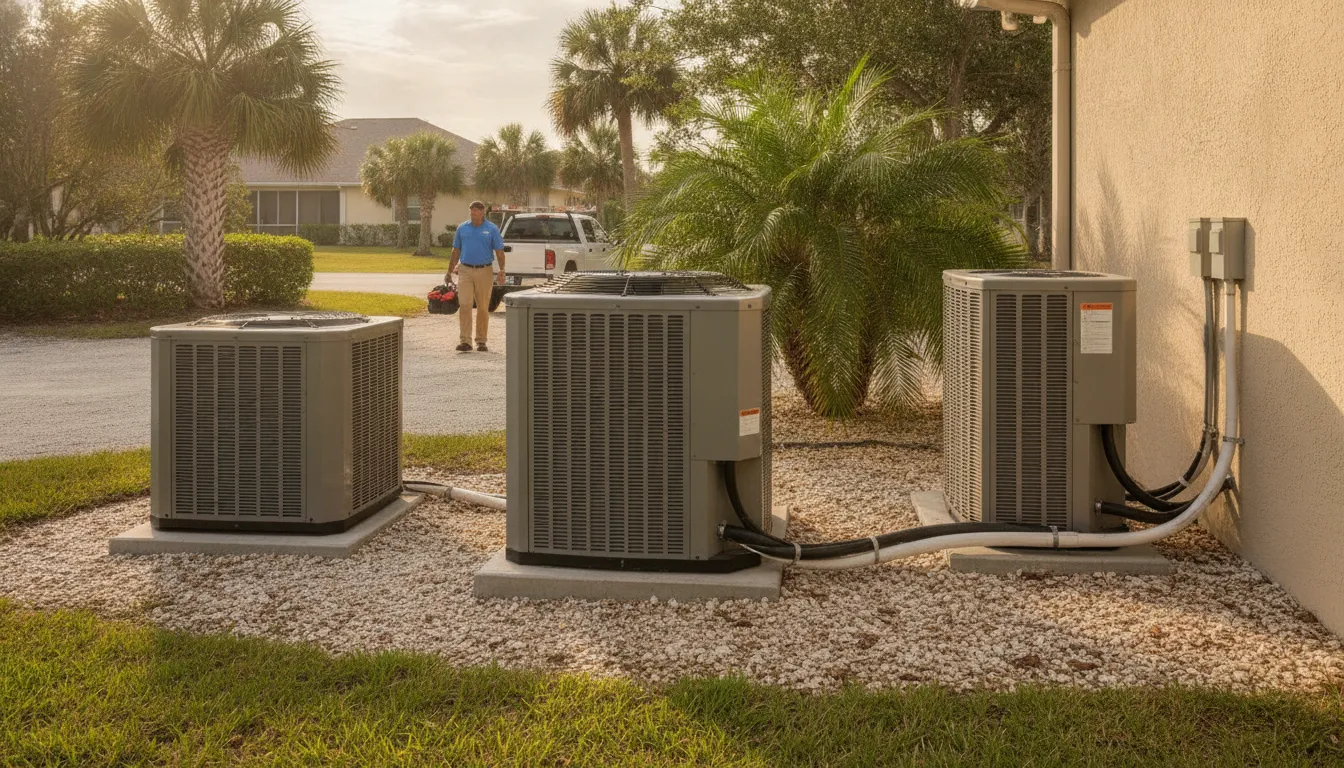
Ductless systems deliver zone-specific comfort without conventional ductwork. A compressor issue may affect one zone or the whole system. The technician should identify the actual impact before recommending work.
Tommy Cool Air provides AC installation and repair for homeowners comparing repair and system design options.
What Happens During a Professional Compressor Evaluation?
A professional evaluation separates a failing compressor from problems that create similar symptoms. The technician confirms system behavior, measures operating conditions, and explains whether repair or replacement makes sense.
- Confirm the symptom. The technician checks thermostat settings and observes sounds, cycling, airflow, and cooling performance. Reduced cooling does not prove compressor failure.
- Check electrical components. The evaluation includes wiring, capacitors, contactors, terminals, and motor connections. Readings can reveal an electrical problem that may be repairable.
- Measure refrigerant conditions. Diagnostics can include pressure, temperature, and ambient readings. Reference values depend on equipment, refrigerant, and expansion device.
- Check airflow and coils. The technician compares return-air and supply-air temperatures and checks humidity. Filters, ducts, blower operation, and coils can affect performance.
- Assess corrosion and age. Coastal salt air, moisture, system age, and other component conditions influence the decision. The technician considers whether the equipment can support a dependable repair.
- Provide written options. Compressor work may include recovery, brazing, pressure testing, evacuation, and recharge. The written recommendation should identify the fault, scope, concerns, and options.
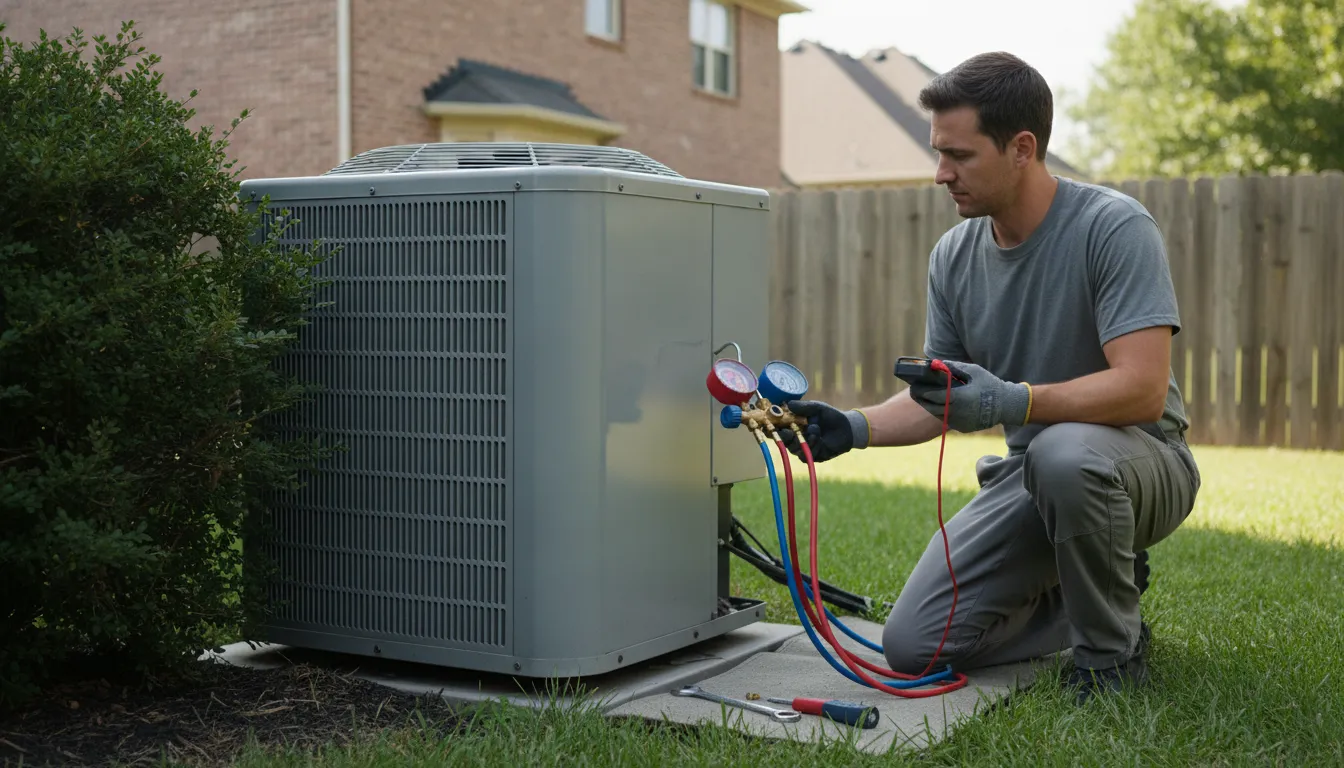
Tommy Cool Air evaluates the complete system before recommending a next step. That helps Corpus Christi homeowners understand what the equipment needs and why.
Should You Repair the Compressor or Replace the HVAC System?
A compressor failure does not automatically mean you need a new HVAC system. The better choice depends on equipment age, major component condition, refrigerant compatibility, efficiency, corrosion, and expected reliability.
Start with a confirmed diagnosis. Then compare the repair scope with the system's remaining service life. If the compressor is the primary problem and other major components remain sound, repair may be reasonable.
When compressor repair may make sense
Repair is worth discussing when the system is in good condition and the failure has a clear cause. Consider maintenance history, coil condition, electrical components, and ductwork airflow.
A compressor replacement can restore operation. It does not correct an undersized system, recurring leaks, restricted airflow, or widespread corrosion. Address the cause as well as the symptom.
When replacement deserves serious consideration
Replacement becomes more compelling when the system is older, inefficient, heavily corroded, or unreliable beyond the compressor itself. Frequent breakdowns, deteriorated coils, and repeated refrigerant problems can change the decision.
Do not base the decision on an unsupported dollar rule. Compare the repair scope with the condition and expected reliability of the entire system. Review both options in writing.
Replacement should begin with proper sizing
If replacement is the better path, proper sizing matters as much as equipment selection. A professional load calculation helps match capacity to the home. It is better than simply replacing an old unit with the same nominal size.
For planning guidance, see HVAC installation cost factors and Corpus Christi HVAC installation cost. Homes with combined equipment can review furnace and AC replacement.
How Can Corpus Christi Conditions Affect Compressor Decisions?
Answer: Corpus Christi heat, humidity, and salt air can increase cooling demand and outdoor equipment wear. A compressor recommendation should account for coil condition, corrosion, airflow, and summer workload. An evaluation helps homeowners choose a repair or replacement that fits the Gulf Coast environment.
Air conditioners in Corpus Christi work through long stretches of high heat. Humid weather can make the home feel warmer. The system may run longer while removing heat and moisture.
Salt air can contribute to corrosion on outdoor components, electrical connections, cabinet surfaces, and coil fins. Corrosion does not automatically mean the compressor has failed. It does mean the outdoor unit should be inspected as a system.
Ask whether the evaluation checked the condenser coil, refrigerant circuit, electrical components, airflow, and nearby connections. If another restriction or leak remains, a new compressor may face the same stress.
Tommy Cool Air serves Corpus Christi and nearby Gulf Coast communities. If your system is not cooling, use the Corpus Christi AC repair resource.
Request a quote-based HVAC compressor evaluation from Tommy Cool Air.
Frequently Asked Questions About HVAC Compressor Cost
What is included in an HVAC compressor cost estimate?
A reliable estimate starts with diagnosis. It accounts for the confirmed fault, equipment, refrigerant, access, labor, and related parts.
How do I know if my compressor is failing?
Warm air, unusual noise, repeated trips, and poor cooling can have several causes. Testing confirms whether the compressor is failing.
Is compressor replacement worth it on an older system?
Compare age, refrigerant, efficiency, corrosion, other components, and expected reliability with a properly sized replacement. Ask for both options in writing.
Does system type change the repair decision?
Yes. Central AC, heat pumps, and ductless systems use different equipment and operating requirements. The evaluation should match the system.
How does a warranty affect HVAC compressor cost?
Coverage depends on equipment, registration, warranty terms, and whether the issue involves a covered part or additional labor. Request coverage details in writing.
Get a Clear HVAC Compressor Evaluation
When compressor symptoms are unclear, an evaluation can separate a repairable issue from a larger system decision. Tommy Cool Air can review your equipment and explain the quote factors. Contact Tommy Cool Air to request an HVAC compressor evaluation.