A two stage HVAC system can adjust its heating or cooling output instead of using only full power or no power. That difference matters in Corpus Christi, where homes face long cooling seasons, high humidity, and changing daily demand.
A two stage HVAC system uses a lower output for milder demand and a higher output when conditions require more capacity. Tommy Cool Air helps Gulf Coast homeowners compare staging, sizing, humidity control, ductwork, and maintenance before choosing a system.
Staging can support steadier temperatures and longer cycles, but equipment alone does not guarantee better comfort. Sizing, controls, airflow, ductwork, and installation quality all shape the result.
Ask Tommy Cool Air to evaluate your home and explain two-stage system options.
What Is a Two Stage HVAC System?
A two stage HVAC system has two operating levels. It can run at a lower output when the home needs gentle conditioning, then move to a higher output when indoor or outdoor conditions demand more capacity.
In cooling equipment, staging usually changes compressor operation. In heating equipment, staging can change burner or heat output. Heat pumps can also use staged operation while moving between heating and cooling modes.
The thermostat and control board coordinate those changes. A mild call for comfort may begin in the lower stage. A stronger or longer call can bring on the higher stage. The exact sequence varies by equipment, thermostat, and installation.
How the two stages work
The lower stage is designed for everyday demand. It may run longer than a single full-capacity cycle when the lower output can maintain the set point.
The higher stage supplies additional capacity during hotter afternoons, colder mornings, or a quick recovery after a thermostat adjustment. It is not a separate HVAC system. It is a second operating level within compatible equipment.
This approach gives the system more choices than a single-stage unit. A single-stage system generally operates at one fixed output when it runs. It turns on at that output, then turns off when the thermostat is satisfied.
What staging does not fix by itself
A two stage HVAC system cannot correct poor equipment sizing or restricted ductwork. It also cannot compensate for a damaged coil, failing control, weak airflow, or poor installation.
Staging works best when the equipment, thermostat, blower, indoor coil, outdoor unit, and duct system are matched. A professional evaluation should review the whole comfort system before recommending an upgrade.
How Does Two-Stage Cooling Help With Humidity?
Two-stage cooling can support humidity control because a lower stage may create longer, steadier cooling cycles. Longer operation gives the indoor coil more time to remove moisture from moving air.
That benefit is especially relevant along the Gulf Coast. Corpus Christi homes can feel damp even when the thermostat shows a comfortable temperature. Lowering the thermostat may make the room colder without fully addressing the moisture in the air.
The U.S. Department of Energy explains that air conditioning removes heat more effectively than moisture in many conditions. Its guidance on hot-humid climates also discusses controls, airflow, and equipment setup. Read the DOE guidance on HVAC humidity control for additional context.
Why longer cycles can matter
A short cycle may lower the temperature quickly but stop before the system removes enough moisture. A longer lower-stage cycle can provide more consistent air movement and moisture removal.
Humidity outcomes still depend on the home and equipment. Oversizing, leaky ducts, poor airflow, outdoor moisture, and air leaks can undermine dehumidification. A two stage system is one part of a complete humidity strategy.
Tommy Cool Air also evaluates humidity-control options for Gulf Coast homes. Depending on the home, the right conversation may include equipment sizing, ductwork, controls, or dedicated dehumidification.
What homeowners should watch for
Persistent clamminess, musty odors, condensation, and uneven comfort deserve attention. These signs do not prove that a staged system is needed. They do show that a broader comfort evaluation may be useful.
Review our guide to humidity control for Gulf Coast homes for more ways to think about indoor moisture.
Two-Stage vs. Single-Stage HVAC: What Is the Difference?
The main difference is output control. A single-stage system has one operating level. A two-stage system has a lower level and a higher level, allowing it to respond more gradually to changing demand.
| Factor | Single-stage system | Two-stage system |
|---|---|---|
| Output choices | One fixed operating level when the system runs | Lower output for lighter demand and higher output for stronger demand |
| Temperature control | Can create more noticeable starts and stops in some homes | May support steadier comfort when the lower stage meets demand |
| Humidity support | Moisture removal depends on cycle length, sizing, and setup | Longer lower-stage cycles may support moisture removal when conditions allow |
| Sound pattern | Starts at its available operating level | May spend more time at a lower operating level |
| Controls | Often uses a simpler control sequence | Needs compatible staging controls and wiring |
| Best fit | Homes with straightforward comfort needs and compatible equipment | Homes where steadier comfort and variable demand are priorities |
Neither option is automatically right for every home. A properly installed single-stage system can provide dependable comfort. A poorly sized two-stage system can still cycle incorrectly or leave rooms uneven.
The comparison also differs from a variable-speed system. Variable-speed equipment can adjust across many output levels, while two-stage equipment uses two primary levels. The right choice depends on the home, comfort goals, controls, budget, and installation plan.
For broader equipment guidance, see our article about energy-efficient HVAC systems in Corpus Christi.
Is a Two-Stage System More Efficient?
A two stage HVAC system may operate more efficiently in some conditions, but no responsible evaluation should promise a specific utility-bill result. Efficiency depends on equipment ratings, sizing, runtime, duct performance, thermostat settings, weather, and installation quality.
When the lower stage meets demand, the system may avoid using full output for every call. That can support a smoother operating pattern during milder conditions. On a very hot Corpus Christi afternoon, the system may need its higher stage for longer periods.
Efficiency also starts with proper sizing. A unit that is too large may satisfy the thermostat quickly and cycle before removing enough moisture. A unit that is too small may run excessively during peak conditions. A load calculation gives the installer a better basis for equipment selection.
Controls and ductwork matter
The thermostat must communicate correctly with the equipment. The blower and indoor coil must support the selected staging sequence. Duct leaks or restrictions can waste capacity before conditioned air reaches the rooms.
Homes with comfort complaints should receive more than an equipment-label comparison. An energy evaluation may consider insulation, air leakage, duct performance, thermostat behavior, and the home's actual load.
Tommy Cool Air offers smart HVAC comfort and energy-saving guidance for homeowners comparing controls and system operation. Smart controls do not replace proper sizing, but they can be part of a complete comfort plan.
Talk with Tommy Cool Air about sizing, staging, and comfort goals before choosing equipment.
What Maintenance Does a Two-Stage System Need?
A two-stage system needs the same core HVAC care as other equipment, plus attention to staging controls and the relationship between components. Regular maintenance helps identify problems before they affect comfort during peak weather.
- Check the filter. A restricted filter can reduce airflow and affect how the system responds in each stage. Replace or clean it according to the filter and equipment requirements.
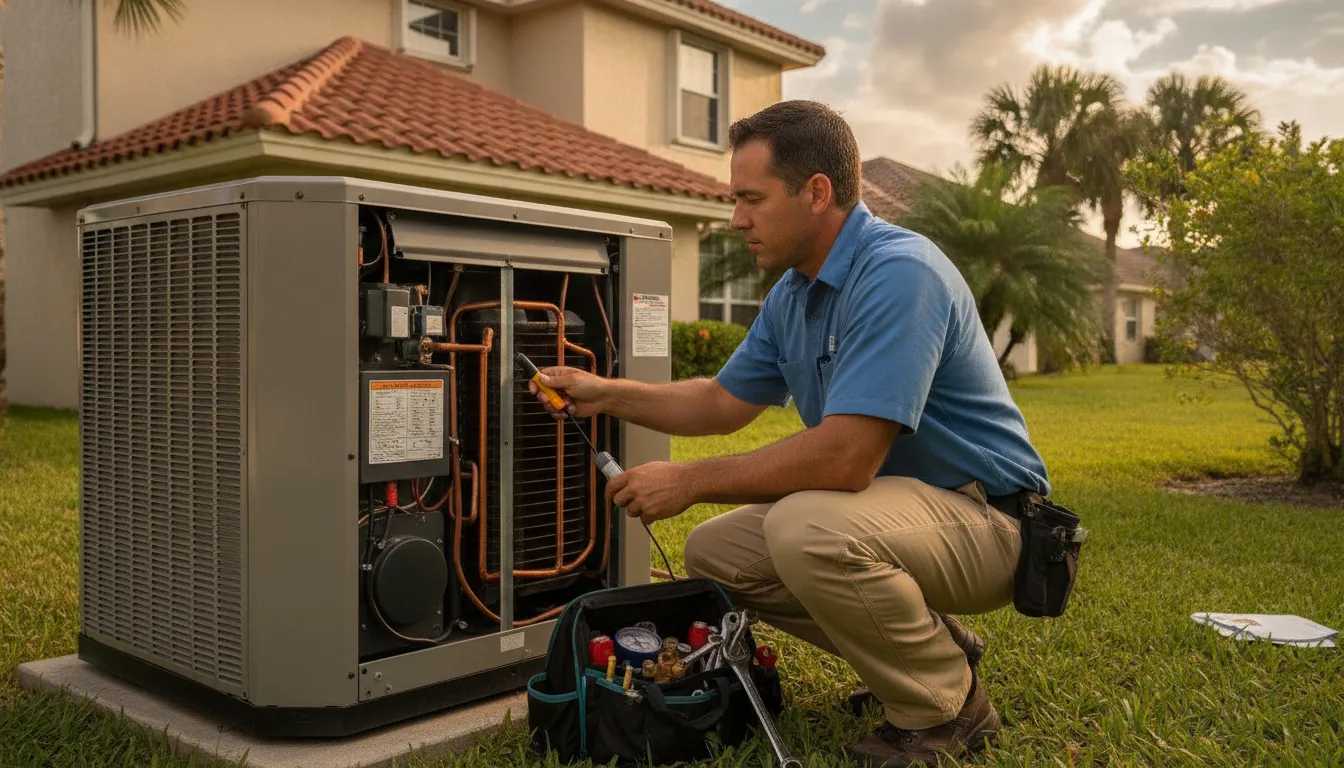
- Inspect indoor and outdoor coils. Dirt on either coil can reduce heat transfer. Coastal air also makes outdoor equipment condition important.
- Test electrical connections. A technician can inspect terminals, capacitors, contactors, wiring, and protective controls. Staged equipment relies on compatible control signals.
- Review thermostat operation. The thermostat should call for the correct stage and communicate with the equipment. A control problem can look like a capacity problem.
- Check the drain system. Cooling creates condensate. A restricted drain line can cause water problems or system shutdowns.
- Measure refrigerant and airflow conditions. The correct readings depend on the equipment. A technician should evaluate the system rather than add refrigerant based on a guess.
- Confirm blower performance. Airflow affects comfort, coil temperature, moisture removal, and stage operation. Duct restrictions should be considered when rooms remain uneven.
- Review the complete installation. Maintenance is also a chance to discuss noise, cycling, humidity, corrosion, and comfort changes with a qualified technician.
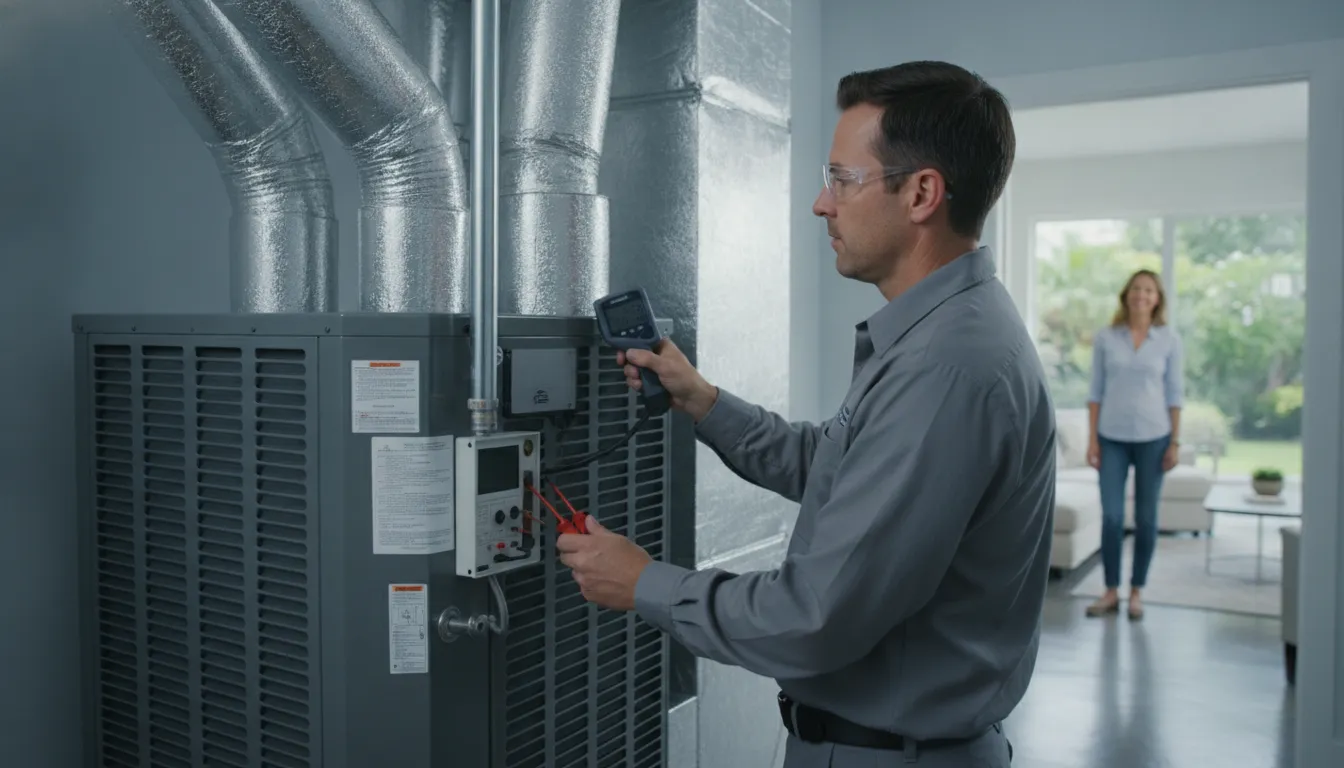
For local service planning, read our guide to Texas Gulf Coast AC maintenance. Maintenance timing should reflect the equipment, usage, indoor conditions, and manufacturer requirements.
Is a Two-Stage HVAC System Right for Your Corpus Christi Home?
A two-stage HVAC system may fit a Corpus Christi home when comfort varies across the day, indoor humidity is a concern, or the household wants more control than a fixed-output system provides.
Gulf Coast conditions create a demanding test for equipment. Extreme heat increases cooling demand. Humidity can make rooms feel uncomfortable even when the temperature seems acceptable. Salt air can contribute to corrosion on outdoor components and connections.
Those conditions do not make two-stage equipment an automatic solution. They make proper design more important. The installer should evaluate the home's load, ductwork, insulation, thermostat location, airflow, and exposure to coastal air.
Questions to ask before choosing staged equipment
- Was the home evaluated for proper equipment sizing?
- Will the thermostat and wiring support the planned stages?
- How will the system address humidity during lower sensible cooling demand?
- Are the ducts sealed, balanced, and sized for the equipment?
- What maintenance will the equipment and controls require?
- How will salt-air exposure affect outdoor inspection and cleaning?
- Would zoning, a variable-speed option, or dedicated humidity control better match the home?
Two-stage equipment can also make sense for homes with changing occupancy. A family may need more cooling in the afternoon, less at night, and different comfort levels in separate areas. Zoning and smart controls may complement staging when the duct system supports them.
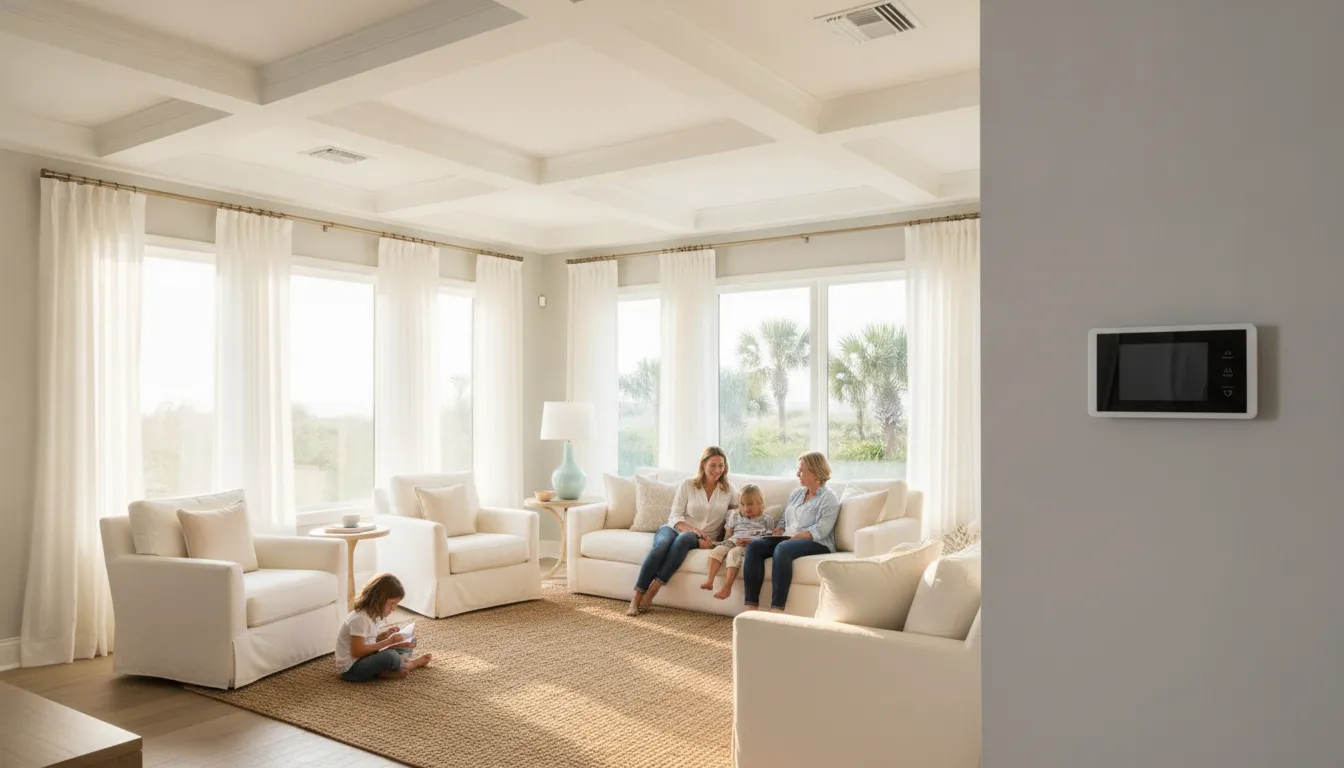
Tommy Cool Air works with central air conditioners, heat pumps, ductless systems, zoning, and indoor humidity solutions. Its team can compare options based on the home's actual needs instead of treating one feature as a universal answer.
Homeowners comparing equipment can also review Trane cooling systems for Gulf Coast homes and our AC installation and repair guide.
Request a quote-based HVAC evaluation for your Corpus Christi or Gulf Coast home.
Two-Stage HVAC System FAQs
What is a two stage HVAC system?
A two stage HVAC system has two primary operating levels. It can use lower output for milder demand and higher output when the home needs more heating or cooling capacity. The thermostat, control board, blower, and matched equipment coordinate the change between stages.
Does a two-stage AC run all the time?
Not necessarily. It may run longer at a lower output when that level can maintain comfort, then turn off when the thermostat is satisfied. Runtime depends on weather, sizing, insulation, ductwork, thermostat settings, and the home's cooling demand.
Can a two-stage system help with humidity?
It can support humidity control when longer lower-stage cycles remove more moisture from the air. Results depend on sizing, airflow, ductwork, controls, and installation quality. A separate humidity evaluation may be needed when indoor moisture remains high.
Is a two-stage HVAC system more efficient than a single-stage system?
It may use its lower output during lighter demand, but efficiency varies by equipment and installation. Equipment ratings, sizing, weather, duct performance, controls, maintenance, and thermostat settings all affect energy use. No system should be sold with a guaranteed savings promise.
What are common problems with a two-stage air conditioner?
Possible problems include incorrect thermostat wiring, control faults, airflow restrictions, dirty coils, poor sizing, and stage changes that do not occur as expected. These symptoms need testing. A technician should confirm the cause before recommending a part or replacement.
How is two-stage equipment different from variable-speed equipment?
Two-stage equipment uses two primary output levels. Variable-speed equipment can adjust across a wider range of output levels. Variable-speed systems may offer more modulation, but the best fit depends on the home's design, controls, ductwork, comfort goals, and installation plan.
Plan Your Next HVAC Upgrade With Tommy Cool Air
A staged system can be a thoughtful option for a Gulf Coast home, but the best choice starts with the building and the people who live in it. Tommy & the Cool Kids can help you compare sizing, staging, humidity control, maintenance, and installation scope.
Keep the next step practical. Ask for an evaluation and a quote based on your equipment, home, comfort goals, and current system condition.
Contact Tommy Cool Air to plan your next HVAC comfort upgrade.