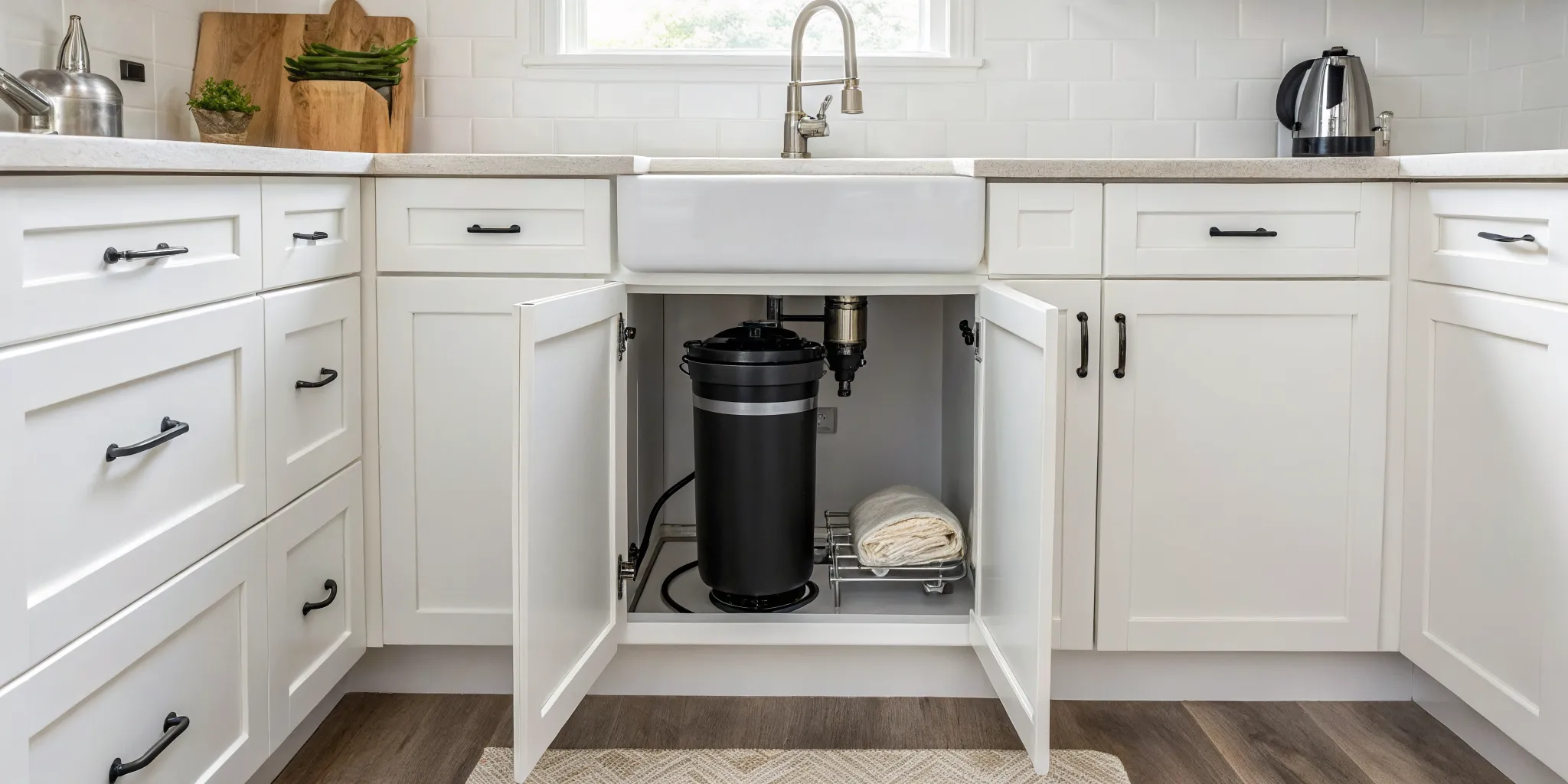
That puddle of water under your sink is more than just a plumbing nuisance; it's a potential safety hazard. When you have a garbage disposal leaking from the bottom, you have water dangerously close to the unit's electrical motor and wiring. Before you even think about grabbing a towel or a wrench, your absolute first priority must be safety. This guide will walk you through the critical first steps to take, starting with cutting the power to prevent any risk of electrical shock. From there, we'll help you diagnose the problem and understand why calling a professional plumber is the smartest and safest way to resolve this issue for good.
Key Takeaways
- A Bottom Leak Means It's Over: Water dripping from the base of the disposal unit, not the connecting pipes, indicates a fatal internal flaw. This means the main housing is cracked or the internal seals have failed, and the unit cannot be repaired.
- Replacement Is the Only Real Fix: Do not waste time or money trying to patch a leak from the bottom of the unit. These temporary fixes will fail, so investing in a new garbage disposal is the most effective and long-term solution.
- Prioritize Safety, Then Call a Professional: Your first step should always be to turn off the power to the disposal at the circuit breaker. Once the area is safe, contact a qualified plumber to handle the replacement correctly and efficiently.
Why Is My Garbage Disposal Leaking From the Bottom?
Finding a puddle of water under your kitchen sink is never a good sign, especially when the source is your garbage disposal. While some leaks around the sink flange or drain pipes can be fixed with a little tightening, a leak coming directly from the bottom of the unit itself is a different story. This type of leak almost always points to a serious internal failure. Think of it as the disposal’s way of saying it has reached the end of its life and is ready for retirement.
A leak from the bottom means the main body of the disposal is compromised. Unfortunately, this isn't something you can patch up with sealant or a simple part swap. The internal components are sealed at the factory, and once that seal breaks, the entire unit is usually a loss. It's a frustrating discovery, but knowing what's going on inside the machine can help you make the right call without wasting time or money on repairs that won't work. Let's look at the three most common culprits behind this problem. Understanding why it's happening can help you see why a replacement is often the only real solution our plumbing services team will recommend.
Worn-Out Internal Seals
Inside your garbage disposal, a system of seals and bearings keeps water contained while the motor does its job. Over years of grinding up food scraps, these internal seals simply wear out. They can dry up, crack, and lose their ability to hold a watertight barrier. When this happens, water begins to seep through the main body of the disposal and drip out from the bottom. Because these seals are built deep inside the unit and aren't designed to be replaced, a leak caused by their failure is a clear sign that the disposal's service life is over. It's the most common reason for a bottom leak and, unfortunately, the most definitive.
A Cracked Housing
Another major cause of a bottom leak is a crack in the disposal's housing. The outer shell of your disposal can develop cracks for a few reasons. Sometimes it's just due to old age and the stress of vibrations over many years. Other times, a crack can form if you accidentally send a hard, non-food item down the drain (like a bone or a piece of silverware) that rattles around and damages the interior. A manufacturing defect could also be to blame, though it's less common. Whatever the cause, a crack in the main body is a fatal flaw that can't be repaired, making replacement the necessary next step.
Internal Rust and Decay
Your garbage disposal lives a tough life, constantly exposed to water and acidic food waste. Over time, this environment can cause the metal components inside the unit to rust and corrode. As the rust eats away at the metal, it can create small holes or weaken the structure enough for water to start leaking out the bottom. Significant internal corrosion compromises the entire unit, making it unsafe and ineffective. If you suspect rust is the problem, especially in an older disposal, it’s definitely time to start shopping for a new one and schedule a professional installation. This ensures the job is done right and your new unit is set up for a long life.
Found a Leak? Here's What to Do First
Okay, take a deep breath. Finding a puddle of murky water under your kitchen sink is never a fun discovery, but don't panic. A leaking garbage disposal is a common household issue, and there are a few immediate things you need to do to manage the situation safely before you figure out the next steps. Acting quickly can prevent electrical hazards and minimize water damage to your cabinets. Let's walk through the first three critical actions to take as soon as you spot that leak.
Step 1: Kill the Power
Before you do anything else, your top priority is safety. Water and electricity are a dangerous mix, so you need to cut all power to the garbage disposal immediately. If your unit has a power cord, simply unplug it from the outlet under your sink. For hardwired disposals, you’ll need to head to your home’s circuit breaker panel and flip the switch that controls the unit. This single step is the most important one you can take to prevent the risk of electrical shock while you investigate the leak.
Step 2: Clear and Dry the Cabinet
Now that the power is off, it's time to assess the situation. Start by removing everything from the cabinet under your sink. This includes cleaning supplies, sponges, and any other stored items. Moving everything out of the way protects your belongings from water damage and gives you a clear, open space to work. Once the area is empty, use old towels to soak up any standing water and thoroughly dry the cabinet floor and the exterior of the disposal itself. A dry surface will make it much easier to spot exactly where the water is coming from.
Step 3: Stop Using the Disposal
This might sound obvious, but it’s crucial: do not use your sink or garbage disposal until the leak is fixed. Running any water down the drain will just send more of it onto your cabinet floor, potentially worsening the water damage. A leak from the bottom of the unit is often a sign that the disposal's internal seals have failed, which usually means it's time for a replacement. Trying to use it in this condition is ineffective and risky. If you're facing this issue, it's best to leave the water off and get professional help from a qualified plumber.
How to Confirm It's a Bottom Leak
Okay, you've spotted a puddle under your sink, and the garbage disposal looks like the culprit. Before you jump to conclusions and start shopping for a new one, let's make sure the leak is actually coming from the bottom of the unit. Water is sneaky; it can start leaking from a connection up top and drip down, making it seem like the main body has failed. A leak from the top or side connections is often a simple fix, like tightening a bolt or replacing a gasket. A true bottom leak, however, usually points to an internal failure that can't be repaired. Taking a few minutes to pinpoint the exact source of the water can save you a lot of time, money, and hassle. Follow these simple steps to play detective and find out exactly what you're dealing with.
Disconnect Power at the Breaker
First things first: safety. Before you put your hands anywhere near the garbage disposal, you absolutely must cut the power. Water and electricity are a dangerous combination, and your safety is the top priority. Find the electrical cord for the disposal under your sink and unplug it from the wall. If your unit is hardwired, you'll need to go to your home's circuit breaker box and flip the switch that controls the disposal. If you aren't sure which breaker it is, you can turn off the main power, but it's better to identify the specific one. If you're at all uncomfortable with this step, it's always best to call for professional plumbing services.
Thoroughly Dry the Unit
Now that the power is off and the area is safe, you need a clean, dry surface to spot any new drips. Grab some old towels or a roll of paper towels and completely dry the outside of the garbage disposal, the pipes connected to it, and the floor of the cabinet underneath. You want to eliminate any existing moisture so you can clearly see where new water is coming from. Once everything is bone dry, place a few fresh, dry paper towels directly on the cabinet floor under the disposal. This will act as your leak detector during the water test.
Check Other Connection Points First
With everything dry, take a moment to inspect the most common leak spots before you even turn on the water. A leak from the bottom is often just water that has dripped down from a higher point. Gently run your fingers around the main connection points to check for any dampness. Start at the very top, where the disposal meets the sink drain (this is called the sink flange). Then, check the side pipes where the dishwasher hose and the main drain line connect. If you find moisture at any of these spots, you've likely found your culprit, and it's probably not a fatal bottom leak.
Perform a Quick Water Test
If all the upper connections feel dry, it's time for the final test. Put the stopper in your sink drain and fill the basin with a few inches of water. To make a leak extra visible, you can add a few drops of food coloring to the water. Now, get your flashlight ready and position yourself so you have a clear view under the sink. Pull the stopper and let the water drain into the disposal. Watch carefully as the water runs through. Check the paper towels you placed underneath. If they become wet directly under the main housing of the unit, and you've already confirmed the upper connections are dry, you have successfully confirmed a bottom leak.
Can a Garbage Disposal Leaking From the Bottom Be Repaired?
I’ll get straight to the point: a garbage disposal leaking from the bottom is almost never worth repairing. While it’s tempting to look for a quick fix, a leak from the unit's base signals a major internal failure. Think of it as the engine block cracking in a car; you can’t just patch it up and expect it to run reliably. The internal seals have likely worn out, or the housing itself has cracked from age and use. These aren't simple parts you can swap out. Trying to repair it is often a temporary, messy, and ultimately futile effort. The leak will almost certainly return, and you’ll be right back where you started, but with less money in your pocket. It’s a tough pill to swallow, but accepting that the unit has reached the end of its life is the first step toward a real, long-lasting solution.
Why Internal Leaks Are a Dealbreaker
A leak coming from the physical bottom of the garbage disposal unit, not the pipes connected to it, is a sign of a fatal flaw. This happens when the internal seals that keep water inside the grinding chamber have completely degraded. Over time, water, food particles, and rust wear these seals down until they can no longer do their job. Another common cause is a crack in the metal or plastic housing of the disposal itself. Because these core components are sealed by the manufacturer and not designed to be serviced, a repair isn't a practical option. It's the disposal's way of telling you it's officially retired.
Why Replacement Is Your Best Bet
When you're facing a bottom leak, replacement is your best and safest bet. Attempting a DIY patch on an internal crack is a recipe for a bigger, more damaging leak down the road. A new unit gives you a fresh start with brand-new seals, a sturdy housing, and the peace of mind that comes with a reliable appliance. Instead of wasting time and money on a repair that won’t hold, investing in a replacement solves the problem for good. Our team offers professional plumbing services to make the switch quick and seamless, ensuring your new disposal is installed correctly and safely from day one.
The Cost of Repair vs. Replacement
Let’s talk numbers. While there isn't really a "repair cost" for a bottom leak since it's not a viable fix, you can expect a full garbage disposal replacement to cost between $200 and $550. This range typically covers the new unit and professional installation. Trying to seal the leak yourself might seem cheaper initially, but when the patch fails, you'll be paying for a replacement anyway, plus any water damage that occurred in the meantime. A professional replacement is a one-and-done cost that guarantees a working, leak-free sink for years to come, making it the more cost-effective choice in the long run.
Don't Forget to Check Your Warranty
Before you run out and buy a new disposal, take a minute to check its warranty. Most garbage disposals come with a manufacturer's warranty that can range from a few years to a decade. If your unit is still covered, a bottom leak might qualify you for a free replacement. Find the model number on the unit and look it up online or check your original paperwork. While leaks from the top (the sink flange) or side (the drain lines) are often fixable by tightening connections, a bottom leak is usually a sign of complete failure, which is exactly what a warranty is for.
Is It Time for a Replacement? Watch for These Signs
A leak from the bottom is a pretty clear signal that your garbage disposal’s time is up. But other, more subtle signs can also tell you that a replacement is on the horizon. If your unit is showing a few of these symptoms, especially in combination with a leak, you can feel confident that investing in a new disposal is the right move. It saves you the headache of paying for a temporary fix on an appliance that's already on its way out.
It's Leaking From the Bottom (The Big One)
I know this is the last thing you want to hear, but a leak coming from the bottom of the unit itself is the most definitive sign that it needs to be replaced. This isn't a loose pipe or a worn-out flange; it means the internal seals have failed or the casing has cracked. Think of it as a hole in the bottom of a bucket. You can’t patch it effectively, and any attempt to do so will likely fail again soon. This kind of internal failure is not repairable, so your best and safest option is to start looking for a new unit.
Frequent Jams and Resets
Is your garbage disposal jamming every time you try to use it? While an occasional jam can happen, constant clogging means the motor is too weak or the blades are too dull to do their job. If you find yourself constantly reaching for the Allen wrench or hitting the little red reset button on the bottom of the unit, it’s a cry for help. The disposal is struggling to function, and this continuous strain is a clear indicator that it's nearing the end of its functional life.
Strange Grinding or Humming Noises
You’re used to the normal roar of your disposal, but new, strange sounds are a bad sign. A loud, metallic grinding noise, different from the usual food-chopping sound, can point to a failing motor or broken internal components. Even worse is a persistent humming sound with no action. This often means the motor has power but is seized and unable to spin. After ensuring there isn't a stray object causing the jam, these noises usually signal a fatal mechanical issue that a simple repair can't solve.
It's More Than a Decade Old
Most garbage disposals have a lifespan of about 8 to 12 years. If your unit is in that age range or older, it has served you well. Like any appliance with a motor and moving parts, it will eventually wear out. Pouring money into repairing an old unit is often not a good investment, as another part is likely to fail soon after. If your decade-old disposal starts acting up, consider it a life well-lived and begin the process of choosing a replacement.
Smells That Just Won't Quit
A funky smell that won't go away, no matter how many lemon peels or ice cubes you grind, is a major red flag. While temporary odors are common, a persistent foul smell often means that food waste has gotten trapped in tiny cracks inside the unit caused by internal rust and decay. These areas are impossible to clean properly. The lingering odor is a symptom of this internal breakdown, telling you that the unit is decaying from the inside out and it's time for a fresh start with a new disposal. If you're ready to make a change, our team provides expert plumbing services to get your kitchen back in order.
Safety First: Handling a Leaking Disposal
When you find a puddle under your sink, it’s easy to go into problem-solving mode. But with a garbage disposal, you have to put safety at the top of your list. A leaking disposal isn't just a plumbing issue; it's an electrical hazard waiting to happen. Before you grab a towel or a wrench, taking a few key safety precautions is essential to protect yourself and your home.
Always Prioritize Electrical Safety
Before you do anything else, your first and most important step is to cut the power to the garbage disposal. Don't just flip the switch on the wall; that's not enough. You need to go to your home's main breaker box and turn off the specific circuit that powers your unit. If your breakers aren't labeled, you can shut off the main power to be completely sure. This is a non-negotiable step to prevent any risk of electric shock. Your safety is the absolute priority, and working on any appliance without fully disconnecting it from its power source is a serious risk.
Water and Electricity Don't Mix
We all know that water and electricity are a dangerous combination. When your garbage disposal is leaking, you have both elements in a very small, enclosed space under your sink. This creates a hazardous situation that can lead to electrical shocks or short circuits, which could damage other appliances or your home's electrical system. That's why simply putting a bucket under the leak isn't a safe, long-term solution. The constant presence of water near the disposal's motor and wiring is a problem that needs to be addressed immediately, and it’s always better to be overly cautious.
When to Leave It to the Professionals
If you've confirmed the leak is coming from the bottom of the unit itself, it's time to call for backup. A leak from the main housing is almost always a sign of an internal failure, and this isn't something you can fix with sealant or tape. Attempting a DIY patch is not only ineffective but can also be unsafe. The best and safest solution is a full replacement. Our team of experienced plumbers can handle the entire process for you, from safely removing the old, leaking unit to installing a new one correctly. Don't hesitate to contact us for professional help; it's the quickest way to get your kitchen back in working order.
Choosing Your Next Garbage Disposal
If you’ve confirmed the leak is coming from the bottom of your garbage disposal, it’s unfortunately time to say goodbye. Since the internal housing is compromised, a replacement is the only safe and effective solution. But this is also an opportunity to get a new unit that perfectly fits your kitchen habits and household size. Choosing the right garbage disposal isn't just about replacing a broken appliance; it's about upgrading your kitchen's functionality for the long haul. A good disposal can make cleanup faster and easier, while a poorly chosen one can lead to clogs, jams, and frustration.
When you start shopping, you'll notice a few key differences between models. The most important factors to consider are the motor's power, the quality of the grinding components, and the noise level. You'll also need to decide whether you'll install it yourself or call a professional. Getting these things right will ensure your new disposal works efficiently for years to come, without the drama of another leak under your sink. Let's walk through how to pick the best option for your home so you can make a confident choice.
Finding the Right Horsepower
The motor is the heart of your garbage disposal, and its power is measured in horsepower (HP). A higher horsepower means the disposal can grind tougher food waste more effectively and is less likely to jam. For a small household or apartment, a 1/3 or 1/2 HP model is usually sufficient. However, if you have a larger family, cook frequently, or want to dispose of fibrous foods like celery or potato peels, investing in a 3/4 or 1 HP model is a smart move. Beyond power, look for units with stainless steel grinding components. They resist rust and corrosion, which is a major cause of the internal decay that leads to leaks in the first place.
DIY vs. Professional Installation
Once you've picked your new disposal, the next question is installation. If you're comfortable with basic plumbing and electrical work, replacing a garbage disposal can be a straightforward DIY project. Most models come with detailed instructions, and the process usually involves disconnecting the old unit and hooking up the new one. However, if the thought of working under the sink with pipes and wires makes you nervous, there’s no shame in calling for backup. A professional plumber can handle the installation quickly and safely, giving you peace of mind that everything is connected properly and leak-free. Our team offers expert plumbing services to ensure your new disposal is installed right the first time.
Know When to Call a Plumber
If you’ve tried the basic troubleshooting steps and the leak is definitely coming from the bottom of the disposal unit itself, it’s time to call in a professional. A leak from the bottom is one of the most serious kinds because it almost always points to a crack in the internal housing or a complete failure of the internal seals. Think of it as a crack in the engine block of a car; it’s a fundamental problem that can’t be patched up from the outside. These internal components are not designed to be serviced or replaced, so when they fail, the entire unit has reached the end of its life.
While it might be tempting to reach for some waterproof sealant or epoxy, this is one DIY fix you should skip. The intense vibration and pressure inside a garbage disposal will quickly break down any patch you apply, leading to another leak and potentially more water damage under your sink. This is where a certified plumber becomes essential. They can accurately diagnose the problem and handle the replacement safely and efficiently, ensuring all the new plumbing connections are secure and the electrical work is done correctly.
Trusting a professional not only saves you time and frustration but also protects your home from the serious risks of mixing water and electricity. A plumber will manage the entire process, from safely disconnecting the power and water supply to installing the new unit and testing it to make sure everything is working perfectly. They can also help you choose the right replacement model for your household's needs. If you’re facing a stubborn leak from the bottom of your disposal, give our team at Tommy Cool Air a call. We’ll help you get your kitchen back to normal in no time.
Frequently Asked Questions
Can I just use some kind of sealant to patch a small leak at the bottom? I know it’s tempting to look for a quick fix, but patching a bottom leak with sealant is unfortunately not a real solution. The leak is a sign of a major internal failure, and the intense pressure and vibration inside the unit will cause any patch to fail quickly. You would be setting yourself up for another, potentially worse, leak down the road, along with the risk of water damage to your cabinets.
My leak is just a slow drip. Do I really need to replace the whole unit right away? Yes, even a slow drip from the bottom of the unit is a serious issue. That small leak is proof that the internal seals have broken down or the housing is cracked, and it will only get worse over time. Ignoring it can lead to warped cabinets, mold growth, and a constant electrical hazard under your sink. Acting now prevents a small problem from turning into a much bigger, more expensive one.
How can I be sure the leak is from the bottom and not just a loose pipe? This is a great question, as a loose pipe is a much easier fix. To be sure, first, turn off the power to the disposal at the breaker. Then, completely dry the outside of the unit and all the pipes connected to it. Place a dry paper towel underneath and fill your sink with a few inches of water. When you pull the plug, watch closely to see exactly where the first drops appear. If the paper towel gets wet directly under the main body of the disposal, you've confirmed a bottom leak.
How long do garbage disposals typically last? Most garbage disposals have a lifespan of about 8 to 12 years, depending on the model and how often you use it. They are hardworking appliances that deal with a lot of stress from water, food acids, and vibration. If your unit is around a decade old and is starting to fail, it has likely reached the end of its expected service life, and replacement is a sensible investment.
What's the biggest risk of a leaking garbage disposal? The single biggest risk is electrical shock. Water and electricity are a dangerous combination, and a leak creates a hazardous environment right next to the disposal's motor and wiring. Beyond the immediate safety concern, a persistent leak can cause significant water damage to your kitchen cabinets and flooring, leading to costly repairs and the potential for mold.