Is Duct Cleaning a Waste of Money? Corpus Christi Guide
Is duct cleaning a waste of money? Sometimes, yes, when a company recommends a whole-system cleaning without confirming contamination or heavy debris. In Corpus Christi, homeowners can make a better decision by identifying the source of dust, odors, or comfort problems before paying for work.
Ask Tommy Cool Air for an evidence-based ductwork evaluation.
Duct cleaning is not automatically a waste of money, but it is not routine maintenance for every home. Tommy Cool Air recommends looking for confirmed mold, pests, heavy debris, or post-renovation contamination. If those signs are absent, filter care, source control, repairs, or ventilation may solve the actual concern more effectively.
The U.S. Environmental Protection Agency says duct cleaning has not been shown to prevent health problems. It also explains that dirty ducts do not necessarily release particles into living areas. At the same time, the agency identifies situations where professional cleaning deserves serious consideration. This article applies that balanced guidance to Corpus Christi homes.
Is Duct Cleaning a Waste of Money? What Evidence Says
Tommy Cool Air's answer to "is duct cleaning a waste of money" is yes when no meaningful contamination is present. But cleaning can be reasonable when an inspection confirms mold, pests, or heavy debris inside the system. The decision should follow evidence and a defined scope, not a coupon, annual reminder, or promise of guaranteed health benefits.
The EPA does not recommend routine duct cleaning for every home. Its guidance notes that research has not conclusively shown that dirty air ducts increase particle levels throughout a home. It also says duct cleaning has not been shown to prevent health problems. These statements do not mean every duct system is clean or that cleaning is never useful. They mean the service should have a specific reason.
Cleaning also has limits. It removes accumulated material from accessible duct surfaces and selected HVAC components. It does not automatically correct a leaking connection, damaged insulation, undersized equipment, poor drainage, wet building materials, or a contaminated air handler. It cannot guarantee relief from allergies, asthma, odors, or high energy bills when those symptoms have another source.
Indoor air concerns may come from pet dander, tracked-in soil, cleaning products, outdoor air, inadequate ventilation, or moisture. Source control and ventilation can be more direct solutions. Filter selection and replacement may also matter more than duct cleaning when the issue is recurring dust entering the system.
Balanced advice still requires action when contamination is confirmed. Substantial visible mold inside hard-surface ducts or on HVAC components, evidence of rodents or insects, and excessive dust or debris released from supply registers are meaningful warning signs. A major renovation can also justify an inspection if construction debris may have entered unprotected ductwork.
Read the EPA guidance on whether home air ducts should be cleaned before approving a service. It provides useful boundaries without treating every home as the same. For local context, Tommy Cool Air can also help you review indoor air quality service options after a system evaluation.
When Can Duct Cleaning Be Worth the Cost?
Tommy Cool Air recommends considering duct cleaning when an inspection documents a condition that cleaning can address. The strongest reasons include substantial mold-like growth inside the duct system, pests, heavy debris coming from supply registers, or construction dust inside the HVAC equipment. The condition should be documented before work begins.
Substantial visible mold or suspected biological growth
Visible growth inside hard-surface ducts or on HVAC components deserves professional attention. The location is important. A discolored register cover can collect surface material without proving that the duct interior is affected. A technician should inspect accessible areas, identify the suspected material, and look for the moisture source that allowed it to develop.
Cleaning does not solve an ongoing moisture problem. If a drain pan, coil area, duct connection, or nearby building material remains wet, contamination can return. Ask whether the recommendation includes moisture diagnosis and what happens if the inspection finds a problem outside the ductwork.
Rodents, insects, or other pests inside the ductwork
Evidence of rodents or insects inside ducts is another reason to arrange an evaluation. The infestation source must be addressed before or alongside cleaning. Otherwise, the system can become contaminated again. The provider should explain which sections show evidence, how access will be made, and whether pest control or repairs are needed.
Heavy debris released through supply registers
Repeatedly visible dust or debris blowing from supply registers is different from a dusty grille. Observe what happens while the system operates. Note whether material is released from multiple supplies, whether the dust returns soon after cleaning the cover, and whether a renovation could have introduced debris.
Construction dust can contain drywall particles, sawdust, insulation material, or other debris. A significant renovation therefore makes an inspection sensible. The project itself does not prove that every duct requires cleaning. The decision should reflect what entered the system and whether the material remains in the ductwork.
What a justified recommendation should include
A trustworthy recommendation connects evidence to scope. It should identify the affected components, describe the cleaning method, explain containment, and state what is excluded. It should also distinguish cleaning from sealing, repair, moisture control, filter replacement, or other work.
Tommy Cool Air provides professional indoor air quality services that can be considered alongside duct cleaning. If an evaluation supports cleaning and sealing, review the energy-saving heating and cooling options only when they relate to the diagnosed condition. A focused recommendation is more useful than an automatic upgrade list.
Why Is Duct Cleaning a Waste of Money in Some Homes?
Tommy Cool Air generally considers duct cleaning unnecessary when the only evidence is normal household dust. One dusty register, an annual sales offer, or an undiagnosed odor does not prove contamination. Filter care, source control, ventilation, or an HVAC inspection may address those concerns more directly.
| Concern | Why cleaning may be unnecessary | Better first consideration |
|---|---|---|
| Light, ordinary dust | Routine dust does not establish contamination inside ductwork. | Replace the filter and reduce household dust sources. |
| One dusty register | A grille can collect surface dust or carpet fibers. | Clean the cover and observe the supply while the system runs. |
| An annual cleaning offer | Every home does not require a yearly duct cleaning. | Request an inspection and specific evidence. |
| Persistent HVAC odor | The coil, drain pan, filter, or moisture may be the source. | Diagnose the component creating the odor. |
| High energy bills alone | Efficiency problems can come from equipment, airflow, or duct leaks. | Schedule an HVAC performance and leakage evaluation. |
The EPA explains that source control and ventilation may be more effective than duct cleaning for some indoor air concerns. Source control can include reducing tracked-in dust, managing pet dander, correcting moisture, and limiting indoor pollution. Ventilation can help when outdoor air quality and building conditions support that approach.
Filter care is another practical starting point. A loaded or poorly fitted filter lets more particles enter the system. Replace it according to the equipment and household conditions. Before choosing a higher-efficiency filter, confirm that the HVAC system can handle the added resistance. A filter that is too restrictive can create airflow problems.
Cleaning also does not repair leaks. Gaps, disconnected joints, damaged insulation, and poorly sealed connections can waste conditioned air or draw contaminants into return pathways. If leakage is the finding, sealing is the more direct service. Ask the technician to explain whether the concern is contamination, leakage, airflow, or another equipment problem.
For additional household steps, review Tommy Cool Air's air conditioning services and ask whether the equipment itself needs diagnosis. A home with heating concerns may need heating system repair or installation guidance instead. The right first step depends on the symptom and the inspection result.
How Gulf Coast Conditions Affect the Decision
Tommy Cool Air encourages Corpus Christi homeowners to account for heat, humidity, salt air, and long cooling seasons. These conditions make HVAC maintenance and moisture awareness important, but they do not make duct cleaning automatic.

Why a humid home needs a complete inspection
A useful evaluation looks beyond the nearest supply register. The technician should review accessible duct sections, the return path, air handler, coil, drain pan, filter, insulation, and visible signs of leakage. The inspection should also consider whether the equipment is operating correctly and whether moisture is being managed.
Salt air and equipment care
Coastal air can accelerate corrosion on exposed outdoor equipment and fasteners. Corrosion is an equipment-care concern, not proof that the indoor ducts need cleaning. If comfort or performance changes, a technician should identify whether the cause is airflow, coil condition, refrigerant performance, electrical components, duct leakage, or contamination.
Homeowners can use Tommy Cool Air's Cool Kids Comfort Club membership information to review available maintenance support. Confirm current benefits and pricing before enrolling. Membership should complement a documented service need, not replace an inspection.
HVAC ducts and dryer vents are different
HVAC ducts distribute conditioned air through rooms. A dryer vent carries warm, lint-filled exhaust from the clothes dryer to the outdoors. These systems require different inspections, equipment, and recommendations. HVAC duct cleaning does not clean the dryer vent, and a dryer-vent appointment does not address supply or return ductwork.
What Should a Professional Duct Inspection Cover?
Tommy Cool Air recommends that a professional inspection identify the source of the concern before recommending cleaning. It should review accessible duct sections and related HVAC components, document evidence, explain the proposed scope, and distinguish cleaning from repairs.
Ask where the evidence is located
Ask the technician to show or describe the affected area. Is material inside a hard-surface duct, on the air handler, around the coil, in the drain pan, or only on a removable grille? Is it present in one branch or throughout the system? Clear answers make the recommendation easier to evaluate.
For suspected mold, ask how the material was identified and whether the moisture source was considered. For pests, ask whether there is evidence of an active entry point or infestation. For heavy debris, ask whether it is being released through supplies or simply visible near a register.
Confirm the proposed scope
A written scope should list supply and return ducts, registers, grilles, air-handler components, access points, and any areas excluded from the work. It should state the price or pricing basis, the expected duration, and how the company will protect the home. It should not rely on vague claims that the work will cure allergies or guarantee lower bills.
Ask about containment and equipment
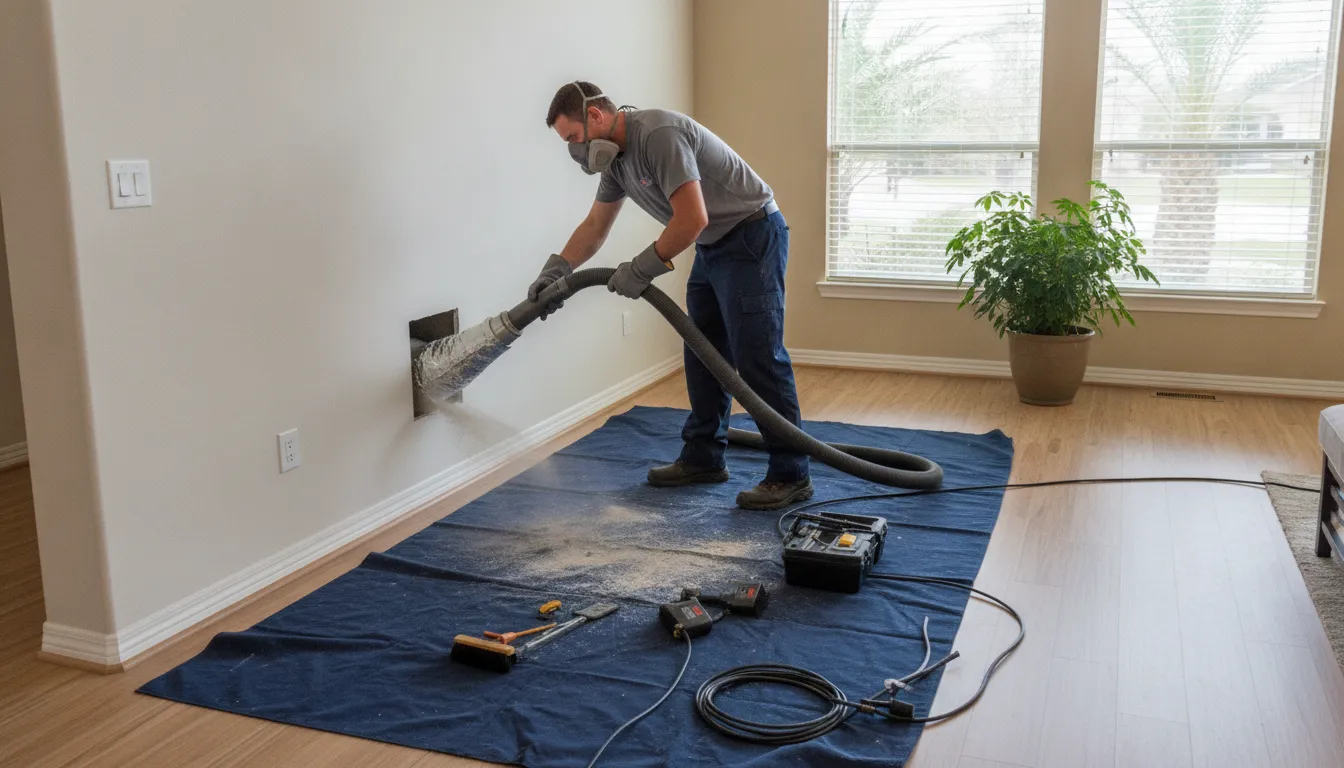
Cleaning should control dust at its source and protect flooring, furniture, and occupied rooms. Ask how openings will be sealed, how debris will be collected, and how the air handler will be protected. The selected vacuum and agitation tools should suit the system and avoid damaging duct liners or insulation.
Be cautious with unsupported chemical upsells. The EPA does not recommend routine use of biocides in air ducts. Ask what problem a product addresses, what evidence supports it, and whether moisture remediation or physical removal is the appropriate approach. Do not feel pressured to approve same-day add-ons.
Tommy Cool Air's company information can help you learn more about the local team before requesting an evaluation. You can also use the Tommy Cool Air FAQs to review common service questions. A credible provider should welcome questions about evidence, scope, equipment, and alternatives.
What Should You Do Before Paying for Duct Cleaning?
Tommy Cool Air recommends checking simple causes first and recording what you observe. Replace or inspect the filter, note where dust appears, identify when odors occur, and look for airflow or moisture symptoms before requesting an evaluation.
- Inspect the filter and note its condition.
- Observe whether dust exits supply vents during operation.
- Record odors, weak airflow, moisture, or unusual noise.
- Ask for documented evidence and a written scope.
Start with the filter and visible symptoms
Check whether the filter is loaded, damaged, poorly fitted, or overdue for replacement. Note the filter size and type before buying a different model. A new filter may reduce particles entering the system, but it will not correct a leak, wet component, or source of indoor pollution.
Observe whether dust actually blows from supply vents while the system operates. Pay attention to weak airflow, uneven room temperatures, water around the indoor unit, repeated odors, or unusual system noise. These clues may point to equipment or duct problems that cleaning alone cannot solve.
Separate contamination from leakage
Settled dust and leaking conditioned air are different problems. Cleaning removes material from accessible surfaces. Sealing addresses gaps, disconnected joints, damaged insulation, and poorly sealed connections. If comfort problems are strongest in rooms far from the equipment, ask whether airflow balance or leakage is involved.
Similarly, a recurring odor may require coil, drain, filter, or moisture diagnosis. Do not assume the smell began in the ductwork. The more specifically you describe the symptom, the easier it is for a technician to recommend the right evaluation.
Get a written recommendation
Do not approve a whole-house package based only on a phone promise or a limited-time discount. Ask for evidence, scope, exclusions, equipment details, and an explanation of alternatives. A professional should tell you when cleaning is not the best first step.
If the inspection supports service, Tommy Cool Air can help compare duct cleaning, sealing, repairs, and other indoor air quality options. Use the contact page to request a ductwork evaluation in Corpus Christi. Individual repair, installation, and project pricing should be confirmed after the property and system are evaluated.
Contact Tommy Cool Air before approving a duct cleaning package.
Frequently Asked Questions
Tommy Cool Air answers the most common duct-cleaning questions by separating confirmed contamination from ordinary dust, equipment issues, and moisture problems.
How much does air duct cleaning cost?
There is no useful one-size-fits-all price. Cost depends on system size, number of supply and return paths, access, contamination, equipment, and the scope of work. A written estimate should identify what is included and what is excluded. Choose an inspection and itemized recommendation instead of comparing dramatic discount prices without knowing the service scope.
What are the drawbacks of duct cleaning?
The main drawback is paying for work without a confirmed reason. Cleaning can also fail to solve an odor, allergy concern, comfort problem, or high bill when the actual source is elsewhere. Improper technique or equipment may damage duct materials or redistribute dust. Ask how the provider will protect the system and home before authorizing service.
Can duct cleaning remove a persistent odor?
Sometimes, but not always. Odors may come from an evaporator coil, drain pan, filter, moisture issue, insulation, or another component. Duct cleaning will not correct a failing part or ongoing water problem. A technician should identify the odor source first and explain why the proposed service is likely to address it.
When should ducts be cleaned for mold or pests?
Arrange a professional evaluation when substantial visible mold appears inside hard-surface ducts or HVAC components. Schedule one when rodents or insects are present inside the ductwork, or when heavy debris is repeatedly released from supply registers. These are specific reasons identified in EPA guidance. A dusty grille alone does not establish contamination.
Do ducts need routine cleaning every year?
Usually not. Routine cleaning is not necessary for every home, and research has not shown that it prevents health problems. Replace filters as recommended, manage moisture and indoor pollution sources, and maintain the HVAC system. Schedule duct cleaning when an inspection finds a clear condition that the service can address.
Is duct cleaning a waste of money after a renovation?
Not necessarily. An inspection is sensible after major work if drywall dust, sawdust, insulation, or other construction debris may have entered an unprotected HVAC system. The renovation alone does not prove cleaning is needed. Ask whether debris is inside the ducts or equipment, then approve only the scope supported by that finding.
Contact Tommy Cool Air for a Ductwork Evaluation
Tommy Cool Air can help Corpus Christi homeowners separate confirmed duct concerns from other issues. Filtration, repairs, sealing, moisture control, or source control may be better options after an evaluation.
Filtration, repairs, sealing, moisture control, or source control may be better options. Tommy Cool Air can help you review the evidence and choose a proportionate next step.
Contact Tommy Cool Air to schedule an indoor air quality and ductwork evaluation.