It’s tempting to ignore that tiny drip, hoping it will just go away. But when it comes to your water heater, even the smallest leak is a big problem. That slow trickle can silently cause serious structural damage, create a perfect home for mold, and even pose safety risks. A persistent water heater leak is also a huge energy waster, driving up your utility bills. This guide will show you exactly what to do for damage control. We’ll cover why you should act fast and help you make a smart, cost-effective decision about repairing or replacing your unit.
Key Takeaways
- Act fast to control the situation: Your first move should always be safety. Immediately turn off the power at the breaker and shut off the water supply to the tank to prevent further damage and electrical risks.
- The leak's location tells you everything: A leak from a top pipe or valve is often a simple repair, but water coming from the tank's body or base signals internal rust, meaning a replacement is necessary.
- Proactive care is your best defense: You can prevent most leaks with routine maintenance. Schedule an annual tank flush to clear out sediment and have a professional check the anode rod every few years to stop corrosion before it starts.
Found a Water Heater Leak? Here Are Your First Steps
Finding a puddle around your water heater is never a welcome sight. It’s stressful, and your first instinct might be to panic. But take a deep breath. You can get this under control by taking a few immediate, simple steps to prevent further damage and keep your home safe. Acting quickly can make a huge difference, turning a potential disaster into a manageable problem.
Before you even think about what’s causing the leak or how to fix it, your priority is safety and damage control. We’ll walk you through the four essential things you need to do right now to secure the situation before calling in a professional.
A Critical Safety Note for Gas Heaters
If you have a gas water heater, there’s one rule that trumps all others: trust your nose. If you smell gas—often described as a rotten egg or sulfur scent—you need to act immediately. Do not try to find the source of the leak, turn lights on or off, or use your phone inside the house. Your only priority is to get everyone out of the home safely. Once you are a safe distance away, call your gas company’s emergency line right away. A gas leak is extremely dangerous and can lead to a fire or explosion. Let the utility professionals handle the situation before you take any other steps.
Check Your Surroundings First
Before you conclude the water heater is the culprit, take a moment to inspect the area around it. Sometimes, the water on the floor isn't coming from your water heater at all. Other appliances are often installed nearby and can be the true source of the puddle. Your air conditioner’s condensate line could be clogged, or your furnace or a whole-house humidifier might be leaking. Check for any drips coming from these units or their connecting pipes. Tracing the water back to its highest point can help you pinpoint the real problem, saving you from misdiagnosing the issue before you call for help.
Document the Damage
Once you’ve managed the immediate safety concerns, grab your phone and become a detective. Before you start cleaning up, take clear pictures and videos of everything. Document the puddle of water, the visible signs of the leak on the tank or pipes, and any damage to the surrounding floor, walls, or personal items. This evidence is incredibly important if you need to file a homeowner's insurance claim. Having a clear visual record of the situation from the very beginning can make the claims process much smoother and help ensure you get the coverage you need for repairs.
Check Your Warranty
Before you or a professional start any repair work, it’s smart to check if your water heater is still under warranty. Most tanks have a sticker on the side that lists the serial number and installation date, which you can use to look up warranty information on the manufacturer's website. If your unit is covered, some repairs or even a full replacement might be paid for. Keep in mind that attempting a DIY fix or hiring an unauthorized technician could void the warranty. It’s always best to contact the manufacturer or a certified plumbing professional first to understand your options.
First, Cut the Power Supply
This is your first and most important step. Water and electricity are a dangerous combination. For an electric water heater, head to your home’s breaker box and flip the switch that controls the water heater. If you’re not sure which one it is, it’s safest to shut off the main breaker. If you have a gas water heater, you’ll find a dial or switch on the gas line leading to the unit. Turn it to the “Off” position. This prevents any risk of electrical shock or gas-related hazards while you deal with the water.
Next, Stop the Water Flow
Next, you need to stop more water from flowing into the tank. Look for a valve on the cold water pipe that enters the top of your water heater. It will likely have a wheel or a lever handle. To shut off the water supply, turn the wheel clockwise until it stops, or turn the lever handle so it’s perpendicular to the pipe. This will cut off the water source, preventing the tank from refilling as it leaks. Taking this step ensures the mess doesn't get any bigger while you figure out your next move. If you're having trouble, our team is always ready to help with professional plumbing services.
What to Do if the Valve is Stuck or Old
Sometimes, the shut-off valve itself is the problem. If you try to turn the handle and it won’t budge, don’t force it. An old, corroded valve can be fragile, and applying too much pressure could cause the pipe or valve to break, turning a small leak into a major flood. Your first step is to assess the situation. If the valve is covered in mineral deposits or rust, it’s a sign that it may be too compromised to operate safely. In this case, your best bet is to shut off the main water supply to your entire house and then call a professional. It’s better to be without water for a short time than to risk a burst pipe.
If the valve looks like it's in decent shape but is just stiff from years of not being used, you can try a few things. First, apply a penetrating oil, like PB Blaster or WD-40, around the valve stem and let it sit for about 15 minutes to work its way into the threads. Then, try gently wiggling the handle back and forth to loosen it. If you need more leverage, you can use a pair of pliers or a wrench, but be careful not to apply too much force. The goal is to coax it, not crank it. A few light taps on the body of the valve with a hammer can also sometimes help break the corrosion free.
If these gentle methods don’t work, it’s time to stop and call for backup. A stuck valve is often a sign that it needs to be replaced, which is a job best left to an expert. Continuing to force it is a gamble you don’t want to take. Our team of licensed plumbers can quickly and safely replace the faulty valve, ensuring your water heater can be properly shut off in the future. Getting a new, reliable valve installed gives you peace of mind and makes future plumbing maintenance much simpler and safer for everyone.
How to Safely Drain the Tank
With the power and water off, you can now drain the remaining water from the tank to prevent it from leaking out all over your floor. Find the drain valve near the bottom of the tank and attach a standard garden hose to it. Run the other end of the hose to a floor drain, a bathtub, or outside your home. Open the valve to let the water start flowing out. To help it drain faster, you can open a hot water faucet somewhere in your house. This allows air to enter the tank, breaking the vacuum and speeding up the process.
Contain the Mess and Clear the Area
While the tank is draining, focus on damage control. Move any boxes, furniture, or other belongings away from the water heater to protect them from water damage. Use old towels, blankets, or a wet/dry vacuum to soak up the water that has already pooled on the floor. Placing a bucket under the source of the leak can also help contain any remaining drips. Once you’ve managed the immediate mess and the situation is stable, it’s the perfect time to give us a call so we can diagnose the problem and find the right solution.
Why Is My Water Heater Leaking?
Finding a puddle around your water heater is never a welcome sight, but don't panic. Leaks can happen for a number of reasons, ranging from a simple loose fitting to a more serious issue with the tank itself. The first step toward a solution is figuring out where the water is coming from and what’s causing it.
Understanding the potential causes can help you assess the situation. Some issues are relatively easy fixes, while others are clear signs that it’s time for a replacement. Let's walk through the most common culprits behind a leaking water heater so you can get a better idea of what you’re dealing with.
Check for Loose Pipes and Fittings
One of the most frequent and, fortunately, simplest causes of a water heater leak is a loose connection. Your water heater has a cold water inlet pipe and a hot water outlet pipe, usually located at the top. Over time, normal vibrations can cause these fittings to loosen, allowing water to drip down the side of the tank. If you notice water coming from the top of the unit, your first check should be these connections. A quick tightening might be all it takes to solve the problem. If you're not comfortable handling it yourself or the leak persists, our expert plumbing services team can take a look and ensure everything is secure.
Is the T&P Valve the Culprit?
The T&P valve is a critical safety feature, typically found on the side or top of your water heater. Its job is to release water if the temperature or pressure inside the tank gets dangerously high. If you see water leaking from this valve, it could mean one of two things. Either the valve itself is faulty and needs to be replaced, or it's doing its job because of excessive pressure in the tank. While it's designed to leak under certain conditions, a constant drip is a sign of a problem that needs immediate attention to prevent a more serious, and potentially dangerous, situation.
Leaks from Gaskets and Other Connections
Beyond the main pipes, your water heater has several other connection points that can become sources for leaks. Take a look at the drain valve near the bottom of the tank. This small spigot can sometimes start to drip if it's not closed tightly enough. If a simple tightening doesn't solve it, the valve itself might be worn out and need replacing. For electric models, the gaskets around the heating elements are another common culprit. Over time, these rubber seals can degrade and fail, causing a slow but steady leak. While some of these issues sound like simple fixes, they can be tricky to handle correctly. If you've tried tightening a connection and the drip continues, it's best to let our team of expert plumbers take over to prevent causing a bigger problem.
Rust and Corrosion Inside the Tank
If you see water seeping from the bottom of your water heater, it’s often a sign of internal corrosion. Over the years, sediment can build up inside the tank, and the anode rod, a component designed to prevent rust, eventually wears out. Once that happens, rust can eat through the steel tank itself. Unfortunately, a corroded tank cannot be repaired. This type of leak is a clear signal that your water heater has reached the end of its life and needs to be replaced. Regular maintenance, like the kind offered in our membership plan, can help flush sediment and extend the lifespan of your unit.
Cracks or Damage to the Tank Itself
Similar to corrosion, a crack in the inner tank is a fatal flaw. The inside of your water heater is lined with glass to prevent the water from touching the steel. If this glass lining cracks, water will begin to corrode the steel shell, leading to a leak directly from the tank's body. You might see water dripping from a seam or the side of the unit itself, not from a pipe or valve. Just like a rusted-out tank, a cracked tank is not repairable. This kind of damage means it's definitely time to start looking for a new water heater.
Could High Water Pressure Be the Problem?
Sometimes the problem isn't the water heater, but the water pressure in your home. If your home's water pressure is too high (anything above 80 psi is generally considered excessive), it puts a constant strain on all your plumbing fixtures and appliances. This includes your water heater. This excessive pressure can force water out of the T&P valve or cause leaks at connection points. A licensed plumber can test your home's water pressure and, if needed, install a pressure-reducing valve at the main water line. This simple device protects your entire plumbing system from unnecessary wear and tear.
Is It a Leak or Just Condensation?
Before you jump to conclusions, it’s worth checking if you’re dealing with a true leak or just a bit of condensation. Sometimes, the water you see isn't a sign of a major problem at all. In our humid Corpus Christi climate, it's not uncommon for condensation to form on the exhaust flue of a gas water heater and drip down, creating a small puddle. The water might also be coming from a completely different appliance. Since your furnace or air conditioner is often installed nearby, a clogged drain line can create a puddle that flows under the water heater, making it look like the culprit. Here’s a simple way to investigate: dry the entire area thoroughly, then place fresh paper towels on the floor around the base of the unit. Check back in a few hours. If the paper towels are soaked, you likely have a leak. If they’re dry, or if you can trace the water back to another source, you’ve found your answer.
How to Pinpoint the Source of the Leak
Okay, you've spotted water. Before panic sets in, let's play detective and find out exactly where it's coming from. Pinpointing the source of the leak is the most important step because it tells you whether you're dealing with a simple fix or a sign that your water heater's time is up. Grab a flashlight and a dry cloth, and we'll walk through a systematic check. By carefully inspecting a few key areas, you can get a clear idea of what's wrong and what your next move should be.
Start at the Top: Check Connections and Valves
Start your inspection at the top of the water heater. This is where the cold water enters and the hot water exits the tank. Look closely at the flexible or solid pipes connected to the top of the unit. Do you see any drips or moisture around the fittings? Sometimes, these connections can loosen over time, causing a slow leak. Wipe the area with a dry cloth and watch to see if new moisture appears. A leak from these inlet or outlet connections is often the best-case scenario, as it might just require tightening a fitting or replacing a small part. It's a common issue our plumbing services team handles.
Examine the Tank for Cracks or Rust
Next, move your inspection to the tank itself. Run your hands and flashlight along the seams and down the sides of the water heater's outer shell. Are there any streaks of rust or trails of water? If you find moisture coming directly from the tank's jacket, it's a strong indicator that the inner tank has corroded and is leaking. Unfortunately, this isn't a repairable problem. The structural integrity of the tank is compromised, and the only safe solution is to replace the entire unit. An internal leak will only get worse, so it's important to act quickly to prevent significant water damage to your home.
Note When the Leak Happens
The timing of a leak can be a major clue. Some water heaters only leak when they are actively heating water. This happens because as the water heats up, it expands, which increases the pressure inside the tank. That extra pressure can force water out of a weak spot, like a tiny crack or a failing seal that might not leak under normal conditions. If you suspect a leak but don't see a constant drip, try running the hot water at a nearby sink for a few minutes to kickstart a heating cycle. Then, keep a close eye on the unit. Noting that the leak only occurs during heating gives a professional valuable information to diagnose the problem faster and more accurately.
A Specific Check for Gas Water Heaters
If you have a gas water heater, you need to be extra cautious. Before you get close to inspect for a leak, trust your nose. If you smell gas—it's often described as a rotten egg smell—do not touch anything. Leave your home immediately and call your gas company from a safe distance. If you don't smell gas but you do see water, it's still a critical safety measure to turn the gas control knob on the unit to the "Off" position. This eliminates any risk of gas-related hazards while you investigate the water leak. Remember, any issues involving gas appliances are best left to the pros. It's always the safest choice to contact a certified technician to handle the situation.
Trace Puddles Back to the Source
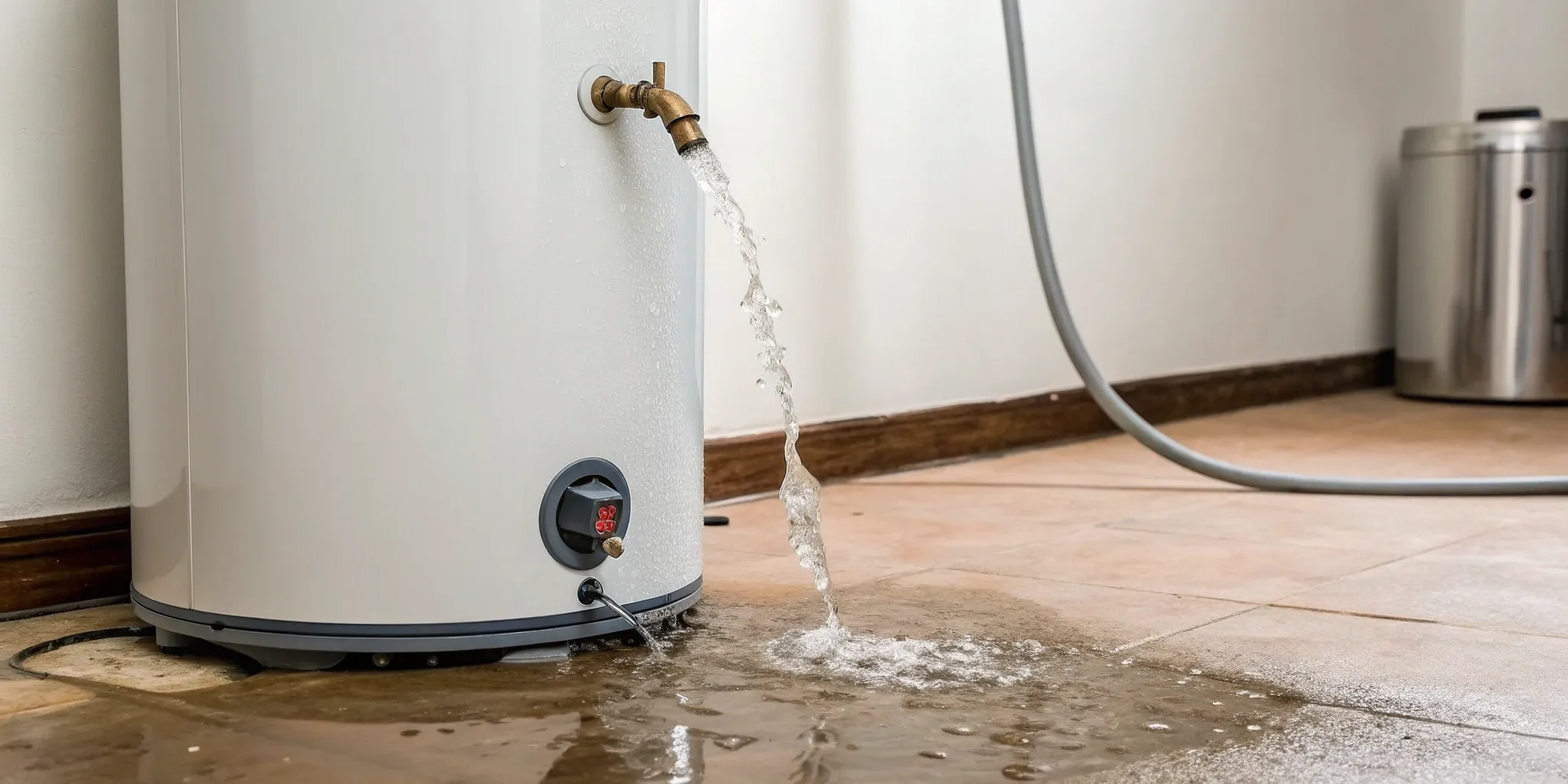
Now, check the floor around the base of your water heater. A puddle of water here is a clear sign of trouble, but you still need to find its origin. Is the water coming from the drain valve near the bottom? Or does it seem to be seeping from underneath the unit itself? If the leak is coming from the bottom seam of the tank, it's a critical failure. Much like a leak on the side, this means the inner tank has rusted through. This is one of the most common reasons for water heater failure and requires an immediate replacement. If you see water pooling, it's time to contact a professional to assess the situation.
How to Test Your T&P Valve
Find the Temperature and Pressure (T&P) relief valve. It's a brass valve located on the top or side of the tank with a pipe that runs down toward the floor. This is a safety feature designed to open and release water if the temperature or pressure inside gets too high. Check for drips at the valve's connection to the tank and at the end of the discharge pipe. A constantly dripping T&P valve could mean the valve itself is faulty and needs replacing. However, it could also be doing its job, indicating dangerously high pressure in your system. This is a problem that needs a professional diagnosis to ensure your home's safety.
Is Your Water Heater About to Fail?
Your water heater usually won't fail without giving you a few hints first. Paying attention to these early warning signs can save you from a major headache and a flooded room. If you notice any of these red flags, it’s a good idea to investigate or call a professional before a small issue becomes a big, expensive problem. Catching these signs early is the key to preventing catastrophic failure and ensuring you always have hot water when you need it.
Hearing Rumbling or Popping Sounds?
Is your water heater suddenly making a lot of noise? Sounds like rumbling, popping, or cracking are often the first signs of trouble. These noises are typically caused by a buildup of mineral deposits, also known as sediment, at the bottom of your tank. As the water heats, it gets trapped under this layer of sediment, causing it to boil and create those popping sounds. Over time, this sediment hardens and can weaken the tank's inner lining, eventually leading to a leak. If your water heater sounds more like a popcorn machine than a plumbing appliance, it’s time to get it checked out by our plumbing services team.
Noticing Rusty or Murky Water
If the hot water coming from your faucets looks rusty, cloudy, or has a metallic smell, it’s a clear signal that something is wrong inside your water heater. This discoloration often means the inside of your tank is corroding. Your water heater has an internal component called an anode rod that is designed to corrode so the tank doesn't. Once that rod is gone, the tank itself starts to rust from the inside out. This corrosion compromises the tank's integrity and is a sure sign that a leak is on the horizon.
Seeing Puddles or Condensation Nearby
Finding a little bit of moisture on or around your water heater isn't always a cause for panic. Sometimes, it's just condensation, which can happen when the tank refills with cold water and the surrounding air is warm and humid. This type of moisture usually dries up as the water inside the tank heats. However, if you notice persistent dampness, dripping, or a puddle forming at the base of the unit, you likely have a slow leak. Don't ignore it, even if it seems small. A consistent leak is a problem that will only get worse.
Your Hot Water Isn't Staying Hot
Are your showers suddenly turning lukewarm halfway through? Fluctuating water temperatures are a common symptom of a struggling water heater. This can be caused by a couple of issues. A thick layer of sediment at the bottom of the tank can insulate the water from the heating element, making it work harder and less effectively. This inefficiency not only leaves you with unpredictable hot water but can also lead to higher energy bills. If your water heater can't keep up, it might be a sign that it's nearing the end of its life and it's time to look into more energy-saving systems.
When Should You Call a Plumber?
While it’s tempting to tackle home repairs yourself, a leaking water heater is one of those problems that often requires a professional. Trying to fix it without the right knowledge can lead to bigger, more expensive issues like major water damage or even safety hazards. If you’re not 100% confident in what you’re doing, or if you encounter any of the situations below, it’s time to put down the wrench and pick up the phone. Your home and your safety are worth the professional service call.
The Tank Has a Crack or Is Rusted Through
A puddle of water under your unit is always a concern, but where the water is coming from matters most. If you notice water seeping directly from the main body of the tank, that’s a major red flag. A leak from the tank itself usually means internal corrosion has compromised its structure, and as one expert puts it, "A leaking water heater usually means it needs to be replaced." This isn't a simple patch job. It’s a sign that the unit has reached the end of its life. Continuing to use it risks a complete rupture, which could flood your home. Shut off the water and call for professional plumbing services right away.
You Have a Gas Model (and Safety Is Key)
If you have a gas water heater, you need to be extra cautious. A leak can be a symptom of a much more dangerous problem. For example, if the temperature and pressure (T&P) valve is leaking, it could mean the pressure inside the tank is dangerously high, creating a risk of explosion. Beyond that, any work on a gas appliance carries the risk of creating a gas leak, which is a serious fire and health hazard. Don’t take chances with your family’s safety. Any leak or malfunction on a gas water heater should be handled by a qualified technician who understands how to work with gas lines safely.
The Repair Seems Too Complicated
Sometimes, the source of a leak isn't obvious. You might see water but can't pinpoint where it's coming from, or the repair might seem more complicated than just tightening a loose connection. In these moments, it’s best to call in an expert. A professional plumber has the diagnostic tools and experience to accurately identify the problem and perform the correct fix. For your own safety and an effective repair, it's always best to contact an authorized service provider. Guessing can lead to more damage and higher costs down the road, so let a pro handle it from the start.
You Suspect an Electrical Problem
Water and electricity are a dangerous combination. If your water heater is electric and you suspect an issue with a heating element, thermostat, or any of the wiring, do not attempt to fix it yourself. The first step in any guide is to turn off the power at the breaker box for a reason. If you see water leaking near any electrical components or are unsure how to safely disconnect the power, it’s crucial to call a professional. An experienced plumber can safely manage the electrical aspects of the repair, protecting you from the serious risk of electrical shock and your home from a potential fire.
Why Even a Small Water Heater Leak Is a Big Deal
It’s easy to dismiss a small puddle under your water heater as a minor inconvenience. You might even be tempted to put a towel down and forget about it. But that tiny leak is often a warning sign of a much larger problem. Ignoring it can lead to costly structural damage, serious health concerns, and even safety hazards for your family. Think of it as your water heater’s way of asking for help before a small issue becomes a full-blown emergency. Addressing it quickly not only saves you money and stress but also protects your home and keeps your family safe.
It Can Cause Serious Water Damage
That consistent drip might not seem like much, but over time, it can cause serious harm to your home’s structure. Water can seep into subflooring, causing wood to rot and warp. It can ruin drywall, compromise your home’s foundation, and destroy flooring like carpet or hardwood. What starts as a simple plumbing issue can quickly turn into a major home renovation project. Getting professional plumbing services at the first sign of a leak is the best way to prevent water from causing widespread and expensive damage.
The Risk of a Full Tank Failure
That slow drip from the base of your tank is more than just an annoyance; it's a critical warning. It often means the inner tank has rusted through, and its structural integrity is compromised. Ignoring this sign risks a complete rupture, which can release the entire tank's contents—typically 40 to 80 gallons of water—all at once. This isn't a slow leak; it's a sudden flood that can cause catastrophic damage to your home in minutes, ruining floors, drywall, and personal belongings. A leak from the tank body is a clear signal that your water heater has reached the end of its life. It's essential to contact a professional immediately to prevent a small problem from turning into a major disaster.
It Creates a Risk of Mold and Mildew
Wherever there’s persistent moisture, mold is sure to follow. A leaking water heater creates the perfect damp, dark environment for mold to thrive, often in places you can’t easily see, like behind walls or under floors. Mold doesn’t just look and smell bad; it can release spores into the air that trigger allergies, asthma, and other respiratory problems. Protecting your family’s health means maintaining good indoor air quality, and that starts with stopping leaks before they create a breeding ground for mold.
How Quickly Mold Can Grow
It’s shocking how fast mold can take hold once it has a source of moisture. Under the right conditions, mold spores can begin to grow on a damp surface in as little as 24 to 48 hours. That slow, steady drip from your water heater provides the perfect environment—dark, damp, and undisturbed—for a colony to establish itself behind a wall or under your flooring. By the time you notice a musty smell, the growth is already well underway. This is why acting fast is so critical. Addressing a leak immediately doesn't just stop water damage; it prevents a much more complicated and costly mold remediation problem from developing and protects your family from the associated serious health concerns.
It Poses Electrical and Fire Dangers
Water and electricity are a dangerous combination. Many water heaters have electrical components near the bottom of the tank, and if water leaks onto this wiring, it can cause a short circuit—a serious fire hazard. Furthermore, a leak from the temperature and pressure (T&P) relief valve can indicate that the pressure inside the tank is dangerously high. This is a critical safety issue that requires immediate attention from a professional to prevent a potential tank rupture. Don’t take chances with your family’s safety; treat any leak as a potential hazard.
Pressure Buildup and Safety Valve Risks
Your water heater has a small but mighty safety device called the Temperature and Pressure (T&P) valve. It's designed to automatically release water if the pressure or temperature inside the tank climbs to dangerous levels. So, if you see water dripping from it, pay close attention. It could mean the valve itself has failed and needs to be replaced, which is a relatively simple fix. However, it could also be a sign that the valve is doing its job, indicating a serious and potentially hazardous pressure buildup within the tank. A leaking T&P valve is a clear warning sign that something is wrong, and ignoring it could lead to the tank bursting. This is a situation that requires an immediate professional assessment from our plumbing services team to keep your home and family safe.
Can I Still Use Water if My Heater is Leaking?
It might be tempting to keep using your water as usual, especially if the leak seems small, but it's a risky move. Continuing to run a leaking water heater can lead to more than just a cold shower. It can accelerate water damage to your floors and walls, drive up your utility bills, and put extra strain on the unit, potentially causing it to fail completely. If you're not sure where the leak is coming from, or if you suspect it's an internal tank leak, the safest bet is to stop using it. The best course of action is to shut off the power and water supply to the unit and call a licensed plumber to diagnose the problem accurately and prevent a small issue from becoming a major disaster.
It's Wasting Energy and Money
A leaking water heater is an inefficient one. When hot water constantly drips out, the unit has to work harder to heat the fresh, cold water that replaces it. This continuous cycle means your water heater runs more often than it should, driving up your energy consumption and your utility bills. That small leak is literally letting your money drip down the drain. Fixing the leak not only prevents water waste but also helps your system run more efficiently, which is better for your wallet and can extend the life of your unit.
Can You Patch a Leaking Water Heater Temporarily?
Finding a puddle around your water heater can definitely send you into a panic, but don't grab the phone to order a new one just yet. In some cases, you can apply a temporary fix to stop the leak while you figure out your next steps. The key is to correctly identify where the water is coming from. Some leaks are simple issues with fittings that can be tightened, while others are clear signs that your water heater’s time is up. A quick fix might buy you a few hours or days, but it’s rarely a permanent solution. Think of it as first aid for your plumbing, not a cure.
Quick Fixes for Minor Drips and Leaks
If you're lucky, your leak is coming from a place that’s easy to access and repair. The most common culprits are loose plumbing connections right on top of the unit or a faulty drain valve near the bottom. Take a close look at the cold water inlet and hot water outlet pipes. Sometimes, all you need is a wrench to gently tighten a loose connection. Similarly, the drain valve at the base of the tank can sometimes leak if it isn't fully closed or if the washer inside has worn out. Tightening the valve handle or replacing the valve itself are manageable tasks for a confident DIYer and can stop a slow drip in its tracks.
Stopping a Dripping Drain Valve
If you've traced the leak to the drain valve at the bottom of your tank, you might be in luck. Often, the fix is as simple as making sure the valve is completely closed. If it’s still dripping, you can try giving it a gentle quarter-turn with a wrench to snug it up. However, if the leak continues, the problem is likely a worn-out washer inside the valve or the valve itself has failed due to buildup or age. At this point, the best solution is to replace the valve. While it's a straightforward job, it does involve draining the tank, so if you're not comfortable with the process, our plumbing team can handle it quickly and safely.
Knowing When a Quick Fix Will Do
It’s important to know when a quick fix is just a band-aid on a much bigger problem. Generally, if the leak is coming from the top of the tank (like from the pipes or T&P valve), it’s often a repairable issue. However, if you see water seeping from the bottom or sides of the tank itself, that’s a different story. This almost always means the inner tank has corroded and failed, which is not something you can patch up. In this situation, a temporary fix isn't an option, and a full water heater replacement is your only safe move. Trying to patch a corroded tank is dangerous and will only delay a much bigger flood.
Important Safety Rules for Any DIY Repair
Before you even think about touching your water heater, you need to prioritize safety. Water and electricity (or gas) are a dangerous combination. Your first step should always be to cut the power. For an electric water heater, go to your breaker box and flip the corresponding switch to the "off" position. If you have a gas heater, find the shutoff valve on the gas line leading to the unit and turn it to the "off" position. This simple step prevents the risk of shock or a gas leak. If you feel unsure about any part of the process, it's always best to contact a professional. Your safety is worth more than a DIY attempt.
How to Prevent Future Water Heater Leaks
Dealing with a water heater leak is stressful, but the good news is that you can take simple steps to prevent one from happening in the first place. A little proactive care goes a long way in protecting your home and extending the life of your unit. Think of it as a simple checkup for one of the hardest-working appliances in your house. By staying on top of a few key tasks, you can avoid the surprise of a cold shower or a flooded basement.
Schedule Annual Professional Maintenance
The single best thing you can do for your water heater is to schedule regular professional maintenance. Just like your car, your water heater needs routine check-ups to run efficiently and safely. During a maintenance visit, a technician will flush the tank to clear out sediment, test the temperature and pressure (T&P) valve to ensure it’s working correctly, and inspect the anode rod. Catching small issues during these checks can stop a major breakdown before it starts, saving you from a much bigger headache down the road.
Flush the Tank to Remove Sediment
Over time, minerals like calcium and magnesium naturally present in our water supply can settle at the bottom of your water heater tank, creating a layer of sediment. This buildup can cause the tank to corrode, reduce its efficiency, and lead to those strange popping or rumbling noises. Flushing the tank once a year removes this sediment, allowing your water heater to work more effectively and last longer. While it’s a task some homeowners do themselves, having a professional handle it ensures it’s done thoroughly and safely.
Check and Replace the Anode Rod
Inside your water heater tank is a hidden hero called the anode rod. Its job is to attract corrosive elements in the water, essentially sacrificing itself to protect the steel tank from rusting out. This little part does a big job, but it doesn’t last forever. Typically, an anode rod needs to be replaced every three to five years. If you ignore it, the tank itself will start to corrode, which often leads to an irreparable leak. Replacing the anode rod is a small, inexpensive step that can significantly extend the life of your water heater.
Keep an Eye on Your Water Pressure
Water pressure that’s too high puts a constant strain on your entire plumbing system, including your water heater. This excess force can weaken connections, damage valves, and even cause the tank to fail prematurely. If you notice your faucets are spraying water with a lot of force, it might be a sign of high pressure. A plumber can test your home's water pressure and, if needed, install a pressure-reducing valve. This device helps protect your pipes and appliances from unnecessary stress, preventing leaks throughout your home.
Install a Drain Pan
Whether you're installing a new water heater or just want to better protect your current one, a drain pan is a must-have. This is a special pan that sits directly underneath the unit, acting as a first line of defense against leaks. If your tank starts to drip, the pan will catch the water, preventing it from seeping into your floors and causing serious structural damage. It’s a simple, inexpensive addition that can save you thousands in repairs. Just make sure you get a strong, proper pan designed for the job, not a flimsy substitute. When our team handles a water heater installation, we make sure a durable drain pan is part of the setup for your peace of mind.
Consider a Water Leak Detector
For an extra layer of security, think about adding a water leak detector to your setup. These are small, often inexpensive sensors you can place on the floor right next to your water heater. The moment it detects moisture, the device will sound a loud alarm or even send an alert straight to your smartphone. This gives you an immediate heads-up, which is especially valuable if your water heater is tucked away in a closet, attic, or basement where a small leak could go unnoticed for days. It’s a simple piece of technology that provides powerful protection, letting you catch a problem before it becomes a catastrophe. For more home maintenance ideas, you can always check out our blog.
Repair or Replace? Making the Right Call
When you’re dealing with a leaking water heater, the big question is whether to fix it or get a new one. It’s a tough call, but you can make the right decision by looking at a few key factors: the unit's age, the cost of the repair, and the type of leak you’re facing. A quick fix might seem tempting, but sometimes a replacement is the smarter, more cost-effective choice for the long haul. Let’s walk through what you need to consider to figure out the best path forward for your home.
Factor in the Age and Efficiency
Most traditional tank water heaters have a lifespan of about 8 to 12 years. If your unit is approaching or has passed that age, investing in a significant repair might not be the best use of your money. Think of it this way: you wouldn’t put a brand-new engine in a car with a rusted-out frame. An older water heater is more likely to have other parts fail soon, leading to more service calls. Plus, modern water heaters are much more efficient. Upgrading to a new unit can lower your monthly energy bills, and those savings can help offset the cost of the replacement over time. Many new models are designed as energy-saving systems that can make a real difference in your home's consumption.
Weigh the Cost of Repair vs. Replacement
The next step is to weigh the financials. A minor repair, like replacing a faulty valve, will cost significantly less than a full replacement. However, if the problem is major, like a crack in the tank itself, a repair isn't just expensive; it's often not even possible. In that case, replacement is your only option. For other issues, consider the "50% rule." If the cost of the repair is more than half the cost of a new water heater, replacement is usually the better financial decision. A professional plumber can give you a clear diagnosis and an accurate quote, helping you understand the costs of both options so you can make an informed choice. You can contact us for an honest assessment.
Telltale Signs You Need a New Water Heater
Sometimes, your water heater gives you clear signals that its time is up. The most serious sign is water leaking from the bottom of the tank. This almost always indicates that the inner tank has rusted through, and there’s no safe way to repair it. Other red flags include widespread rust on the exterior of the tank, water that comes out of your taps looking rusty or discolored, or hearing loud popping and banging noises from the unit. If you find yourself calling for repairs frequently, it’s another sign that the unit is failing. These issues point to internal decay that a simple fix won't solve, making a full replacement the safest and most reliable solution. Our team is experienced with all types of plumbing services, including water heater installations.
Frequently Asked Questions
How long should my water heater last? A standard tank-style water heater usually works well for about 8 to 12 years. If your unit is approaching that decade mark and starts having problems, it's often smarter to replace it rather than pay for a big repair. Newer models are also more energy-efficient, which can help you save on utility bills.
Is a little water normal, or is it always a leak? Sometimes, you might see a small amount of condensation on the tank, especially in humid weather when it's refilling with cold water. This moisture should dry up on its own. However, if the water is persistent, forms a puddle, or is actively dripping from a pipe or valve, you're dealing with a leak that needs attention.
What are those rumbling or popping sounds I hear? Those strange noises are almost always caused by sediment, which are mineral deposits that have built up at the bottom of your tank. The sound you hear is water boiling underneath that layer of gunk. This buildup makes your heater less efficient and can cause the tank to corrode over time, so it's a good idea to have it flushed out.
Why is my hot water suddenly rusty? Rusty or discolored hot water is a major red flag. It usually means the inside of your water heater's tank is corroding. The tank has a part called an anode rod that is supposed to rust away to protect the tank, but once it's gone, the tank itself starts to decay. This is a clear sign that your water heater is nearing the end of its life.
If the tank itself is leaking, is it ever repairable? Unfortunately, no. If you've confirmed that water is seeping from the body of the tank itself, and not from a pipe or valve connected to it, the tank's internal structure has failed. This is usually due to rust. There is no safe or effective way to patch a corroded tank, so a full replacement is the only solution.
Related Articles
- My AC Is Leaking Water | Tommy Cool Air
- Broken Furnace: Repair It or Replace It? | Tommy Cool Air
- Plumbing Services Services | Corpus Christi, TX | Tommy Cool Air
- Heating Services | Corpus Christi, TX | Tommy Cool Air
- 20 Common Problems Requiring Emergency Furnace Repair and How to Prevent Them | Tommy Cool Air