Last Updated: November 19, 2026
Quick Summary
A hard start kit is a small add-on device that gives your AC compressor an extra jolt of electrical power when it starts, helping the motor overcome its initial resistance. It works alongside your existing start capacitor and potential relay. It helps only when the compressor struggles to start.
- A kit can ease compressor startup and reduce electrical stress on marginal systems.
- Symptoms like a humming compressor, dimming lights, or short cycling may point to other faults too.
- Diagnose the real cause first, since a kit can mask a failing compressor.
- A properly matched and installed kit is designed to protect the compressor.
- Have a licensed technician handle diagnosis and installation because the work involves high voltage.
Does your AC need a hard start kit?Tommy Cool checks your system and gives you a straight answer, locally owned since 1994.Schedule Your System Check-Up
Table of Contents
- What a Hard Start Kit Does for Your AC (Think of It as a Running Start)
- Does My AC Need a Hard Start Kit? A Quick Checklist
- The Real Benefits of Installing a Hard Start Kit
- Hard Start Kit vs. Soft Start Kit: Which One Fits Your System?
- Can a Hard Start Kit Damage Your Compressor? The Honest Answer
- How a Hard Start Kit Gets Installed (and Why a Pro Should Do It)
- Book a System Check-Up with Tommy Cool Before You Install Anything
- Frequently Asked Questions
What a Hard Start Kit Does for Your AC (Think of It as a Running Start)
Picture a sprinter who starts from a dead stop versus one who gets a running start. The first one strains every muscle just to get moving. A hard start kit gives your air conditioner's compressor that running start.
A hard start kit is a small add-on device that gives your compressor an extra jolt of electrical power when it fires up. It works alongside your existing start capacitor and potential relay, helping the motor overcome its initial resistance. Tommy Cool has been helping Corpus Christi homeowners keep cool since 1994.
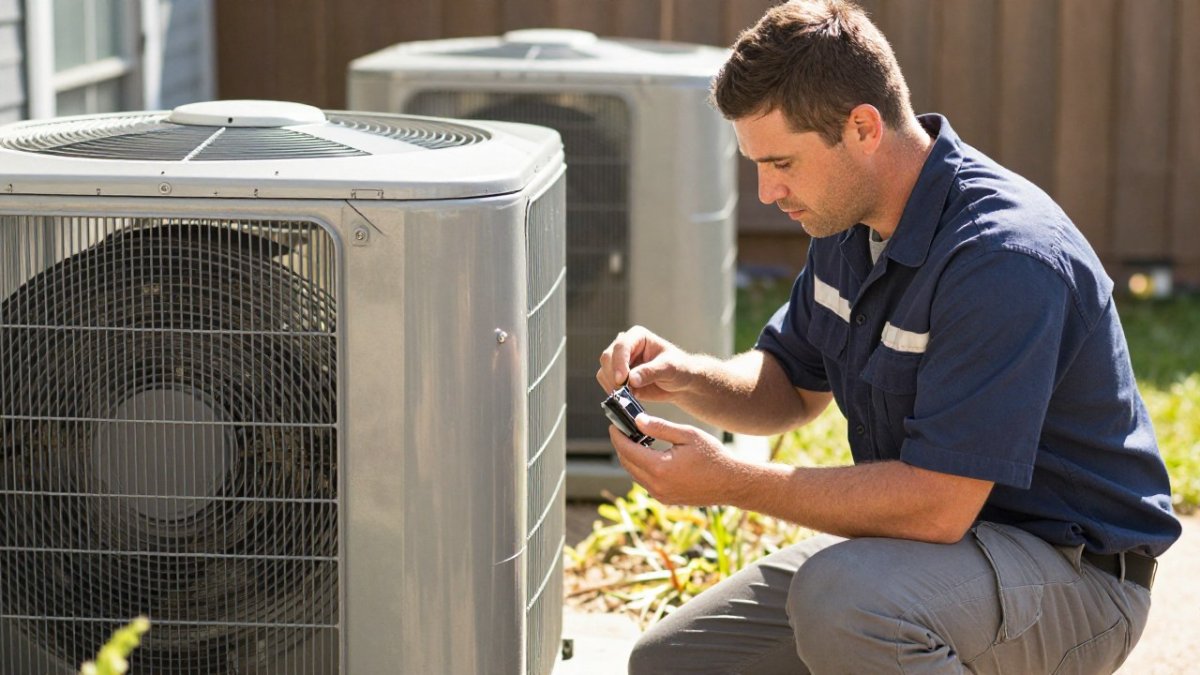
Here's the simple version of how it works:
- The compressor needs a burst of torque to start spinning
- The kit adds extra starting power for a moment
- Once the motor is running, the kit steps aside
- Your system settles into normal operation
A standard start capacitor handles the basics. A hard start kit is the extra push for compressors that struggle to get going. Keep that difference in mind, because it matters when you compare options later in this guide.
Does My AC Need a Hard Start Kit? A Quick Checklist
Not every air conditioner needs one. And here's the part most checklists skip: a hard start kit is a fix for one specific problem, not a cure for every grumpy compressor. So before you buy anything, let's figure out what your system is actually telling you.
Start with what you're seeing and hearing when the unit kicks on:
- The compressor hums but doesn't turn over, then maybe trips the breaker
- Lights dim or flicker briefly at startup
- The outdoor unit short cycles, starting and stopping every few minutes
- Startup gets worse on the hottest afternoons or during neighborhood brownouts
- The system is older, or the compressor has already been replaced once
- Everything runs fine until the first hot week of a Corpus Christi summer, when startup gets sluggish
If two or more of those sound familiar, a hard start kit might help. But here's where a lot of folks get steered wrong. Those same symptoms can come from a weak run capacitor, a pitted contactor, loose wiring, or a compressor that's already on its way out. Working through a homeowner checklist for an AC that won't turn on can help you narrow down the cause first. Put a hard start kit on a compressor with a bad capacitor and you've spent money masking the real problem.
So the checklist isn't really "do I need a kit?" It's "what's actually failing?" A technician sorts that out with a few measurements: capacitor microfarads against the rated value, contactor condition, winding resistance, and startup current draw. That last one matters most. If the compressor pulls a normal locked-rotor current and starts cleanly, a kit adds nothing. If it struggles and the current stays high too long, a kit may genuinely help. If you're not sure where your system stands, our AC Inspections & Diagnostics team can take those readings for you.
Watch out: a hard start kit can make a failing compressor limp along for a while, which feels like a win until it quits for good in August. Diagnose first, install second.
One more local note.
The Real Benefits of Installing a Hard Start Kit
Now for the good stuff. A hard start kit can genuinely help, but the benefits aren't universal, and we're not going to pretend they are. Here's what a kit actually does, when it does it, and where the honest limits are.
Easier compressor startup. The compressor does its hardest work in the first fraction of a second, when the motor has to overcome the pressure sitting on the system and get the rotor spinning. A hard start kit adds a short burst of torque through the start winding to get past that moment.
Lower startup current and less electrical stress. A compressor that labors to start draws high current for longer than it should. That current heats the windings and stresses the wiring, the contactor, and the breaker. A kit that gets the motor spinning quickly shortens that high-current window.
Fewer nuisance breaker trips. If your breaker trips right as the unit starts, a kit can sometimes settle that down by reducing the startup surge. But sometimes is the operative word. A tripping breaker can also mean a weak breaker, a loose connection, or a compressor drawing more than it should.
A way to buy time on an older system. This is the benefit homeowners care about most, and it's the one that needs the most honesty. A kit can keep a marginal compressor starting reliably for a while, which can stretch the life of a system you weren't ready to replace. It does not repair anything.
Better behavior during low-voltage conditions. On a hot afternoon when the whole neighborhood is pulling power, voltage sags and compressors struggle to start. A kit can help a system ride through those moments. In a place like Corpus Christi, where the cooling season runs long and the grid works hard in July and August, that's not a hypothetical.
Now the other side of the ledger, because you deserve it. A hard start kit is an added electrical component, and added components are added failure points. If you want to know whether the whole system is nearing the end of its life, check the signs that point to replacement. A start capacitor can fail. A relay can stick.
So here's the balanced version. A hard start kit is a good tool for a specific job: helping a marginal compressor start reliably. It is not a tune-up, not an efficiency upgrade, and not a substitute for diagnosing the actual problem. When it fits, it fits well. When it doesn't, it's money spent on a part you didn't need.
Hard Start Kit vs. Soft Start Kit: Which One Fits Your System?
You'll hear both names, and they sound similar. They are not the same thing.
A hard start kit adds a burst of starting power, which helps a stubborn compressor get moving. A soft start kit works differently. It ramps the motor up gradually, which reduces the electrical surge when the unit starts.
Here's a quick comparison:
- Main job: Hard Start Kit: Adds starting torque; Soft Start Kit: Reduces startup surge
- Best for: Hard Start Kit: Compressors that struggle to start; Soft Start Kit: Systems with high startup current
- How it works: Hard Start Kit: Short extra power boost; Soft Start Kit: Gradual motor ramp-up
- Typical use: Hard Start Kit: Older or weak-starting units; Soft Start Kit: Units that trip breakers on start
Which one fits your system? That depends on what's happening when it starts. If the kit won't solve the problem, see what a full compressor replacement costs for comparison. A compressor that won't turn over usually points toward a hard start kit. A unit that trips breakers or strains the electrical supply may need a soft start solution. A technician can measure current draw and tell you which makes sense.
Can a Hard Start Kit Damage Your Compressor? The Honest Answer
This is the question we hear most, and it deserves a straight answer. A properly matched and installed hard start kit is generally designed to protect the compressor, not harm it. But there are real risks if the kit is wrong for your system or installed badly.
Here's what can go wrong:
- A kit that doesn't match your compressor's specs
- Incorrect wiring that stresses the motor
- Running a kit that never gets switched off correctly
- Installing one on a compressor that has deeper problems
Most of these risks come down to the install and the match. That's why a professional should handle both the diagnosis and the installation. We'd rather tell you a kit won't help than sell you one that causes trouble later.
Watch out: if your compressor is already failing, a hard start kit won't fix it. It can only mask the problem for a while. Dirty or missing airflow strains the whole system too, so it's worth reading about running an AC without a filter as well.
How a Hard Start Kit Gets Installed (and Why a Pro Should Do It)
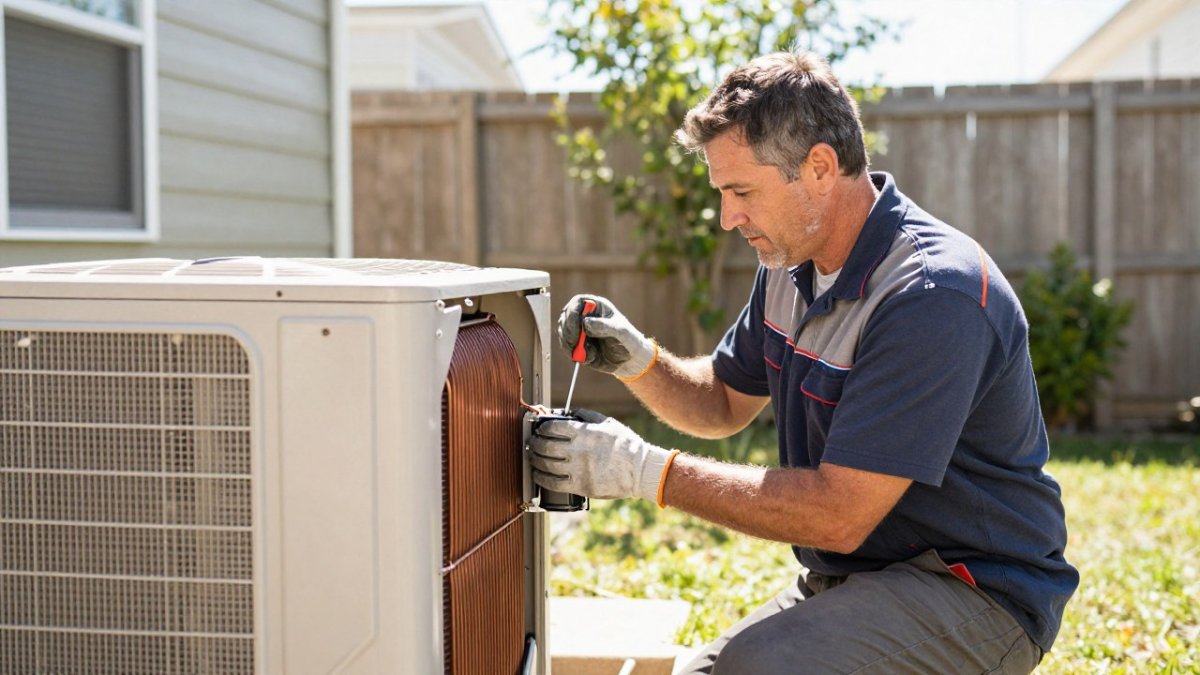
Installing a hard start kit involves working around high-voltage electrical components. That's no place for guesswork. A licensed technician typically follows these steps:
- Turn off power at the disconnect and confirm it's dead. Safety first, every time.
- Confirm the diagnosis. Check the capacitor, relay, and compressor readings.
- Select a kit that matches the compressor's specs. The wrong size causes problems.
- Wire the kit into the start circuit. Connections must be correct and secure.
- Test the startup and current draw. The system should start smoothly and run normally.
- Confirm the results. You should see steady starts and no breaker trips.
Trying this yourself can mean shock, damaged parts, or voided warranties. Let a pro do it. Your safety is worth more than a DIY shortcut.
Book a System Check-Up with Tommy Cool Before You Install Anything
Here's our honest advice. Before you buy a hard start kit, get your system checked. A proper diagnostic can tell you whether a kit will help or whether the real problem is something else. We'd much rather find the true cause than send you home with a part you don't need.
Our team has been serving Corpus Christi since 1994, and we're locally owned and operated. We also offer a 100% satisfaction guarantee and 24/7 emergency support when your system quits at the worst possible time. If your unit won't start and you need help right away, our 24/7 Emergency AC Repair crew is ready. For a second opinion or a straight answer, give us a call. You can also join the Coool Kids Comfort Club for convenient maintenance that keeps your system in good shape all year.
Frequently Asked Questions
Are hard start kits worth it?
For many systems, yes, but it depends on your unit. A hard start kit can help a compressor that struggles to start, especially an older air conditioner that hesitates or short cycles on hot Corpus Christi afternoons. It is not a cure-all, though. If your compressor is failing for other reasons, a kit will not fix that. A technician can test your system and tell you whether a kit makes sense or whether another repair is the better investment.
Can a hard start kit damage a compressor?
A properly sized and correctly installed hard start kit should not damage a compressor. Problems tend to come from mismatched components, poor wiring, or installing a kit on a system that was never a good candidate. That is why sizing and installation matter so much.
Which is better, a hard start kit or a soft start kit?
They solve different problems. A hard start kit gives the compressor an extra jolt of starting torque, which helps when the unit struggles to get going. A soft start kit ramps up the startup current more gently, which can reduce electrical surge. Which one fits depends on your compressor, your electrical supply, and the symptoms you are seeing. Manufacturer guidance and a proper diagnostic test are the best way to decide.
Can you install a hard start kit on any air conditioner?
Not every air conditioner is a good match. Kits are sized for specific compressors and voltages, and installing the wrong one can cause trouble. Before anything goes in, your system should be checked for compatibility with the manufacturer's specifications. If you are not sure whether your AC qualifies, give Tommy Cool a call and we will take a look.
 Add tommycool.com as a preferred source on Google →