Table of Contents
- What Drives the Cost to Replace an Air Conditioning Compressor
- Signs of a Bad AC Compressor: When to Call a Technician
- AC Compressor Repair vs Replacement: Which Makes Sense?
- Average Lifespan of an HVAC Compressor and What Shortens It
- Warranty, Insurance, and Home Warranty Coverage for Compressor Replacement
- Refrigerant Phase-Out and Energy Efficiency: The Long-Term Cost Picture
- Conclusion
- Frequently Asked Questions
Last Updated: September 27, 2026
What Drives the Cost to Replace an Air Conditioning Compressor
The AC compressor replacement cost comes down to three variables: the compressor itself, the labor to install it, and the markup your contractor applies to parts. No two quotes land in the same place because system size, refrigerant type, and accessibility all shift the math. At Tommy Cool, we've handled these replacements since 1994, and the pattern rarely changes: homeowners who understand the cost drivers get fairer quotes.
Parts, Labor, and the Markup You Should Expect
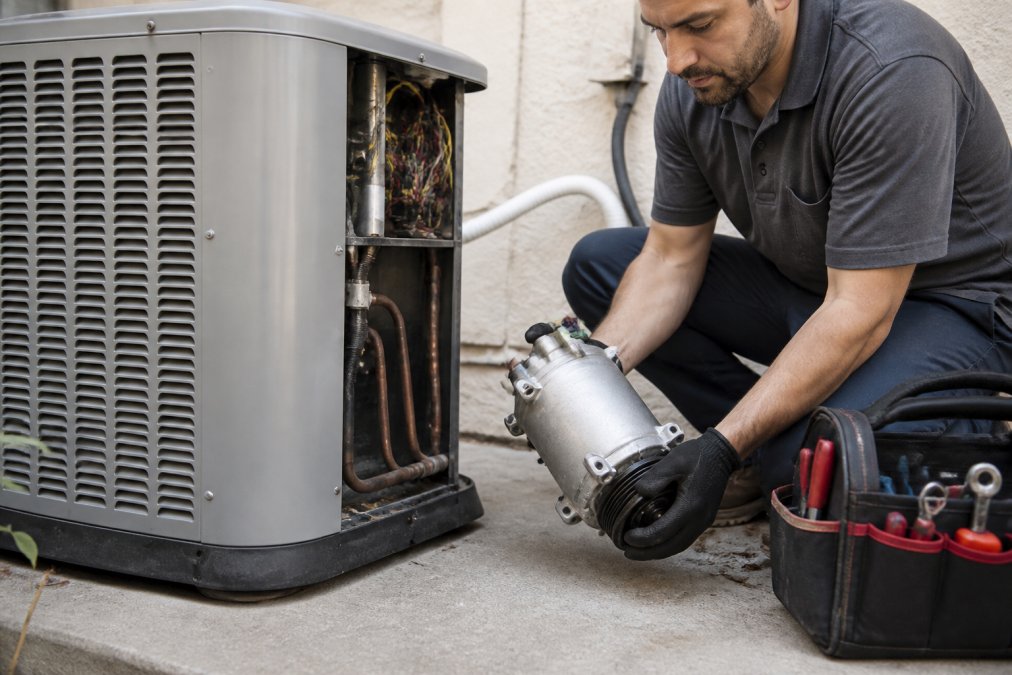
The compressor is the most expensive single component in your outdoor condenser unit. Parts pricing depends on tonnage, refrigerant compatibility, and whether the manufacturer still produces that model.
Labor covers several skilled tasks:
- Recovering and disposing of old refrigerant
- Cutting out the failed compressor and brazing in the new one
- Installing a new filter drier
- Pulling a vacuum to remove moisture
- Recharging the system and testing amperage
How System Size and Tonnage Change the Price
Bigger systems cost more to repair. A 5-ton residential unit needs a larger compressor, more refrigerant, and longer labor than a 2-ton system. Tonnage also affects how hard the compressor works, which shapes how long the replacement lasts.
- 2 ton: Compressor Size: Small; Relative Parts Cost: Lower; Relative Labor: Lower
- 3 ton: Compressor Size: Medium; Relative Parts Cost: Moderate; Relative Labor: Moderate
- 4 ton: Compressor Size: Large; Relative Parts Cost: Higher; Relative Labor: Higher
- 5 ton: Compressor Size: Extra large; Relative Parts Cost: Highest; Relative Labor: Highest
Watch Out
Skipping the filter drier or vacuum pump step to save money is the fastest way to kill a new compressor. Moisture and acid left in the lines cause repeat failure, and the manufacturer warranty will not cover it.
Signs of a Bad AC Compressor: When to Call a Technician
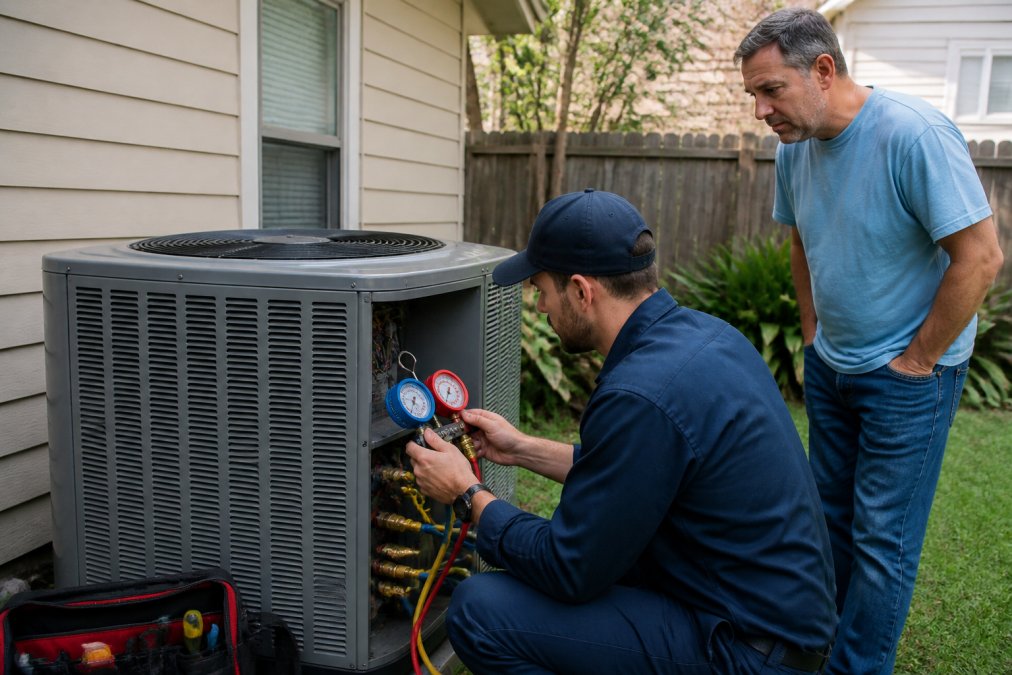
The clearest signs of a bad AC compressor are a unit that hums without cooling, warm air from the vents, tripped breakers, and a compressor that draws high amperage. If you notice any of these, stop running the system and call a licensed HVAC technician. Continued operation can burn out electrical components and turn a repair into a full system replacement.
Watch for these warning signs:
- Hard start: The compressor strains to turn on and trips the breaker
- High amperage: A technician's meter shows the compressor pulling more current than its rating
- Warm air: The system runs but the evaporator coil never gets cold
- Loud grinding or clicking: Internal mechanical failure or a failing capacitor
- Refrigerant leaks: Low charge forces the compressor to overwork
AC Compressor Repair vs Replacement: Which Makes Sense?
Repair makes sense when the AC compressor replacement cost outweighs the fix and the failure traces to a cheap electrical component. Replacement makes sense when the compressor has failed mechanically, the system is near the end of its service life, or the repair bill climbs close to the price of new equipment. The hard part is the middle ground, a 12-year-old system with a dead compressor and a warranty that only covers the part.
A Decision Framework, Not a Gut Call
Work through these four gates in order. The first one that points to replacement usually ends the debate.
- Age of the outdoor unit. Under 10 years, lean repair. Past 12 to 15 years, lean replacement, the rest of the system (coil, blower, contactor) is aging alongside the compressor and will start failing next.
- Refrigerant type. If the system uses a phased-out refrigerant, a compressor replacement locks you into rising refrigerant prices and shrinking service availability. That alone can flip the decision toward replacement.
- SEER rating vs. current equipment. Compare the nameplate SEER to what a new unit delivers. The wider the gap, the more monthly electricity savings a replacement recovers.
- Warranty status. A compressor still under a manufacturer parts warranty changes the math, you may only be paying labor, refrigerant, and related parts.
The Energy-Efficiency ROI Math
This is the calculation most cost guides skip. A compressor-only repair keeps your old SEER rating. A full replacement resets it. To decide which wins, compare the two paths over a realistic holding period:
- Repair path: compressor + labor + refrigerant today, plus the old system's higher monthly electricity cost for every month you keep it.
- Replacement path: new system cost today, minus any warranty credit, minus the lower monthly electricity cost going forward.
Pro Tip
Ask your technician to measure compressor amperage against the nameplate rating before authorizing any repair. A compressor drawing within spec often just needs a hard start kit or capacitor, not a full replacement.
When Repair Is the Clear Winner
- The compressor is under a manufacturer parts warranty
- The fault is a capacitor, contactor, or hard start kit, not the compressor
- The system is under 10 years old and uses a current refrigerant
- The rest of the system (coil, blower, ductwork) is in good condition
When Replacement Is the Clear Winner
- The compressor has failed mechanically (grounded, seized, or shorted windings)
- The system is past 12 to 15 years old
- The system uses a phased-out refrigerant
- Repair cost approaches a meaningful share of a new system's price
- You plan to stay in the home long enough to capture the efficiency savings
Key Takeaway
Run the age, refrigerant, SEER, and warranty gates in order. If two or more point to replacement, the long-term cost of repairing usually exceeds the long-term cost of replacing, even when the repair quote looks cheaper today.
Average Lifespan of an HVAC Compressor and What Shortens It
The average lifespan of an HVAC compressor is 10 to 15 years with regular maintenance, and shorter in hot climates where the system runs nearly year-round. Compressors fail early for predictable reasons: dirty coils, low refrigerant, oversized or undersized systems, and skipped maintenance.
What shortens compressor life:
- Dirty condenser coils that trap heat and raise head pressure
- Low refrigerant charge from slow leaks
- Improper sizing that makes the compressor cycle too often
- Neglected filters that restrict airflow
- Electrical issues like a weak capacitor or loose contactor
Warranty, Insurance, and Home Warranty Coverage for Compressor Replacement
Compressor warranty coverage varies widely, and homeowners are often surprised by what is and is not covered. Most manufacturers cover the compressor part for 5 to 10 years, but labor is rarely included. That means you may still pay for the technician's time, refrigerant, and related parts even on a covered failure. The three coverage types below behave very differently, and the difference between a home warranty and homeowners insurance is the part most guides get wrong.
Manufacturer Warranty: Parts Only, Usually
A manufacturer warranty covers the compressor itself for a set period, typically 5 to 10 years from installation. What it almost never covers:
- Labor to diagnose and replace the compressor
- Refrigerant recovery, disposal, and recharge
- The filter drier and other required replacement parts
- Diagnostic fees
Home Warranty: A Service Contract, Not Insurance
A home warranty is a service contract, not an insurance policy. You pay a premium plus a per-visit service fee, and the plan agrees to repair or replace covered systems that break down from normal wear and tear. For compressor failures, the details matter:
- Pre-existing conditions are typically excluded. If the compressor was already failing when you enrolled, the claim can be denied.
- You must use the plan's network. Most plans require you to file a claim and use their assigned contractor.
- Payouts are often capped. Many plans cap the total payout per system or per year, which can leave you covering the difference on a full replacement.
- Age limits apply. Some plans exclude systems past a certain age or require a home inspection before enrollment.
Homeowners Insurance: Generally Not a Mechanical Breakdown Policy
Standard homeowners insurance generally does not cover mechanical breakdown from normal wear and tear. A compressor that simply wears out is not a covered loss. There are narrow exceptions where insurance may respond:
- Power surge or lightning strike that damages the compressor or its electrical components
- Fire, flood, or other covered peril that damages the system
- Falling objects or storm damage to the outdoor unit
How to File a Compressor Claim Without Getting Denied
- Confirm which coverage applies. Manufacturer warranty, home warranty, or insurance, each has its own claim path.
- Get a written diagnosis from a licensed technician that states the cause of failure in plain terms.
- Read the exclusions in your policy or plan before you file.
- Keep every receipt for diagnostic fees, refrigerant, and labor, some plans reimburse these, most do not.
- Ask for the payout cap in writing before authorizing work, so you know your out-of-pocket exposure.
Watch Out
Do not authorize a compressor replacement before confirming coverage. Once the work is done, most plans and insurers will not reimburse a claim filed after the fact without prior approval.
Key Takeaway
Manufacturer warranties cover the part, home warranties cover some wear-and-tear failures with caps and exclusions, and homeowners insurance generally covers only event-driven damage. Match the failure cause to the right coverage before you spend a dollar.
Refrigerant Phase-Out and Energy Efficiency: The Long-Term Cost Picture
Refrigerant rules are reshaping compressor replacement decisions, and they are the angle most cost guides skip. Older refrigerants are being phased out under federal rules, which raises the price of servicing systems that still use them. If your system uses an older refrigerant, a compressor replacement can lock you into rising refrigerant costs for years.
Key Takeaway
When a compressor fails on an older, low-SEER system using a phased-out refrigerant, the long-term cost of repairing usually exceeds the long-term cost of replacing. Run the age, refrigerant, and efficiency math before you commit.
Conclusion
A failing compressor forces a real decision: repair the part or replace the system. The right answer depends on age, refrigerant type, warranty coverage, and how much you value lower energy bills. Tommy Cool has served local homeowners since 1994 with honest, transparent pricing, 24/7 emergency service, and certified contractors who measure before they recommend. We back our work with a 100% satisfaction guarantee and focus on energy efficiency so your home stays comfortable year-round.
Frequently Asked Questions
Is it worth replacing an AC compressor?
It depends on the system's age and condition. If your unit is under 10 years old and the rest of the system is in good shape, replacing the compressor can make sense. Once you pass 12 to 15 years, the money often goes further toward a new system with a higher SEER rating. A technician can check refrigerant type, coil condition, and electrical components before you decide.
What is the average lifespan of an AC compressor?
Most compressors last 10 to 15 years with regular HVAC maintenance. Factors that shorten that include dirty filters, low refrigerant, and frequent short cycling. In hot climates where the system runs almost year-round, expect the lower end of that range. Annual tune-ups and clean condenser coils help you get closer to the top end.
What are the most common signs of a bad AC compressor?
Watch for warm air from the vents, a humming or clicking sound from the outdoor unit, frequent breaker trips, and higher-than-usual electric bills. A technician can confirm compressor failure by checking high amperage draw, capacitor condition, and refrigerant pressure. Catching these signs of a bad AC compressor early can sometimes mean a repair instead of a full replacement.
Does a home warranty cover AC compressor replacement?
Many home warranty plans list compressor replacement as a covered item, but coverage varies widely. Some policies exclude systems over a certain age or require documented maintenance records. Read the fine print on pre-existing conditions and per-incident limits. If you are weighing AC compressor repair vs replacement, ask the warranty company which option they will pay for before you authorize any work.