If your current maintenance plan involves a note stuck to the fridge, it’s time for an upgrade. While any reminder is better than none, a digital checklist offers so much more than a piece of paper. It becomes a dynamic tool that helps you actively manage your AC’s health. By creating a simple AC maintenance checklist in Excel, you can set automated reminders, track the history of your system’s performance, and keep important notes all in one place. This isn't about creating a complicated spreadsheet; it's about building a smart, simple resource that makes routine care easier and more effective, ensuring your system runs smoothly for years to come.
Key Takeaways
- Prioritize small, consistent tasks for big results: A little effort goes a long way. Simple actions, like changing your air filter monthly and cleaning the outdoor unit quarterly, are the most effective ways to maintain your AC's performance and prevent expensive repairs.
- Use a digital checklist to stay organized: An Excel template helps you track maintenance history, set automated reminders for due dates, and customize tasks for your specific AC unit. This keeps all your information in one place and ensures nothing gets missed.
- Balance DIY maintenance with professional service: While your checklist is great for routine upkeep, it does not replace an annual tune-up. Leave complex jobs, such as checking refrigerant and electrical systems, to a certified technician to ensure your system runs safely and lasts longer.
What Is an AC Maintenance Checklist (And Why Do You Need One)?
Think of an AC maintenance checklist as a simple to-do list for your air conditioner. It’s a structured guide that walks you through the essential tasks needed to keep your system running smoothly, especially during those hot Texas summers. A good checklist covers everything from the simple things you can do yourself, like cleaning or replacing air filters, to more technical checks like inspecting coils and verifying refrigerant levels.
Following a checklist helps you stay organized and proactive. Instead of waiting for a problem to pop up (usually on the hottest day of the year), you’re taking small, consistent steps to maintain your AC’s performance. This not only helps your unit last longer but also ensures your home stays comfortable and cool. It’s the best way to get ahead of potential issues and keep your air conditioning services focused on prevention rather than emergency repairs.
The Benefits of Regular AC Maintenance
Sticking to a regular maintenance schedule does more than just prevent breakdowns. A well-maintained system runs at its best, cooling your home more effectively without having to work as hard. This directly translates to better energy efficiency, which is great for both the planet and your electricity bill. Plus, consistent upkeep contributes to better indoor air quality. When you clean or replace filters and have your system professionally serviced, you’re helping to remove dust, allergens, and other particles from the air your family breathes. A little routine care makes your living space healthier and much more comfortable.
Save Money with Preventive Care
Investing a little time in preventive care can save you a lot of money down the road. When an AC system is neglected, small issues can turn into major, expensive repairs. A dirty filter, for example, can strain the entire system, leading to decreased efficiency and higher energy costs. By simply following a checklist and performing routine tune-ups, you can catch these minor problems before they escalate. This proactive approach is why we offer a membership program to help homeowners stay on top of maintenance. It’s a smart financial decision that protects your investment and keeps your system running smoothly for years.
Your Essential AC Maintenance Checklist
Keeping your air conditioner in top shape doesn't have to be a huge, overwhelming project. The key is to break down the work into smaller, more manageable tasks. By tackling a few things each month, quarter, and year, you can stay on top of your system's health and prevent small issues from turning into expensive emergencies. Think of this checklist as your guide to the essential DIY steps you can take to support your AC's performance and efficiency.
Following a regular maintenance schedule helps your system run more smoothly, which can lead to lower energy bills and a longer lifespan for your unit. While this checklist covers the basics you can handle yourself, it’s important to remember that it doesn’t replace a professional tune-up. Some tasks require specialized tools and expertise for safety and accuracy. For a comprehensive system check, it's always best to schedule professional air conditioning services at least once a year.
Monthly: Check and Replace Your Air Filter
If you do only one thing for your AC unit regularly, make it this. Your air filter is the first line of defense, trapping dust, pollen, and other particles before they can get into your HVAC system and your home's air. A clogged filter forces your system to work much harder to pull in air, which wastes energy and can lead to overheating. One of the most common maintenance mistakes homeowners make is simply forgetting to change the filter. Set a recurring reminder on your phone to check it every month. If it looks dirty, replace it. This simple step can significantly improve your system's efficiency and your home's indoor air quality.
Quarterly: Clean Drains and Coils
Every few months, take a little time to inspect your AC unit's components. First, check the condensate drain line. This small pipe carries moisture that your AC removes from the air outside. If it gets clogged with algae or debris, water can back up and cause damage to your home. You can help keep it clear by pouring a cup of distilled vinegar down the line. Next, head outside to your condenser unit. The coils can get covered in dirt, leaves, and grass clippings, which makes it harder for the unit to release heat. Make sure the power is off at the breaker, then gently spray the coils with a garden hose to wash away any buildup.
Annually: Inspect Refrigerant and Electrical Parts
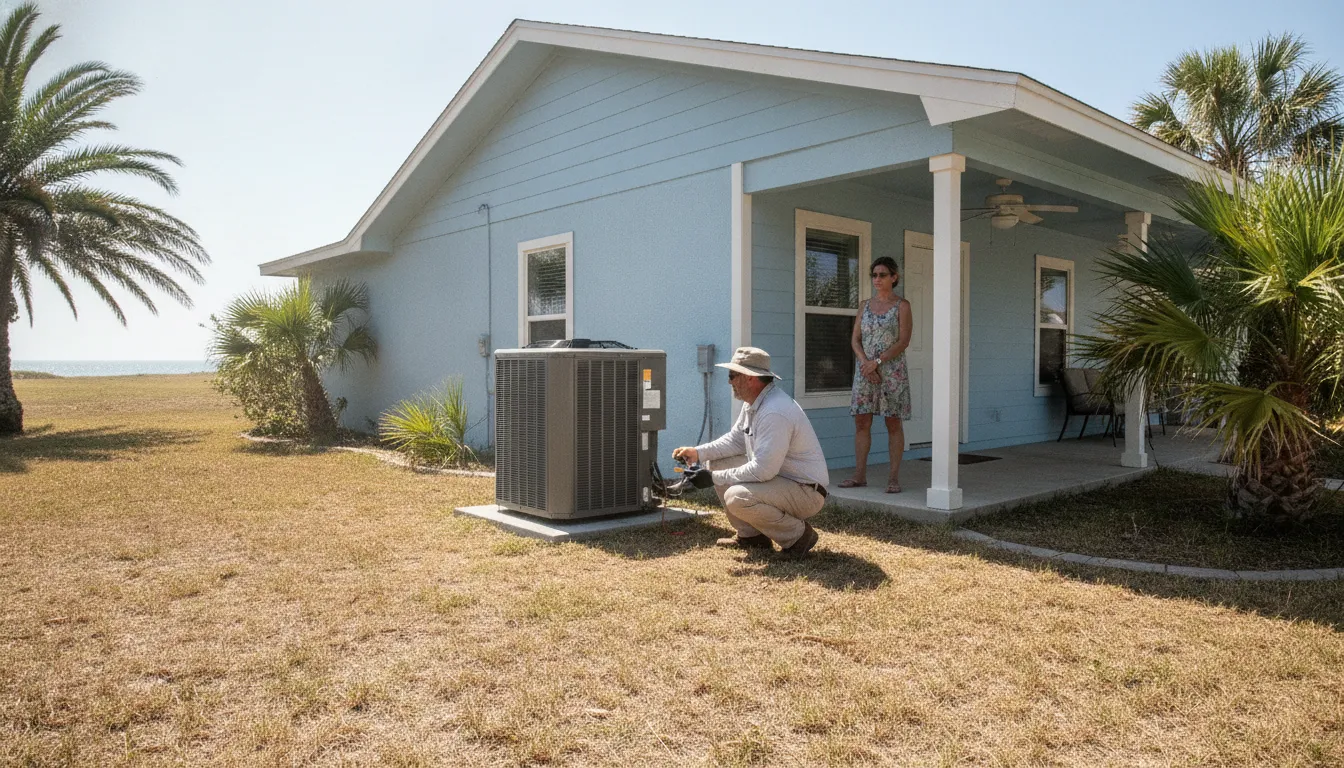
While you can handle filters and basic cleaning, some jobs are best left to the pros. Once a year, you should have a certified technician perform a full tune-up. This is when a professional will check refrigerant levels, inspect electrical connections, test capacitors, and lubricate moving parts. These tasks require specific tools and a deep understanding of how HVAC systems work. Neglecting a yearly professional tune-up can lead to unexpected breakdowns and costly repairs. Our membership plan includes annual maintenance visits to ensure your system is running safely and efficiently all year long.
Why Use Excel for Your AC Maintenance Checklist?
If you’re still using a paper checklist stuck to your fridge, it’s time for an upgrade. While any checklist is better than none, using a digital tool like Excel can transform how you approach AC maintenance. An Excel template brings structure to your routine and makes it easier to track everything in one place. It’s a simple switch that helps you stay organized, remember important tasks, and keep a detailed history of your system’s health. This isn't about creating complicated spreadsheets; it's about building a smart, simple tool that works for you and your home.
Go Digital: Why Excel Beats a Paper Checklist
Let's be honest, paper checklists get lost, smudged, or ignored. A digital checklist in Excel keeps all your AC maintenance information neat, tidy, and accessible from your computer or phone. The best part is the flexibility. You can easily customize a template to match your specific unit and its needs, ensuring no important tasks are overlooked. Unlike a generic printable list, you can add notes, track costs, and adjust your schedule as you learn more about your system. This creates a living document that evolves with your home’s needs, giving you a clear and organized approach to your home's air conditioning services and upkeep.
Set Up Automated Reminders and Dates
One of the biggest challenges with AC maintenance is simply remembering to do it. Excel can help with that. By using simple formulas or conditional formatting, you can have dates automatically highlight when a task is due. This is a great way to set reminders to check and change your air filters regularly, which is one of the most important things you can do for your system. You won’t have to rely on memory or a calendar notification you might dismiss. Your checklist becomes a proactive tool that helps you stay on schedule, preventing small issues from turning into bigger, more expensive problems down the road.
Track Your AC's Performance and History
An Excel checklist does more than just manage current tasks; it creates a valuable historical record of your AC's performance. Over time, you’ll have a detailed log of every filter change, coil cleaning, and professional service call. This data is incredibly useful for spotting recurring problems or noticing a decline in efficiency. An effective AC maintenance checklist helps you stay on top of essential tasks, ensuring your system runs efficiently year-round. When you do need to call a professional, you can provide them with a complete history, which helps with faster and more accurate diagnostics. This log also empowers you to make informed decisions about future repairs or system upgrades.
What Makes an Excel Checklist Effective?
A great checklist does more than just list tasks; it brings clarity and structure to your routine, making it easy to keep your AC system in top shape. When your checklist is well-designed, you’re more likely to stick with it, which means your air conditioner runs more efficiently and lasts longer. The key is to create a tool that works for you, not against you. A truly effective Excel checklist is organized logically, visually intuitive, and detailed enough to track your system’s history. By incorporating a few simple features, you can transform a basic spreadsheet into a powerful maintenance hub that saves you time and helps prevent unexpected breakdowns. Let’s look at three core elements that make an Excel checklist a game-changer for your home maintenance.
Categorize Tasks and Schedule by Frequency
One of the fastest ways to get overwhelmed by a maintenance list is to see everything that needs to be done all at once. A more effective approach is to break tasks down by how often they need your attention. Grouping your to-dos into monthly, quarterly, and annual sections makes the entire process feel much more manageable. An effective AC maintenance checklist can help you stay on top of essential tasks like cleaning filters, inspecting coils, and checking refrigerant levels, ensuring your system runs efficiently year-round. For example, checking your air filter is a quick monthly job, while cleaning the outdoor condenser unit might be a seasonal task. This structure helps you focus on what’s important right now without worrying about tasks that are months away.
Use Color-Coding and Visual Cues
Let’s be honest, a spreadsheet full of black-and-white text isn’t very exciting and can be easy to ignore. That’s where visual cues come in. Using an Excel template for your HVAC maintenance schedule isn't just about staying organized; it's about keeping those systems running smoothly. Use Excel’s formatting tools to add a splash of color. You could set it up so that tasks automatically turn red when they’re overdue, yellow when they’re coming up soon, and green once you’ve checked them off. This simple system gives you an at-a-glance overview of your AC’s status, helping you prioritize what needs to be done. Visuals make the checklist more engaging and ensure no critical steps for maintaining your indoor air quality fall through the cracks.
Add Columns for Notes and Progress
Sometimes, a simple checkmark doesn’t tell the whole story. A simple tool like an Excel template brings structure to your maintenance routine, and you should customize it for your needs. Adding extra columns for details like "Date Completed," "Notes," or "Issues Found" can be incredibly valuable. The notes section is the perfect place to jot down anything you observe, like a strange noise you heard or a part that looks a little worn. Over time, this creates a detailed service history for your AC unit. This log is not only helpful for you, but it also provides crucial information if you ever need to contact a professional for repairs, as you can give them a clear picture of your system's performance.
How to Create Your Own Excel Maintenance Checklist
Ready to build your own AC maintenance checklist? It’s easier than you might think, and creating a custom spreadsheet means you can tailor it perfectly to your home’s specific system and your schedule. A personalized checklist helps you stay on top of every task, from simple monthly filter changes to more detailed annual inspections. By tracking your AC’s upkeep, you create a valuable record that can help you spot potential issues before they become major headaches.
Building your checklist from scratch gives you complete control. You can decide what information to track, how to organize it, and what features will make it most useful for you. Think of it as your AC’s personal health journal. We’ll walk through the simple steps to set up your spreadsheet, add some helpful automation, and make it easy to use. This small time investment will pay off by helping you keep your system running efficiently all year long.
Set Up Your Spreadsheet and Headers
First things first, open a new spreadsheet in Excel or Google Sheets. The foundation of a great checklist is a clear structure. A simple tool like an Excel template brings structure to your maintenance routine, and you can customize it for your specific needs. Start by creating headers in the first row. I recommend using columns like:
- Task: A clear description of the maintenance job (e.g., "Change Air Filter").
- Frequency: How often the task should be done (e.g., Monthly, Quarterly, Annually).
- Last Completed: The date you last performed the task.
- Next Due: The date the task is due again.
- Status: The current state of the task (e.g., To-Do, Complete).
- Notes: A space for any important details, like the filter size or observations.
This simple setup organizes all the essential information for your air conditioning services at a glance.
Add Formulas to Automate Scheduling
Now for the fun part: making your spreadsheet do the work for you. Using an Excel template for your HVAC maintenance schedule isn't just about staying organized; it's about keeping those systems running smoothly with timely reminders. You can use simple formulas to automatically calculate the "Next Due" date. For example, if your "Last Completed" date is in cell C2, you can use these formulas in the "Next Due" column:
- For monthly tasks:
=EDATE(C2,1) - For quarterly tasks:
=EDATE(C2,3) - For annual tasks:
=EDATE(C2,12)
Once you enter the completion date, the next due date will pop up automatically. This takes the guesswork out of scheduling and ensures you never miss an important maintenance step.
Create Checkboxes and Status Updates
To make your checklist truly interactive, add checkboxes and status dropdowns. This makes your checklist easier to complete and action than traditional paper formats. To add checkboxes, you may need to enable the "Developer" tab in Excel's settings first. Once enabled, you can simply insert a checkbox next to each task to get that satisfying feeling of checking it off.
For the "Status" column, you can create a dropdown list. Select the cells in that column, go to Data > Data Validation, and allow a "List." For the source, you can type "To-Do,In Progress,Complete." This lets you update the status of each task with a single click. These visual cues make it easy to see what needs your attention and what’s already done, keeping your maintenance plan on track.
Common Mistakes to Avoid with Your Checklist
A checklist is a fantastic tool for keeping your AC in good shape, but a few common missteps can make it less effective. By steering clear of these pitfalls, you can ensure your checklist is a helpful guide that keeps your system running smoothly and efficiently all year long.
Avoid an Overly Complicated Template
When you first create your checklist, it’s tempting to include every possible maintenance task you can think of. However, a checklist with dozens of complicated steps can quickly become overwhelming. The goal is to create a tool you’ll actually use, not one that collects dust. An effective AC maintenance checklist helps you stay on top of essential tasks like cleaning filters, inspecting coils, and checking drain lines. If your list is too long or confusing, you’re more likely to put it off. Keep it simple and focus on the core tasks you can handle yourself. A straightforward checklist you follow consistently is far better than a complex one you ignore.
Forgetting to Customize for Your Specific System
A one-size-fits-all checklist downloaded from the internet is a good starting point, but it’s not the final word. Air conditioning systems vary widely, and your maintenance routine should be tailored to your specific unit. A simple tool like an Excel template brings structure to your maintenance, but you should always customize it for your needs. The upkeep for a high-efficiency Trane system might differ from an older model or a ductless mini-split. Check your owner’s manual for the manufacturer’s recommended maintenance schedule and add those specific tasks to your list. This small step ensures you’re giving your AC the exact care it needs to perform its best.
Skipping Professional Maintenance
Your checklist is an excellent way to handle the routine upkeep that keeps your AC running efficiently between professional visits, but it doesn't replace an annual tune-up. Neglecting professional service can lead to costly repairs down the road. There are certain tasks, like checking refrigerant levels, inspecting electrical connections, and diagnosing complex mechanical issues, that should always be left to a certified technician. Think of it as a team effort. You handle the monthly check-ins, and a professional handles the deep-dive inspection once a year. This partnership is the best way to extend the life of your system and prevent unexpected breakdowns, and our membership program makes it easy to stay on schedule.
Get Your Free AC Maintenance Checklist Template
Ready to take control of your AC's health? We've created a straightforward, easy-to-use Excel template to help you stay on top of your maintenance schedule. This checklist is designed to guide you through the essential tasks that keep your system running efficiently, helping you save money and avoid unexpected breakdowns. Think of it as your personal roadmap to a cooler, more comfortable home. Download it, customize it, and start tracking your progress today.
What's Inside Our Free Template
Our free template is more than just a list; it's a complete tool to help you manage your AC care. We've included all the essential tasks, from monthly filter checks to annual inspections. You'll find reminders for cleaning coils, checking safety controls, and other key steps that prolong the life of your unit. We designed this comprehensive checklist to cover everything you need for your AC to operate at its best. It takes the guesswork out of maintenance, ensuring you don’t miss a single important step in keeping your system in top shape.
How to Customize Your Template
Every home and AC system is a little different, which is why our template is fully customizable. You can easily add or remove tasks based on your specific unit's model and your home's needs. Using an Excel template helps bring structure to your maintenance routine, making it simple to track what you've done and what's coming up next. Adjust the frequencies, add personal notes, or even color-code tasks to match your style. The goal is to create a checklist that works perfectly for you and makes routine AC care feel effortless.
Know When to Call a Professional
While our checklist is a fantastic tool for DIY maintenance, some jobs are best left to the experts. Tasks involving electrical components, refrigerant levels, or deep internal cleaning require specialized knowledge and tools. Trying to handle these yourself can be unsafe and may lead to bigger, more expensive problems. To avoid costly mistakes, it's wise to schedule regular maintenance with a qualified technician. If you notice strange noises, weak airflow, or anything that seems off, it’s time to call for professional air conditioning services. We can handle the complex work so you can enjoy peace of mind.
Related Articles
- AC Tune-Ups & Maintenance in Corpus Christi, TX | Tommy Cool Air
- AC not turning on? A homeowner's checklist | Tommy Cool Air
- Your Guide to Mastering Indoor Climate Control in Every Season | Tommy Cool Air
- Understanding AC Efficiency: Tips for Optimizing Your Cooling System | Tommy Cool Air
- 20 Common Problems Requiring Emergency Furnace Repair and How to Prevent Them | Tommy Cool Air
Frequently Asked Questions
What's the most important task on the checklist if I'm short on time? If you can only commit to one thing, make it checking your air filter every month. A dirty, clogged filter makes your entire system work harder, which drives up your energy bills and can lead to unnecessary strain on the unit. Swapping out a dirty filter is a quick, simple job that has a huge impact on your AC's efficiency and your home's air quality.
Do I still need professional maintenance if I follow this checklist? Yes, absolutely. Think of your DIY checklist as the essential upkeep between professional tune-ups. While you can handle tasks like changing filters and rinsing the outdoor unit, a certified technician has the tools and expertise to check refrigerant levels, inspect electrical components, and diagnose issues you can't see. Your checklist and an annual professional visit work together to give your system the most complete care.
My AC unit is brand new. Should I still bother with a maintenance checklist? Definitely. Starting a maintenance routine from day one is the best way to protect your investment and keep your new system running at peak performance. Regular care ensures your unit operates efficiently from the start, which can help you maintain the terms of your warranty and prevent small issues from developing over time. It’s all about being proactive.
What if I'm not comfortable performing some of the DIY tasks, like cleaning the coils? That's perfectly fine, and it's smart to know your limits. The checklist is a guide, not a strict set of rules you have to follow yourself. If you're unsure about any task, especially cleaning the outdoor unit or checking the drain line, it's always best to call a professional. The goal is to get the maintenance done safely, not to become an HVAC expert overnight.
Why use a spreadsheet instead of just setting calendar reminders? While calendar reminders are great for remembering a task, a spreadsheet does so much more. It creates a detailed historical log of your AC's health. You can add notes about strange noises, track the cost of filters, or record observations about performance. This history is incredibly valuable for spotting patterns and gives a technician a head start if you ever need a repair.