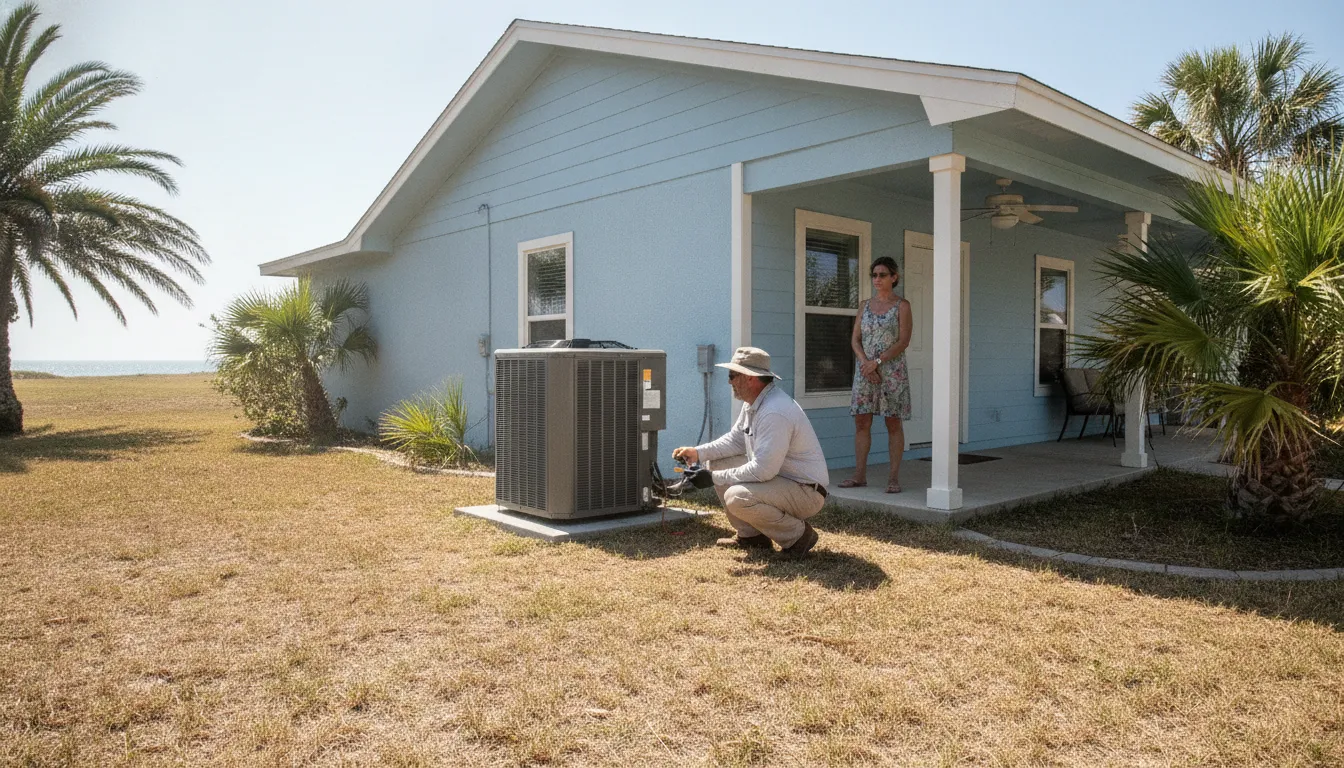
When a Corpus Christi air conditioner stops cooling during a heat wave, the indoor temperature can rise quickly, especially in Gulf Coast humidity. Treat the situation as a safety decision first, not a do-it-yourself repair project. Protect children, older adults, pregnant people, and anyone with a chronic condition while you determine whether a simple check is safe.
Request urgent AC service from Tommy Cool Air through our contact page.
Emergency AC repair during a heat wave is appropriate when the system has stopped cooling and indoor heat is becoming unsafe. It is also urgent when vulnerable people are exposed or the unit shows electrical or mechanical warning signs. Check the thermostat and breaker once without opening panels or handling refrigerant. If cooling does not return, move people to air conditioning and contact a qualified HVAC professional.
The CDC recommends staying hydrated, watching for heat-illness symptoms, and using air conditioning or another cooled location. Tommy Cool Air identifies extreme-heat AC failures as an emergency-service situation, with emergency repair availability 24 hours a day, seven days a week, including weekends and holidays. Start by judging the risk in your home, then separate safe observations from problems that require immediate professional help.
When Is Emergency AC Repair During a Heat Wave Necessary?
Emergency AC repair during a heat wave is necessary when your system stops cooling during extreme heat, especially if someone in the home is vulnerable to heat illness. In Corpus Christi, humidity can make indoor conditions uncomfortable quickly. Treat a complete AC failure as urgent, move people to a cooler location if needed, and contact a qualified service team.
Tommy Cool Air's service guidance identifies AC failure during extreme heat as an emergency-service situation. The Cool Kids offer 24/7 emergency AC repair, including weekends and holidays. Availability does not mean a guaranteed arrival time, so contact the team as soon as you recognize that cooling will not return through safe, basic checks.
Call promptly when cooling has stopped
A failed system deserves urgent attention when the indoor temperature is rising or the home cannot maintain a comfortable environment. The outage is even more urgent when it affects an older adult, young child, pregnant person, or someone with a chronic health condition. The CDC notes that heat can worsen health for people with certain chronic conditions. Watch for dizziness, weakness, nausea, unusual sweating, or other signs of overheating, and prioritize a cool location and medical help when symptoms are serious.
Do not wait for a full diagnosis before requesting service. Common repair issues can include a frozen evaporator coil, refrigerant leak, failed capacitor or relay, clogged drain line, or broken thermostat. These problems require different solutions, and continuing to reset equipment may not help.
Know when this is more than a comfort issue
If you smell burning or rubber, see sparks, find exposed wiring, notice a warm or discolored outlet, or the breaker trips repeatedly, stop troubleshooting. Keep clear of the equipment and seek qualified electrical help for an apparent electrical hazard. For ordinary cooling loss without those warning signs, you can make one safe observation of the thermostat and system before calling. Never open electrical panels or handle refrigerant.
If the home is already too hot, do not rely on a fan alone in high heat and humidity. Use air conditioning elsewhere, arrange a cool place with family or friends, or locate a public cooling space while help is arranged.
Safe Checks to Try Before Calling for Help
If your air conditioner stops working during a heat wave, make only simple observations that do not expose you to electrical or refrigerant hazards. Confirm the thermostat, look for restricted airflow, and check the breaker once if safe. Then call for professional help rather than guessing at the failure.
- Confirm the thermostat settings. Make sure the system is set to Cool, the temperature is lower than the room temperature, and the display has power. If the thermostat is blank, note that detail for the technician. A broken thermostat is one possible AC repair issue, but it is not something to open or rewire yourself.
- Observe airflow and the filter. Check whether air is coming from the vents and whether it feels cool, warm, or unchanged. If the filter is easy to access without tools, look for heavy dust or blockage. Do not remove panels or dismantle the equipment. For related homeowner checks, see these AC not blowing cold air troubleshooting steps.
- Check the breaker once, only when it is safe. Look at the labeled HVAC breaker without opening the electrical panel or touching wiring. If it is clearly tripped, you may reset it once. If it trips again, leave it off and call a qualified professional. Repeated trips can point to an electrical problem, so do not keep resetting it.
- Observe the outdoor unit from a distance. Listen for unusual sounds and look for ice, standing water, visible damage, smoke, or anything obstructing the unit. Do not remove the cover, reach through the grille, spray the equipment, or handle refrigerant. Frozen coils, clogged drains, faulty capacitors, relays, and refrigerant leaks require trained diagnosis.
- Call when cooling has not returned or a hazard appears. Call Tommy Cool Air through the contact page for emergency AC repair when the system remains down, airflow is weak, or the breaker will not stay on. Stop immediately for smoke, sparks, burning odors, exposed wiring, water near electrical components, or any situation that feels unsafe. Tell the technician what you observed and which checks you completed.
These observations help the Cool Kids start with useful information without turning a heat-wave failure into a safety risk. They do not replace an on-site diagnosis.
What To Do If Your AC Is Out During Extreme Heat
When your AC fails in extreme heat, drink fluids, move to a cooler air-conditioned place, and check on vulnerable people first. Use fans only when indoor temperatures are below 90 degrees Fahrenheit. In Corpus Christi humidity, fans may not be enough, so arrange a cooling shelter or public indoor location while help is on the way.
Protect people before protecting the house
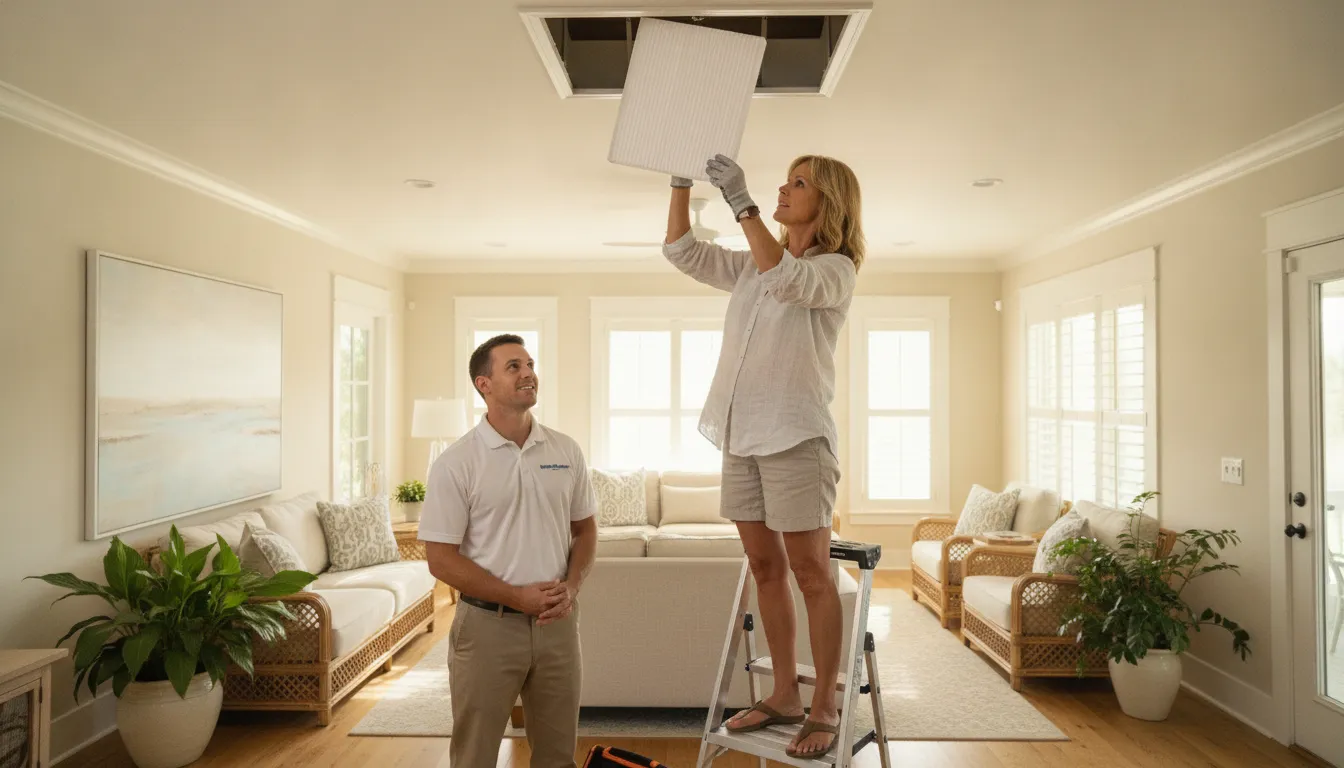
Start by drinking plenty of fluids and moving household members to the coolest available room. Close blinds or curtains on sunny windows, and avoid adding heat with ovens, dryers, or unnecessary lights. Check on older adults, infants and young children, pregnant people, and anyone with a heart or other chronic health condition. The CDC also recommends checking on friends and neighbors who live alone.
Watch for warning symptoms such as dizziness, weakness, nausea, headache, unusual sweating, muscle cramps, or shortness of breath. This is general safety guidance, not a diagnosis. If someone seems seriously ill or symptoms worsen, seek urgent medical help rather than waiting for the AC repair.
Use fans carefully in Gulf Coast humidity
A fan can improve comfort when indoor temperatures are below 90 degrees Fahrenheit. The CDC warns that a fan can increase body temperature above that threshold, so do not rely on one in a dangerously hot room. Review the CDC heat safety guidance for hydration, cooling, and heat-illness information.
Corpus Christi humidity can make a hot home feel even more oppressive. Learn more about AC struggling with Corpus Christi humidity while you arrange help. Ready.gov explains that fans alone are not enough in high heat and high humidity. It recommends moving indoors to air conditioning or a public place such as a library, museum, or shopping mall.
Relocate if the home is unsafe or keeps heating up
During an Extreme Heat Warning, the National Weather Service recommends staying in air conditioning as much as possible. If your home cannot stay cool, locate a cooling shelter or arrange to stay with nearby family or friends. Check the National Weather Service heat safety guidance for warning information and shelter advice. Contact Tommy Cool Air through the emergency AC repair contact page while you remain in a safer cool location.
Which AC Symptoms Mean You Should Stop Troubleshooting?
If an air conditioner smells burned, sparks, trips the breaker repeatedly, leaks near electrical parts, or makes a dangerous noise, stop troubleshooting. Keep people away, avoid touching the equipment, and seek qualified help. These warning signs can turn a difficult heat-wave outage into an electrical, fire, or water-safety emergency.
A burning or rubbery odor is a clear stop signal, especially when it comes from the indoor unit, outdoor unit, or another appliance connected to the same circuit. Sparks from an outlet, a warm or discolored outlet, or visible smoke also require immediate distance. Do not reset the breaker repeatedly or investigate behind a panel. The Colorado Springs Fire Department recommends qualified electrical help for these warning signs, including frequent breaker trips, burning smells, sparks, and warm or discolored outlets.
Repeated breaker trips deserve attention even when the air conditioner starts again after one reset. The pattern may point to an electrical fault or a failing component. Turn the system off and contact a qualified professional rather than treating the breaker as a switch to keep forcing back on.
Water changes the risk. If a drain overflow leaves standing water near wiring or electrical equipment, keep clear. Do not step into the water to reach a switch. If you see exposed wiring, smoke, active arcing, or a fire, leave the area and contact emergency services when appropriate. Keep children and pets away.
Loud grinding, screeching, banging, or repeated clicking is another reason to stop. A noisy system may have a mechanical or electrical problem that worsens when it continues running. Do not remove covers, open panels, handle refrigerant, or reach into the equipment.
Once the area is safe, write down what you noticed, when it began, and whether the breaker tripped. Tommy Cool Air can help assess air conditioning repair options without asking you to perform unsafe work. During extreme heat, stop early when a symptom suggests danger. Protecting people and the property comes before restoring cooling.
What Should You Tell an Emergency AC Repair Technician?
When your air conditioner fails in extreme heat, clear information helps the technician prepare for a safer diagnosis. Share the system's symptoms, when they began, what you observed around the equipment, and every check you already attempted. Tommy Cool Air can use those details to understand the situation before service begins.
Before you call, gather these details:
- Your service address: Include the city, neighborhood, gate code, or access instructions. Mention whether the property is a home, rental, business, or managed building.
- The symptoms and timeline: Explain whether the system stopped completely, blows warm air, cycles on and off, makes unusual sounds, or shows weak airflow. Note when you first noticed the problem and whether it followed a power interruption or storm.
- Thermostat status: Tell the technician what the display shows, whether it responds to adjustments, and whether the indoor temperature is rising. Do not repeatedly lower the setting to force cooling.
- Breaker observations: Say whether you checked the HVAC breaker once and whether it was tripped. Do not open an electrical panel or reset a breaker repeatedly.
- Water, odors, or safety concerns: Report dripping water, a burning or rubbery smell, smoke, sparks, exposed wiring, or water near electrical components. If you see an immediate hazard, stay clear and explain it when you call.
- What you already tried: List filter changes, thermostat adjustments, power checks, or other safe observations. This helps avoid repeating steps and shows where professional diagnosis is needed.
You can also ask what information the technician needs before arriving, which service options fit the symptoms, and what you should do to keep people safe while waiting. Avoid opening equipment or handling refrigerant. For background on common home AC repair issues, review the homeowner guide. If the failure is urgent, request 24/7 emergency AC repair or contact Tommy Cool Air through the online contact page. Availability depends on current circumstances, so provide a reliable callback number and remain reachable.
How To Keep Your Home Safer While Waiting
If your AC fails during extreme heat, reduce indoor heat, protect vulnerable people, and plan a move to reliable cooling. Drink fluids, close curtains, and use fans carefully. If anyone develops concerning heat-related symptoms, move them to a cooler place and seek medical help rather than waiting for the repair.
The CDC recommends staying cool, staying hydrated, and knowing heat-illness symptoms. Older adults, infants, young children, pregnant people, and those with chronic conditions may need extra attention. Check on anyone living alone, especially if the home is becoming hotter.
| Situation | Safer action | When to relocate or seek medical help |
|---|---|---|
| Indoor temperature is below 90 F | Use a fan for air movement, drink fluids, close blinds or curtains, and limit strenuous activity. | Relocate if the temperature keeps rising, someone is vulnerable, or cooling cannot be maintained. |
| Indoor temperature reaches 90 F or higher | Do not rely on a fan alone. The CDC warns that fans can increase body temperature above 90 F. Use air conditioning elsewhere. | Move to an air-conditioned home, cooling shelter, library, or other public place promptly. |
| High heat and Gulf Coast humidity | Keep windows and sun-facing curtains closed. Ready.gov notes that about 40 percent of unwanted home heat enters through windows. | Relocate when the home remains hot or humid despite these steps. Fans alone are not enough in high heat and humidity. |
| Someone feels dizzy, weak, nauseated, unusually sweaty, or short of breath | Stop activity, move the person to a cooler location, and follow guidance from medical professionals or emergency services. | Seek medical help promptly. Do not diagnose the cause or leave the person alone while waiting. |
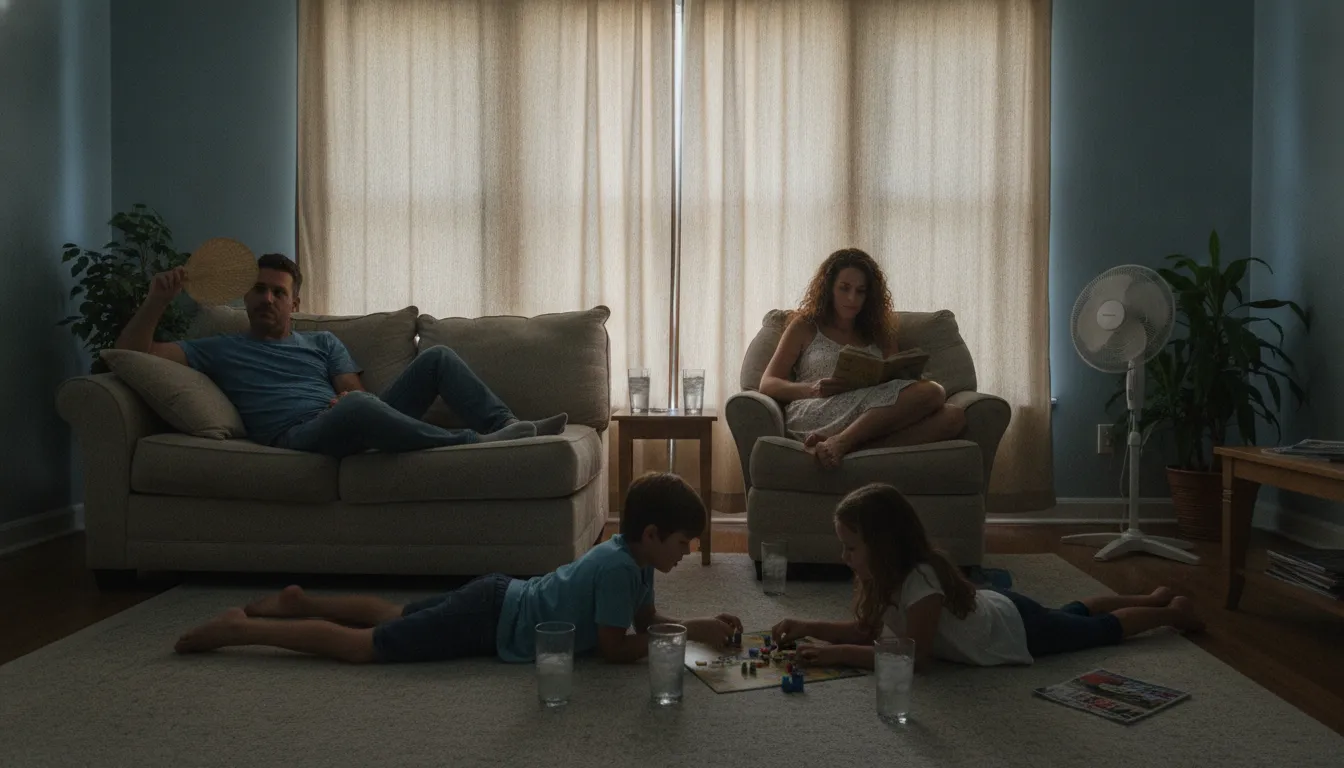
The National Weather Service recommends air conditioning or a cooling shelter during an Extreme Heat Warning. Ready.gov also recommends an air-conditioned public place. If you need repair support, you can contact Tommy Cool Air while arranging a safe cooling location.
How To Reduce the Risk of Another Heat-Wave AC Failure
Professional maintenance can identify developing AC problems before the next heat wave, although no service can prevent every breakdown. Ask a technician to review filters, electrical connections, refrigerant, thermostat operation, and condensate drainage. Then prepare your home for extreme heat so a future failure creates less risk.
Schedule AC maintenance and tune-ups before the hottest part of the season, or after an emergency repair if the cause is unclear. A thorough visit may include checking or replacing filters, inspecting electrical connections, checking refrigerant, testing the thermostat, and flushing drain lines. These checks address common trouble areas, including clogged drains, faulty capacitors or relays, frozen coils, refrigerant leaks, and thermostat problems. They improve visibility into system condition, but they do not guarantee that an aging component will never fail.
Between visits, keep the return-air filter accessible and replace it according to the manufacturer's guidance or when it is visibly loaded with dust. Keep supply vents open, and avoid blocking the outdoor unit with stored items or overgrown vegetation. If the system begins short-cycling, stops cooling evenly, leaks water, or makes an unfamiliar sound, arrange professional evaluation instead of waiting for the next extreme-heat day. You can also review common home AC repair issues to recognize changes worth reporting.
Prepare before the forecast turns dangerous
Save the service contact, identify a nearby air-conditioned location, and plan for children, older adults, pets, or anyone with health conditions who may be more vulnerable to heat. Ready.gov recommends using awnings or curtains because roughly 40 percent of unwanted household heat buildup comes through windows. During a heat wave, close coverings on sunny windows and keep doors and windows shut while the AC operates. If you use the Cool Kids Comfort Club membership, review its current terms directly so you know what is included before an emergency.
Contact Tommy Cool Air to request AC service or plan your next maintenance visit.
Frequently Asked Questions
What qualifies as an AC emergency during a heat wave?
A complete cooling failure becomes urgent when indoor heat is rising, someone at home is vulnerable to heat illness, or electrical hazards are present. Call for qualified help promptly, and relocate to an air-conditioned place if the home cannot stay safely cool.
What should you do if your AC breaks during a heat wave?
Set the thermostat correctly, check the filter and breaker once, and observe the outdoor unit from a safe distance. Do not open electrical panels or handle refrigerant. Contact a technician with the symptoms, recent changes, and checks you already completed.
Should you leave the house if the AC is out?
Yes, if indoor conditions become dangerously hot, a household member develops symptoms, or the home cannot provide safe cooling. The CDC recommends using air conditioning or finding an air-conditioned location during indoor heat. Review CDC heat-safety guidance for cooling options and warning signs.
Is it safe to use fans while waiting for AC repair?
Fans can help only when indoor temperatures are below 90 degrees Fahrenheit. Above 90 degrees, the CDC warns that a fan can increase body temperature. Drink fluids, close curtains, and move to an air-conditioned location if the home remains hot.
What should you tell an emergency AC repair technician?
Share when the problem began, whether the system blows warm air or makes unusual sounds, thermostat settings, breaker trips, water or odor observations, and any safe checks attempted. Mention smoke, sparks, exposed wiring, or repeated trips immediately, and leave hazardous equipment off.
Ready to Get Help With Your AC?
When Corpus Christi heat puts your comfort and household safety at risk, a professional assessment can help identify the next practical step. Contact Tommy Cool Air to request urgent AC service or schedule professional help through the contact page. The Cool Kids can review what you observed and help you move forward with the right service option.
Contact Tommy Cool Air for AC service through the online contact page.