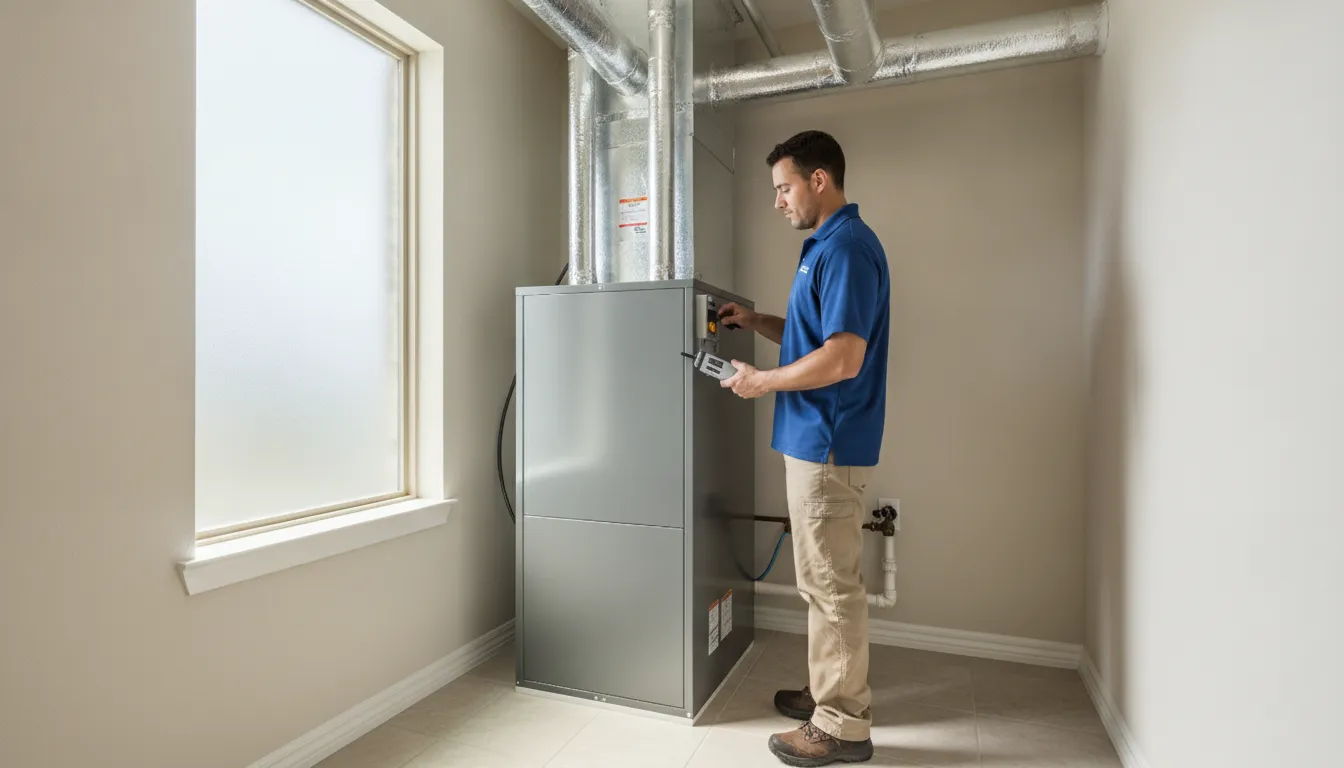
Choosing HVAC air purification is less about finding one winning device and more about matching the technology to your home's actual indoor-air concerns. A filter can capture particles, while UV treatment serves a different purpose inside the equipment. Airflow, filter-slot size, coil condition, humidity, and maintenance all affect whether an option fits your system.
Request an indoor air quality evaluation from Tommy Cool Air.
The best air purifier for hvac system with uv light depends on the pollutants you want to address. Your HVAC system's airflow capacity, and where treatment can be installed. Whole-home filtration and UV may complement each other, but neither is universal. A professional evaluation can help match the setup to your equipment.
Start by separating particle filtration from UV treatment, then compare how each option affects airflow, coil maintenance, installation, and everyday upkeep.
What Is the Best Air Purifier for an HVAC System With UV Light?
The best air purifier for an HVAC system with UV light depends on what you want to address. Particle filters capture airborne debris, UV treatment targets certain biological pollutants on HVAC surfaces, carbon helps with some odors, and portable units treat limited areas. The right choice also depends on coverage, airflow, equipment compatibility, and maintenance.
Start by identifying the main concern rather than choosing a universal winner. A technician can evaluate the pollutant, filter slot, blower capacity, duct layout, and available installation space. Tommy Cool Air's indoor air quality services cover several approaches for matching equipment to a home's conditions.
Whole-home mechanical filtration
Mechanical filtration is usually the starting point for particles such as dust and pollen. Media, HEPA, electronic, and other filtration options can be integrated with HVAC equipment, but filter selection must suit the fan and filter slot.
A higher-efficiency filter is not automatically better for every system. The filter can affect resistance and airflow, so compatibility matters. The EPA recommends choosing MERV 13 or the highest rating the system fan and filter slot can accommodate. Read more about how MERV-rated filters capture particles.
UV treatment inside the HVAC system
UV treatment serves a different purpose. Properly designed UVGI may affect some biological pollutants growing on moist HVAC surfaces, including cooling coils and drain pans. Its value depends on lamp output, exposure time, placement, air velocity, humidity, and system design.
Typical residential UVGI units have limited effectiveness against some bacteria and molds. The EPA also notes that typical home units may not provide enough exposure for effective destruction of some viruses and most mold or bacterial spores. UV should therefore complement filtration and equipment maintenance, not replace them.
Carbon and portable air cleaners
Activated carbon can be useful when odors or certain gases are the primary concern. Its suitability depends on the product design and the amount of carbon available. A portable air cleaner may fit one room, but it does not provide the same whole-home coverage as an HVAC-integrated system.
For Gulf Coast homes, the practical comparison is layered. Match particle filtration, UV placement, carbon, ventilation, and humidity control to the specific issue. Then confirm airflow, installation conditions, and replacement needs before selecting equipment.
How Do Filtration and MERV Ratings Affect Your Choice?
Filtration physically captures airborne particles as HVAC air passes through a filter. MERV helps compare that capture performance, but the best choice also depends on filter size, blower capacity, and airflow. A higher rating can improve particle capture while creating resistance your system was not designed to handle.
Mechanical filters work by directing return air through a fibrous media. Particles become trapped as air moves through the material. MERV, or Minimum Efficiency Reporting Values, compares how effectively a filter captures particles from 0.3 to 10 microns. The EPA explains that higher MERV ratings capture specific particle sizes more effectively, but rating alone does not determine the right filter for every home.
For a closer explanation, read how MERV-rated filters capture particles. The rating gives you a useful comparison point. It does not replace an evaluation of the complete HVAC system.
Why the highest MERV rating is not always the best fit
A denser filter can increase resistance to airflow. If the blower, return ductwork, or filter slot cannot accommodate that resistance, the system may not move air as intended. That can affect comfort and equipment operation, even when the filter has a higher capture rating.
The EPA recommends choosing at least MERV 13, or the highest rating that the HVAC fan and filter slot can accommodate. It also advises consulting an HVAC professional to identify the highest suitable efficiency. This is especially important when replacing a standard filter with a deeper media filter or another high-efficiency option.
For perspective, the EPA table lists MERV 16 filters as capturing at least 95 percent of particles in each listed range from 0.30 to 10 microns. That figure describes tested particle-size ranges. It does not mean every MERV 16 filter belongs in every residential system.
Match filtration to the equipment and maintenance plan
Check the filter dimensions, depth, replacement schedule, and manufacturer requirements before upgrading. All filters require periodic replacement to function properly. A loaded filter can restrict airflow regardless of its original MERV rating.
Filtration and UV treatment also perform different jobs. A filter captures particles, while properly designed UV equipment may treat some biological pollutants on moist HVAC surfaces. Treat them as complementary options, not interchangeable solutions. The right combination depends on the pollutant concern, available equipment, airflow, and installation conditions.
When Does UV Light Add Value to HVAC Air Cleaning?
UV light can add value when an HVAC system needs treatment near moist coils or drain pans, or when a properly designed airstream system fits the equipment. It does not replace particle filtration, humidity control, or ventilation. The best choice depends on placement, exposure time, airflow, maintenance, and professional design.
UV-C is most useful as one layer in a broader indoor-air-quality plan. Properly designed UVGI may affect some biological pollutants growing on moist HVAC surfaces, including cooling coils and drain pans. However, EPA notes that typical residential units have limited effectiveness against some bacteria and molds. EPA explains UVGI limitations and applications.
Coil-surface treatment usually provides longer exposure
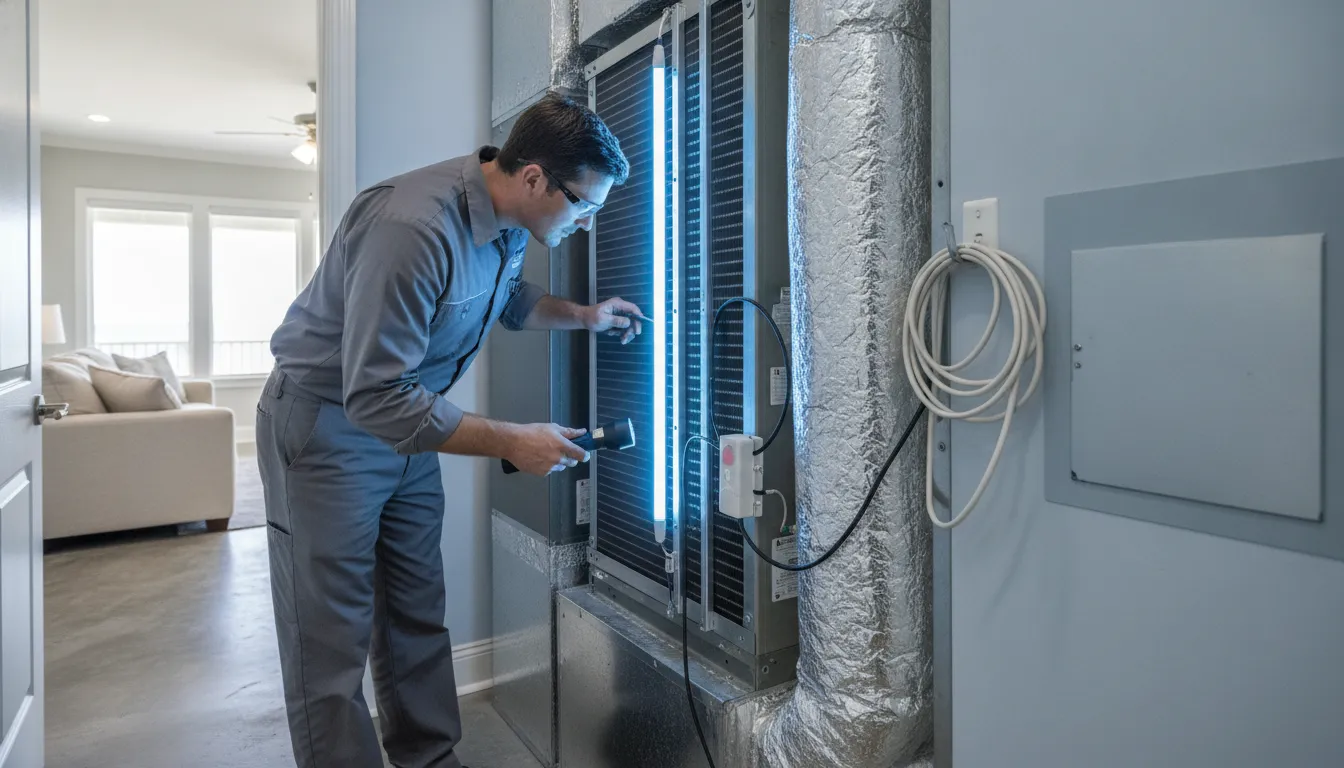
A lamp aimed at a cooling coil or drain pan treats a fixed surface continuously. That longer exposure can require less intense UV than treating particles moving through an air stream. This makes coil-focused placement a practical consideration when moisture and surface cleanliness are central concerns.
Some HVAC UVGI systems also direct light toward coils and drain pans. The goal is not to make every part of the home air sterile. The goal is to apply UV where the HVAC system provides a suitable, controlled treatment zone.
Moving-air treatment has tighter design limits
In-duct UV systems expose airborne particles for a short time as they pass through the equipment. Effectiveness depends on lamp output, air velocity, humidity, temperature, particle size, and the target microorganism. A stronger bulb alone does not guarantee a better result.
That difference matters when comparing the best air purifier for hvac system with uv light. A coil lamp and an airstream lamp solve different design problems. They should not be treated as interchangeable with a filter, carbon media, or a ventilation system.
UV-C bulbs also require annual replacement according to Tommy Cool Air's technical guidance. A professional can evaluate lamp position, access, airflow, electrical fit, and safe maintenance intervals. For a useful comparison, review how UV purification differs from duct cleaning before selecting equipment.
Which Air Purification Option Fits Your Main Indoor-Air Concern?
The best system depends on what you want to address. Filters target particles, carbon can help with odors, and UV focuses on selected biological pollutants or damp HVAC surfaces. Ventilation and humidity control address moisture and stale air. These technologies complement one another, but they are not interchangeable.
- Identify the primary pollutant or moisture concern.
- Confirm the HVAC system can support the chosen equipment.
- Plan the filter, bulb, airflow, and service schedule.
| Main concern | Better-fit HVAC approach | What it addresses | Limitation or maintenance |
|---|---|---|---|
| Dust, pollen, and other airborne particles | Whole-home media, pleated, electronic, or HEPA filtration | Particle capture as air passes through the filter. MERV ratings compare capture across particles from 0.3 to 10 microns. | Higher filtration can affect airflow if the equipment and filter slot are not compatible. Replace filters according to manufacturer guidance. |
| Household odors and some gaseous pollutants | Activated-carbon filtration, sized for the HVAC system | Carbon media can complement particle filtration when odors are the primary concern. | Carbon is not a substitute for ventilation or source control. Media requires inspection and replacement. |
| Moisture on coils, drain pans, or other HVAC surfaces | Properly designed HVAC-integrated UV treatment | UVGI may destroy some biological pollutants growing on moist HVAC surfaces. UV placement and exposure time affect results. | Typical residential UV units have limited effectiveness against some bacteria and molds. UV-C bulbs require annual replacement in the documented service guidance. |
| One room with a specific air-quality concern | Room-specific filtration or a targeted HVAC assessment | A focused solution can address the room, airflow pattern, and equipment serving that space. | Portable or room-specific equipment does not automatically treat the entire home. Check airflow, placement, and maintenance needs. |
| Stale air, excess humidity, or recurring moisture concerns | Whole-home air purification and ventilation, plus humidity control | Ventilation introduces planned outdoor-air exchange, while humidity equipment addresses moisture conditions. | Ventilation and dehumidification require system design and ongoing service. They do not replace particle filtration or source control. |
Start with an indoor-air-quality evaluation rather than choosing a device by label alone. Indoor air quality services can help match filtration, UV placement, airflow, and installation conditions to your HVAC equipment.
UV treatment also serves a different purpose from duct cleaning. Learn how UV purification differs from duct cleaning, then explore whole-home air purification and ventilation when moisture or stale air is part of the concern.
Why Does Gulf Coast Climate Matter for HVAC Air Purification?
For Corpus Christi homes, humidity and salt air affect how an HVAC-integrated purification system should be selected. The best fit depends on moisture control, airflow, equipment compatibility, and whether the system treats particles, surfaces, or both.
Gulf Coast air conditioning runs through much of the year. That extended runtime increases the importance of matching any filter or UV component to the existing fan, filter slot, coil, and duct layout. A device that looks effective on paper may not suit an installation if it restricts airflow or cannot be positioned correctly.
Humidity deserves separate attention. Tommy Cool Air identifies high humidity as a local concern and offers humidity-control equipment for excess-moisture conditions. Read more about humidity control for Corpus Christi homes before treating air purification as the only answer.
Moisture also affects UV performance in moving air. Air velocity, humidity, particle size, and system design influence how airborne UV treatment performs. UV directed at a cooling coil or drain pan has different exposure conditions than UV aimed at particles passing through the airstream.
Salt air adds another Gulf Coast consideration. Coastal conditions can contribute to corrosion on HVAC components, so equipment placement, materials, access, and service requirements matter during installation. A professional evaluation can identify whether the proposed system fits the cabinet, coil area, electrical setup, and maintenance access.
In practical terms, climate fit means choosing the complete system rather than one headline feature. Filtration, UV treatment, humidity control, ventilation, and coil maintenance address different conditions. The right combination should support the equipment's airflow and the home's actual indoor-air-quality priorities.
What Maintenance and Installation Should You Expect?
Maintenance keeps an HVAC air-cleaning system working with the equipment around it. Expect regular filter changes, annual UV-C bulb replacement, airflow checks, and careful installation. A professional evaluation can confirm whether the filter, UV placement, ductwork, electrical connections, and enclosure fit your system before equipment is added.
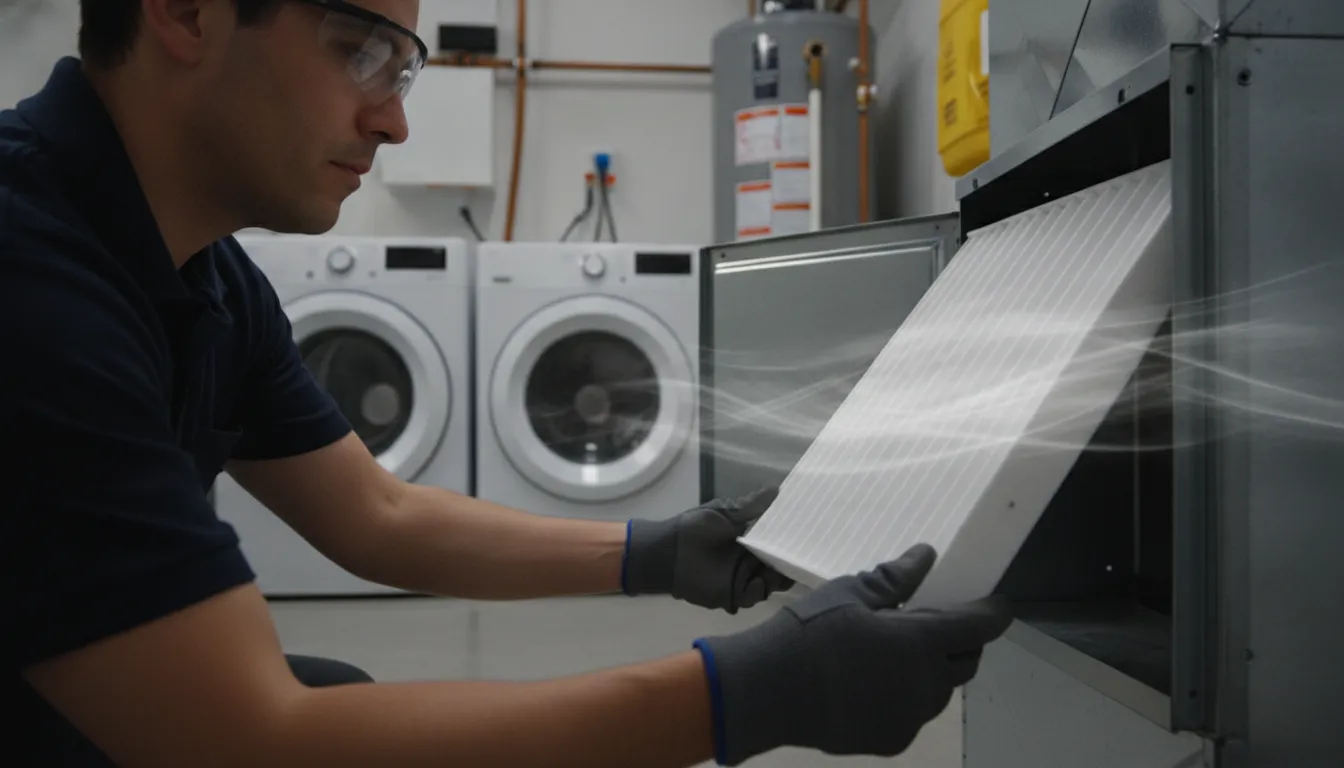
Start with the filter. All filters require periodic replacement, so follow the manufacturer's maintenance guidance. A filter that is loaded with dust can restrict airflow, even when its efficiency rating suits the system. Your technician should confirm the filter size, slot, fan capacity, and expected replacement schedule. Read more about indoor air quality maintenance tips before setting a routine.
Plan for filter and UV maintenance
UV-C equipment has a separate maintenance need. Tommy Cool Air's technical guidance identifies coil sterilization as one application and says UV-C bulbs require annual replacement. A lamp can remain lit while its useful output declines, so annual service helps keep the system operating as designed. UV treatment and particle filtration are complementary, not interchangeable.
Check airflow, static pressure, and duct performance
Adding filtration or changing filter efficiency can affect resistance through the system. An evaluation should consider airflow and static pressure instead of assuming the highest-rated filter is automatically the best choice. EPA guidance recommends choosing MERV 13, or the highest rating the fan and filter slot can accommodate. EPA also recommends consulting an HVAC professional about suitable filter efficiency.
Technicians can use airflow measurement and duct-testing equipment to assess system performance. Those checks can reveal whether duct leakage, an undersized filter slot, or restricted airflow needs attention before installing additional equipment. This keeps the installation focused on the complete HVAC system rather than one device.
Confirm placement and installation safety
UV systems may be installed inside HVAC equipment or ductwork. Placement matters because air velocity, humidity, temperature, lamp output, and exposure time influence UV system design. A professional should verify the intended treatment area, access for service, electrical connection, and enclosure fit. Never bypass safety covers or install a UV lamp where routine servicing could expose people to its light.
Tommy Cool Air offers UV air purifier installation in Corpus Christi and repair. The goal is a compatible combination of filtration, UV treatment, and airflow management, not a universal winner labeled the best air purifier for HVAC system with UV light.
Request a Tommy Cool Air indoor air quality evaluation before choosing equipment.
Frequently Asked Questions
What is the best air purifier for an HVAC system?
There is no single best option for every home. A compatible whole-home filter is usually the starting point for airborne particles, while UV treatment serves a different purpose near coils, drain pans, or ductwork. The right combination depends on your pollutant concerns, available filter space, airflow, and maintenance plan.
What is the best UV light for an HVAC system?
The best UV setup is one designed for your equipment and intended placement, rather than one chosen by lamp name alone. Coil and drain-pan treatment provides longer exposure than a fast-moving airstream. Air velocity, humidity, lamp output, and system design all affect UV performance, so an experienced HVAC professional should evaluate the installation.
Are HVAC air purifiers with UV light worth it?
They can be useful when their roles are clearly matched to the home's needs. Filtration captures particles, while properly designed UVGI may affect some biological pollutants on moist HVAC surfaces. However, typical residential UVGI units have limited effectiveness against some bacteria and mold, according to the EPA. UV should not be treated as a replacement for filtration, ventilation, or humidity control.
How often do HVAC filters and UV bulbs need maintenance?
Replace filters according to the manufacturer's guidance, and check them sooner if dust loads are high or airflow changes. Tommy Cool Air's technical guidance identifies annual UV-C bulb replacement as a maintenance requirement. A professional evaluation can also check filter fit, static pressure, airflow, coil condition, and ductwork before installation.
Can a UV light replace an HVAC air filter?
No. A filter captures particles as air passes through its media, while UV treatment serves a different role near selected HVAC surfaces or in an airstream. Keep the filter maintained and evaluate UV as a complementary option when the equipment and installation conditions support it.
Ready to Choose the Right HVAC Air Purification Option?
The right combination of filtration and UV treatment depends on your HVAC system, airflow needs, and indoor-air concerns. Tommy & the Cool Kids can help you compare practical options without assuming one solution fits every home. Contact us to request an indoor air quality evaluation or installation recommendation.