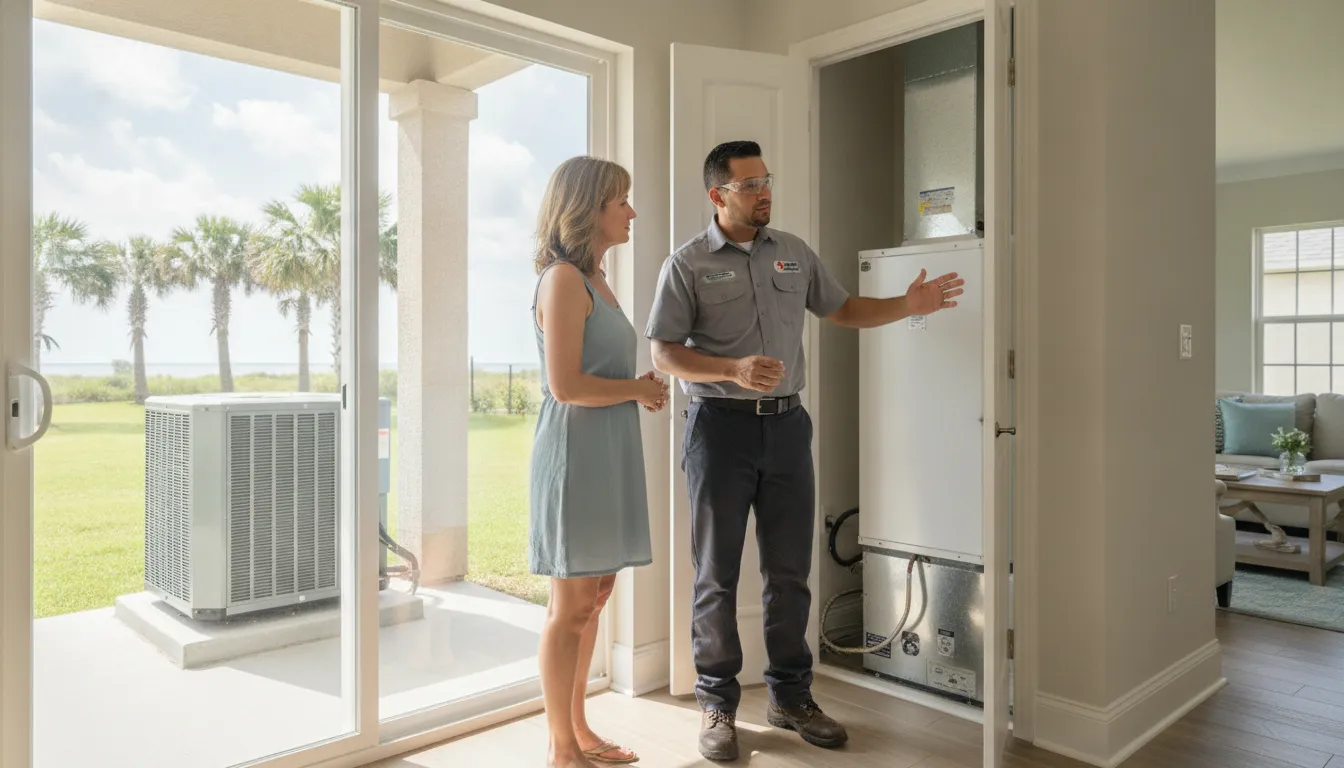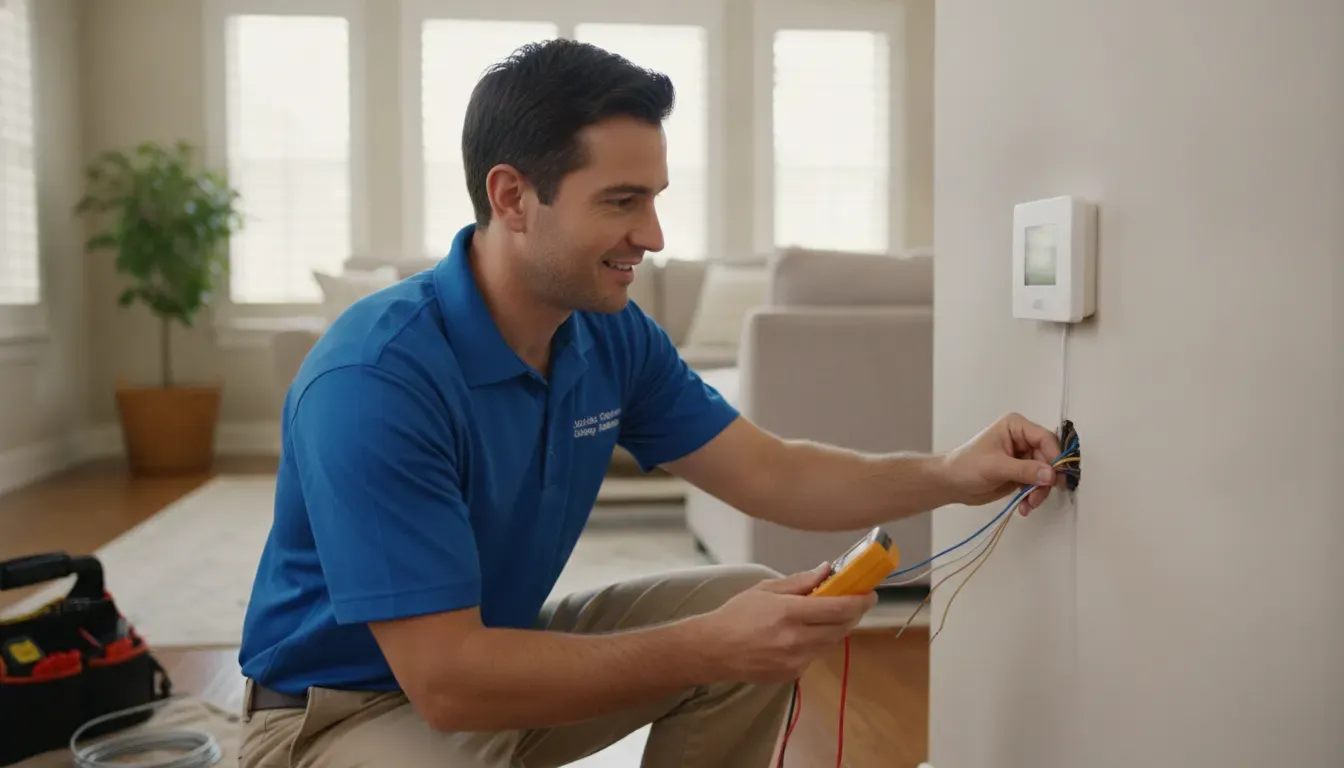
If you are asking, "what if there is no C-wire for a thermostat," you may still have several upgrade paths. Some thermostats use batteries, some work with an approved power adapter, and others need a new common wire. The safest choice depends on your HVAC equipment and wiring.
Talk with Tommy Cool Air about a safe thermostat upgrade.
A C-wire, also called a common wire, supplies continuous low-voltage power to many modern thermostats. It does not usually tell the air conditioner or heater to run. Instead, it completes the power path that helps a thermostat stay on, maintain Wi-Fi, and operate its display or controls.
Not seeing a C-wire does not automatically mean your upgrade is impossible. It does mean you should not choose a thermostat based only on its appearance or the number of wires visible at the wall. The indoor control board, HVAC type, terminal connections, and thermostat instructions all matter.
What does a C-wire do for a thermostat?
A C-wire provides a continuous return path for low-voltage power from the HVAC control board to the thermostat. That steady supply can support a Wi-Fi connection, touchscreen, sensors, scheduling, and other features. The thermostat still uses separate terminals to call for heating, cooling, or fan operation.
ENERGY STAR explains that most smart thermostats use a C-wire or another compatible power solution. Google also notes that some Nest systems can need a C-wire or power accessory. Requirements vary by model, so read the exact installation guide before buying equipment.
| Thermostat connection | Typical role | Why it matters during an upgrade |
|---|---|---|
| R or Rc | Low-voltage power supply | Confirms the thermostat receives system power |
| Y or Y1 | Cooling call | Controls the air-conditioning contactor through the system |
| W or W1 | Heating call | Controls a heating stage or auxiliary heat call |
| G | Indoor fan call | Operates the blower in compatible configurations |
| C | Common return path | Provides continuous power for many smart thermostats |
Terminal letters are common conventions, not a substitute for testing. Heat pumps, multi-stage systems, dual-fuel equipment, zoning, and communicating controls can use different terminals or requirements. A wiring diagram and equipment inspection are more reliable than color alone.
How can you check whether a C-wire is present?
Start with a visual check, but treat it as an initial clue rather than a final answer. A wire can be hidden, unused, disconnected, attached to the wrong terminal, or not connected at the indoor unit. Safe verification requires matching the thermostat-side conductor to the equipment-side connection.
- Read the thermostat and HVAC manufacturer safety instructions.
- Turn off power to the HVAC system at the appropriate breaker or disconnect.
- Remove the thermostat cover without pulling on the wire bundle.
- Take a clear photo of the terminal labels and connected conductors.
- Look for a wire connected to the C terminal.
- Check whether an unused conductor is available behind the wall plate.
- Have the indoor control-board connection verified before using that conductor.
Do not assume the blue wire is the C-wire. Wire colors are not universal, and installers may repurpose conductors. Do not move a wire to the C terminal while the system is energized. A wrong connection can damage controls, blow a low-voltage fuse, or leave the system unable to operate.
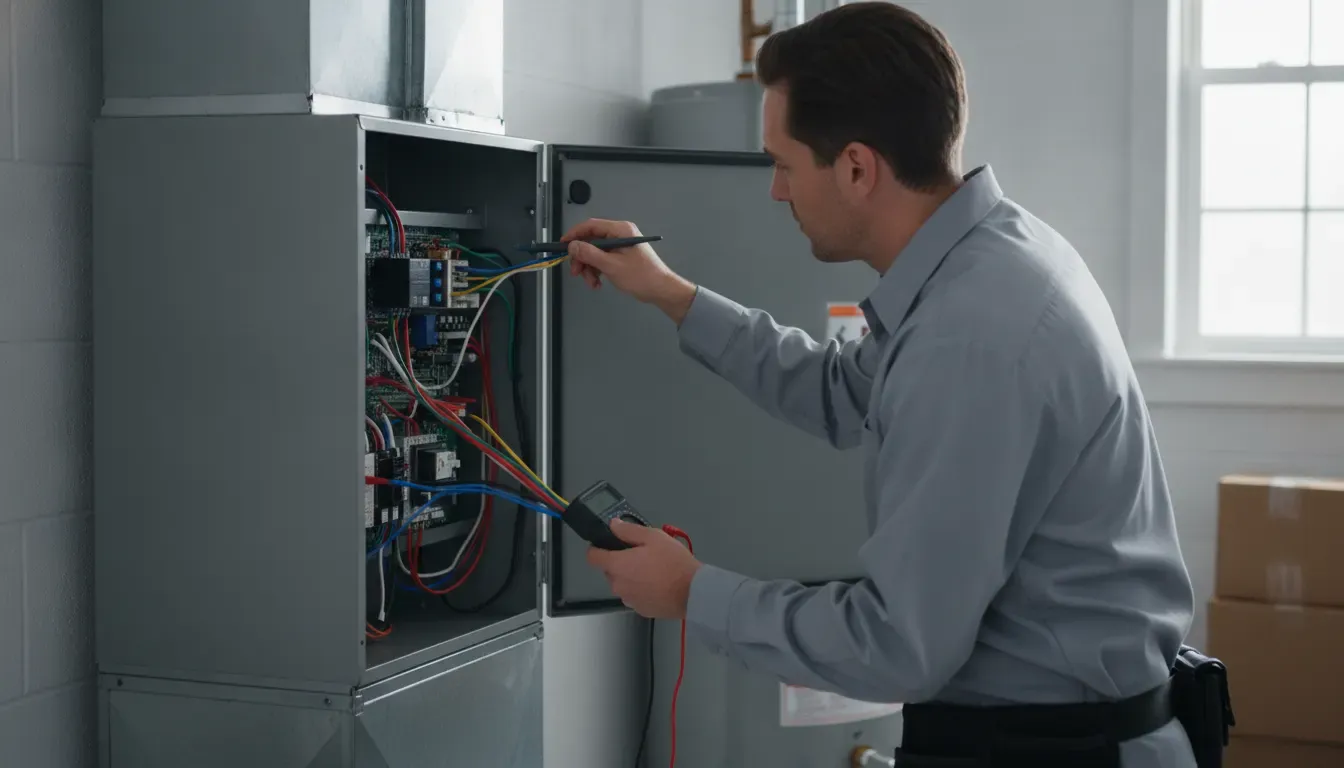
An unused wire behind the thermostat may be useful, but it is not proof that a functioning C-wire exists. The conductor must reach the indoor equipment and connect to the correct terminal. A technician should also confirm the available low-voltage power and the system's control sequence.
Can you use a thermostat without a C-wire?
Yes, in some installations. The available path depends on the thermostat design, the HVAC system, and the features you want. A battery-powered thermostat may avoid a dedicated common connection. A power-stealing model may operate in limited systems. A compatible adapter or newly installed wire may provide a more reliable solution.
These options are not interchangeable. A thermostat that works on one conventional air conditioner may not work on a heat pump, zone panel, variable-speed system, or communicating system. The manufacturer compatibility checker can narrow the choices, but it cannot replace a wiring and equipment inspection when the setup is unusual.
| Option | Best fit | Important limitation |
|---|---|---|
| Battery-powered thermostat | Simple systems where battery operation meets the homeowner's needs | Battery changes and feature limits may apply |
| Compatible power-stealing thermostat | Some conventional systems with suitable terminals | Can cause cycling, power, or compatibility problems |
| Approved C-wire adapter | Systems with the required conductors and an approved accessory | Must match the thermostat and equipment instructions |
| New C-wire | Upgrades needing dependable continuous power | Access, routing, and installation conditions affect the work |
| Manufacturer-specific accessory | Selected smart thermostats with an approved power module | Not universal across brands or HVAC configurations |
What are the main options for a no-C-wire upgrade?
The best no-C-wire solution is the one that matches the equipment and creates stable control power without sacrificing safe operation. A professional can compare a battery thermostat, an adapter, a new conductor, or a manufacturer-specific accessory. The right answer is a compatibility decision, not a popularity contest.
1. Choose a compatible battery-powered thermostat
A battery-powered thermostat can be a straightforward option for a compatible conventional system. It may avoid adding a conductor and can work well when remote access, a touchscreen, or constant Wi-Fi connectivity is not required. Confirm battery type, replacement needs, terminal support, and system compatibility before choosing it.
Battery operation does not make every installation simple. A thermostat can still be incompatible with heat pumps, multiple stages, electric auxiliary heat, zoning, or communicating equipment. The system may also need a separate configuration for emergency heat or other special functions.
2. Use a compatible power adapter
An approved power adapter can provide a common-wire alternative when the existing cable has the necessary conductors. Adapter designs vary, so use the instructions for the exact thermostat and HVAC setup. The adapter may connect at the indoor equipment and thermostat, rather than simply plugging into a nearby outlet.
Do not buy an adapter based only on a product description that says it replaces a C-wire. Confirm the required terminals, system type, voltage, and supported thermostat. Some adapters are designed for specific applications and may not support every heat pump, zone board, or multi-stage arrangement.
3. Install a new C-wire
Running a new common wire creates a direct power path when the thermostat cable or equipment requires one. This can be a durable choice for a planned smart thermostat upgrade, especially when the wiring route is accessible. The technician can inspect the cable, route, connections, and system operation as one project.
Adding a conductor is not always as simple as pulling one wire through the wall. Finished walls, attic access, crawl spaces, multiple thermostat zones, and older control layouts can affect the method. The technician should confirm that the new wire reaches the correct equipment terminal and does not interfere with existing calls.
4. Use a manufacturer-specific power accessory
Some smart thermostat makers offer a named power accessory for systems that lack a conventional C-wire. These accessories can be useful when the thermostat and HVAC system meet the maker's compatibility requirements. Follow the current installation guide for that specific accessory instead of applying instructions from another brand.
A power accessory may change how existing conductors are used. That can affect fan control, cooling calls, heat-pump operation, or system monitoring. Professional installation is especially important when the equipment has a zone panel, multiple stages, or a communicating control board.
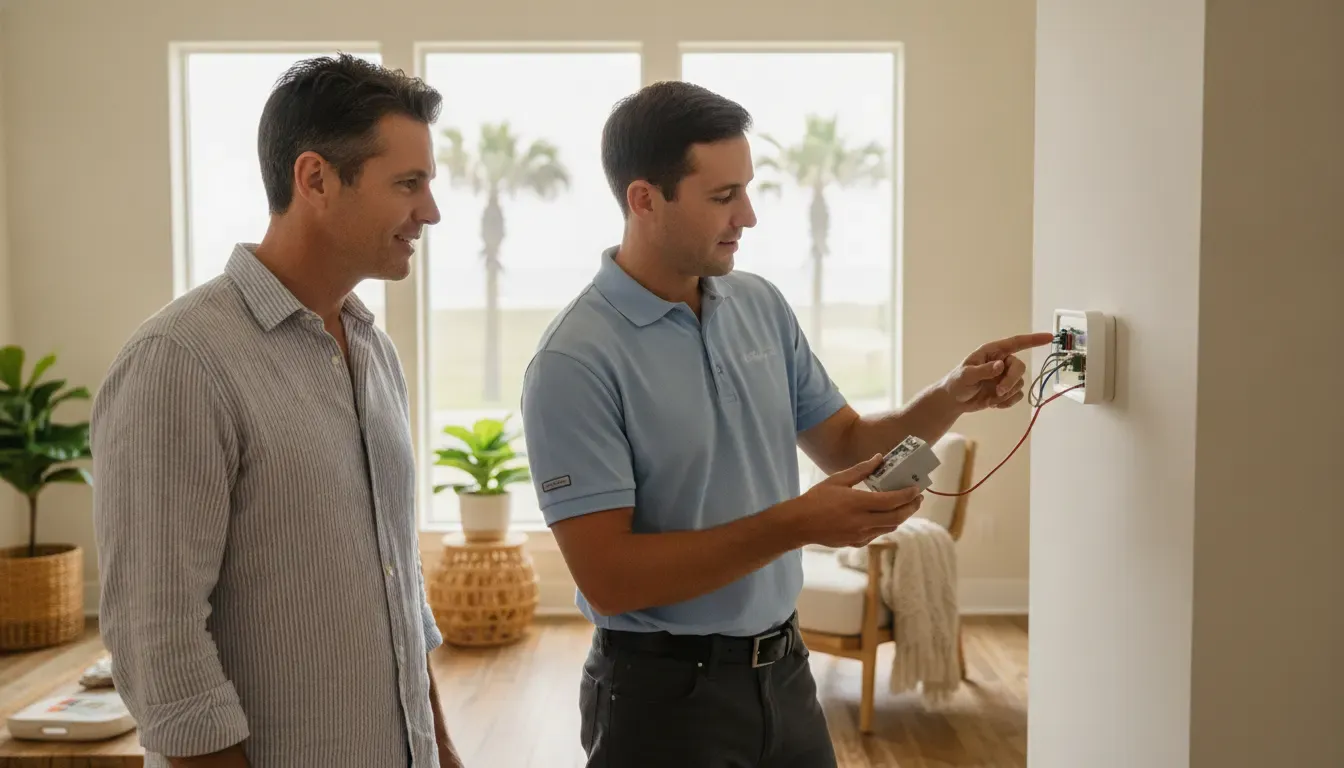
When is a no-C-wire adapter not the right choice?
An adapter is not automatically the best option simply because it avoids opening a wall. The system may lack the conductors the adapter needs, use a control board outside the adapter's supported configuration, or require functions the accessory cannot preserve. A new wire or different thermostat may be safer.
- The thermostat manufacturer does not list the adapter as compatible.
- The system has a heat pump, dual-fuel setup, or electric auxiliary heat.
- The home uses zoning, multiple thermostats, or a specialized zone panel.
- The equipment uses communicating controls rather than standard terminals.
- The thermostat repeatedly reboots, loses Wi-Fi, or reports low power.
- The indoor blower, cooling, heating, or auxiliary heat behaves unexpectedly.
- The wire bundle or control board is difficult to identify.
- The HVAC fuse opens after the thermostat change.
Thermostat power problems can look like a bad thermostat. They can also point to wiring errors, a weak transformer, a control-board issue, or equipment compatibility limits. Repeatedly resetting the thermostat can hide the problem and create more downtime during a Corpus Christi cooling season.
Why should you avoid guessing at thermostat wiring?
Low-voltage thermostat wiring is less hazardous than line-voltage electrical work, but it is not risk-free. A short between terminals can damage a fuse, transformer, control board, or accessory. A wrong terminal assignment can also make the system heat when it should cool or disable a safety function.
Turning off the thermostat is not the same as turning off HVAC power. Use the equipment instructions and shut off power at the correct breaker or disconnect before opening wiring. If the breaker label is unclear, the system has multiple disconnects, or you are not comfortable identifying the control board, stop and request service.
Professional help also matters because equipment compatibility is broader than wire count. A technician can identify the system type, confirm the existing control sequence, test the power path, and explain which upgrade preserves the functions you need. That approach is more reliable than copying a color from an online diagram.
How does Gulf Coast weather affect a thermostat upgrade?
Corpus Christi homes often depend on cooling for long periods. Heat, humidity, salt air, and frequent cycling can expose weak connections or unstable controls sooner than a short-season climate. A thermostat upgrade should therefore include a check that the system starts, cools, cycles, and responds correctly after installation.
Do not treat a smart thermostat as a substitute for an aging HVAC system or poor airflow. Remote control and scheduling can improve convenience, but the equipment still needs clean filters, suitable airflow, proper drainage, and safe electrical operation. A compatible control is one part of a complete comfort system.
Tommy Cool Air provides energy-saving heating and cooling system solutions, including smart thermostat upgrades. The team can help compare control options with the equipment already installed in your home.
What should a professional check before installing the upgrade?
A careful thermostat assessment connects the wall wiring to the equipment and the homeowner's goals. The technician should document the existing terminals, system type, control sequence, and available power. The recommendation should explain whether the project needs an adapter, new wire, different thermostat, or no change.
- Identify whether the system is conventional, a heat pump, dual fuel, zoned, or communicating.
- Confirm the thermostat model and its published wiring requirements.
- Inspect the thermostat-side conductors and terminal connections.
- Match each conductor to the indoor unit or zone-control equipment.
- Check low-voltage power and control-board condition.
- Evaluate whether an adapter is approved and compatible.
- Assess access if a new C-wire or cable is needed.
- Install, configure, and test heating, cooling, fan, and special modes.
- Confirm the thermostat remains powered through normal system operation.
Ask for a quote that separates the thermostat, wiring or accessory work, configuration, and testing. Individual projects are quote-based because equipment, access, and compatibility differ from one home to another. A clear scope helps prevent an inexpensive-looking thermostat swap from becoming an unexpected controls problem.
For installation help, Tommy Cool Air also provides air-conditioning services and heating system services for Corpus Christi and surrounding Gulf Coast communities.
Request a thermostat compatibility review from Tommy Cool Air.
Frequently asked questions
What if there is no C-wire for my thermostat?
You may still have options. A compatible battery thermostat, approved power adapter, manufacturer-specific accessory, or new common wire may work. The correct choice depends on the thermostat, HVAC equipment, existing conductors, and control-board connections. Have those details checked before changing terminals or purchasing an accessory.
Can a thermostat work without a C-wire?
Some can, but compatibility varies. Battery-powered and power-stealing thermostats may work in certain conventional systems. Other smart thermostats need continuous power from a C-wire or approved accessory. Heat pumps, zoning, multi-stage equipment, and communicating controls need more careful evaluation.
How do I know if my thermostat has a C-wire?
Look for a conductor connected to the C terminal after HVAC power is turned off. Then verify that the matching conductor reaches the indoor control board and is connected correctly. An unused wire behind the thermostat is not automatically a functioning C-wire.
Is a C-wire adapter safe?
An adapter can be safe when it is approved for the specific thermostat and HVAC system and installed according to its instructions. It is not universal. Confirm the available conductors, system type, terminal connections, and functions that must remain operational.
Should I install a new C-wire or use an adapter?
That depends on wiring access, equipment compatibility, thermostat requirements, and future plans. A new C-wire provides a direct power path. An approved adapter may reduce wall access when the system supports it. A professional comparison helps identify the safer long-term option.
When there is no C-wire, the right answer is not to guess. Start with the thermostat requirements, verify the HVAC equipment and wiring, then choose a compatible power solution. Tommy Cool Air can help homeowners in Corpus Christi and nearby Gulf Coast communities plan the upgrade.
Sources: ENERGY STAR smart thermostat guidance and Google Nest C-wire guidance.