When a mechanical thermostat stops responding, the problem may be as simple as an incorrect mode or setpoint. But it can also point to a control or HVAC issue. In Corpus Christi, a missed cooling cycle becomes uncomfortable quickly, especially during hot, humid weather. Start with observations you can make safely, and leave wiring, equipment panels, and compatibility questions to a qualified technician.
A mechanical thermostat not working may have a wrong mode, an unchanged setpoint, poor placement, or a deeper system fault. Tommy Cool Air recommends checking the visible settings and whether the system responds, without opening the thermostat or touching wires. A thermostat controls when heating or air conditioning turns on, according to the U.S. Department of Energy.
Before assuming the thermostat has failed, use the dial and the system's response as clues. The safest checks can help separate a simple setting issue from a problem that needs professional diagnosis.
Need help with a thermostat problem? Contact Tommy Cool Air for HVAC service in Corpus Christi.
Mechanical Thermostat Not Working? Start With Safe Checks
A mechanical thermostat uses a dial or lever to signal when heating or air conditioning should turn on. If it seems unresponsive, begin with visible settings and system behavior. You can check the mode, temperature setting, and room conditions without removing the cover or touching wiring. Tommy Cool Air can diagnose broken thermostats when safe observations do not explain the problem.
The thermostat is a control, not the equipment that creates conditioned air. The U.S. Department of Energy explains that a thermostat controls when heating or air conditioning turns on. A mechanical model typically uses a physical temperature-sensitive control and a marked setting rather than a digital screen. That means a blank display is not the main clue, but a loose dial, unclear setting, or absent system response can still signal trouble.
What you can observe safely
- Confirm the selector is set to the mode you need, such as cooling, heating, or off.
- Check that the temperature setting is meaningfully different from the current room temperature. A small difference may not produce an immediate call for heating or cooling.
- Look for a dial or lever that feels unusually loose, damaged, or difficult to move. Do not force it.
- Notice whether the indoor system starts, stops, or remains silent after a normal short delay.
- Observe room comfort and airflow without opening the thermostat, air handler, furnace, or outdoor equipment.
For a broader sequence of non-invasive checks, review these checks to confirm thermostat settings before calling. You can also compare symptoms with these safe HVAC troubleshooting checks, but do not use a general checklist as a reason to bypass a control or test exposed terminals.
Stop at observation if the system does not respond, the thermostat appears damaged, or you notice burning odors, sparking, or unusual sounds. Tommy Cool Air's current AC and heating service pages offer professional repair support for malfunctioning systems. Ask the team whether thermostat diagnosis fits your equipment. For local help, see HVAC service in Corpus Christi.
Why Is the Mechanical Thermostat Not Working or Unresponsive?
A blank or unresponsive mechanical thermostat may reflect a simple setting, a loss of obvious power, restricted airflow, or a problem elsewhere in the HVAC system. Check only what you can observe safely. If the system remains silent after a reasonable setting change, Tommy Cool Air can diagnose the thermostat and connected equipment without guesswork.
Start by looking at the thermostat's mode and setpoint. Confirm it is set to heat or cool as needed, rather than off, and make sure the target temperature calls for operation. On a mechanical model, inspect the dial, indicator, or visible display for damage, looseness, or an unusual position. Do not remove the cover or touch any terminals.
Some mechanical thermostats use batteries, while others receive low-voltage power from the HVAC system. If your model has a clearly labeled, user-accessible battery compartment and its instructions permit replacement, install the same battery type with the correct polarity. Do not remove the thermostat cover to reach batteries when access is unclear. Battery contacts, wire terminals, and internal contacts are technician-only; do not clean, bend, or test them yourself.
Check the obvious power context
Notice whether other equipment in the home has power. If the indoor unit, nearby outlets, or other major systems also appear inactive, the thermostat may not be the only concern. You can look at the HVAC breaker from outside the electrical panel and note whether it appears tripped. Do not open the panel, reset a repeatedly tripping breaker, or investigate wiring yourself.
Also observe the air filter and airflow. A heavily loaded filter, weak airflow, or unusual system noise can make a thermostat complaint look like a control failure. Replace a filter only if you already know the correct size and the filter is accessible without opening equipment. Otherwise, leave the system off and arrange an inspection. These safe thermostat checks before calling can help you record useful details.
When the problem may be broader
If changing the mode or setpoint produces no response, or if the system starts and stops repeatedly, the fault may involve the indoor unit, electrical controls, airflow, or another component. A mechanical thermostat not working can also be a symptom rather than the root cause. Note what you observed, including whether heating, cooling, and airflow are all affected. For more symptom-based guidance, review these safe HVAC troubleshooting checks.
Stop checking and seek professional diagnosis if you notice burning smells, sparking, exposed wiring, water near electrical equipment, or a breaker that will not stay on. Those conditions need more than a thermostat adjustment.
How Do You Check the Dial, Setpoint, and System Response?
A mechanical thermostat not working may still have a simple setting problem. A careful check can show whether the control is calling for heating or cooling, or whether the system needs professional diagnosis.
Start with the mode and temperature setting, then watch for a normal response from the indoor unit. Tommy Cool Air recommends safe observations only. If the equipment does not respond, stop before touching wiring, removing covers, or opening HVAC equipment.
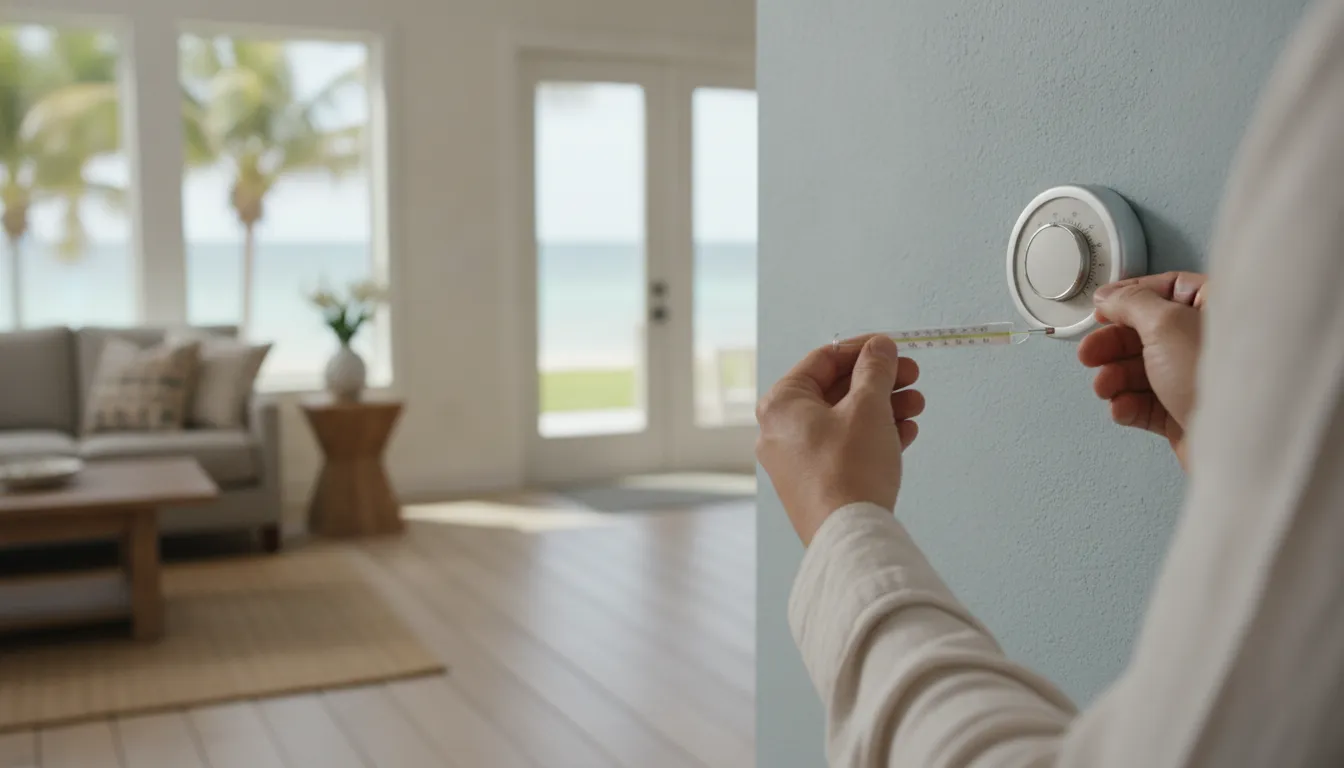
Use this sequence to keep the check focused and non-invasive:
- Confirm the operating mode. Set the control to Cool when the home needs air conditioning or Heat when heating is needed. Do not leave it on Off or a fan-only setting if you expect the system to change the room temperature.
- Check the setpoint. For cooling, set the temperature modestly below the current room temperature. For heating, set it modestly above the room temperature. Moving the dial far beyond a comfortable setting will not make an air conditioner cool faster, so use a modest adjustment.
- Allow time for a response. Mechanical controls and HVAC equipment may not react instantly. Listen and look for a change from the indoor unit rather than repeatedly spinning the dial. A single deliberate adjustment makes the result easier to interpret.
- Observe the indoor unit. Look for normal signs such as the blower starting, air moving from the vents, or the system beginning its heating or cooling cycle. Do not remove a panel or inspect terminals. For additional context, review how heating and cooling systems work.
- Note what happens at the vents. If the system starts, check whether airflow feels consistent with the selected mode. If cooling is expected but the air remains warm, use these checks when your AC blows warm air without moving into electrical diagnosis.
- Stop when there is no response. If the indoor unit remains silent or the thermostat does not appear to control the system, do not bypass the control or touch wiring. Record the mode, setpoint, and observed symptoms, then arrange safe HVAC troubleshooting checks with a qualified professional.
These observations give a technician useful starting information without turning a basic check into an unsafe repair attempt. If the issue continues, contact Tommy Cool Air to schedule HVAC service.
Could Placement or Calibration Make It Seem Broken?
A thermostat can appear faulty when its sensor is reading the wrong part of the room. Direct sun, a nearby heat source, or a steady draft can make the sensed temperature differ from the rest of the living space. Before assuming the mechanical thermostat is broken, check its surroundings and compare its reading with a separate thermometer.
Placement matters because the thermostat controls when heating or air conditioning turns on. The U.S. Department of Energy explains this control role in its thermostat overview. The University of Massachusetts advises keeping the sensor out of direct sunlight and away from heat pipes or the direct line of a duct outlet. See the UMass thermostat accuracy guidance for placement details.
Look for conditions that distort the reading
Notice whether sunlight falls across the thermostat during part of the day. Also look for a nearby supply register, return-air disturbance, heat-producing appliance, or cold draft from a door or window. Do not relocate the thermostat yourself. Record when the mismatch happens and whether the system runs longer or shorter than expected.
Dust on a visible sensor area may also affect accuracy. If the cover is designed to come off easily and the instructions clearly permit it, gently remove surface dust with a soft, dry tool. Do not spray cleaner, insert anything into the thermostat, loosen screws, or touch wire terminals. If safe access is unclear, leave the thermostat closed.
Compare the reading without opening the equipment
Place a reliable room thermometer beside the thermostat and allow both readings to stabilize. UMass recommends checking thermostat accuracy at least annually. A persistent difference is useful information, but it does not prove that recalibration is the only problem. The sensor, control, wiring, or HVAC equipment may require diagnosis.
Write down the displayed temperature, the nearby thermometer reading, the mode, and the time. A technician can use that information to assess whether recalibration is appropriate. UMass specifically recommends having a service person recalibrate the thermostat when readings differ during heating-system service. If the system also fails to respond, cycles repeatedly, or creates an unsafe condition, stop testing and arrange professional service.
For related, non-invasive guidance, review these safe HVAC troubleshooting checks before scheduling thermostat repair in Corpus Christi. The goal is not to force an adjustment. It is to separate an environmental reading problem from a control or equipment fault.
What Should Homeowners Leave to an HVAC Professional?
A homeowner can observe settings, sounds, airflow, and temperature changes without opening the thermostat or equipment. A professional should handle electrical diagnosis, calibration, compatibility, and repairs. If a mechanical thermostat is not working after safe checks, Tommy Cool Air can identify whether the control or the HVAC system needs attention.
The boundary is simple: observe what the system does, but do not intervene where wiring, energized components, or safety controls may be involved. Use this comparison as a practical guide.
| Situation | Safe homeowner observation | What a technician diagnoses | Stop-now warning conditions |
|---|---|---|---|
| Settings and response | Confirm the mode, note the setpoint, and observe whether the indoor unit responds normally. | Tests whether the thermostat is sending the correct call for heating or cooling and whether the system receives it. | No response after a reasonable wait, repeated cycling, or a control that behaves unpredictably. |
| Temperature mismatch | Compare the displayed or dial setting with a separate room thermometer placed nearby. Note the difference. | Checks accuracy, placement, calibration, and whether the sensor represents the room it is meant to control. | The home is becoming excessively hot or cold, or the thermostat reading changes without a clear reason. |
| Visible condition | Look for sunlight, a nearby draft, or an obvious obstruction. Keep the thermostat closed. | Inspects internal components, connections, control signals, and equipment compatibility using proper procedures. | Burning odor, smoke, buzzing, heat at the thermostat, exposed conductors, or water near electrical equipment. |
Do not remove the cover to touch wire terminals, bypass the thermostat, jump controls, or guess whether a replacement will work with the equipment. Those steps can create shock, equipment-damage, or safety risks. A technician may also find that the thermostat is only reporting a broader HVAC problem.
Tommy Cool Air's current AC and heating service pages describe professional repair support for malfunctioning HVAC systems. Ask the team whether thermostat diagnosis and testing fit your equipment. Those inspections belong with a qualified technician. Learn more about homeowner-safe HVAC checks or review safe HVAC troubleshooting checks before scheduling thermostat repair in Corpus Christi.
UMass Extension recommends checking thermostat accuracy at least annually and having a service person recalibrate it when readings differ during service. Read the thermostat accuracy guidance.
When Does a Thermostat Problem Point to the HVAC System?
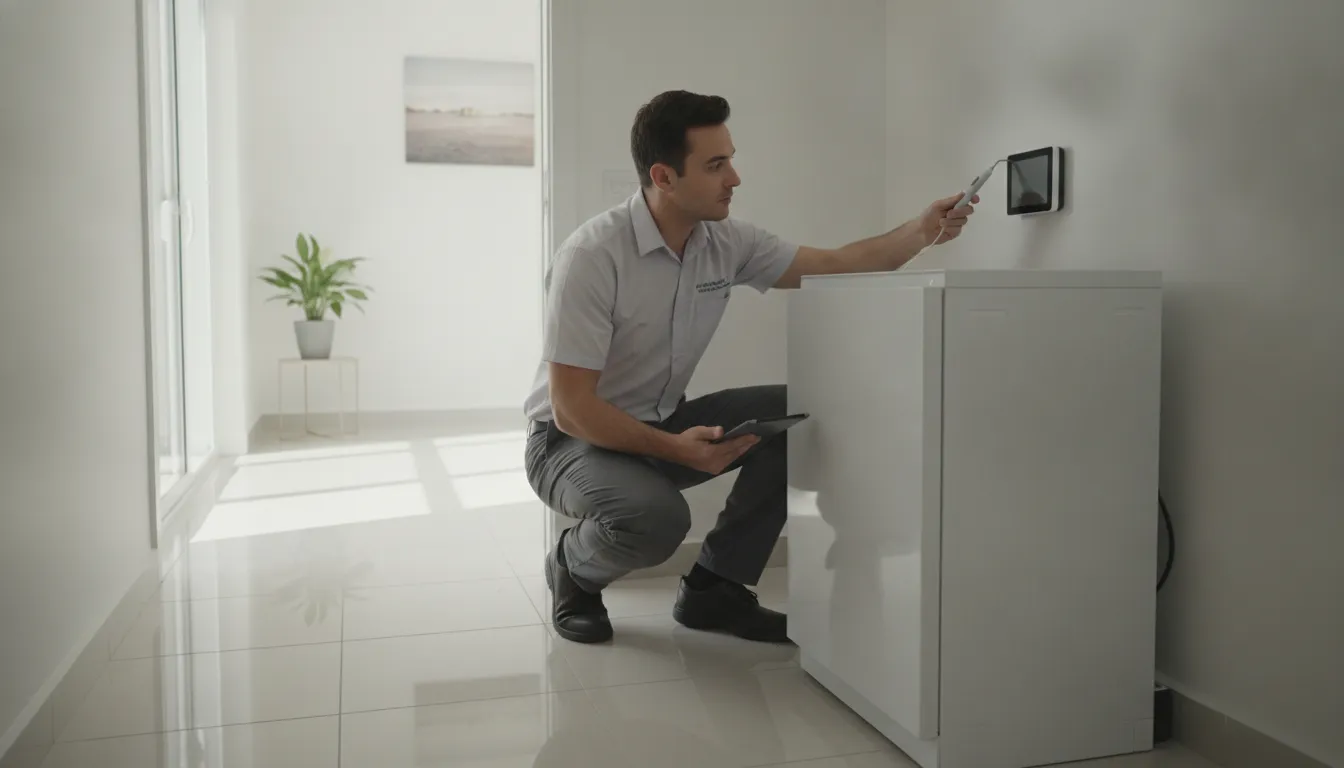
A thermostat can be the visible point of failure without being the root cause. Repeated cycling, no heating or cooling response, weak airflow, unusual power symptoms, or a room that never reaches the setting can indicate a broader HVAC problem.
Tommy Cool Air can help separate a mechanical thermostat issue from equipment, airflow, or power trouble. If basic settings are correct but the system still behaves inconsistently, schedule a professional diagnosis instead of guessing at a replacement.
Repeated cycling is a system clue
An air conditioner or heater that starts and stops repeatedly may not be responding to a simple dial problem. The thermostat could be sensing the wrong temperature, but cycling can also involve airflow, equipment capacity, or another control issue.
Track when the starts and stops occur, how long each cycle lasts, and whether the home actually becomes comfortable. These details help a technician distinguish a control symptom from a broader operating problem. Review common causes of AC short cycling for more context, but do not open the equipment to investigate.
No response can involve more than the thermostat
If changing the setting produces no heating or cooling response, observe whether the indoor unit makes any sound and whether air moves through the vents. A blank indicator, absent airflow, or other power-related symptom can point beyond the thermostat.
Check only what is safely visible. Do not remove panels, touch terminals, bypass controls, or reset equipment repeatedly when the system shows an unusual condition. A clogged filter or restricted airflow can also affect comfort, so note its visible condition without treating that observation as a complete diagnosis. These checks when your AC blows warm air can help organize safe observations.
Persistent mismatch deserves professional diagnosis
A thermostat that says the home has reached its setting while one or more rooms remain uncomfortable may be sensing a poor location, communicating inconsistently, or exposing an airflow or equipment issue. Placement near direct sunlight, a duct outlet, or another heat source can affect what the sensor reads, according to UMass guidance.
Write down the thermostat reading, a nearby room-temperature observation, the affected rooms, and the system behavior. If the mismatch persists after ordinary settings checks, give those details to an HVAC professional. The goal is to diagnose the complete system, not replace a thermostat based on one symptom.
When Should You Schedule Thermostat Service in Corpus Christi?
If a mechanical thermostat is not working after you confirm the mode and setpoint, schedule professional service rather than opening the control or guessing at a replacement. Tommy Cool Air can assess whether the thermostat, its connections, or the heating and cooling equipment is causing the symptom. A technician can then explain the recommended repair or replacement in a quote before work begins.
Schedule service when the system does not respond to a reasonable temperature adjustment. The indoor temperature stays far from the setting, or the thermostat repeatedly starts and stops the equipment. Persistent symptoms matter in Corpus Christi, where a cooling problem can quickly become a comfort issue during Gulf Coast heat. You should also arrange an evaluation when the thermostat reading seems consistently inaccurate, especially after checking for direct sunlight or another nearby heat source.
Tommy Cool Air's current AC and heating service pages describe professional repair support for malfunctioning HVAC systems. Ask the team whether thermostat diagnosis and testing fit your equipment. Those checks belong to a trained HVAC professional. Do not remove the thermostat cover, touch terminals, bypass controls, or open the equipment cabinet.
A service visit is also appropriate when a thermostat symptom appears alongside weak airflow, unusual cycling, or no heating or cooling response. Those signs may point beyond the wall control. Reviewing thermostat repair in Corpus Christi can help you understand why diagnosis comes before a repair or replacement recommendation. For broader context, see this guide to heating and air conditioning repair.
For a local evaluation, schedule HVAC service in Corpus Christi through Tommy Cool Air's service area page. The team can review the symptom, inspect the related system, and provide a quote-based recommendation without asking you to diagnose electrical components yourself.
Schedule a professional thermostat diagnosis with Tommy Cool Air through our contact page.
Frequently Asked Questions
How do I fix an unresponsive mechanical thermostat?
Confirm the thermostat is set to the correct heating or cooling mode, then adjust the dial slightly past the room temperature and wait for a normal response. Do not remove the cover, touch wiring, bypass controls, or open HVAC equipment. If the system still does not respond, schedule a professional diagnosis.
Why is my mechanical thermostat not kicking on at the set temperature?
The dial may be inaccurate, the sensor may be affected by sunlight or a nearby duct outlet, or the HVAC system may have a separate fault. A thermostat controls when heating or air conditioning turns on, but it cannot correct a problem with equipment, power, airflow, or controls. The U.S. Department of Energy explains the thermostat's control role.
Why does my thermostat read the wrong temperature?
Direct sunlight, nearby heat sources, supply-air drafts, dust, or aging calibration can affect a reading. Compare it with a reliable thermometer placed beside the thermostat without opening the device. UMass recommends checking thermostat accuracy at least annually and having a service person recalibrate it when readings differ.
Can a thermostat cause short-cycling?
Yes. An inaccurate reading, poor placement, control problem, or mismatch with the HVAC system can contribute to repeated starts and stops. Short-cycling can also signal an equipment or airflow issue, so avoid bypassing the thermostat. Schedule service if the pattern continues after you confirm the settings.
When should I schedule professional thermostat service?
Arrange service when the system does not respond, the temperature remains far from the setting, cycling repeats, or heating or cooling stops unexpectedly. Tommy Cool Air can diagnose thermostat concerns as part of AC or heating repair in Corpus Christi and identify whether the thermostat or a larger system issue needs attention.
Ready to Get Your Thermostat Working?
A mechanical thermostat can seem simple, but repeated cycling, inaccurate room temperatures, or no system response may point to a larger HVAC issue. A professional diagnosis can separate a control problem from an equipment or airflow concern before the Gulf Coast heat makes comfort harder to maintain.
Contact Tommy Cool Air to schedule HVAC service or thermostat diagnosis.