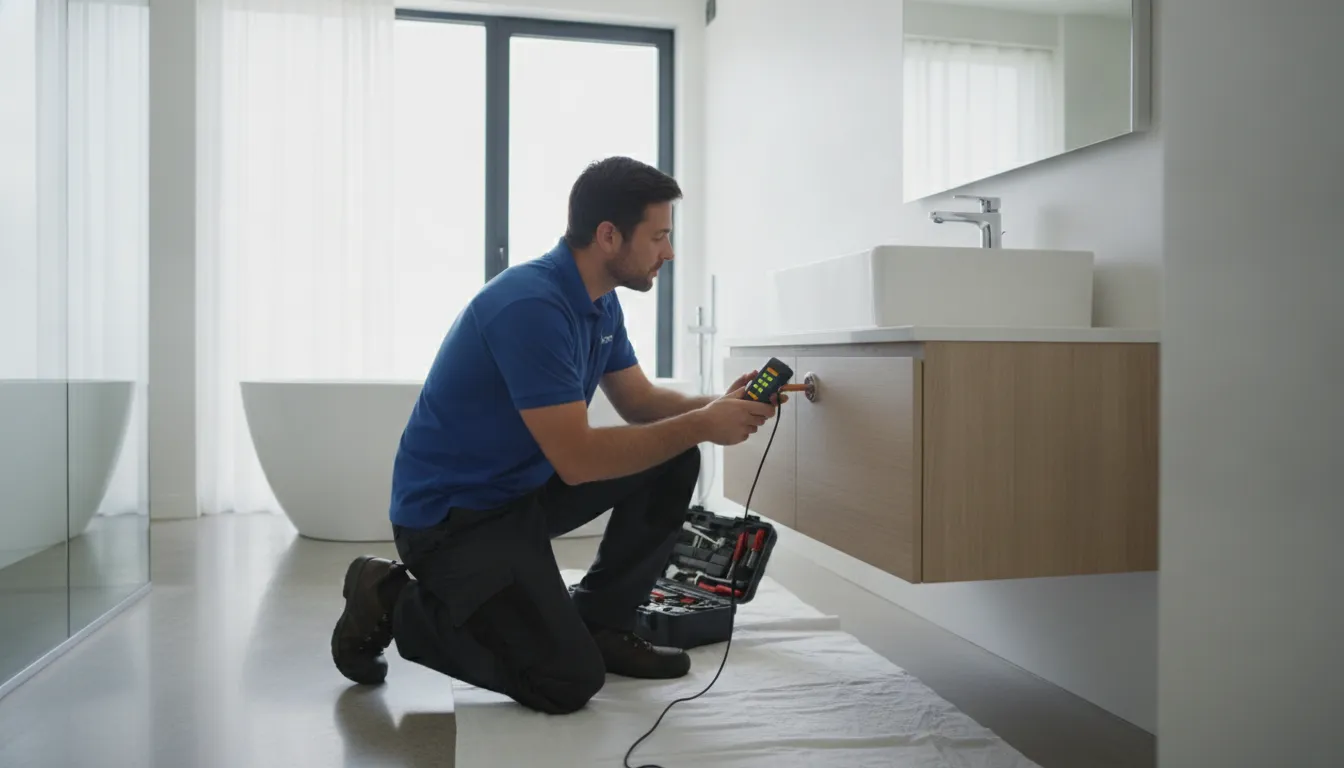
A hidden water leak rarely begins with a dramatic burst pipe. More often, it starts behind a wall, beneath a floor, or inside a fixture, quietly wasting water while damage spreads where you cannot see it. An unexplained jump in your water bill may be the first warning, even when every faucet appears closed.
Water leak detection combines simple checks, such as watching the water meter with every fixture turned off, with professional tools when the source is concealed. Tommy Cool Air helps Corpus Christi homeowners catch warning signs early. This limits water damage and reveals the right plumbing repair before a small leak grows into a larger problem.
The CDC recommends checking systems for leaks as an important step in protecting your home. Start by understanding why finding that hidden moisture early matters, then work through the signs and practical checks that can point you toward its source.
Why Water Leak Detection Matters for Your Home
A hidden leak rarely announces itself with a burst pipe. More often, water moves quietly behind a wall or beneath flooring. The first clue may be a stain, a musty odor, or an unexpectedly high utility bill. That delay gives moisture time to affect materials that are difficult and expensive to replace. The CDC recommends checking for leaks as an important step in protecting your home, and early attention can keep a small plumbing problem from becoming a larger repair.
Contact Tommy Cool Air for water leak detection help
Early water leak detection protects more than your monthly budget. Water can soak drywall, insulation, cabinets, subflooring, and other building materials that are not designed to stay wet. Once those materials are damaged, the job may involve more than tightening a connection or replacing a worn seal. It may also require drying, cleanup, and repairs to the surrounding structure. The EPA notes that finding and repairing leaks early can prevent significant water waste and expensive structure repairs. CDC guidance on checking systems for leaks likewise emphasizes the role of routine inspection in protecting a home.
A rising bill can be an early warning
An unexplained increase in your water bill is often one of the first measurable signs that water is escaping somewhere on the property. Compare the bill with your normal household pattern before assuming the change is caused by seasonal use, guests, or a new appliance. If usage has increased without a clear reason, investigate promptly. A leak may be inside the home, in an underground service line or at an outdoor fixture. So the absence of a visible puddle does not rule it out.
Even a modest leak can continue around the clock. The longer it runs, the more water it wastes and the greater the chance that nearby materials remain damp. Check fixtures and accessible plumbing first, then arrange professional evaluation if the source is not obvious. Tommy Cool Air provides leak detection and plumbing services for homeowners and businesses in Corpus Christi and surrounding Gulf Coast communities.
Technology can help find what a visual check misses
When a leak is concealed, looking for a wet spot may not be enough. The EPA identifies leak detection and flow-monitoring devices as tools that can help identify and repair leaks. These devices can monitor unusual water movement while a professional can use diagnostic methods to narrow down the source without immediately opening large sections of a wall or floor. The right approach depends on the plumbing layout, symptoms, and accessibility.
For Gulf Coast homeowners, timely investigation is especially practical. Humidity can make moisture problems harder to distinguish from ordinary indoor dampness, while salt-laden air can contribute to pipe corrosion over time. If you notice a bill spike, hear water moving when every fixture is off, or see unexplained moisture, do not wait for the damage to become obvious. The Cool Kids can help determine whether the issue is a repairable fixture leak or a concealed plumbing problem that needs a closer look.
Common Signs of a Hidden Water Leak
Hidden leaks do not always announce themselves with a burst pipe or a puddle. Water can travel behind drywall, under flooring, or inside cabinets before the source becomes obvious. Watch for changes that do not fit your home's normal pattern, especially when they appear near plumbing fixtures or in areas that should stay dry.
- Damp or discolored surfaces: Yellow, brown, or expanding spots on walls, ceilings, or floors can point to water escaping from a nearby supply line, drain, or fixture. Soft drywall, bubbling paint, warped flooring, or a musty smell adds to the concern. A stain far from a visible plumbing fixture may mean water is traveling behind the wall or beneath the floor.
- Mold or mildew in a dry area: Mold or mildew growth where there is no obvious source of moisture may indicate a concealed leak. Check around baseboards, inside cabinets, behind furniture, and along bathroom or laundry walls. Humidity can also contribute to mold, so look for a pattern of dampness rather than assuming every spot proves a pipe has failed.
- Running-water sounds: If you hear water moving through the pipes while faucets, appliances, and toilets are off, investigate promptly. That sound can signal an active leak within the home's distribution system. Listen near walls, ceilings, floors, and the area around the water heater.
- An unexplained water-bill increase: Compare your current bill with similar months and consider whether guests, irrigation, or seasonal use explains the change. If usage rises without a clear reason, a hidden leak may be wasting water continuously. The EPA identifies an unexplained increase in a water bill as a strong leak warning sign.
- A persistent dripping faucet: Even a small drip matters. A faucet dripping about once per second can waste more than 3,000 gallons of water in a year. Mineral buildup, worn washers, or damaged valve seats can all contribute, particularly in areas with hard water.
Do not overlook leaks at appliances and fixtures. If moisture appears near a tank, review this guide to water heater leak safety before using the equipment. A wet cabinet beneath the kitchen sink also deserves attention, including any signs of garbage disposal leaking from the bottom.
When the source is not visible, check the water meter with every fixture turned off. Movement during that quiet period is a useful clue that water is escaping somewhere in the system. Document what you see, then arrange professional water leak detection before a small warning becomes damaged cabinetry, flooring, or drywall.
How to Check Your Water Meter for a Leak
Your water meter can reveal a hidden leak even when there is no visible puddle, stain, or dripping fixture. This simple water leak detection test works best when everyone in the home can avoid using water for about 30 minutes. Before you begin, let the washing machine, dishwasher, ice maker, water softener, sprinkler system, and any other water-using equipment finish its cycle.
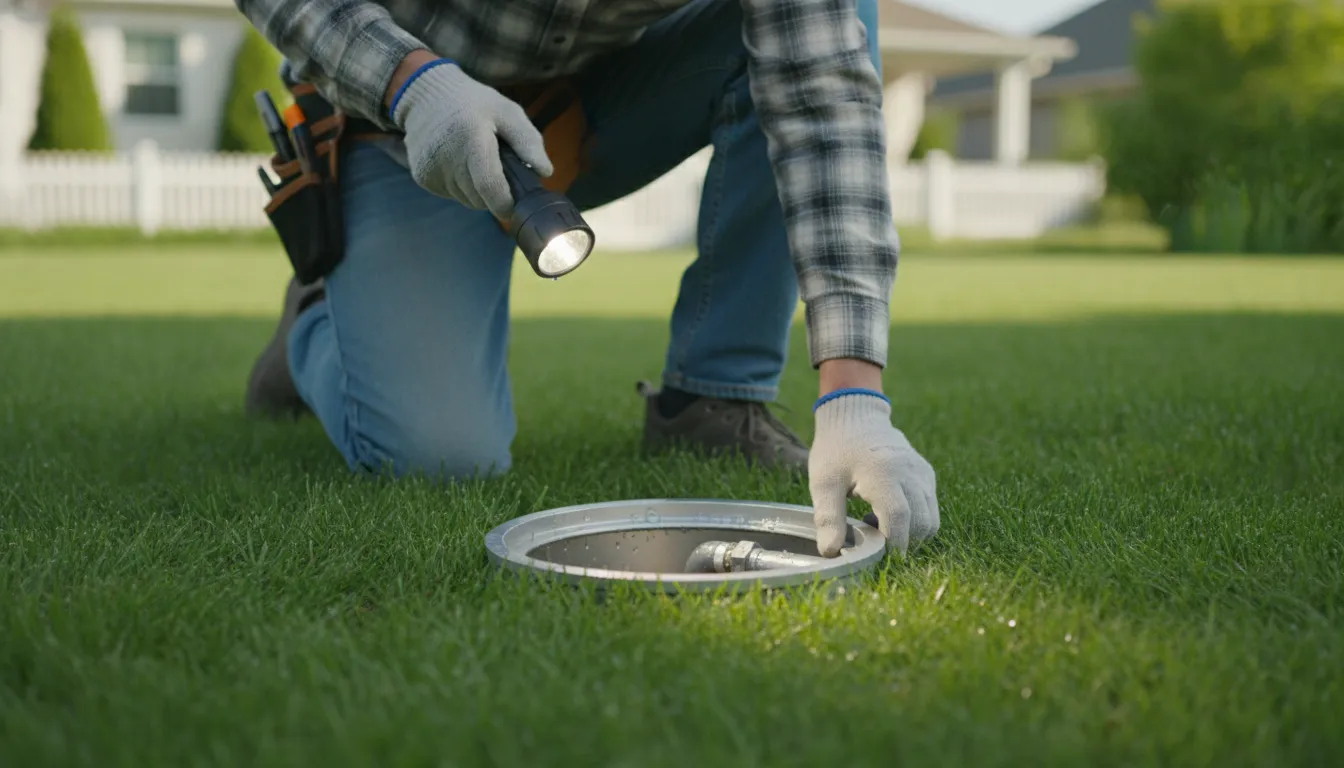
- Turn off every water source. Close faucets and showers, stop toilets from running, and make sure no one is using a water appliance. If your home has an automatic irrigation system, pause its scheduled cycle during the test.
- Find and inspect the meter. Depending on your meter, look for a small low-flow indicator, a sweep hand, a digital flow display, or the current reading. Take a photo or write down the reading so you have a reliable starting point. The EPA recommends checking the meter when you know no water is being used.
- Watch for immediate movement. Observe the low-flow indicator or meter dial for a few minutes. If it moves while every fixture and appliance is off, water is flowing somewhere in the system. That is a strong sign of an active leak.
- Wait 30 minutes without using water. Leave the home's water undisturbed. Do not flush a toilet, run a faucet, use an appliance, or refill a pet's bowl during this period.
- Read the meter again. Compare the new reading with your starting point. Any movement during the no-use period confirms that water passed through the meter. Record the change and note whether the low-flow indicator continued moving or only moved intermittently.
A moving meter confirms water use, but it does not identify the exact source. Check toilets and visible supply lines first. If the reading changed only when a fixture was used, you may be dealing with a drain or fixture leak rather than a continuously pressurized supply-line leak. For added protection, the EPA explains that leak detection and flow monitoring devices can help identify unusual water use and alert homeowners to leaks.
Use Food Coloring to Check Each Toilet
Toilets are common sources of silent water loss. Remove the tank lid and add a few drops of food coloring to the tank water. Do not flush. Wait 15 to 20 minutes, then look in the bowl. If colored water appears in the bowl, the flapper or another tank component is allowing water to pass through. Repeat the test for each toilet, since one leaking toilet may not account for all the movement shown at the meter.
Save your meter photo and the results of the toilet test. If the meter continues moving and you cannot locate the source, shut off the fixture or home water supply if it is safe to do so. Then arrange professional leak detection before moisture damages walls, flooring, or cabinetry.
Read EPA guidance on leak detection and flow monitoring devices.
Simple DIY Leak Checks for Every Room
Routine checks of toilets, faucets, showers, and other fixtures can catch small leaks before they waste water or damage cabinets, flooring, and walls. Set aside a few minutes each month for a room-by-room inspection, especially after a plumbing repair or a noticeable change in your water bill.
Bathrooms: Start with toilets, faucets, and showers
Listen near the toilet when the room is quiet. A toilet that refills or runs after it has not been flushed may have a worn flapper, a fill-valve problem, or another internal leak. For a simple test, add a few drops of food coloring to the tank and wait 15 to 20 minutes without flushing. If colored water appears in the bowl, the tank water is escaping and the toilet needs attention.
Next, inspect the faucet spout, handles, supply connections, and the base of the showerhead. A drip that returns after you close the handle can point to a worn washer, cartridge, or valve seat. Hard-water mineral buildup can erode valve seats over time, which is a common reason faucets begin to drip. Wipe each fixture dry, then check again later for fresh moisture.
Kitchen: Look under the sink and around the disposal
Remove everything from the cabinet and feel around the shutoff valves, supply lines, drain connections, and cabinet floor. A slow leak may leave only a swollen cabinet panel, staining, or a musty odor at first. Run the faucet for a minute while watching the drain assembly, then fill and drain one basin. If water appears only while the sink drains, the issue may be in the drain piping rather than the pressurized supply line.
If you notice moisture beneath the disposal, use this guide to troubleshoot garbage disposal leaking from the bottom. Do not reach into the unit. Turn off power before attempting any inspection beyond looking for visible moisture.
Utility area: Inspect the water heater carefully
Look at the floor around the water heater base for pooling, dampness, rust, or corrosion. These signs can indicate a tank leak, particularly as the equipment ages. Also watch the pressure relief valve and its discharge pipe. A relief valve that constantly releases water is a safety issue and may signal excessive tank pressure or a faulty valve. Do not cap, disable, or repeatedly test it. For practical guidance, review this water heater leak safety advice and arrange a professional inspection.
- Use a flashlight under sinks and behind toilets, but never touch exposed electrical components with wet hands.
- Photograph new moisture or corrosion so you can track whether it is spreading.
- Shut off the local fixture valve, or the main water supply for an active leak, if it is safe to do so.
These checks are useful water leak detection steps, not a substitute for opening walls or testing concealed pipes. If you hear running water with every fixture off, find recurring moisture, or cannot identify the source, contact Tommy & the Cool Kids for professional help.
What Methods Do Professionals Use to Locate Hidden Leaks?
A visible drip is usually the easy part. The difficult leaks may be inside a wall, beneath a slab, or along a buried section of pipe, where moisture can spread before it reaches a stain. Professional leak detection and plumbing services use targeted testing to narrow down the source before opening a wall or floor.

Thermal imaging and acoustic listening
Thermal imaging cameras scan for temperature patterns that differ from the surrounding building materials. A cool or warm area does not prove a leak by itself. But it can show where moisture or escaping water is changing conditions behind drywall, under flooring, or near a foundation. Technicians compare the image with the plumbing layout and other evidence to determine where further testing belongs.
Acoustic or sonic listening devices work differently. They pick up the sound and vibration created as pressurized water escapes through a pipe or opening. By listening at accessible points, a technician can compare signal strength and trace the likely location of a leak that cannot be seen. Acoustic sensing and signal processing are also used to localize leaks in larger distribution networks (academic research on acoustic leak detection and localization). This is useful when the source may be far from the first visible symptom.
Pressure and flow testing
When the location is unclear, pressure testing helps determine whether a supply line is holding pressure as it should. A controlled pressure drop can indicate a leak in a specific branch or section of the system. Flow testing adds another layer of information by measuring how much water is moving when fixtures are off, or by comparing expected flow with actual usage. This is especially useful when a leak is too small to create an obvious sound or wet spot.
These tests can also help separate a plumbing leak from condensation, roof intrusion, or a fixture that is quietly passing water. That distinction matters because the repair path depends on the source, not simply on where a stain appears.
Sensor networks and flow monitoring
Complex homes, commercial properties, and buildings with multiple pipe branches may benefit from connected sensors or advanced monitoring. Research has shown that sensor networks and physics-informed modeling can help detect and localize leaks in complicated pipe systems (NIH-indexed research on water pipe leak localization). For ongoing protection, the EPA also recognizes leak detection and flow monitoring devices as tools that can identify abnormal water use and support faster repairs (EPA WaterSense leak detection guidance).
The value of professional testing is precision. Instead of guessing and removing multiple sections of finished material, a technician can combine thermal, acoustic, pressure, and flow evidence to choose the least disruptive next step. That can limit unnecessary demolition and help address hidden water damage before it becomes a larger structural or mold problem.
How Much Water Can a Small Leak Waste?
A leak does not need to produce a visible puddle to waste a meaningful amount of water. EPA WaterSense estimates that household leaks across the United States waste nearly 1 trillion gallons each year. The average household with leaks can lose close to 10,000 gallons annually, which is roughly the amount used for 300 loads of laundry.
Those totals make early water leak detection and plumbing services worthwhile, especially when a leak is hidden behind a wall, beneath a floor, or inside a fixture. The amount lost depends on the opening, water pressure, and how long the problem continues. The examples below use estimates from EPA WaterSense guidance and its referenced leak-waste figures. They are useful for understanding scale, not for calculating an exact bill.
| Leak type | Estimated water waste | Typical impact |
|---|---|---|
| Dripping faucet | More than 3,000 gallons per year at one drop per second | A slow, easy-to-ignore drip can raise water use over time and may point to worn fixture components. |
| Running toilet | Varies with the flow rate and how long it runs | A silent toilet leak can continue around the clock and may not be obvious until the water bill increases. |
| 1/8-inch service line leak | About 250 gallons per day | That sustained loss can quickly become a major source of waste, even when the leak is difficult to see. |
| Slab or wall leak | Varies with the pipe opening, pressure, and duration | Besides wasting water, an unseen supply-line leak can damage flooring, drywall, insulation, or framing. |
A bill that rises without a clear change in household use is one reason to investigate. You can also check the water meter when every faucet, appliance, and fixture is off. If the dial or leak indicator moves, water is flowing somewhere in the system. EPA WaterSense recommends leak detection and flow-monitoring devices as another way to identify unusual usage and help locate problems. See the EPA's leak detection and flow monitoring guidance for testing and device information.
Why Gulf Coast Homes Face Unique Leak Risks
Homes in Corpus Christi and nearby Gulf Coast communities deal with plumbing conditions that are tougher than many homeowners realize. Heat, moisture, and coastal air do not always create an obvious emergency on day one. Instead, they can gradually weaken pipes, fittings, tanks, and valves until a small hidden leak becomes visible damage.
Humidity and salt air can accelerate corrosion
High humidity keeps moisture present around plumbing components, while salt-laden sea air introduces corrosive conditions that can speed up deterioration. Over time, corrosion can compromise metal pipes, connections, and other plumbing parts. A weakened section may begin with a slow seep behind a wall, under a cabinet, or beneath flooring. By the time a homeowner notices staining, a musty odor, or a change in water usage, the affected materials may have been exposed for weeks or longer.
This is one reason leak detection and plumbing services matter in the Corpus Christi area. Finding the source is not always as simple as looking for a puddle. Water can travel along framing or flooring before it appears, and coastal corrosion may affect more than the first component that shows a symptom. A careful inspection helps separate a plumbing leak from moisture caused by condensation, poor ventilation, or an exterior water intrusion.
Water heaters face their own coastal challenges
Water heaters are another common source of hidden leaks. Older units are more prone to tank corrosion, and their relief valves can also corrode or begin discharging water. Check around the base of the tank for pooling, dampness, or visible corrosion. If the pressure relief valve is constantly releasing water, treat it as a safety concern rather than simply wiping up the moisture. Excessive tank pressure or a faulty valve may be involved and should be inspected by a qualified professional.
Gulf Coast homes also keep their plumbing busy year-round. There is no long, reliably cold offseason that gives fixtures and water heaters an extended break. Continuous use means small weaknesses are repeatedly exposed to pressure, temperature changes, and daily demand. That makes routine observation especially valuable. Watch for unexplained moisture, listen for water moving when every fixture is off, and pay attention to changes that seem minor.
Tommy & the Cool Kids can help homeowners assess those warning signs before they become a larger disruption. For ongoing prevention, the Cool Kids Comfort Club membership can support a more consistent maintenance routine, so plumbing concerns are less likely to remain unnoticed between service visits.
Frequently Asked Questions
What is the quickest way to check for a hidden water leak?
Turn off every faucet and water-using appliance, then watch your water meter. If the dial or leak indicator moves while no water is being used, your home likely has a leak. The EPA recommends this type of monitoring to identify silent water loss: EPA leak detection guidance.
Can a high water bill indicate a leak?
Yes. An unexplained increase in your water bill is often an early warning, especially when your household usage has not changed. Compare recent bills, check toilets and fixtures, and use the meter test to determine whether water is moving when everything is off.
How can I test a toilet for a slow leak?
Add a few drops of food coloring to the toilet tank without flushing. Wait 15 to 20 minutes, then look in the bowl. If colored water appears, the tank is leaking into the bowl and the toilet needs attention. This simple test is recommended by the EPA.
When should I call a professional for leak detection?
Call a professional when you hear running water with all fixtures off. See unexplained damp or discolored walls and ceilings, notice mold in a normally dry area, or cannot locate the source. Thermal imaging and acoustic sensors can help locate leaks behind walls or beneath floors without unnecessary demolition.
What should I do if my water heater is leaking?
Check for pooling or corrosion around the base, and take constant water discharge from the relief valve seriously. If the leak is active, shut off the water supply when safe to do so and arrange an inspection. Do not remove or cap a relief valve yourself, because it is a safety component.
Ready to Find the Source of a Hidden Leak?
Early professional attention can help identify a hidden water leak before moisture causes broader trouble in your home. If you have noticed damp spots, unusual sounds, or an unexplained water bill change, contact Tommy Cool Air for water leak detection and plumbing service. Our team can help you choose the next practical step for your home.