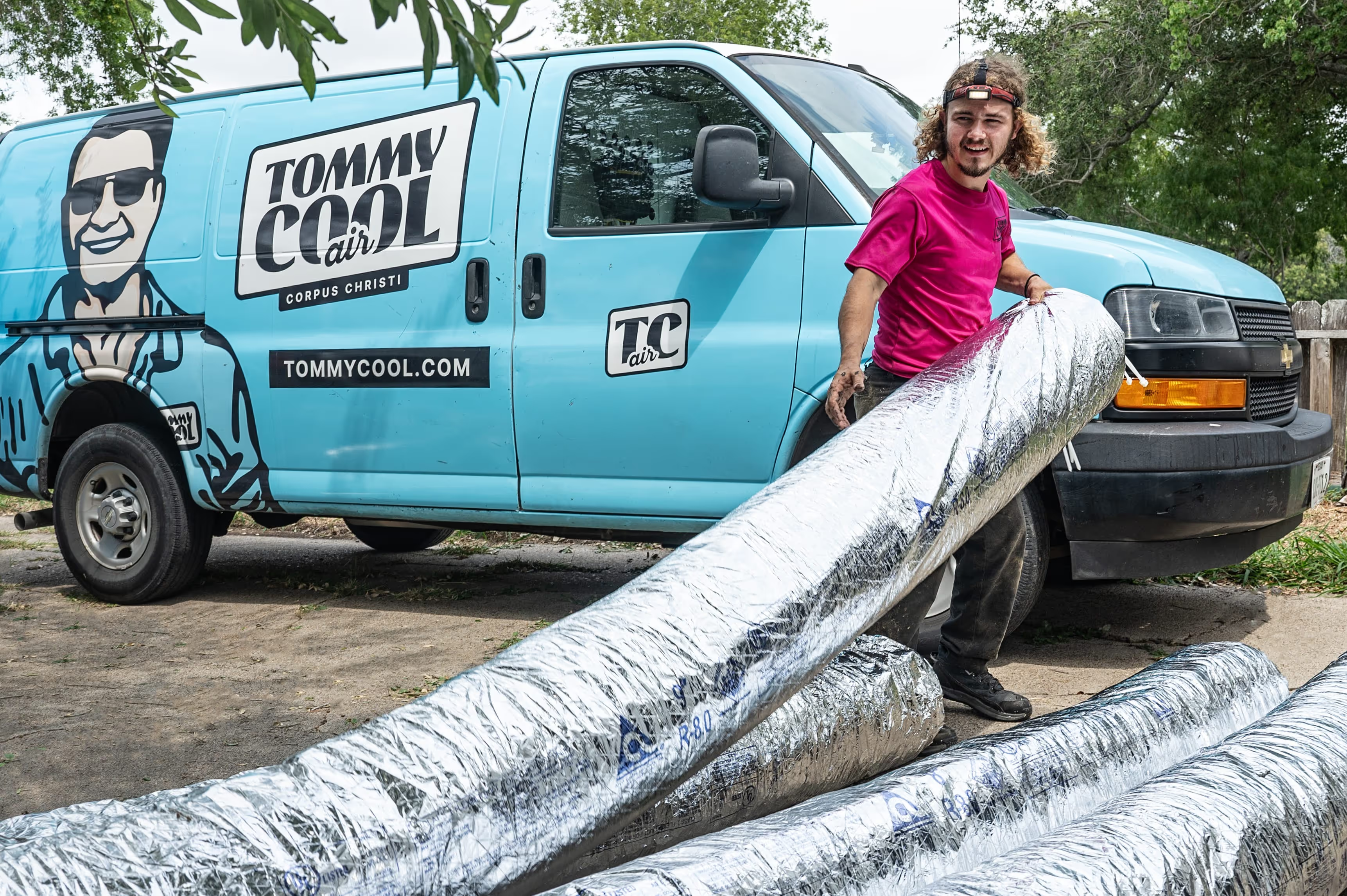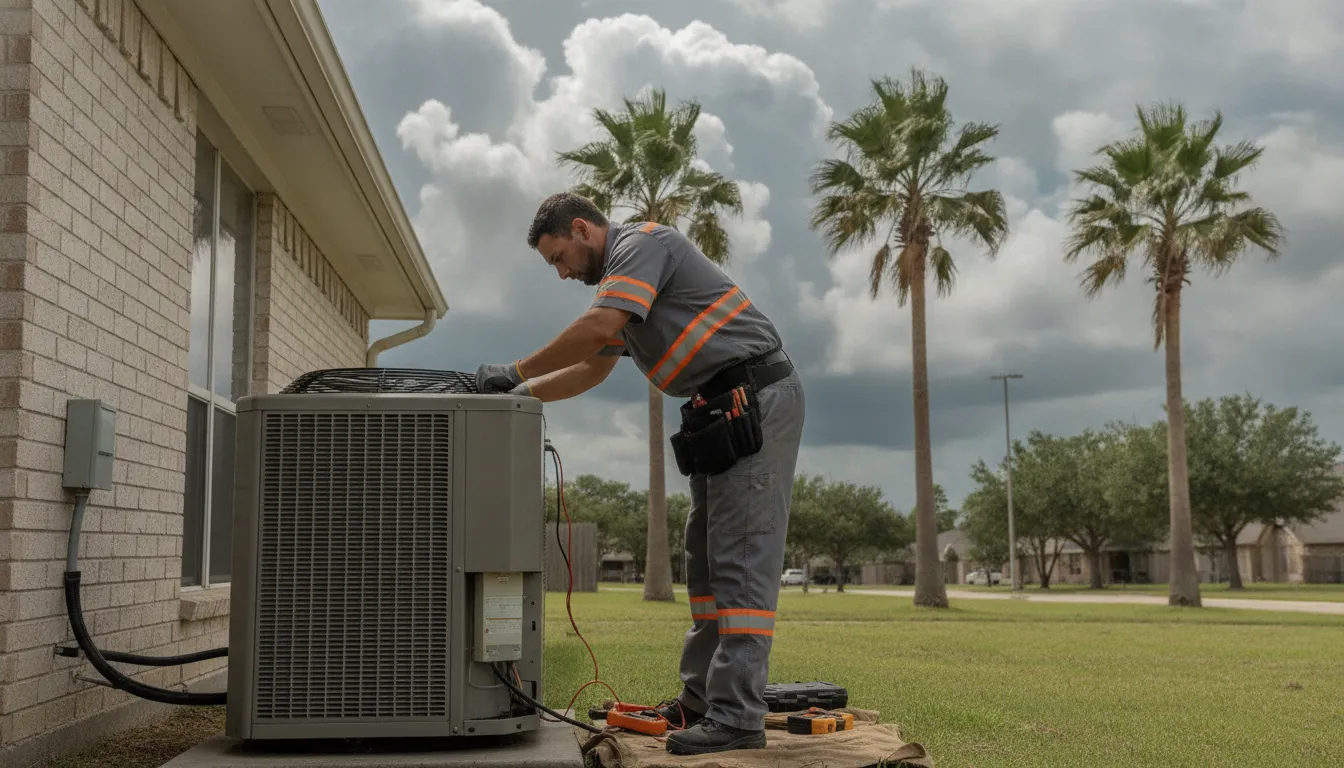
On the Texas Gulf Coast, hurricane preparation is also air-conditioning preparation. Storm season runs from June 1 through November 30, and a system that keeps your home comfortable through extreme heat can face wind. Flooding, storm surge, debris, and unstable power when conditions turn dangerous.
To prepare your AC for hurricane season Texas Gulf Coast homeowners should schedule a professional inspection, confirm the outdoor unit is securely anchored, clear nearby debris, plan for power surges, and never restart equipment that may have flooded. Tommy Cool Air can help you build a safer pre-storm and post-storm plan.
Ready.gov identifies storm surge, wind damage, and flooding as major hurricane hazards, so coastal HVAC protection takes more than switching off the thermostat. Start by understanding why Gulf Coast conditions are especially hard on outdoor equipment.
Why Hurricane Season Is Hard on Gulf Coast HVAC Systems
Along the Corpus Christi and Texas Gulf Coast, your air conditioner faces a difficult combination: extreme heat. Heavy humidity, salt-laden air, and hurricane season from June 1 through November 30. That means a system may be working at full capacity when a storm adds wind, water, and unstable electricity to the challenge. Ready.gov notes that hurricanes can cause major damage through storm surge, wind, and flooding, including well inland from landfall. Learn more about hurricane hazards from Ready.gov.
Wind turns ordinary debris into equipment damage
Strong winds can move branches, patio items, roofing materials, and other loose objects into an outdoor condenser. A single impact can bend the coil fins, damage the fan, or puncture important components. Wind can also shift an improperly installed unit or stress the refrigerant and electrical connections. The outdoor unit should remain clear of debris and securely anchored to its pad before storm conditions arrive. In flood-prone locations, a professional can also advise whether the equipment needs additional elevation or other site-specific protection.
Water brings flooding, surge, and corrosion
Storm surge is not simply a nuisance around the property. It is historically the leading cause of hurricane-related deaths in the United States, so flood safety must come before protecting equipment. Salt water and floodwater can contaminate electrical parts and leave corrosive residue inside an outdoor unit. Never power up an AC system that has been submerged until a qualified technician has inspected it.
Even without a direct flood, coastal air keeps exposing HVAC components to salt. Homeowners in Port Aransas, Rockport, Padre Island, and nearby communities can review these practical tips for protecting AC units from salt air. Humidity adds another constant load, making managing Gulf Coast humidity part of long-term system care.
Power instability can damage sensitive controls
Hurricanes can interrupt service, cause brownouts, and create voltage surges when the grid trips or power is restored. Those rapid changes can damage circuit boards, capacitors, and other sensitive HVAC electronics even when the condenser looks untouched. A properly selected surge protector can add an important layer of protection. But it does not make it safe to operate equipment that has visible damage or flood exposure. The safest approach is to secure the system before the storm and wait for a careful inspection before restarting it afterward.
Pre-Season AC Maintenance: Your First Line of Defense
The best time to discover a weak capacitor, corroded connection, or restricted drain is before the first storm threat, not during a Gulf Coast heat wave. Hurricane season runs from June 1 through November 30, so schedule a professional inspection in May or earlier. A pre-season checkup gives your system a better chance of handling extreme heat, humidity, and storm-related power problems.
Tommy & the Cool Kids can use a detailed tune-up to identify small issues before they become an emergency. A technician should:
- Check refrigerant levels and look for signs of leaks or poor cooling performance.
- Inspect electrical connections, capacitors, contactors, and other components that could fail under heavy demand.
- Clean the indoor and outdoor coils so the system can move heat efficiently.
- Replace or clean the air filter. The U.S. Department of Energy identifies routine filter cleaning or replacement as the most important maintenance task for supporting air conditioner efficiency. Learn more about HVAC maintenance from ENERGY STAR.
- Check the condensate drain for clogs that could cause water damage or shut down the system.
- Look for salt-air corrosion, loose parts, and other wear that coastal weather can accelerate.
DIY vs. Professional Storm Prep
| Preparation Task | DIY | Professional Service |
|---|---|---|
| Clear debris from condenser area | Yes | Included in tune-up |
| Inspect for visible damage | Yes | Yes, with diagnostics |
| Check refrigerant levels | No | Yes |
| Inspect electrical components | No | Yes |
| Install surge protector | Requires pro | Yes |
| Secure unit to concrete pad | No | Yes |
| Post-storm safety inspection | Visual only | Full system check |
This is also a practical time to ask about a whole-home surge protector. Hurricane-related power surges can damage sensitive HVAC controls and electronics. Surge protection does not prevent every storm-related problem, but it adds an important layer of defense for the equipment that keeps your home comfortable after the weather passes.
Make maintenance a recurring habit
One inspection before June is valuable, but Gulf Coast systems work hard for much of the year. Use this guide to schedule regular AC maintenance, and review Tommy Cool Air's professional AC tune-ups for service details. The Cool Kids Comfort Club includes bi-annual tune-ups, helping keep seasonal checks on your calendar instead of leaving them to chance. Early attention gives you more time to repair a weak point, improve reliability. And prepare your AC for hurricane season Texas Gulf Coast conditions before the forecast becomes urgent.
48 to 24 Hours Before Landfall: Your AC Prep Checklist
Once a storm is tracking toward the Texas Gulf Coast, shift from routine maintenance to securing the equipment and its surroundings. Complete these steps while conditions are still safe, then follow local emergency instructions and evacuation orders.
- Clear the condenser area. Move patio furniture, grills, planters, toys, umbrellas, trash cans, and other loose objects inside or into a secure enclosed area. Remove leaves, branches, and yard debris around the outdoor unit so airflow is not restricted and wind has fewer materials to throw against the cabinet.
- Secure what cannot be moved. Strap down or anchor heavier items that must remain outdoors, such as storage containers or equipment. Do not use the condenser itself as an anchor point. Check that the HVAC unit remains securely fastened to its pad, and do not attempt to relocate or raise it yourself.
- Document the system's condition. Take clear, dated photos of the outdoor unit from several angles, including the cabinet, pad, refrigerant lines, electrical disconnect, and nearby area. Save the images somewhere you can access after the storm. This record can help establish the system's pre-storm condition if damage needs to be documented for an insurance claim.
- Choose the right approach for the condenser. A light, breathable mesh cover may help keep windblown debris out, but it must be properly secured and should not block drainage. Never wrap the unit in a plastic tarp. Plastic can trap moisture against electrical components and metal surfaces, creating additional problems. If you do not have an appropriate mesh cover, leaving the condenser uncovered is safer than using plastic.
- Trim nearby weak limbs. Remove dead or visibly weak branches that could fall onto the condenser, but only if the work can be completed safely before winds increase. Do not climb, use power equipment in worsening weather, or work near energized electrical equipment. Hire a qualified tree professional when the job is beyond safe ground-level trimming.
- Install surge protection if it is not already in place. Hurricane-related power changes can damage sensitive HVAC controls and electronics. A whole-home surge protector is worth discussing with a qualified electrician or HVAC professional before storm conditions arrive. It is a preventive measure, not a substitute for shutting the system down.
- Shut the AC down in stages. About 12 to 6 hours before expected landfall, turn the system off at the thermostat first. Then switch off the air-conditioning circuit at the electrical breaker, following your home's labeling and safety procedures. Do not open the equipment cabinet or handle wiring. If you are unsure which disconnect or breaker controls the system, ask a professional before the weather deteriorates.
Once the power is off, leave the system off through the storm. Do not restart it afterward until the outdoor unit has been visually inspected for debris, damage, or flooding, and have a professional check any unit that was underwater.
How to Prepare Your AC for Hurricane Season Texas Gulf Coast After the Storm
When the storm has passed, resist the urge to turn the air conditioner back on immediately. Wait until local authorities say it is safe to leave shelter or return home. Hurricanes can leave behind unstable electrical conditions, debris, and contaminated floodwater, so your safety comes before indoor comfort.
Inspect before restoring power
Start outside, staying away from standing water whenever possible. The EPA advises avoiding floodwaters because they may contain hazardous materials or debris. From a safe, dry position, look over the outdoor condenser without opening panels or reaching into damaged equipment. Check for:
- Branches, leaves, or other debris lodged around the cabinet
- Bent coil fins, a shifted cabinet, or loose panels
- Standing water, mud lines, or other signs of flooding
Do not restart an outdoor unit that was submerged or heavily flooded. Flooded HVAC equipment must be professionally inspected before it is powered on, since trapped water can create electrical shorts and long-term damage. Call Tommy Cool Air's 24/7 call-or-text line at (361) 444-7777 for help.
Check the indoor equipment and disconnect
Next, look at the indoor air handler, furnace cabinet, and the area around them for dripping water, wet insulation, staining, or other water damage. Do not touch wet electrical components. Confirm that the outdoor disconnect box and the surrounding ground are dry. If anything is wet, damaged, or uncertain, leave the system off and wait for a qualified technician.
Restore power gradually
Once the system has passed a visual inspection and everything is dry, restore power at the main HVAC breaker first. Then use the thermostat to turn the system on. Wait several minutes before setting a new temperature, giving the equipment and electrical system time to stabilize. If you hear unusual sounds, smell burning, see sparking, or the system will not start normally, switch it off and call for service instead of repeatedly resetting it.
Use generators safely
Never run a portable generator inside a home, garage, shed, or enclosed porch. Place it outdoors, away from doors, windows, and balconies, so carbon monoxide cannot collect indoors. Follow the generator manufacturer's instructions and local emergency guidance. Safe power restoration is an essential part of how to prepare your AC for hurricane season Texas Gulf Coast, especially when homes may still have storm damage nearby.
Storm-Ready All Year: How the Cool Kids Comfort Club Helps
The best time to prepare your AC for hurricane season on the Texas Gulf Coast is before a storm is in the forecast. Routine professional care gives your system a better chance of handling heat, humidity, and storm-related disruptions, while giving you a clear plan when weather conditions change.
Choose the membership tier that fits your system
The Cool Kids Comfort Club offers two ways to keep maintenance on schedule:
- Monthly: $24.99 per system, billed monthly.
- Annual: $19.99 per system per month, billed yearly at $239.88.
Both tiers include bi-annual high-performance checkups, helping the Cool Kids identify developing problems before they become an inconvenient breakdown. Members also receive a 10% discount on repairs, no dispatch fee during Monday through Friday service hours. No emergency premium fees, priority scheduling, and an extended one-year warranty on repairs. The standard repair warranty is 90 days.
Predictive monitoring for annual members
Annual members receive 24/7 Smart AC monitoring through the Cool Kids App. This predictive maintenance feature watches for signs that your system may need attention. So a small issue can be addressed before it turns into an emergency during extreme weather. That extra visibility can be especially useful along the Gulf Coast, where a storm may arrive while your AC is already working hard against high temperatures and humidity.
Membership does not replace storm safety steps, such as clearing debris, protecting electrical equipment, and having a professional inspect any flooded equipment before restart. It adds a year-round maintenance plan that makes those preparations less rushed. Review the Cool Kids Comfort Club benefits and choose the coverage that keeps your system ready through every season.
Frequently Asked Questions
Should I turn off my AC before a hurricane?
Yes. When conditions become unsafe and the storm approaches. Turn the system off at the thermostat and disconnect power at the appropriate breaker if it is safe to do so. Shutting down helps reduce exposure to electrical surges, wind-driven debris, and flooding. Follow local evacuation and emergency instructions first.
How do I protect my outdoor AC unit during a hurricane?
Clear leaves, branches, and loose objects from around the condenser, and confirm that the unit is securely anchored to its pad. Take photos of the equipment and surrounding area before the storm for your records. Do not improvise a cover or tie-down that could trap water or damage the coil; ask an HVAC professional about options for your equipment.
When can I restart my HVAC system after the storm?
Wait until the storm has passed and it is safe to go outside. Visually inspect the outdoor unit for debris, bent components, visible damage, or standing water before restoring power. If the unit was flooded or underwater, do not turn it on. A qualified professional must inspect it first to reduce the risk of electrical shorts and further damage.
Can a surge protector help prevent hurricane damage to my AC?
A whole-home or HVAC-specific surge protector can help safeguard sensitive controls and electronics from power spikes during a storm. It is a protective measure, not a guarantee against every type of damage. Have the device selected and installed by a qualified electrician or HVAC professional so it matches your home's electrical system.
What should Texas Gulf Coast homeowners do differently?
Plan for more than wind. Corpus Christi and nearby coastal communities also face storm surge, flooding, high humidity, salt-air corrosion, and extended heat after a storm. Schedule a professional inspection before hurricane season, confirm the unit is anchored, and never enter unsafe floodwater to reach HVAC equipment. For hurricane guidance, see Ready.gov's hurricane safety information.
Schedule Your Hurricane-Ready AC Checkup
A pre-season tune-up can help identify maintenance needs before Gulf Coast weather puts your system to the test. Tommy Cool Air can review your AC system and help you prepare for hurricane season with practical, local guidance. Schedule your pre-season AC tune-up and hurricane readiness inspection with Tommy & the Cool Kids.