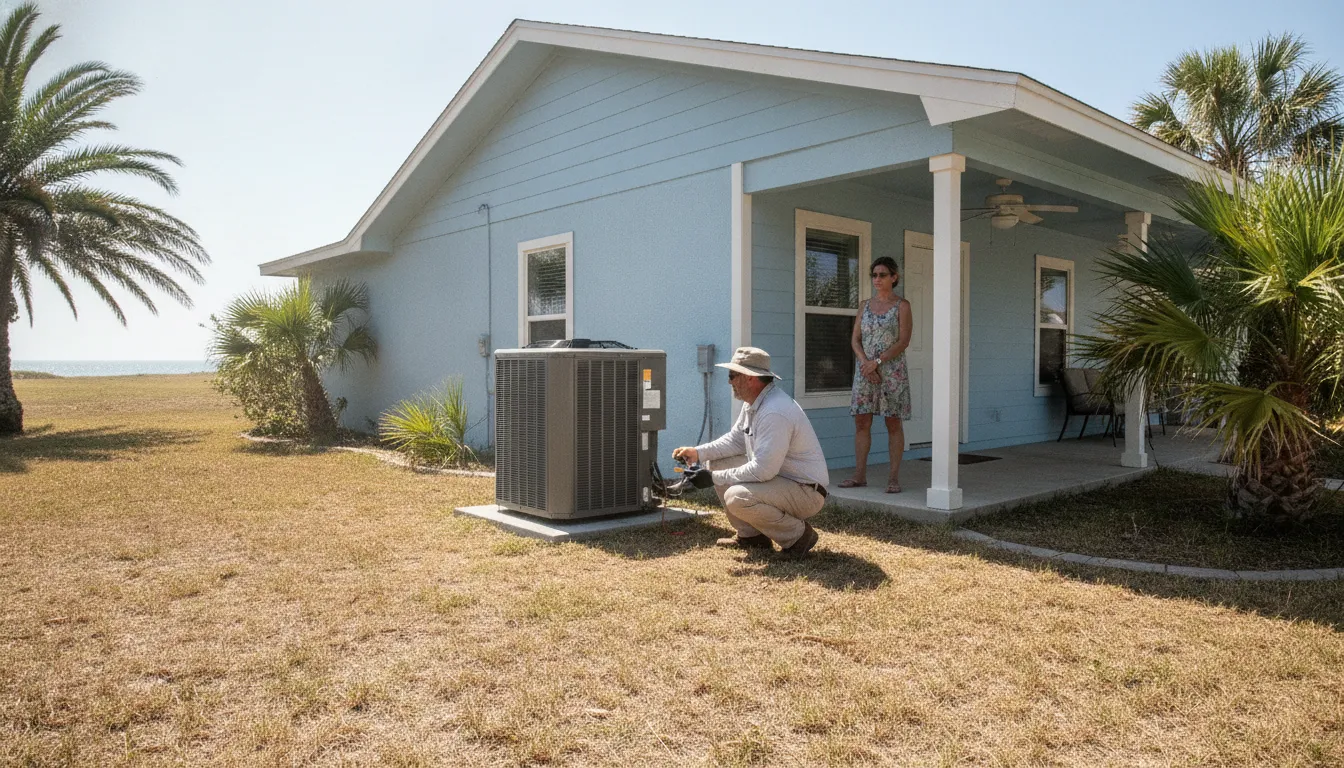
When an air conditioner struggles to start, hums without cooling, or shuts off unexpectedly, a capacitor may be one possible cause. Knowing the signs of a bad AC capacitor can help you describe what is happening and decide when to stop troubleshooting. These symptoms can also come from other faults, so observation is useful, but it is not a diagnosis.
Request AC service or a repair estimate
Short answer: A failing AC capacitor may cause a hard start, repeated clicking or humming, a fan that does not begin turning, weak or interrupted cooling, or a system that stops and starts. Those clues are not proof of a capacitor failure. Because the component stores electrical energy, leave testing and replacement to an HVAC professional. Tommy Cool Air can inspect the system and identify the actual cause.
What Does an AC Capacitor Do?
A capacitor is an electrical component that helps certain motors in an air conditioner start and run. Depending on the system design, a unit may use a capacitor for the compressor, the outdoor fan motor, or both. Some systems use a dual-run capacitor for more than one motor. The exact arrangement varies by equipment.
When the system calls for cooling, the motors need electrical support to begin operating. If a capacitor weakens or fails, a motor may not start as expected or may stop during operation. The air conditioner may then fail to cool normally, even though the thermostat is set correctly.
A capacitor is only one part of a larger electrical and mechanical system. Similar symptoms can be caused by a motor problem, a control issue, restricted airflow, a tripped breaker, or another fault. A technician needs to inspect and test the equipment rather than infer the cause from one sound or symptom. For a broader look at other noises and their possible sources, see our guide to unusual air conditioner sounds.
What Are the Common Signs of a Bad AC Capacitor?
Watch for a pattern, not just one moment. Note whether the symptom happens at startup, after the system has been running, or every time cooling is requested. If possible, record what you hear and whether the indoor blower, outdoor fan, and cooling respond. Do not open the equipment cabinet to investigate.
1. The outdoor unit struggles to start
A common clue is an outdoor unit that hesitates or repeatedly tries to start after the thermostat calls for cooling. You might hear a click, followed by a pause, then another attempt. The indoor blower may still run, but the outdoor section may not begin normal operation.
This does not confirm a capacitor problem. A contactor, motor, wiring connection, or other electrical control can produce a similar startup issue. If the unit repeatedly attempts to start, turn cooling off at the thermostat and arrange an inspection. Repeated attempts can add stress to equipment that is already not operating correctly.
2. You hear a steady hum but the unit does not run normally
A low hum from the outdoor unit, without the expected startup or cooling, may indicate that a motor is receiving power but is not running as it should. A failed or weakened capacitor is one possible explanation. The same sound may also point to a motor or electrical problem.
Do not reach through the grille, push a fan blade, or remove a panel to test whether the motor will start. Even if the unit is off, its electrical components can remain hazardous. If the hum continues or returns, switch the system off and request professional help.
3. The outdoor fan does not start or turns abnormally
If the outdoor fan does not begin turning when cooling is requested, the capacitor may be among the parts a technician checks. A fan that seems slow, stops, or behaves inconsistently also deserves attention. The problem may be the fan motor or another component, not necessarily the capacitor.
Look and listen only from a safe distance. Do not put hands, tools, or anything else through the grille. A moving fan can cause injury, and an apparently still unit is not proof that the electrical supply is safely isolated.
4. Cooling starts and then cuts out
A system that starts, runs briefly, and then stops may have an electrical fault, including a capacitor issue. But short cycling has many possible causes. Thermostat placement or settings, airflow restrictions, overheating, controls, and other system problems can also interrupt a cooling cycle.
Make a note of how long the system runs before stopping and whether it restarts on its own. If it repeatedly cycles or indoor temperatures keep rising, avoid repeatedly resetting the equipment. An HVAC technician can assess the operating sequence and determine whether the issue is electrical, airflow-related, or something else.
5. The air conditioner cools poorly or inconsistently
Weak cooling can happen when a motor or compressor is not operating correctly. A bad capacitor is one possible cause, but poor airflow, a dirty filter, duct concerns, refrigerant problems, or a different component fault may look similar from inside the home.
First, check the thermostat setting and inspect the air filter if it is accessible. Replace a visibly dirty filter with the correct size and type for your equipment. Do not assume that a filter will resolve the problem if the outdoor unit hums, fails to start, or keeps shutting off. Our AC repair service page explains the service path for persistent cooling problems.
6. The system clicks, stops, or needs repeated attempts
A click can be part of normal equipment operation. Repeated clicks paired with no startup, humming, or abrupt shutdowns are more concerning. Several electrical and control components can make these sounds, so the sound alone cannot identify a bad capacitor.
If the equipment is making an unusual sound alongside poor performance, describe the sequence to the service team. For safety guidance during a serious breakdown, review what to do when you need emergency AC service.

Which Symptoms Suggest a Different Problem?
Capacitor symptoms overlap with common AC problems. A thermostat display that is blank may involve the thermostat or its power supply. A running indoor blower with no outdoor operation may point to an outdoor-unit issue, but it does not specify which part failed. A unit that runs continuously without cooling might have an airflow or refrigeration problem. Water near an indoor unit can relate to condensate drainage rather than a capacitor.
That is why a useful description is more valuable than a guess. Tell the technician what the unit did, what you heard, whether the indoor air changed, and when the issue began. If the system made a new or unusual sound, our article on air conditioner noises offers additional context, but it cannot replace an equipment inspection.
| What you notice | What it could mean | Safe next step |
|---|---|---|
| Outdoor unit hums but does not start | Capacitor, motor, control, or another electrical issue | Turn cooling off and arrange an HVAC inspection |
| Fan does not start or stops | Capacitor, fan motor, or electrical fault | Observe from a distance; do not touch the fan or open the cabinet |
| Cooling is weak or inconsistent | Possible electrical, airflow, thermostat, or refrigeration issue | Check thermostat settings and accessible filter; request service if it persists |
| Repeated starts and stops | Possible control, airflow, electrical, or other system problem | Stop repeated resets and note when the cycling occurs |
| Breaker trips when AC runs | Electrical fault or another condition needing evaluation | Do not keep resetting it; contact a qualified professional |
What Can Homeowners Safely Check?
Keep checks simple and limited to normal controls or accessible items. If you smell burning, see smoke, hear sharp electrical popping, or notice a breaker repeatedly tripping, stop using the system. Do not touch the equipment or electrical panel if there is an immediate safety concern. Contact an appropriate professional or emergency service based on the situation.
- Confirm the thermostat is calling for cooling. Check that it is set to cool and that the set temperature is below the room temperature. Avoid rapidly changing settings to force a response.
- Check the air filter. If it is accessible, inspect it and replace it with the proper size if it is dirty. Do not operate equipment with a filter removed unless the manufacturer's instructions specifically allow it.
- Look at the breaker without repeated resets. If it has tripped, do not keep switching it back on. A recurring trip needs professional attention.
- Observe the system from a safe distance. Note whether the indoor blower runs, whether the outdoor unit starts, and what sounds happen. Do not remove a cover or reach inside.
- Write down the timing. Record when the issue began, how long the unit runs, and whether the symptom returns after the system is turned off.
Capacitor testing or replacement is not a safe do-it-yourself task. The component can retain an electrical charge after power is disconnected, and accessing it involves electrical equipment. Do not touch terminals, discharge the part, bridge connections, or try to spin a fan blade. For general consumer product safety information, consult the U.S. Consumer Product Safety Commission; an HVAC technician should handle diagnosis and repair of the air conditioner itself.
When Should You Turn the AC Off and Call for Service?
Turn the system off at the thermostat and arrange service if the outdoor unit hums without starting, repeatedly clicks, the fan does not operate normally, or cooling cycles on and off. Do the same if the breaker trips more than once or the equipment produces a burning smell. If there is smoke or an immediate hazard, keep clear and seek urgent help.
Corpus Christi's heat and humidity can make a cooling interruption uncomfortable quickly. A prompt evaluation can help identify whether the problem is a capacitor or another issue, without risking damage from guesswork. Tommy Cool Air serves residential customers in Corpus Christi and surrounding Gulf Coast communities. See the Tommy Cool Air service areas to check whether your community is listed.
When you contact a service provider, share the model information if it is easy to read without opening a panel, the thermostat setting, the sounds you heard, and what the indoor and outdoor units did. Mention any recent power interruption or breaker trip. Avoid describing a capacitor as a confirmed failure unless a technician has tested it.
What Happens During a Professional Capacitor Inspection?
A technician will ask about the symptoms and inspect the system in context. Depending on the equipment and findings, the technician may check the electrical supply, related controls, motor operation, and capacitor condition using appropriate procedures and equipment. The goal is to determine the actual cause rather than replace a part based only on a symptom.
If a capacitor has failed, the technician can explain the recommended repair and any relevant options before work proceeds. The correct part must match the equipment requirements. Avoid buying a replacement based on a visual guess or attempting to install it yourself.
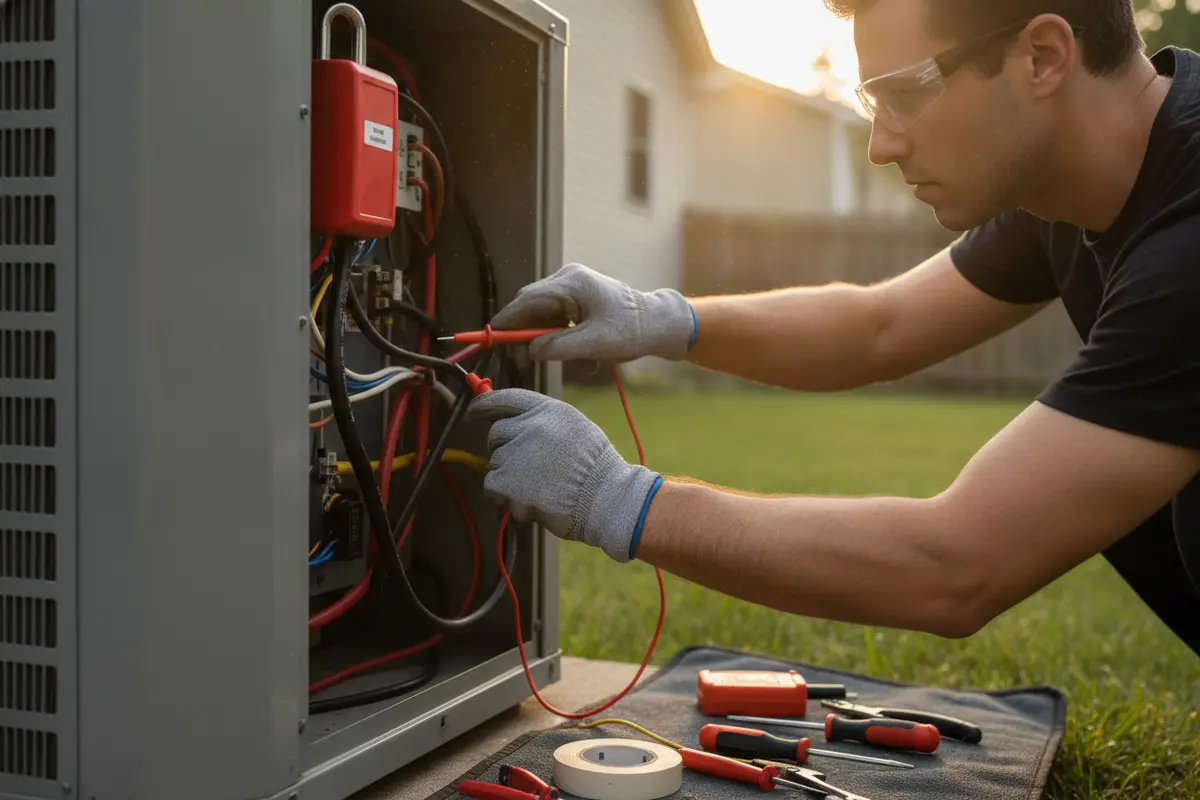
For concerns that come up during routine upkeep, Tommy Cool Air also offers AC maintenance and tune-up service. Maintenance does not guarantee that a component will never fail, but a professional visit provides an opportunity to check system operation and discuss issues you have observed.
How Can You Reduce the Chance of Another Cooling Interruption?
No maintenance routine can prevent every electrical failure. Still, practical care can help you notice changes early and reduce avoidable strain from neglected airflow or unresolved operating problems.
- Check the filter at the interval recommended for your home, equipment, and filter type.
- Keep furniture and other obstructions away from indoor supply and return vents.
- Keep the area around the outdoor unit clear enough for normal airflow, without opening or modifying the equipment.
- Pay attention to new sounds, repeated starts, or a gradual change in cooling. Share the timing with a technician.
- Schedule an inspection when performance changes instead of repeatedly restarting a unit that will not run normally.
Homeowners who want to plan ongoing care can review the Cool Kids Comfort Club information and confirm current plan details directly with Tommy Cool Air. If a larger repair or replacement is recommended, ask for a written explanation and review available financing information before making a decision. Individual repair and installation pricing depends on the work required.
Contact Tommy Cool Air to discuss your AC symptoms
Frequently Asked Questions
Can an AC still run with a bad capacitor?
It may run intermittently or partially, depending on the equipment and the fault. A motor may struggle to start, stop, or fail to operate, so the system may cool poorly or not at all. Continued operation is not a reliable way to test the part. Turn the system off if it repeatedly struggles or shuts down, and arrange an inspection.
Can I tell if a capacitor is bad by looking at it?
A visual check is not a safe or dependable diagnosis. Some damaged parts may show visible changes, while others do not. Reaching the component requires access to electrical equipment, and a capacitor can retain charge. Do not remove a panel or touch the component. Have an HVAC professional inspect and test it.
Is a humming air conditioner always a capacitor problem?
No. Humming can be associated with a capacitor, motor, contactor, or another electrical or mechanical issue. A sound by itself cannot identify the failed part. Note whether the fan starts and whether cooling begins, then share those details with a technician.
Should I keep resetting the breaker if the AC trips it?
No. A breaker that trips again indicates a condition that needs evaluation. Repeatedly resetting it does not diagnose or fix the cause. Leave the system off and contact an HVAC professional.
How do I book an AC inspection in Corpus Christi?
Use Tommy Cool Air's contact page to request service and describe the symptoms you observed. If the equipment is making repeated startup attempts, shutting down, or causing a breaker to trip, include that information so the team understands what is happening.
Contact Tommy Cool Air to discuss your AC symptoms
The signs of a bad AC capacitor can help you recognize a problem, but only a safe professional inspection can confirm its cause and the right repair.