If you’re searching because your AC condensate pump is not working, the first clue is often water where it should not be. A full pump reservoir, unusual pump behavior, or an air conditioner that stops cooling can also point to a problem. None proves the pump has failed, but together they help you decide what to check and when to call.
Short answer: A homeowner may notice water around the indoor unit or pump, a reservoir that stays full, a pump that runs constantly or never starts, or a safety switch that stops the AC. Tommy Cool Air recommends treating these as warning signs, not a diagnosis. Turn off cooling if water is overflowing, avoid opening electrical components, and have an HVAC professional check the pump, float switch, drain tubing, and system together.
What Does AC Condensate Pump Not Working Mean?
An air conditioner removes moisture from indoor air as it cools. That moisture collects on the indoor coil and drains away through a condensate line. In many systems, gravity carries the water to an appropriate drain. In other installations, the air handler sits below or far from a suitable drain, so a condensate pump moves collected water through tubing to a discharge point.
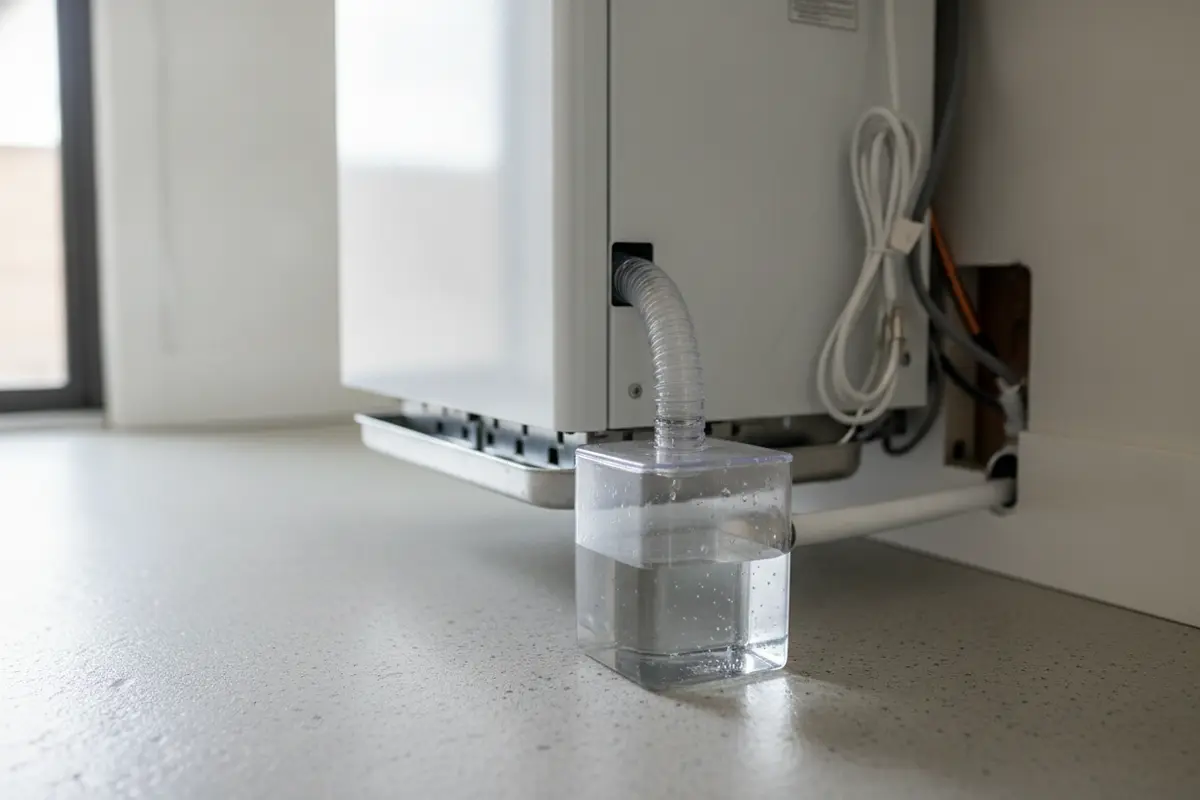
A typical pump has a small reservoir, a float or level-sensing mechanism, a motor, and discharge tubing. As water enters the reservoir, the float rises. The pump should start at its designed level, move water through the tubing, and stop when the water level falls. Exact designs differ by equipment and installation.
The pump is not the same thing as the primary condensate drain. A gravity drain may carry water directly away without any pump. Some installations include a pump as the normal drainage method; others may use one as part of a particular configuration. Knowing which arrangement your system has helps avoid mistaking a clogged drain for a failed pump.
Some HVAC monitoring designs include sensors that detect condensate levels. An HVAC remote-monitoring patent describing condensate-level sensors illustrates that water-level sensing can be part of a system’s protection or monitoring design. It does not identify the cause of a problem in your home, and sensor and shutoff arrangements vary.
Which Signs Point to an AC Condensate Pump Not Working?
Look for a pattern rather than relying on one symptom. A pump can be noisy while still moving water, and water near an air handler can come from a drain line, coil, or other issue. These signs make a pump or its controls worth checking:
- Water around the pump or indoor unit. A reservoir may be overflowing, a connection may be loose, or discharged water may not be reaching its intended destination. Water on the floor deserves prompt attention, especially near electrical equipment.
- The reservoir remains visibly full. If you can see the reservoir without removing a cover, standing water that does not go down during or after cooling may indicate a pump, float, power, or discharge problem. Do not reach into the pump.
- The pump runs for a long time or cycles repeatedly. Continuous or frequent operation can mean water is not leaving as expected, the float is sticking, or incoming condensate is unusually heavy. The sound alone cannot distinguish among these causes.
- The pump never seems to run. That may indicate a failed motor or loss of power, but the pump might simply not have reached its activation level. Some pumps are quiet, so confirm by observing from a safe distance rather than assuming silence means failure.
- A safety switch shuts down the cooling system. Some installations use a float switch or related overflow protection to interrupt operation if water reaches a high level. A shutdown can help limit overflow. It does not prove the pump itself is defective.
- You hear a change in sound. New humming, rattling, or buzzing can be a reason to investigate, particularly if water remains in the reservoir. Do not remove the pump cover to listen or touch wiring.
Why Can Pump Symptoms Vary With the Installation?
The pump’s location and the way its discharge tubing is routed affect which symptoms you can see. In a utility closet, a clear reservoir may be easy to inspect from outside. In another home, the pump may be tucked beside an air handler or behind a closed equipment panel. Do not move stored items, climb into a cramped space, or remove a panel to find it.
Some pump discharge routes send water to a drain or another approved outlet that is not visible from the equipment. You might hear a short operating cycle without seeing water leave at the pump. A lack of visible discharge at that moment does not establish a failure. Likewise, water on the floor may be coming from a primary drain or pan rather than the pump.
Overflow protection can make a problem appear first as a cooling interruption. If a safety switch senses a high water level, it may stop the system before you see a puddle. Other systems may allow cooling to continue while water accumulates. Because designs vary, do not assume that every pump has the same warning light, alarm, sound, or shutoff response.
How Can You Tell a Pump Problem From a Primary Drain Problem?
This distinction matters because both can leave water near the indoor equipment. A primary drain usually carries water away by gravity through a drain line. A condensate pump collects water in a reservoir and actively pushes it through a smaller discharge tube. A blockage can affect either arrangement, and a blocked pump discharge can make a working motor seem ineffective.
Use what you can safely observe. If you can clearly identify a separate pump and reservoir, note whether the water level changes during normal cooling. Look for obvious kinks in exposed tubing or a visible leak at a connection, but do not pull on tubing, detach it, or remove equipment panels. If you cannot tell which drain arrangement you have, leave the diagnosis to a technician.
For related warning signs, see Tommy Cool Air’s guide to why an AC may be leaking water. That guide covers other possible sources of a leak. The useful takeaway is that a puddle is a symptom, not proof of a condensate-pump failure.
| What you observe | Possible explanation | Safe next step |
|---|---|---|
| Water around a pump reservoir | Overflow, a blocked discharge, a pump or float issue, or a loose connection | Stop cooling if water is actively overflowing; request professional diagnosis |
| Water near an air handler without a visible pump | A primary drain restriction, drain-pan issue, or another condensate problem | Do not assume there is a pump; contact an HVAC professional if water returns |
| AC stops while water is present | An overflow safety switch may have interrupted operation, or another system fault may exist | Leave the switch in place and arrange service instead of bypassing it |
| Pump sound changes, but no water is visible | Normal cycling, a developing pump issue, or a different equipment sound | Observe whether it repeats and note when it occurs; do not open the unit |
| Reservoir appears full and does not empty | Power, float, motor, discharge tubing, or blockage problem | Turn off cooling if overflow is imminent and request an inspection |
What Safe Checks Can You Make at Home?
Keep the inspection visual and limited to areas you can reach without a ladder, tools, or removing a panel. A few observations can help you describe the issue clearly when you request service.
- Look for active water. Check the floor around the indoor unit and the visible exterior of the pump. If water is spreading, dripping onto electrical parts, or approaching stored belongings, stop using the system and seek help promptly. Do not touch wet wiring or electrical equipment.
- Check the thermostat. Confirm that cooling is selected and that the set temperature is below the room temperature. If the thermostat is set correctly but cooling has stopped, a safety interruption or another system problem may be involved.
- Observe the reservoir without opening it. If the pump has a transparent reservoir, note whether it looks empty, partly filled, or near the top. Do not put your fingers or objects inside, and do not remove a cover.
- Listen from a safe distance. Note whether the pump starts, stops, runs continuously, or makes an unfamiliar sound during a cooling cycle. Do not rely on sound alone to decide that the pump is defective.
- Look at exposed tubing. Without moving it, see whether the visible discharge tube appears sharply kinked or disconnected. Do not detach it to test flow. A technician can verify the route, outlet, and condition safely.
- Record the timing. Note when the water or sound appears, whether the AC was running, and whether the system stopped. A photo of a visible leak can also help explain the symptom, provided you can take it without approaching water or electrical hazards.
A simple symptom log can make a service conversation more useful. Write down the approximate time, whether the system had been cooling for a while, and what you observed first. For example, “The pump hummed twice, the reservoir looked nearly full, then cooling stopped” is more helpful than “the pump is broken.” Note whether the symptom occurs every cycle or only after extended operation. Do not wait to gather notes if water is actively spreading or creating an electrical hazard.
If the system has an accessible dedicated power switch, do not use it if you would have to reach through water or touch equipment. If you are unsure how to shut the system off safely, step away and ask for professional guidance. Do not reset a tripped safety switch repeatedly, bypass it, or keep restarting cooling while water is overflowing.
When Should You Turn Off the AC and Call for Help?
Turn off cooling and arrange service when water is actively overflowing, the pump reservoir appears close to spilling, or the system repeatedly shuts down while water is present. A continuing leak can damage nearby materials. Water near energized equipment also creates a safety concern.
Call promptly if the pump appears to run without lowering the water level, the same shutdown returns after a reset, or a new pump noise comes with visible water. Avoid repeated attempts to force the system to run. A safety device may be preventing further overflow, and bypassing it can expose the home to additional water damage.
If you have an urgent cooling problem during hot Gulf Coast weather, explain both the cooling issue and any water you observed when you call. Tommy Cool Air provides emergency AC service information for homeowners who need help with an urgent air-conditioning concern. Never touch exposed wiring or stand in water while checking equipment.
What Will an HVAC Technician Check?
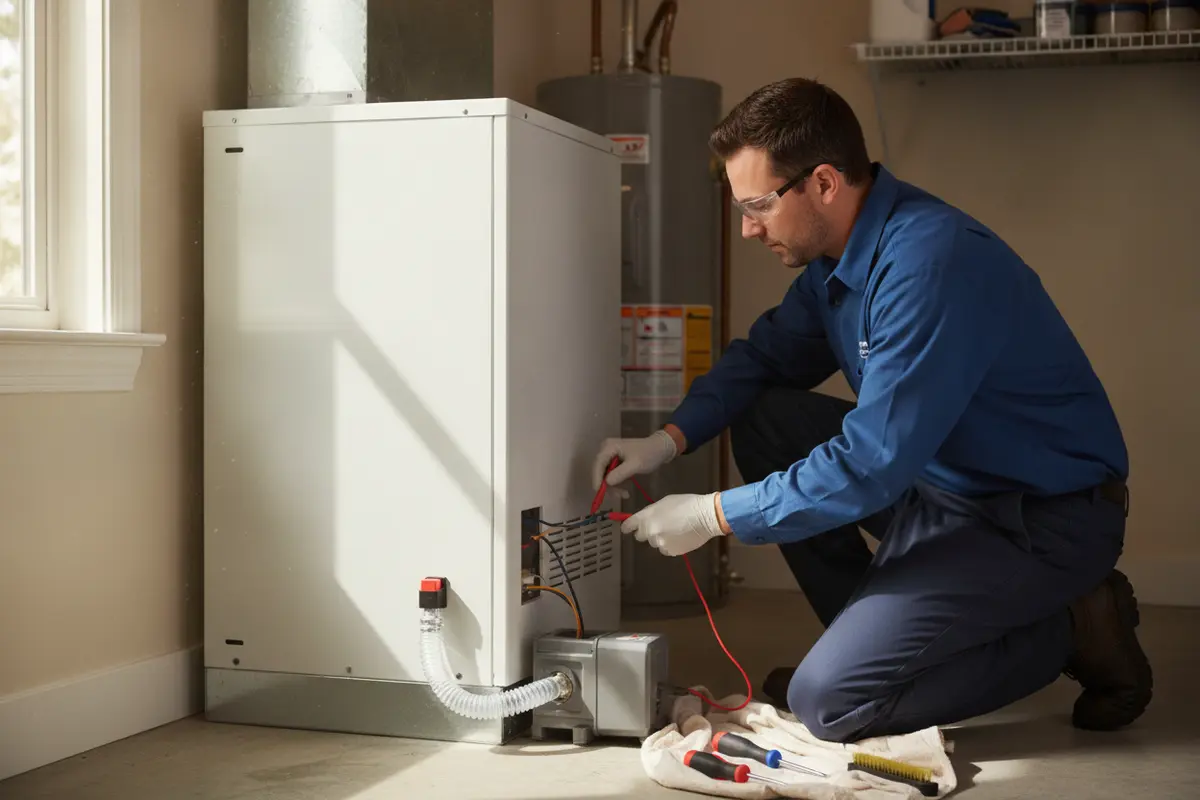
A technician can test the complete condensate-removal path instead of replacing a part based on one symptom. The inspection may include the reservoir, float movement, pump power and operation, discharge tubing, outlet, drain pan, and any overflow switch connected to the equipment.
The technician may also check whether water is entering the pump as expected and whether the pump can move it through the installed discharge route. A pump can run yet fail to clear water if a line is restricted or disconnected. Conversely, a pump that does not start could have a control, power, or float issue rather than a failed motor.
Depending on the observed pattern, the technician may compare pump operation with the system’s cooling cycle and inspect where the discharge tubing ends. They can determine whether water is draining by gravity, being collected by a pump, or encountering a restriction farther along the route. This matters because replacing a working pump would not correct a blocked line, while clearing a line alone may not resolve a sticking float or electrical issue.
Share your notes about when the symptom occurs and whether cooling stops. Mention if you saw standing water, a change in pump sound, or a wet area near the indoor equipment. These observations help the technician focus the inspection, but they do not substitute for testing. A qualified diagnosis should establish both why water is accumulating and whether overflow protection is responding as intended.
Ask what the technician found, whether the issue is isolated to the pump or involves the primary drain, and what work is recommended. Request a clear explanation before authorizing repairs. The appropriate repair and price depend on the equipment and diagnosis, so avoid relying on a generic online estimate.
Regular professional AC maintenance and tune-up service can give a technician a chance to inspect visible condensate components as part of system care. Maintenance cannot guarantee that a pump will never fail, but spotting wear, restrictions, or drainage concerns may help you address them before a leak becomes more disruptive.
How Can You Reduce the Chance of Another Condensate Problem?
Keep the area around the indoor unit accessible, and pay attention to new water, repeated pump sounds, or cooling interruptions. Do not store items where they block access to visible equipment or hide a developing leak. If your system has an overflow alarm or safety switch, leave it in place and ask a technician to explain what it protects.
Have recurring drainage symptoms checked rather than repeatedly clearing or resetting components yourself. A pump, drain pan, float switch, tubing route, and primary drain can interact. Fixing only the most visible symptom may not address the cause.
Corpus Christi’s heat and humidity mean air conditioning often runs for long stretches. More cooling operation can mean more condensate to remove, though the amount varies with weather, indoor conditions, and equipment use. If you notice repeated water issues, share the pattern with the technician and ask whether the drainage arrangement is appropriate for your home.
Tommy Cool Air serves homeowners in Corpus Christi and surrounding communities. You can review the areas served by Tommy Cool Air, learn about air-conditioning service options, or read the company’s answers to common HVAC questions. For broader system care, see the AC repair service page and the guide to what an AC maintenance check can cover.
Contact Tommy Cool Air about an AC drainage concern
Frequently Asked Questions
Can an AC condensate pump fail even if it still makes noise?
Yes. A motor or pump may make noise without moving water effectively, and a restricted discharge line can also prevent water from leaving. Noise alone cannot confirm the cause. If the reservoir stays full or water appears, stop cooling if overflow is likely and request an inspection.
Will a failing condensate pump always shut off the air conditioner?
No. Some installations connect an overflow switch to interrupt cooling, while others may have a different arrangement. A shutdown can also have causes unrelated to condensate. Do not bypass a switch; have a technician identify what triggered it.
Is a condensate pump the same as an AC drain line?
No. The drain line carries condensate away, while a pump actively moves collected water when gravity drainage is not suitable. The pump also has discharge tubing. A blockage in that tubing may cause trouble even if the pump motor runs.
Can I keep running the AC if the pump seems faulty?
If water is overflowing, the reservoir is close to spilling, or an overflow safety has stopped the system, do not keep restarting cooling. Turn it off if you can do so safely and arrange service. If there is no water or shutdown, avoid opening the equipment and seek advice if symptoms persist.
Does a water leak prove that the condensate pump has failed?
No. A blocked primary drain, a loose connection, a drain-pan issue, or another condensate problem can also cause water. A technician can inspect the entire drainage path and confirm whether the pump is the source.
Water around the indoor unit, a reservoir that stays full, or repeated cooling shutdowns deserve attention, but only an inspection can confirm whether the condensate pump is at fault.