In Corpus Christi, a thermostat can look like a simple wall-mounted swap. But the work behind it depends on your HVAC equipment, wiring, control setup, and the way your home is divided into comfort zones. A basic replacement may be straightforward. A smart, communicating, heat-pump, or multi-zone system may require compatibility checks and careful configuration, especially when Gulf Coast heat and humidity keep your system working hard.
Contact Tommy Cool Air for a thermostat installation quote
Thermostat installation cost depends on the thermostat type, equipment compatibility, wiring, access, zoning, and labor required. Tommy Cool Air evaluates the existing HVAC controls before recommending an option, so your quote reflects the actual installation instead of a generic price. This guide explains the variables that shape the project.
This article focuses on installing or upgrading a thermostat, not diagnosing an existing thermostat problem. Repair work can involve different symptoms, testing, and recommendations. For installation, Tommy Cool Air can help with Wi-Fi setup, smartphone controls, and compatible smart-home platforms such as Google Nest, Amazon Alexa, and Apple HomeKit. The first step is understanding what can change the scope of the job. That includes wiring capacity, control-board support, and whether access to the air handler is straightforward. Those details separate a direct replacement from a larger controls project.
What Determines Thermostat Installation Cost?
Thermostat installation cost depends on more than the device mounted on the wall. The thermostat type, existing HVAC equipment, wiring, compatibility, access, testing, and final configuration all shape the work required. A straightforward replacement may involve a different scope than installing a smart control on a zoned or variable-speed system.
For a reliable quote, a technician should evaluate the thermostat and the equipment it controls, not treat the project as an automatic one-for-one swap.
Thermostat type and equipment source
A basic replacement, programmable control, Wi-Fi thermostat, or communicating control each has different setup requirements. Smart models may add Wi-Fi configuration, smartphone control, geofencing, adaptive learning, and integration with Google Nest, Amazon Alexa, or Apple HomeKit. ENERGY STAR explains that smart thermostats use connected features to control heating and cooling equipment. Their full benefit depends on proper setup and a working Wi-Fi connection.
The equipment source also matters. If you supply the thermostat, the installer must verify that the model is appropriate for the system. If the contractor supplies it, the quote can account for the control, its compatibility, and the configuration needed for your home. Explore smart thermostat installation when you want help matching features to your HVAC system.
Wiring, compatibility, and system design
Existing low-voltage wiring may support a direct replacement, or it may need changes. Many Wi-Fi thermostats recommend a common, or C, wire. A missing or unsuitable power connection can require additional diagnostic work or a compatible power solution. Heat pumps, multi-stage equipment, variable-speed systems, and communicating controls also need careful compatibility checks. ENERGY STAR recommends using the equipment manufacturer's thermostat with variable-speed equipment.
Zoning adds another layer. A system with multiple temperature areas may use motorized dampers, zone controls, or room-by-room integration. That scope differs from changing one thermostat on a single-zone system. Learn more about HVAC zoning systems before choosing a control for a multi-zone home or business.
Access, diagnostics, and commissioning
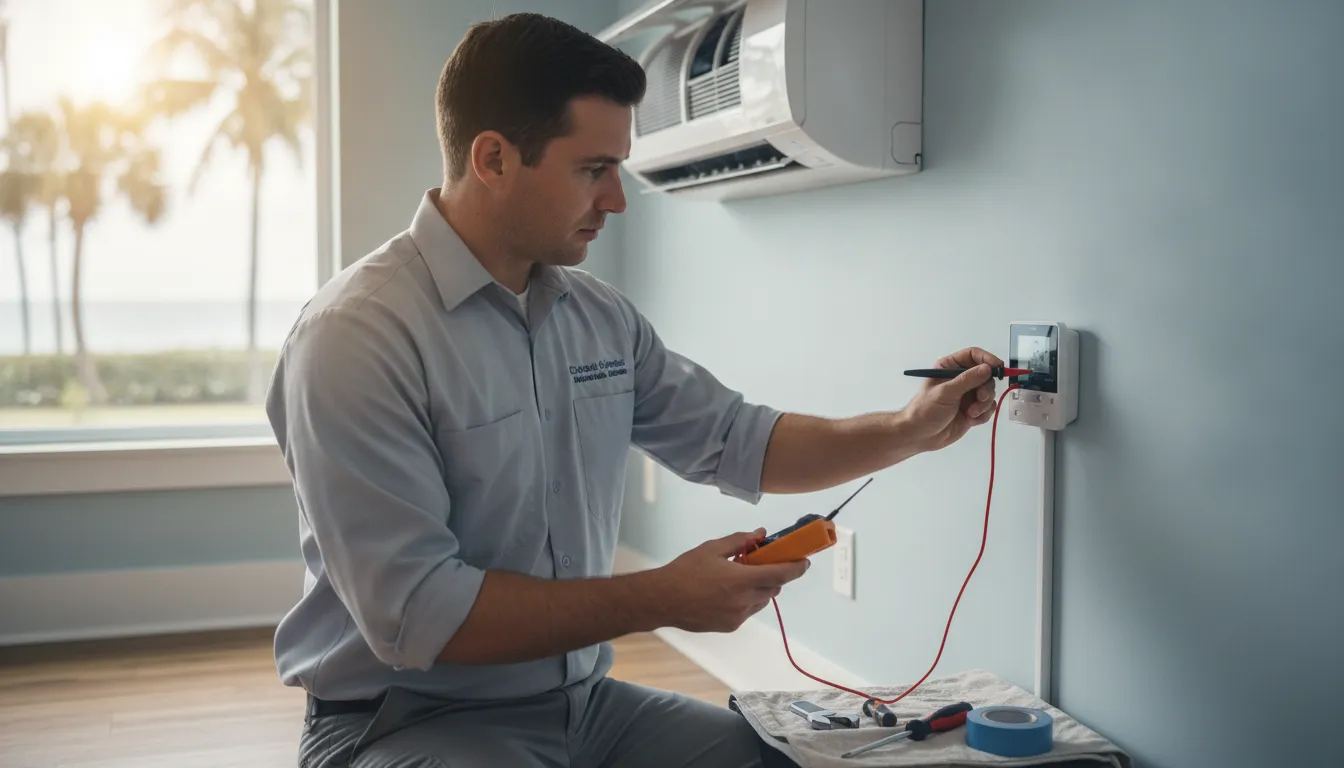
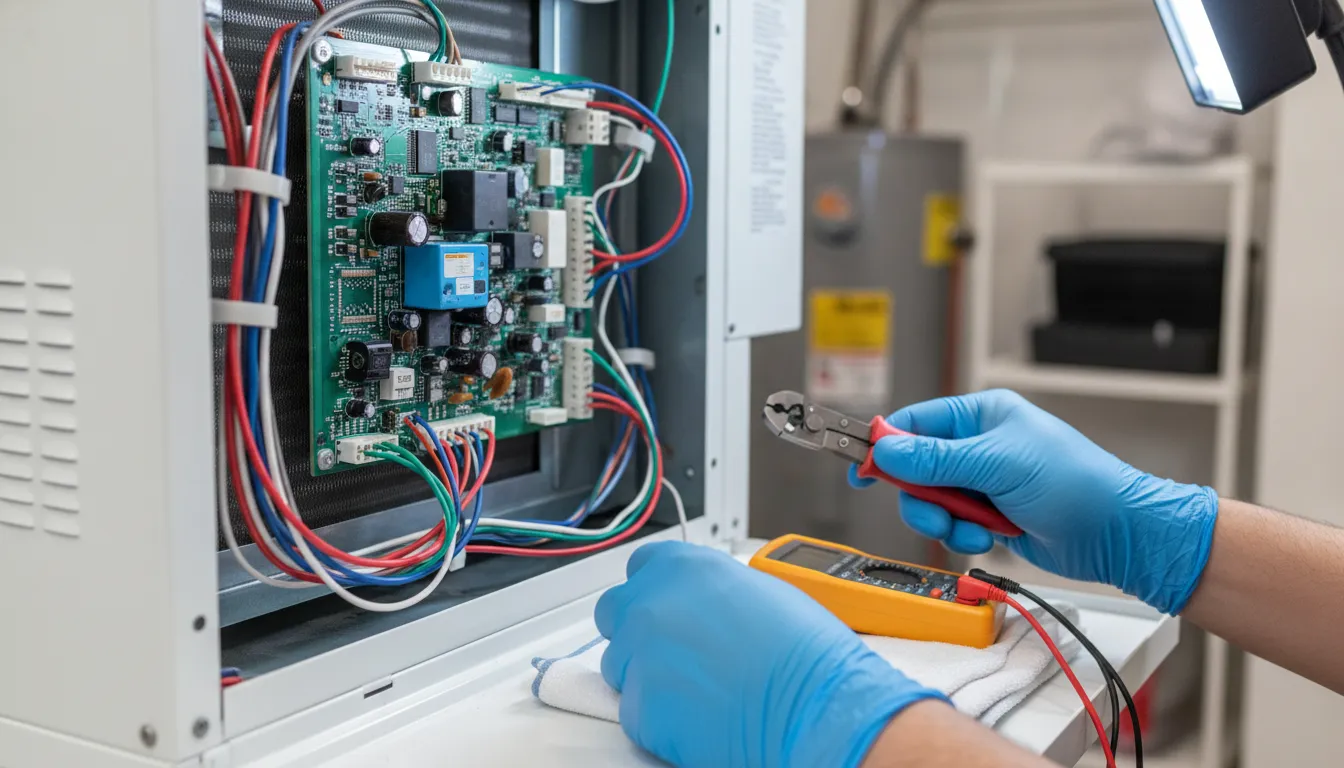
Access to the air handler, control board, attic wiring, or other equipment can affect the work. A careful installation also includes testing heating and cooling operation, confirming the thermostat reads accurately, checking system response, and configuring schedules or connected features. Those steps can reveal a broader control or HVAC issue that should be addressed rather than hidden by a new thermostat.
For homes dealing with Gulf Coast heat and humidity, the right control should support dependable comfort without overlooking the condition of the equipment. Discuss energy-saving HVAC systems if thermostat changes are part of a larger efficiency or comfort evaluation.
How Do Thermostat Types Change the Project?
A thermostat is the control point for your heating and cooling system, so the right replacement depends on more than the display you prefer. A basic swap may be straightforward, while a connected or communicating control can require compatibility checks, wiring review, setup, and equipment testing. That scope is why thermostat installation cost should be based on the actual system rather than a universal menu price.
| Thermostat type | What it typically adds | Questions that affect the quote |
|---|---|---|
| Manual | Simple temperature adjustment with limited programming. | Does the existing low-voltage wiring match the replacement? |
| Programmable | Scheduled temperature changes for occupied, sleeping, or away periods. | Can the system support the control, and will the schedule fit the household? |
| Smart or Wi-Fi | App access, remote control, scheduling, and possible smart-home integration. | Is Wi-Fi available, and is a C-wire or another compatible power solution needed? |
| Communicating | Two-way communication with compatible HVAC equipment and advanced system control. | Does the equipment manufacturer require a specific control? |
| Zoned | Separate temperature control for multiple areas, often with dampers or zone controls. | How many zones, thermostats, dampers, and control components are involved? |
Manual and programmable controls
Manual thermostats are usually the least complicated option when the replacement matches the existing wiring and HVAC equipment. Programmable models add scheduling, which can be useful when your routine is predictable. The installation still needs to account for the system type, wiring condition, and whether the thermostat controls one stage or multiple heating and cooling stages.
Smart, communicating, and zoned controls
Smart thermostats use Wi-Fi for control through a phone, tablet, or computer, according to ENERGY STAR guidance. Tommy Cool Air's smart thermostat installation can include Wi-Fi setup, smartphone controls, and compatibility checks for Google Nest, Amazon Alexa, or Apple HomeKit.
Many smart installations recommend a common, or C, wire. Variable-speed equipment may require the thermostat recommended by its manufacturer, rather than a generic smart model. Communicating controls and zoning can involve still more specialized components. Zoning may include motorized dampers, multi-zone thermostat integration, or smart vents, so it should be evaluated as a control-system project instead of a one-for-one replacement. The final quote should reflect equipment compatibility, wiring, access, configuration, and testing.
That review matters especially in Gulf Coast homes that run cooling equipment for long periods. A thermostat that is attractive on paper may not deliver the expected control if it cannot communicate correctly with the system. A careful evaluation helps match the control to the equipment and the way each space is used.
Why Do Wiring and HVAC Compatibility Matter?
A thermostat is part of the HVAC control circuit, not just a wall-mounted display. Wiring, equipment type, and control logic must work together for reliable heating and cooling. In Corpus Christi, long cooling seasons make compatibility checks important. They can help prevent poor communication, unexpected cycling, or lost thermostat features.
A common wire, often called a C-wire, may provide the continuous power that many Wi-Fi thermostats need. ENERGY STAR notes that many smart thermostat installations recommend a C-wire for new installations. However, the visible wire bundle does not tell the whole story. A technician should verify the terminals, voltage, equipment connections, and available power at the indoor unit before recommending a wiring solution.
Low-voltage wiring is still system-specific
Most residential thermostats use low-voltage control wiring, but low voltage does not mean every thermostat is interchangeable. A basic single-stage system may use a different control arrangement than a heat pump, dual-fuel system, or equipment with multiple heating and cooling stages. Heat pumps also require the thermostat to understand the changeover and auxiliary heat controls. A dual-fuel setup adds another layer because the controls must coordinate electric heat-pump operation with a separate fuel-burning heat source.
Variable-speed and communicating equipment require even closer attention. ENERGY STAR advises using the thermostat recommended by the equipment manufacturer with variable-speed equipment. Communicating systems may exchange more information with the indoor and outdoor units than a conventional thermostat can handle. Installing a visually appealing thermostat that cannot communicate correctly may reduce functionality rather than improve it.
Testing protects the equipment and the quote
Compatibility testing should include the thermostat, wiring, indoor equipment, outdoor unit, and any zoning controls. Tommy Cool Air treats thermostat compatibility as part of the HVAC system and control evaluation, rather than a simple one-for-one swap. This matters when a home has multiple zones, motorized dampers, smart vents, or room-by-room temperature controls. You can learn more about energy-saving HVAC systems when control upgrades are part of a broader efficiency plan.
A professional should confirm the system type, inspect the low-voltage connections, test heating and cooling modes, and verify that safety controls respond correctly. If the thermostat is not communicating or the equipment behaves unexpectedly afterward, the issue may involve the broader HVAC system. In that situation, Corpus Christi AC repair may be more appropriate than replacing the thermostat again. The final project scope should account for the existing wiring, equipment compatibility, access, and testing required, not an invented add-on price.
When Does Zoning Add Installation Complexity?
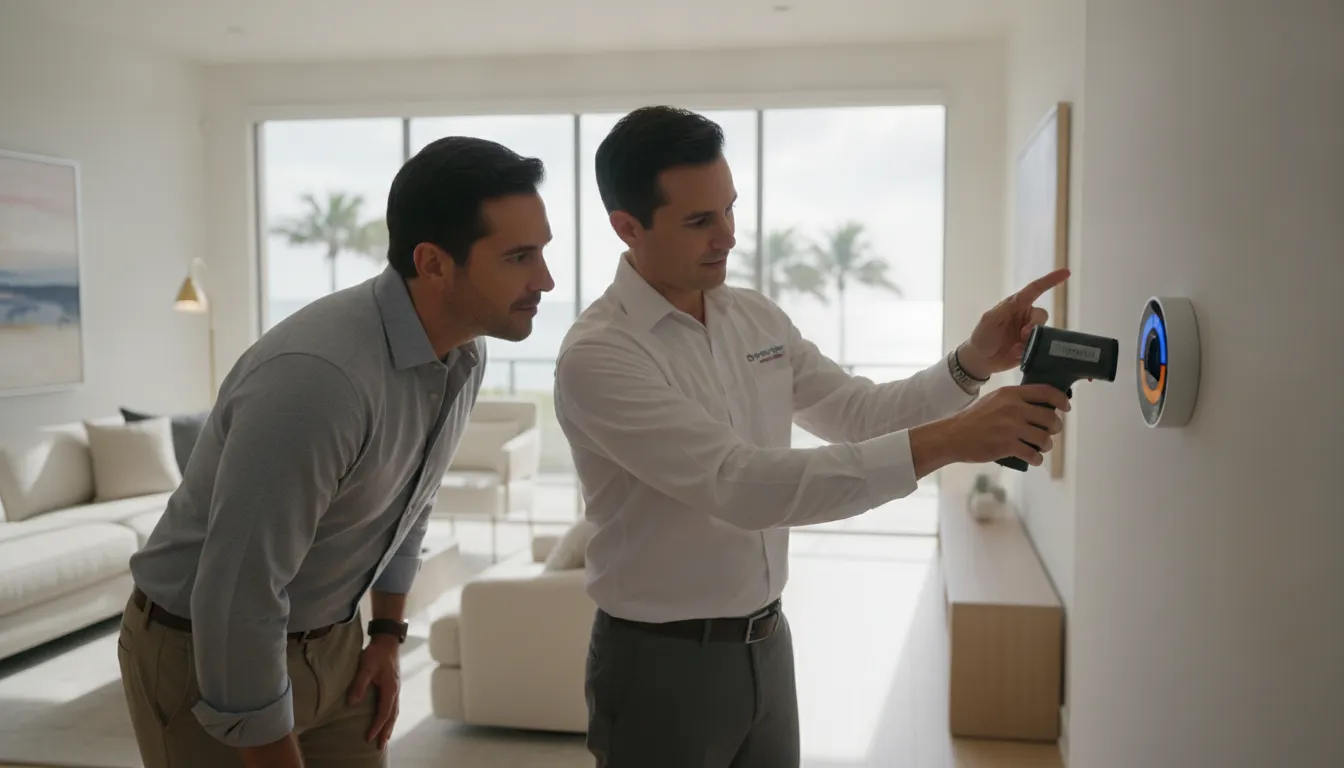
A thermostat installation becomes more involved when it must coordinate separate comfort zones instead of controlling one HVAC circuit. In a zoned home, the thermostat, dampers, control board, and air handler must communicate correctly. The final thermostat installation cost depends on that existing setup, the number of zones, wiring access, and whether the equipment supports the proposed controls.
Multiple zones require coordinated controls
A single thermostat can be a straightforward replacement when it operates one compatible system. Zoning is different. Each zone may have its own thermostat or temperature sensor, while motorized dampers direct conditioned air toward the rooms calling for heating or cooling. The zone control board interprets those signals and coordinates the equipment.
That means a technician must verify more than the wall wiring. They should identify each zone, inspect damper operation, confirm control-board compatibility, and test whether the system responds correctly to every thermostat. A wiring change that seems minor at the thermostat can affect the entire control sequence if it is connected incorrectly.
Tommy Cool Air works with HVAC zoning systems that can include motorized dampers, multi-zone thermostat integration, and smart vents for room-by-room airflow management. The appropriate configuration depends on the equipment and the comfort goals for the property.
Why two-story homes often need a closer review
Upper floors commonly experience different temperatures from first floors because of solar exposure, air leakage, insulation, duct layout, and the natural movement of warm air. A thermostat upgrade alone may not solve that imbalance. The installation review should consider whether zoning, sensors, airflow adjustments, or system sizing are part of the larger comfort issue.
Homeowners planning a control upgrade can review two-story HVAC sizing before choosing equipment. Proper sizing and load calculations help keep a new control strategy aligned with the home, rather than masking a capacity or distribution problem.
Ductless and commercial systems add different variables
Ductless mini-splits can provide zone-specific temperature control without central ductwork, but each indoor unit and its control method must be considered. Commercial properties may have several zones, schedules, air handlers, or operational requirements that make access and commissioning more extensive. In both cases, the installer should test each zone under actual heating or cooling demand.
Because zoning changes the scope from a device swap to a controls project, a site-specific evaluation is the reliable way to understand the work involved. Avoid choosing a thermostat based only on its features. Compatibility with the HVAC equipment and zoning architecture matters just as much.
What Should a Professional Thermostat Installation Include?
A professional thermostat installation is more than removing one wall control and attaching another. The technician should review the home, confirm the thermostat matches the HVAC equipment. Inspect wiring, install it safely, configure its settings, and test the complete heating and cooling system. A careful handoff also helps you use the controls confidently.
- Review the site and the comfort goals. The technician starts by asking how the system behaves, which rooms feel uncomfortable, and what type of control you want. They inspect the thermostat location, air-handler or furnace access, and signs of zoning or communicating controls. In a Corpus Christi home, reliable control matters during long periods of heat and humidity.
- Check the equipment and wiring. Compatibility should be evaluated with the HVAC equipment and control system, not treated as a simple one-for-one device swap. The technician identifies the system type, stages, voltage, terminals, and available conductors. A Wi-Fi thermostat may need a common, or C, wire, or another compatible power solution. Variable-speed equipment may require the thermostat recommended by its manufacturer. This review is one reason a quote can differ between properties.
- Disconnect power and remove the old control safely. The HVAC power is shut off before wiring is handled. The technician documents existing connections, checks for damaged or loose conductors, and removes the old thermostat without disturbing equipment controls. If the inspection reveals a broader electrical or HVAC concern, that issue should be explained before installation continues.
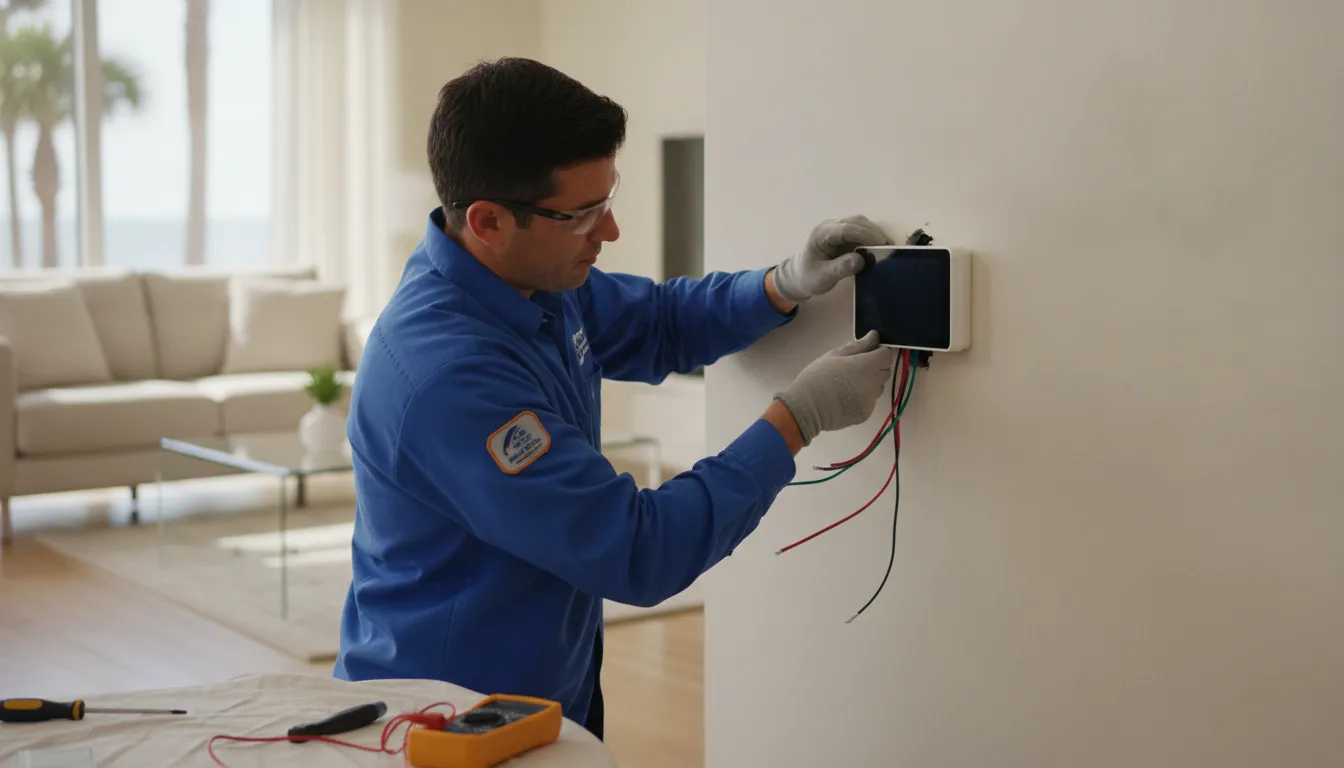
- Mount and wire the new thermostat. The base is positioned securely and level, with wiring connected according to the equipment and thermostat requirements. Any needed wiring adjustment should be identified as part of the work rather than hidden inside a vague installation description. Zoning systems may require coordination with dampers, zone controls, or other room-by-room equipment.
- Configure the controls. Settings should match the HVAC system, including heating and cooling modes, stages, fan operation, schedules, and temperature limits. For a smart thermostat installation, setup may also include Wi-Fi connection, smartphone access, geofencing, adaptive learning, or integration with Google Nest, Amazon Alexa, or Apple HomeKit.
- Commission the system and explain the result. The technician tests heating, cooling, fan operation, transitions between modes, and any connected features. They check that the thermostat responds and that the equipment operates as expected. Finally, the homeowner receives a walkthrough of schedules, alerts, filter reminders, and basic troubleshooting. That handoff is especially useful when the new control offers more features than the previous thermostat.
When Should You Call for Thermostat Help?
A thermostat swap is not always a simple device replacement. Call a professional when wiring is unfamiliar, the system needs a common wire, or the equipment uses multiple stages or zones. A proper evaluation can confirm compatibility, protect the HVAC controls, and keep a small control issue from becoming a larger comfort problem.
For homeowners researching thermostat installation cost, the most useful question is what the existing system requires. Wiring, equipment compatibility, zoning, access, testing, and smart-home configuration can all affect the project. A quote should reflect those conditions rather than assume every thermostat is a one-for-one replacement.
Warning signs that deserve professional attention
- The wiring is unfamiliar. Turn off power and stop if you cannot confidently identify the low-voltage terminals or find damaged, loose, or overheated wires. Incorrect connections can prevent the system from operating safely.
- There is no common wire. Many Wi-Fi thermostats need continuous power. An older installation may require a compatible power solution or wiring change, which should be evaluated with the HVAC equipment rather than guessed from the wall plate.
- The system has multiple stages or zones. Heat pumps, dual-fuel equipment, variable-capacity systems, and HVAC zoning systems can use controls that differ from a basic single-stage setup. A thermostat must communicate correctly with the equipment, dampers, and control board.
- The temperature reading seems wrong. If the thermostat displays a temperature that does not match the room, placement, airflow, wiring, or the sensor itself may need attention. Do not compensate by repeatedly changing the set point.
- The equipment short cycles or does not respond. Frequent starts, long delays, unexpected heating or cooling, or no response after installation can point to a control, configuration, or broader HVAC problem. Tommy Cool Air can assess the thermostat alongside Corpus Christi AC repair needs when appropriate.
- Smart setup fails. Wi-Fi connection problems, app pairing errors, or failed integration with Google Nest, Amazon Alexa, or Apple HomeKit may require configuration beyond mounting the device. Tommy Cool Air provides smart thermostat installation and setup for compatible systems.
These issues are especially important during Gulf Coast heat and humidity, when unreliable temperature control can quickly affect comfort. If the system behaves unexpectedly, schedule an evaluation instead of repeatedly resetting the thermostat.
Contact Tommy Cool Air for a thermostat evaluation
Frequently Asked Questions
How much does thermostat installation cost in Corpus Christi?
There is no universal installed price. The quote depends on the thermostat type, whether equipment is customer-supplied or contractor-supplied, wiring condition, system compatibility, access, and testing required. A professional evaluation gives you a project-specific total instead of a misleading flat number.
Do I need a C-wire for a smart thermostat?
Many Wi-Fi thermostats need continuous common-wire power, but not every system has a usable C-wire. The installer should inspect the existing conductors, thermostat, and HVAC equipment before recommending a compatible power solution. Treat this as a diagnostic question, not an automatic surcharge.
Can I install a smart thermostat myself?
DIY replacement may be reasonable when the existing low-voltage wiring and equipment are clearly compatible. Professional help is the safer choice when wiring is unfamiliar or the system does not power down normally. It is also warranted when a new wire is needed or the home has heat-pump, dual-fuel, communicating, or multi-zone controls.
Do I need an electrician to install a new thermostat?
Most central HVAC thermostats use low-voltage control wiring, so an HVAC professional is usually the right first call. An electrician may be needed if the work involves line-voltage equipment or a separate electrical issue. Do not guess when wiring is damaged, unlabeled, or unexpectedly energized.
Can two thermostats control one AC unit?
Two thermostats do not usually provide independent room control on a standard single-zone system. Separate temperature areas generally require compatible zoning controls, dampers, and a control strategy designed for the HVAC equipment. A site review can determine whether zoning is practical for the home.
What should be checked after a thermostat is replaced?
The installer should verify wiring, thermostat settings, equipment response, heating and cooling calls, fan operation, and any smart-home connection. Testing matters because a thermostat replacement can expose broader control or HVAC problems. The homeowner should also receive a clear handoff on schedules, modes, and basic troubleshooting.
Get started with a thermostat evaluation
Thermostat installation cost depends on more than the thermostat itself. Equipment type, wiring, system compatibility, zoning, and installation access can all shape the work and the final quote. A professional evaluation confirms that the new control communicates with your HVAC equipment and supports dependable Gulf Coast comfort.
Tommy Cool Air can review your current setup, discuss suitable thermostat options, and explain the installation steps in plain language. If your system includes smart-home features or zoning controls, sharing those details early can help the team plan the right evaluation.
Share your thermostat model and current comfort concerns during the evaluation.