Finding ice on your air conditioner during a hot Corpus Christi afternoon is more than an odd sight. A frozen evaporator coil means the system is not moving heat as it should, and continuing to run it can strain the equipment. Turn the system off and let the ice melt before troubleshooting.
AC frozen coil causes usually include restricted airflow, low refrigerant, dirty components, or a mechanical problem that disrupts normal cooling. Tommy Cool Air can identify the underlying issue, restore reliable comfort, and help prevent the coil from freezing again. Schedule AC service in Corpus Christi >
The right fix depends on what interrupted the balance between airflow, refrigerant, and coil temperature. Here is how those problems develop, what you can safely check at home, and when it is time to call Tommy & the Cool Kids.
What Causes an AC Evaporator Coil to Freeze?
Your air conditioner is designed to move warm indoor air across a cold evaporator coil. Refrigerant absorbs heat as it changes pressure and state inside the system, while the blower carries cooled air back through your home. Under normal conditions, the coil stays cold without dropping below freezing. When airflow, refrigerant pressure, or system controls are disrupted, moisture on the coil can turn to ice instead.
These are the five most common AC frozen coil causes:
- Restricted airflow: A clogged filter, blocked return, or closed supply vent reduces the warm air moving across the coil. Restricted airflow is one of the most common reasons an evaporator coil freezes, because the coil temperature can fall as airflow drops. See the airflow explanation from T Comfort.
- Low refrigerant: Refrigerant carries heat through the cooling cycle. If the charge is low, often because of a leak, the coil can become colder than intended and develop ice. The EPA identifies low refrigerant levels as a cause of evaporator coil freeze-ups. Review the EPA homeowner guide to refrigerants.
- Dirty evaporator coils: Dust and buildup on the coil act like a blanket, limiting heat transfer. That makes it harder for the system to absorb heat and can contribute to freezing when other conditions are already marginal.
- Blower fan failure: A failing motor, damaged belt, or electrical problem can prevent enough air from crossing the coil. With less warm air reaching the coil, ice may accumulate instead of cooling your home.
- Thermostat issues: A faulty thermostat or incorrect setting can keep the system running longer than it should. Extended operation may worsen a developing airflow or refrigerant problem, allowing a small patch of frost to spread across the coil.
Ice is a symptom, not the underlying repair. Continuing to run the system can restrict airflow even further and place added strain on the equipment. The first cause to investigate is usually airflow, because it is common, visible problems can sometimes be corrected quickly, and it affects the coil's ability to absorb heat.
Why Restricted Airflow Is the Most Common AC Frozen Coil Cause
Your evaporator coil needs a steady stream of warm return air moving across it. When that airflow drops, the coil can become cold enough for moisture to freeze instead of draining away. That is why restricted airflow is one of the most common AC frozen coil causes, as explained by HVAC industry guidance.
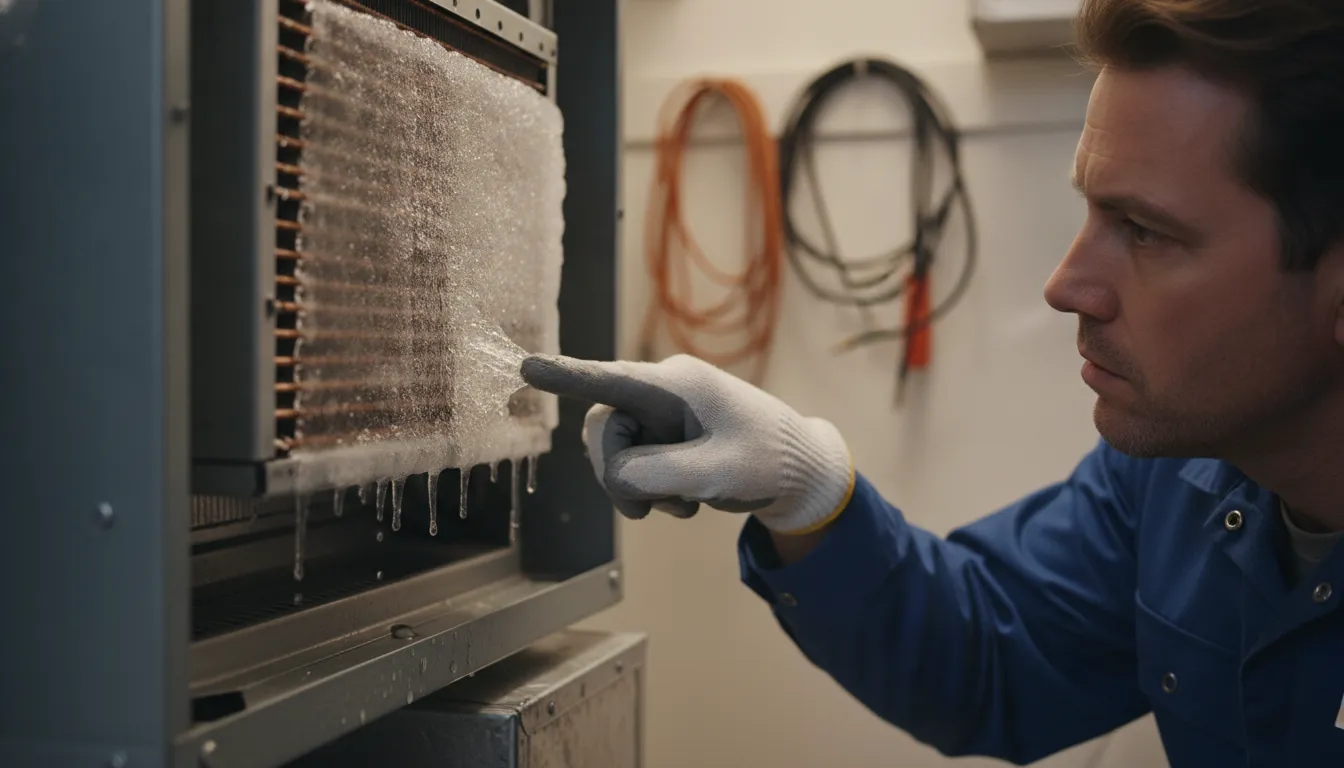
Where the restriction starts
The air filter is the first place to look. A clogged filter makes the blower work against resistance and reduces the volume of air reaching the coil. Trane recommends replacing filters every 30 to 90 days, depending on the filter, system workload, pets, and other conditions. In Corpus Christi, homes with pets or heavy pollen exposure may need the shorter end of that range, with more frequent checks during high-pollen seasons.
Do not stop at the filter. Furniture, curtains, or dust can block return vents and starve the system of air. A dirty evaporator coil can also act like insulation around the coil surface, limiting heat transfer and making it harder for the system to maintain normal temperatures. If the filter is clean and vents are open but airflow remains weak, the blower motor, wheel, or control may be failing. A malfunctioning blower fan may not push enough air across the coil, allowing ice to accumulate. For more on this issue, read our guide to signs your AC is struggling with humidity.
| Filter condition | Airflow volume | Freeze risk | What to do |
|---|---|---|---|
| Clean, correctly sized filter | Normal, steady airflow | Lower, when other components work correctly | Inspect monthly and replace on schedule |
| Dirty or clogged filter | Reduced airflow across the coil | Higher, because the coil can become too cold | Replace it, then check vents and system performance |
A filter change can solve a simple restriction, but repeated icing points to a deeper problem. Turn the system off rather than continuing to run it through a freeze cycle. If the coil freezes again after the filter and vents are addressed, have a qualified technician inspect the blower, coil, and refrigerant system.
How Does Low Refrigerant Lead to a Frozen Coil?
Refrigerant does not get used up during normal air conditioner operation. When the level is low, the system usually has a leak or another underlying problem. That loss changes the pressure inside the evaporator coil. As pressure drops, the refrigerant can become colder than intended, pulling the coil surface below freezing even while Corpus Christi is dealing with a hot summer day. Moisture in the air then freezes onto the coil, restricting airflow and making the ice buildup worse.
The U.S. Environmental Protection Agency identifies low refrigerant levels as a cause of an evaporator coil becoming too cold and developing ice. EPA refrigerant guidance also reinforces why this is not a do-it-yourself repair. Refrigerants must be handled by properly certified technicians using approved recovery and service practices. Adding refrigerant without finding the leak may provide only temporary relief and can leave the system operating inefficiently.
Signs your system may have a refrigerant leak
- Hissing sounds: A faint hissing noise near the indoor coil, refrigerant lines, or outdoor unit can indicate escaping refrigerant.
- Higher utility bills: A system running longer to reach the thermostat setting may consume more electricity than usual.
- Warm air from the vents: Ice can block heat transfer and airflow, so the AC may run while delivering air that feels weak or warm.
- Repeated freezing: If the coil thaws and freezes again, the root cause has not been corrected. Learn more about AC refrigerant leak signs and repair costs.
These signs can overlap with airflow restrictions, blower problems, or other mechanical failures, so symptoms alone cannot confirm a leak. Tommy Cool Air technicians can inspect the system, perform leak detection, evaluate operating pressures, and determine whether repair is appropriate before restoring the charge. Regular professional maintenance helps monitor refrigerant levels and inspect for leaks before they contribute to a frozen coil, which is why Tommy & the Cool Kids include refrigerant checks in every tune-up.
If you find ice on the indoor coil, turn the system off and arrange a professional diagnosis rather than scraping the ice away or handling refrigerant yourself. That protects the coil and compressor while giving Tommy & the Cool Kids a chance to correct the actual cause.
What Mechanical Issues Can Freeze Your Coils?
Not every frozen coil starts with a dirty filter or low refrigerant. Mechanical and control problems can also interrupt the balance your system needs to move warm indoor air across the evaporator coil. When that balance fails, moisture can freeze instead of draining away. These issues often need professional testing rather than a quick part swap.
Blower fan motor failure
The blower fan pushes conditioned air across the evaporator coil and into your home. If the motor fails, runs intermittently, or cannot reach its proper speed, too little air moves across the coil. The coil can become excessively cold, and ice may begin accumulating.
Weak airflow at the vents, unusual motor noise, or a system that runs without cooling the home can point to this problem. Turn the system off if you see ice, then have a technician check the motor, capacitor, wiring, and control board.
Thermostat problems and prolonged cycles
A faulty thermostat may read the room temperature incorrectly or fail to signal the system to stop. That can keep the compressor running longer than it should, allowing the coil temperature to fall below freezing. A thermostat issue may also appear as inconsistent room temperatures, an inaccurate display, or cooling that continues after the set point has been reached.
Because wiring, sensor placement, and equipment controls can all affect the diagnosis, replacing the thermostat is not always the first or only solution. A technician can test whether the thermostat is actually causing the extended cooling cycle. For related symptoms, see our guide to air conditioner short cycling.
Blocked condensate drain
Your AC removes moisture from indoor air at the evaporator coil. That water should flow through the condensate pan and drain line. If the drain is blocked, water can back up around the coil and freeze. Look for water near the indoor unit, a full drain pan, or a safety switch that has shut the system down.
Do not chip ice from the coil or force a blocked line open if you are unsure of the setup. A professional can clear the drain, inspect the pan and safety switch, and confirm that thawed water will not damage nearby equipment.
Outdoor temperatures below 60 degrees F
Running a standard AC when outdoor air is below 60F can create pressure and operating conditions the system was not designed to manage. Below that temperature, air pressure may not work correctly, increasing the chance of coil freezing. This is more likely during a cool morning, an unusually mild day, or when the system is used for cooling outside its normal season. If freezing returns after the coil thaws, schedule professional AC repair services to identify the underlying cause.
How Do I Safely Thaw a Frozen AC Coil?
Ice on the indoor coil is a sign that the system needs a pause, not a quick workaround. Turning off a frozen system immediately allows the coil to thaw and gives you a chance to check simple airflow problems before the equipment runs again. Carrier also recommends shutting the system down while the ice melts and the underlying cause is addressed: turn off a frozen AC system to thaw the coil.
- Turn the AC off and set the fan to ON. At the thermostat, switch the cooling mode to Off. Then set the fan from Auto to On. The blower can move room-temperature air across the coil and help it thaw, but do not leave the cooling system running while ice is present. If water begins dripping around the indoor unit, protect nearby flooring and furniture, but do not open electrical panels.
- Check the air filter. A visibly dirty filter can restrict airflow and contribute to freezing. Replace it with the correct size and type for your system if it is clogged. Do not remove the filter and operate the system indefinitely without one. Filter needs vary, but a commonly cited replacement interval is every 30 to 90 days, depending on the filter, system workload, pets, and household conditions.
- Make sure return vents are open and clear. Walk through the home and check that return grilles are not covered by furniture, rugs, curtains, or stored items. Keep supply registers open as well. The system needs a clear path for air to return to the indoor unit and circulate back through the home.
- Wait at least 24 hours for a complete thaw. A thin layer of frost may disappear sooner, but substantial ice can remain hidden inside the air handler or around the coil. Waiting a full day helps prevent the system from starting while ice is still present. Once thawed, check for standing water and make sure the filter is seated correctly before restoring cooling.
- Call a professional if the coil refreezes or the cause is unclear. A new filter and open vents will not correct every problem. Low refrigerant, a blower issue, a dirty coil, a drain problem, or another mechanical fault may still be restricting normal operation. Do not diagnose refrigerant or electrical components yourself. Tommy Cool Air can investigate recurring AC freezing and repair needs in Corpus Christi and surrounding Gulf Coast communities.
Never pour hot water on the coil. Sudden temperature changes can damage components, and the water can create an electrical hazard. Never chip, scrape, or pry ice with a tool, because a sharp edge can puncture the coil or refrigerant lines. If the problem returns after thawing, contact Tommy Cool Air at (361) 852-4450 for 24/7 help, or schedule service online.
Why Corpus Christi Humidity Makes Freezing More Likely
Corpus Christi Gulf Coast climate can add another layer to the conditions behind a frozen evaporator coil. Warm, moisture-heavy air passes over the cold coil, where water vapor condenses. That condensation is normal, but a coil operating with restricted airflow, incorrect refrigerant pressure, or another mechanical problem has less room for error. As the coil temperature drops too far, the moisture can freeze and build into a layer of ice that further blocks airflow.
More moisture means more ice when conditions are wrong
Humidity does not usually freeze a properly operating AC by itself. It increases the amount of water available to freeze when an underlying issue makes the coil too cold. Once ice begins forming, less air moves across the coil, which can accelerate the cycle. Homeowners may notice weak airflow, water around the indoor unit after thawing, or a system that runs without adequately cooling the home. See the related guide to signs your AC is struggling with humidity for additional warning signs.
Salt air can wear down important components
Coastal salt air is another long-term concern. Salt exposure can contribute to corrosion on metal coil fins and components such as blower fan assemblies. Corrosion can reduce efficiency or contribute to component problems over time. A blower that is not moving enough air can leave the coil colder than intended, increasing the chance of ice accumulation. Learn more about salt air AC corrosion protection and why coastal equipment deserves regular attention.
Temperature swings can change operating conditions
Gulf Coast weather can shift quickly between very hot afternoons and cooler nights. Those changes affect cooling demand and the conditions around the system. If the equipment is already marginally charged, dirty, or struggling with airflow, a cooler period can make freezing more noticeable, especially when the system continues running for long periods. If ice returns after the coil thaws, turn the system off and arrange an inspection rather than repeatedly forcing it to run.
How to Prevent AC Frozen Coil Causes Year-Round
Preventing a frozen coil starts with keeping air moving and giving your system consistent, sensible operating conditions. A few routine habits can reduce avoidable strain, while professional maintenance helps uncover problems before they turn into an icy shutdown.
Replace the filter before airflow drops
Check your air filter regularly and replace it about every 30 to 90 days, depending on the filter type, household activity, pets, and indoor air quality needs. A loaded filter makes it harder for return air to reach the evaporator coil. That restricted airflow can lower coil temperature and contribute to freezing. Keep supply vents and return grilles open and clear as well. Closing several vents or placing furniture over a return can create a similar problem.
Schedule maintenance before Corpus Christi summer
Annual professional maintenance gives a technician the opportunity to inspect airflow, electrical components, refrigerant performance, coils, condensate drainage, and thermostat operation. Tommy Cool Air also offers bi-annual tune-ups through the Cool Kids Comfort Club. Regular service helps identify small performance changes while they are still easier to address, rather than waiting for ice to form on the coil. For guidance on maintenance frequency, see how often to schedule AC maintenance on the Texas Gulf Coast.
Annual members can also use the Cool Kids App for 24/7 monitoring. Predictive maintenance alerts can help identify early signs of trouble, giving Tommy & the Cool Kids a chance to investigate before a minor issue becomes an emergency repair.
Use your thermostat to support steady cooling
Set your thermostat to a comfortable temperature and avoid prolonged overcooling, especially when outdoor conditions are already humid. Large, constant temperature changes can make the system run longer than necessary. If the house feels warm even though the system is running, do not keep lowering the setpoint as a workaround. Check the filter and airflow first, then arrange service if the problem continues.
Corpus Christi summer prep checklist
- Install a clean air filter and note the next replacement date.
- Make sure supply vents and return grilles are open and unobstructed.
- Schedule a seasonal tune-up before the hottest stretch of summer.
- Confirm your thermostat is reading accurately and holding a steady setting.
- Check that the outdoor unit has clear space around it and that drainage is not backing up.
- Watch for weak airflow, unusual sounds, water near the indoor unit, or recurring frost.
If you keep seeing ice after thawing the system or changing the filter, schedule service through our online contact page. Recurring freezing usually points to an underlying airflow, refrigerant, mechanical, or control problem that needs a proper diagnosis. Also review our complete home AC repair guide for more troubleshooting tips.
Frequently Asked Questions
Will a frozen AC coil fix itself?
Usually not. Ice may melt after the system stops, but the cause remains. A dirty filter, blocked airflow, blower problem, or refrigerant issue can make the coil freeze again. Treat thawing as a temporary step, then have the system diagnosed before returning it to normal cooling.
How long does it take an AC coil to thaw?
Thawing time depends on how much ice has formed and how restricted the airflow is. Turn the system off, or use the fan-only setting if recommended for your equipment, and allow the ice to melt completely. Never chip at the ice or pour hot water over the coil, because either can damage components.
Can a dirty air filter cause a frozen evaporator coil?
Yes. A clogged filter reduces the warm return air moving across the evaporator coil, allowing its temperature to fall until condensation freezes. Check the filter first and replace it with the correct size. Filter needs vary, but Trane recommends replacement every 30 to 90 days depending on system use, filter quality, pets, and other conditions: Trane filter guidance.
Does low refrigerant cause an AC coil to freeze?
Yes. Low refrigerant can reduce operating pressure and make the evaporator coil excessively cold, leading to ice buildup. Refrigerant loss usually indicates a leak or another system problem. Do not attempt to add refrigerant yourself; a qualified HVAC professional should locate the cause and service the system. The EPA homeowner refrigerant guide explains the related safety considerations.
Why does my AC coil freeze up at night?
Nighttime freezing can happen when an existing airflow restriction combines with cooler outdoor conditions. A weak blower, dirty filter, or blocked return may not move enough air across the coil, while lower temperatures change how the system operates. If the coil repeatedly freezes overnight, schedule a professional inspection instead of repeatedly restarting the unit.
Schedule AC Service with Tommy Cool Air
A frozen evaporator coil can point to an airflow, refrigerant, or mechanical problem that needs a closer look, especially if the ice returns after thawing. Tommy & the Cool Kids can help identify the cause and recommend the right next step. To schedule AC service or request emergency repair, call (361) 852-4450 or book online. The Cool Kids are available 24/7 for urgent cooling needs across Corpus Christi, Flour Bluff, Portland, Rockport, and the surrounding Gulf Coast area.