When Gulf Coast humidity stays high, your air conditioner can remove moisture for hours at a time. That moisture normally drains away, but a damp filter, coil area, drain pan, or duct can hold onto odors and send them through the vents. A musty scent that returns deserves attention rather than a quick cover-up.
A musty smell from AC in humid weather usually points to moisture collecting somewhere in or near the cooling system. Tommy Cool Air recommends starting with simple checks, such as the accessible filter and visible moisture. Schedule professional help when the odor persists or comes from sealed equipment.
EPA guidance identifies moisture control as the key to controlling mold, while a moldy odor can signal growth that should be investigated. The next step is understanding why damp conditions make the smell stronger and which parts of the system deserve attention first.
Contact Tommy Cool Air for AC or indoor-air-quality service
Why a musty smell from AC in humid weather gets worse
A musty smell from AC in humid weather usually points to moisture lingering inside the system or nearby surfaces. In Gulf Coast homes, sustained cooling can keep coils, drain components, ducts, and filters damp enough for odors to return. Finding the moisture source matters more than masking the smell.
Air conditioners remove heat and some moisture while they run. During Corpus Christi's humid weather, the system may operate for long periods, creating repeated opportunities for condensation. If water does not drain fully, damp areas can develop around the evaporator coil, drain pan, drain line, or supply ducts.
Moisture also gives odor-producing growth a better environment. The CDC explains that indoor mold needs moisture and a carbon source from building materials to grow. It identifies excess moisture as a major cause of indoor mold growth. These facts do not make a musty odor a diagnosis, but they do make it a useful signal to investigate.
The EPA says a moldy odor can indicate mold growth and should be investigated. Read the EPA's guidance on what mold smells can indicate for context. Odor alone cannot identify the exact source, so avoid assuming the issue is inside the ductwork.
Why the odor may intensify after the system starts
When the blower starts, air moves across damp components and through connected ducts. That airflow can carry trapped odors into occupied rooms. The smell may seem stronger after the system cycles on, after the home has been closed, or during a stretch of unusually humid weather.
Start with safe observations. Check whether the filter looks damp, inspect accessible areas around the indoor unit for standing water, and note whether the odor comes from one vent or several. Do not remove panels, handle suspected growth, or pour chemicals into a drain line without guidance.
A technician can trace drainage, coil moisture, duct conditions, and airflow together. Addressing the source is more dependable than adding fragrance or replacing a filter without checking why the odor keeps returning.
Where can the musty odor start?
A musty smell from AC in humid weather can begin around the evaporator coil, inside a condensate pan, on a damp filter, or in ductwork and vents. The odor's location and timing can help narrow the source, but persistent smells need a professional inspection rather than a guess.
| Possible source | Why it can smell musty | What to notice |
|---|---|---|
| Evaporator coil area | The coil gets wet as it removes heat and moisture from indoor air. A dirty coil, restricted airflow, or a frozen coil can leave damp conditions around the equipment. | The odor may appear when cooling starts or come from the return-air side. Coil access is often limited, so do not open sealed equipment. |
| Condensate pan or drain | These components collect and move water produced during cooling. EPA notes that poorly maintained pans can become reservoirs, and water can enter ducts when pans do not drain properly. | Look for standing water, repeated drain backups, or an odor near the indoor unit. Review AC condensate drain issues for related warning signs. |
| Filter | A filter that remains damp can hold dust and other debris. EPA recommends keeping HVAC filters dry and changing them frequently. | Check only the accessible filter. If it is wet, heavily loaded, or deformed, replace it with the correct size and have the moisture source evaluated. |
| Ducts or vents | Moisture from a leaking vent, poorly draining pan, or surrounding building materials can affect nearby duct surfaces and spread odor through supply air. | Notice whether one room smells worse, or whether you see condensation around a grille. See AC vent moisture problems and learn when to clean air ducts. |
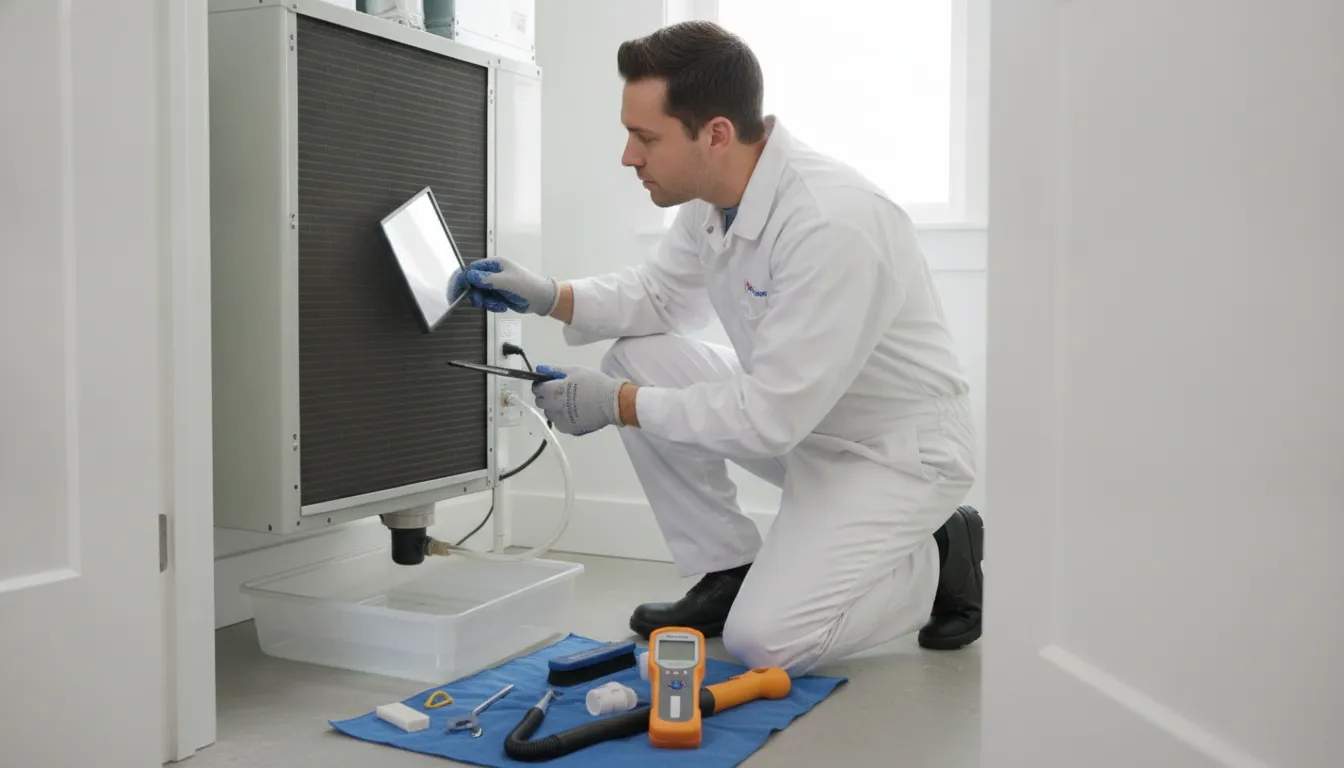
These sources can overlap. For example, a drainage problem may create moisture near the equipment and later affect nearby ductwork. Tommy Cool Air maintenance includes filter service and drain-line flushing, while repair technicians can diagnose clogged drains or frozen evaporator coils. Avoid spraying chemicals into vents or dismantling the system based only on an odor.
What can a homeowner safely check today?
A musty smell from AC in humid weather deserves a calm, limited inspection. Check only accessible parts, look for moisture, and note when the odor appears. These clues can help a technician find the source without turning a simple observation into an unsafe DIY repair.
- Check the accessible air filter. If the filter is easy to reach, look for dampness, heavy dust, or an overdue replacement. EPA guidance says HVAC filters should stay dry and be changed frequently. Tommy Cool Air also includes filter cleaning or replacement in routine AC maintenance. Do not reach into sealed equipment.
- Look for visible moisture. Check around accessible vents, nearby ceilings, walls, and the area around the indoor unit for standing water, dampness, or condensation. Dry a wet surface promptly and note whether moisture returns. Do not pour cleaners into a drain or attempt chemical treatment.
- Confirm basic thermostat operation. Make sure the thermostat is set to cooling, the temperature setting is reasonable, and the system starts and stops normally. Do not remove electrical covers, open panels, handle wiring, or work with refrigerant.
- Track the odor pattern. Write down whether the smell occurs at startup, after the system runs, in one room, or at several vents. Also note unusual noise, weak airflow, repeated water, or an odor that is becoming stronger. This information is useful alongside safe AC maintenance steps.
- Stop before sealed equipment or elevated work. A condensate pan, drain line, coil, duct interior, or electrical compartment may require trained service. If the odor persists, water returns, or airflow changes, use home AC repair guidance and arrange a professional inspection rather than opening the system yourself.

These checks are for observation and basic maintenance, not diagnosis. A visible moisture problem can point to a drainage or cooling issue that needs a qualified technician.
How can you reduce humidity and prevent the odor from returning?
To reduce a musty smell from AC in humid weather, control indoor moisture and correct the source rather than masking the odor. Keep indoor humidity below 60 percent, keep drip pans clean, confirm drain lines flow properly, and keep filters dry. If moisture persists, an HVAC professional can check drainage, ventilation, ductwork, and dedicated humidity-control options.
Start with a simple moisture check. A hygrometer can show whether humidity is consistently elevated. Condensation on windows, walls, or pipes is another warning sign. Dry wet surfaces promptly and address the source of the moisture. In a Gulf Coast home, that may mean reviewing how the system removes moisture during long cooling cycles, not simply lowering the thermostat.
Routine maintenance also matters. Replace or clean the filter according to the equipment and filter requirements, and do not leave a damp filter in place. Ask a qualified technician to inspect the condensate pan and drain line if water collects near the indoor unit, the drain backs up, or the odor returns soon after cleaning. Poorly draining pans can allow water into the HVAC system and contaminate ventilation ducts.
When basic maintenance does not solve the problem, the right fix depends on the cause. Humidity-control equipment, ventilation improvements, filtration, duct cleaning or sealing, and UV purification address different indoor-air concerns. No single product solves every odor. Explore Tommy Cool Air's indoor air quality solutions to understand the options, then review these AC humidity warning signs when the system still feels damp or the smell keeps returning.
Tommy Cool Air offers humidity-control systems, ventilation, filtration, and duct services. A service visit can identify whether the recurring odor points to moisture, drainage, airflow, or another equipment issue.
Is a musty AC smell a sign of a bigger problem?
A brief musty smell from AC in humid weather can happen when moisture lingers on a coil, drain pan, or filter. If the odor persists, grows stronger, returns often, or comes with visible growth or standing water, the system needs a closer inspection. The smell is a service signal, not a diagnosis.
A short odor at startup may fade after the system has run and dried its components. Persistent odor deserves more attention. EPA guidance says a moldy or musty odor can indicate mold growth and should be investigated. CDC guidance also connects building mold with an underlying water or moisture problem. See the related AC humidity warning signs for other clues that moisture control needs review.
Signals that moisture may be collecting
- Musty odor returns every time the system starts or becomes noticeably stronger.
- You see standing water near the indoor unit, a wet drain pan, or repeated drain-line backups.
- Supply vents, nearby surfaces, or accessible duct areas stay damp.
- You notice visible growth around the air handler, drain pan, or ductwork.
- The filter is damp, becomes dirty unusually quickly, or the home feels persistently humid.
Condensate pans collect water created as hot air is cooled. EPA says they should be checked routinely because poor maintenance can allow them to become reservoirs for mold and bacteria. If a pan does not drain properly, water can enter the system and contaminate ventilation ducts. An HVAC professional can inspect the pan, drain line, coil area, filter, ductwork, and humidity controls rather than treating the odor alone.
Turn off cooling and request qualified service if you see active water around the equipment, repeated drain problems, visible growth inside the system, or an odor that keeps worsening. Avoid opening sealed equipment or applying household chemicals inside ducts. If the smell is paired with irritation or other symptoms, move away from the affected area and consult an appropriate healthcare professional; an HVAC inspection cannot diagnose illness. For broader moisture and filtration support, explore indoor air quality solutions.
Routine inspection can identify the moisture source before it affects more of the system. EPA notes that visual inspection and musty odors can be more useful for finding dampness problems than routine air sampling.
What can professional AC or indoor-air-quality service include?
A professional evaluation can trace a musty odor to moisture, drainage, airflow, or a combination of factors. Tommy Cool Air may inspect accessible filters, condensate components, coils, pans, ducts, and ventilation, then discuss humidity control or indoor-air-quality options that fit the equipment and the building.
Service usually starts with diagnosis rather than an automatic recommendation. A technician can check the filter and drain path, look for signs of standing condensate, and assess the evaporator-coil area and drain pan. Tommy Cool Air's AC maintenance includes cleaning or replacing filters and flushing drain lines. Its repair service can diagnose issues such as clogged drain lines and frozen evaporator coils. For background on AC condensate drain issues, review the drainage guide before scheduling service.
Because condensate pans collect water created as hot air is cooled, poor drainage or infrequent cleaning can allow moisture into the HVAC system and ventilation ducts. The U.S. Environmental Protection Agency recommends routine checks of HVAC systems and condensate pans for this reason. A technician may inspect duct connections, accessible duct surfaces, and vents when the odor pattern suggests the air-distribution system is involved. Duct cleaning or sealing may be appropriate in some situations, but it should follow an evaluation. Learn more about when to clean air ducts.
If the main issue is persistent indoor moisture or stale air, the service conversation may include humidity-control equipment, ventilation, filtration, or UV air purification. Tommy Cool Air offers humidity-control systems, including dehumidifier installation and repair, along with indoor-air-quality services that include filtration, ventilation, UV purification, and duct cleaning or sealing. Explore air conditioning services and indoor air quality services to see the available pathways. The right combination depends on what the inspection finds, so avoid treating one product as a universal fix.
Why Corpus Christi homes need a moisture-first AC plan
In Corpus Christi, a musty smell from AC in humid weather often points to moisture that the cooling system is not removing, draining, or containing well. Start with indoor humidity and visible moisture, then check routine maintenance before deciding whether you need equipment service. The same approach helps homeowners, businesses, and property managers respond early.
Gulf Coast buildings face extreme humidity and long, sometimes year-round cooling seasons. That gives condensation more opportunities to collect around the air conditioner, drain system, ducts, or other cool surfaces. The goal is not simply to make the thermostat colder. It is to keep moisture controlled while the system operates.
A practical decision path
- Measure the environment. Use an indoor hygrometer in representative rooms. The Department of Energy recommends keeping indoor humidity below 60 percent. Condensation on windows, walls, or pipes is another reason to investigate humidity levels. Learn more about indoor moisture guidance from the DOE.
- Look for simple moisture clues. Check whether the accessible filter is dry and reasonably clean. Notice standing water, damp ceilings, wet vents, or an odor that is strongest near one area. Dry wet surfaces promptly and address the moisture source rather than masking the smell.
- Escalate recurring problems. If the odor returns, cooling runs constantly, humidity remains high, or moisture is visible, request an inspection. A technician can evaluate drainage, coils, airflow, duct conditions, and humidity control. Review Tommy Cool Air's air conditioning services to choose the appropriate next step.
For a business or rental property, record when the odor appears and which rooms are affected. That pattern helps a service professional distinguish a localized issue from a building-wide humidity problem. Routine maintenance, dry filters, clear drains, and prompt repairs support a healthier-performing comfort system without guessing at the cause.
Contact Tommy Cool Air for help with a recurring musty AC odor
Frequently Asked Questions
Why does my AC smell musty when it first turns on?
A brief odor can come from damp surfaces near the evaporator coil, filter, drain pan, or ductwork. If the smell returns, grows stronger, or lasts beyond startup, moisture may be collecting where it should drain or dry. Check the accessible filter and look for visible moisture, but leave sealed equipment to a qualified technician.
How do you remove a musty smell from an air conditioner?
Start with safe steps: replace a damp or overdue filter, dry visible moisture, and make sure supply and return vents are not blocked. A technician may need to inspect the coil, condensate pan, drain line, and ducts. EPA recommends routine HVAC checks because mold in ventilation systems may spread through a building (EPA guidance).
Is a musty AC smell a sign of mold?
It can be a clue, but an odor alone does not identify the source or confirm a health condition. EPA says a moldy odor suggests that mold growth should be investigated. CDC guidance favors thorough visual inspection or odor detection over routine air sampling for dampness problems (EPA; CDC).
What humidity level helps prevent musty odors?
Use a reliable indoor humidity monitor and aim to keep indoor relative humidity below 60 percent. Dry condensation promptly and address the moisture source. In Gulf Coast homes, a persistent odor may require equipment maintenance, ventilation improvements, or dedicated humidity control rather than masking the smell.
When should I call an HVAC or indoor-air-quality professional?
Request service for persistent or worsening odor, standing water, repeated drain problems, visible growth, damp ducts, or an odor coming from inaccessible equipment. Turn off cooling if water is entering the system or electrical components appear wet. A professional can identify the moisture source and recommend an appropriate repair or cleaning path.
Ready to Get Help With a Musty AC Smell?
If the odor keeps returning, a professional evaluation can help identify moisture around the filter, drain system, coil, or ductwork before the problem becomes harder to manage. Tommy Cool Air can help you choose an appropriate next step for your air conditioning or indoor air quality concerns.
Contact Tommy Cool Air to request guidance and schedule service.